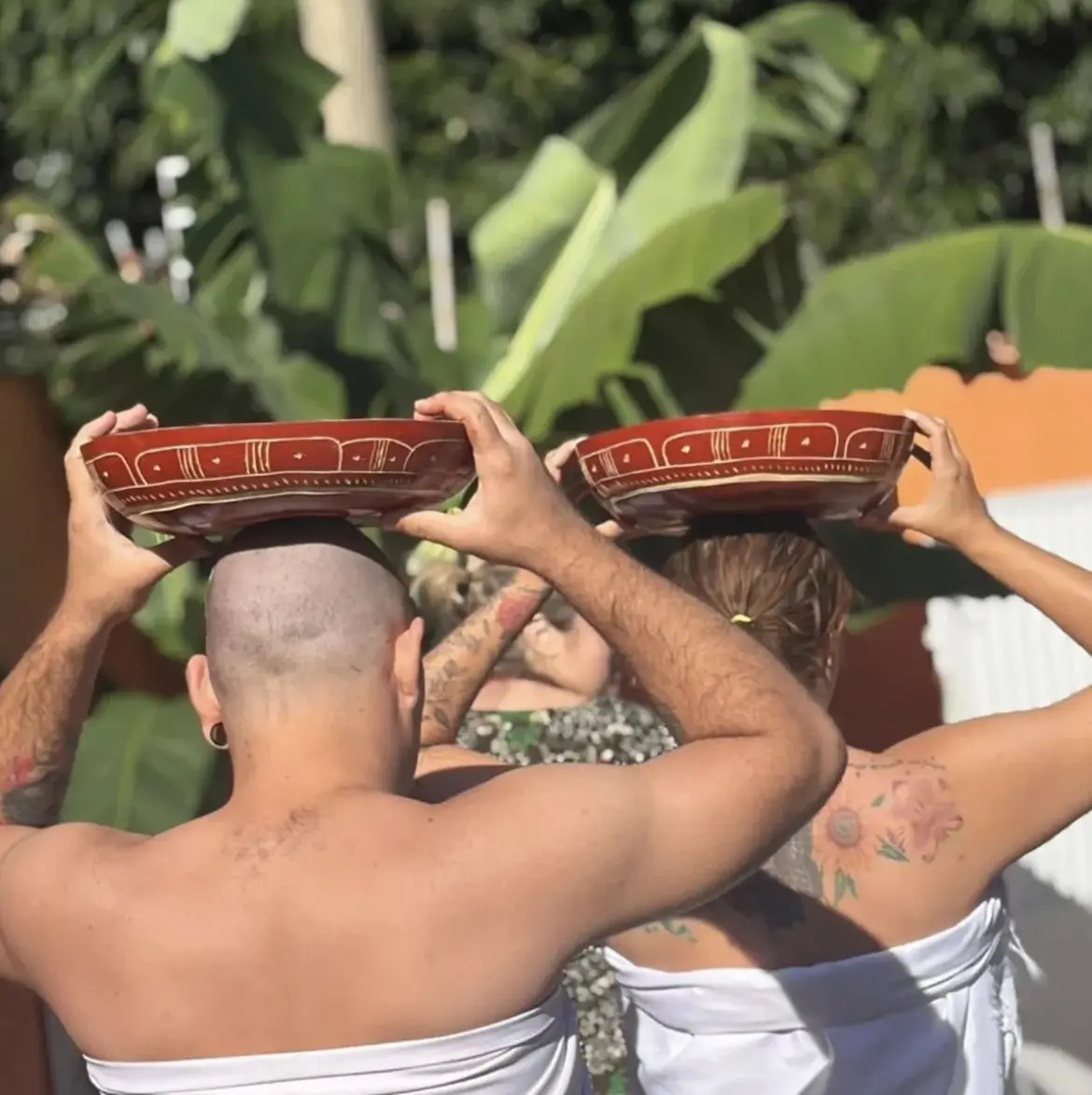
Voodoo festival · Benin
Voodoo festival in Benin: Vodun Days 2027 and the Sakété temple
The voodoo festival in Benin, the Vodun Days, fills Ouidah every January. Some of Wêtê Agbonon’s clients combine it with a ritual at the Sakété temple. Here is how to prepare.
Filmed testimony
“I was skeptical at first, but I’m honestly so grateful I gave it a chance.”
A client, face shown, in her own words
Where the temple is
Sakété, in south-eastern Benin
The temple is in Sakété, in the Plateau department of south-eastern Benin. Travellers arrive in Benin through Cotonou airport.
For a ritual at the temple, everything starts as for a ritual led from a distance: your first message and the Fâ consultation are free. Say from the start that you wish to come.
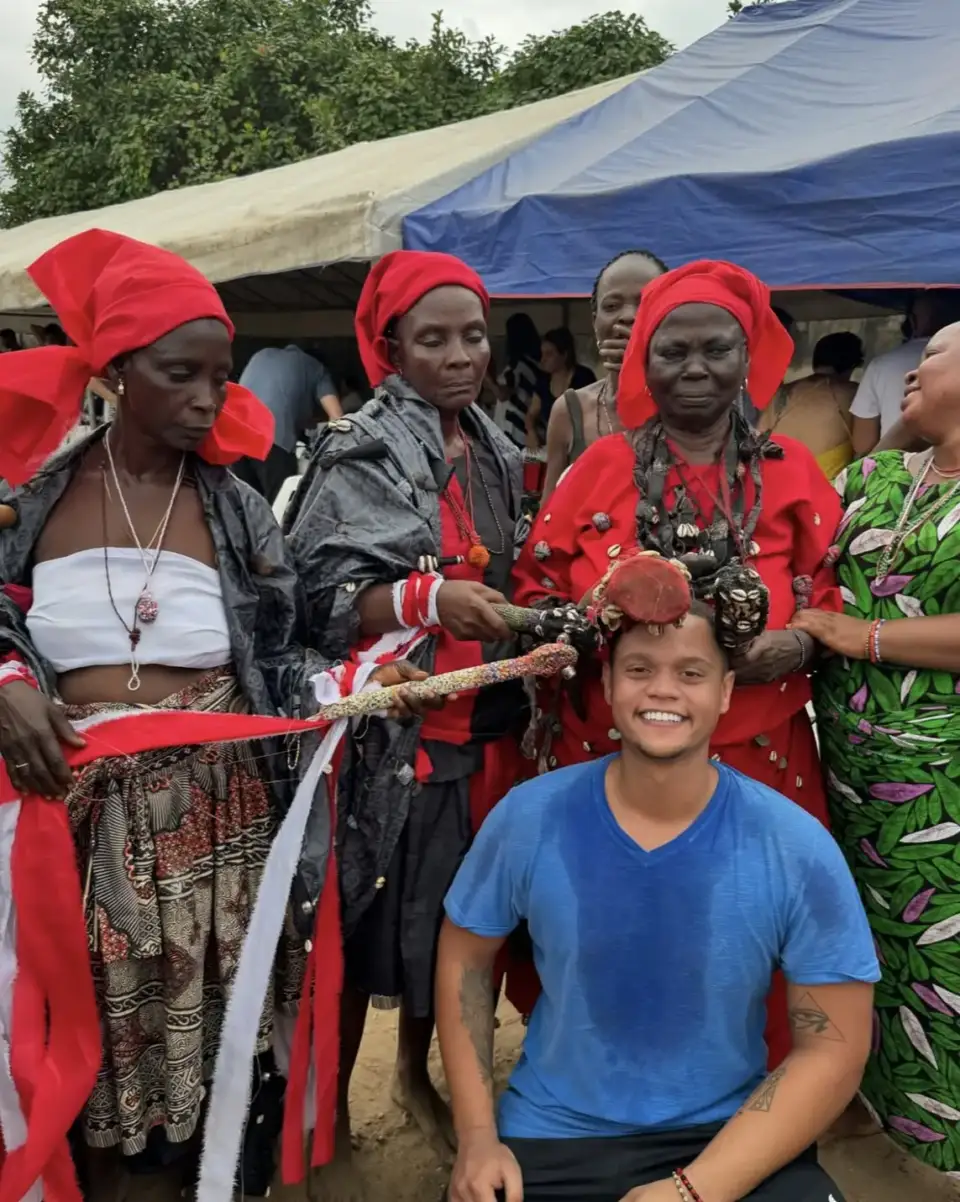
Voodoo festival Benin: what the Vodun Days are
Every year, Benin celebrates voodoo with a national holiday on 10 January. Since 2024 the best-known celebrations have taken the name Vodun Days: priests, initiates, dignitaries and visitors from around the world gather in Ouidah, on the coast about forty kilometres west of Cotonou, for ceremonies, processions, music and dance.
The 2027 edition is announced in Ouidah from 2 to 9 January 2027, over seven days instead of three, as Benin Web TV reported. According to official figures, the 2025 edition gathered more than 435,000 participants. Celebrations take place around places such as the esplanade of the French fort, the sacred forest of Kpassè, the Python temple and Maro square.
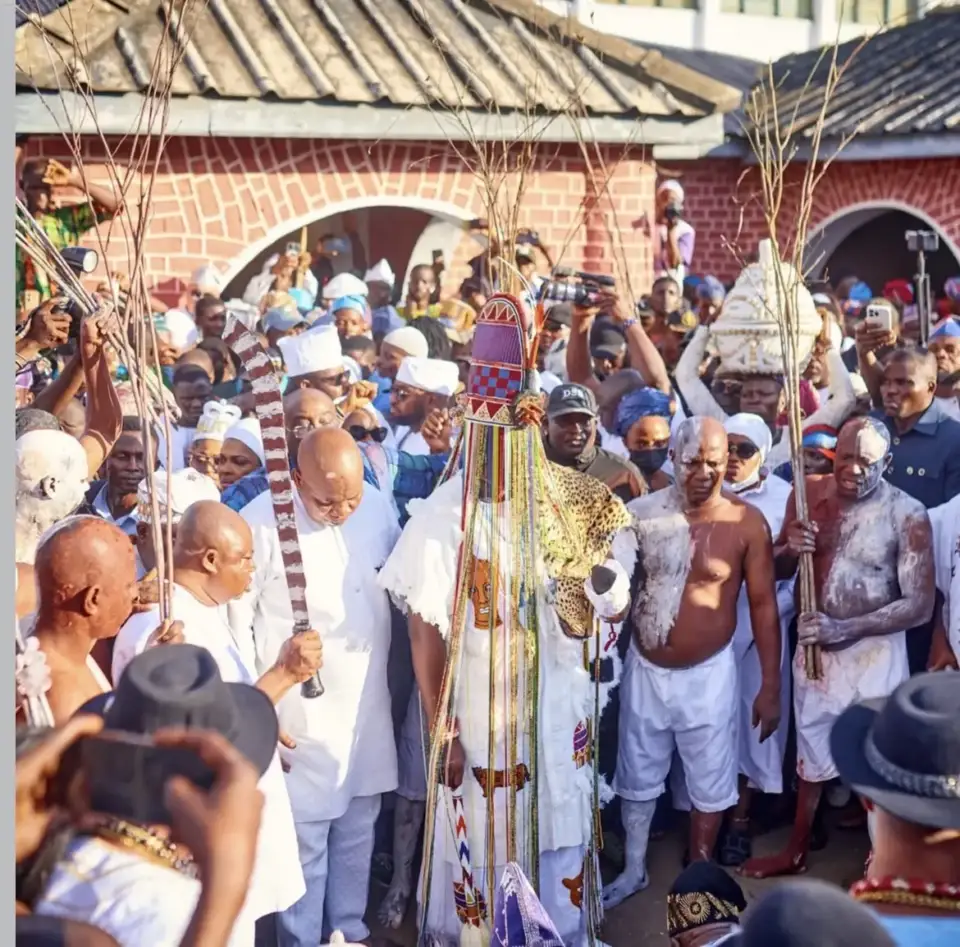
Voodoo in Benin in a few points
Voodoo was born among the Adja, Ewe and Fon peoples of West Africa. In Benin it is a recognised religion, served in temples, convents and sacred forests, from the coast to the plateau. Each voodoo spirit has its domain: Lègba guards passages; Hèviosso is linked to thunder and justice; Sakpata to the earth; Dan, the serpent, to continuity. The Fâ is the path of consultation: it says which spirit to serve, and how. For a first overview, see West African Vodun on Wikipedia.
Preparing the journey
- Flights: you arrive in Benin through Cotonou international airport. Sakété is then on the Porto-Novo road, to the north.
- Visa: check before booking; Benin offers an electronic visa for many nationalities.
- Health: a yellow fever vaccination certificate is required at entry. See your doctor or a travel clinic, also for malaria prevention.
- Currency: the West African CFA franc.
- Season: the dry season, from December to March, is the easiest time to travel.
- Dates: set them with Wêtê Agbonon before buying your ticket, because the Fâ says when the ritual should take place.
The steps
From your first message to the day of the ritual
You write to him
On WhatsApp, saying you wish to come to the temple. He answers you himself.
FreeHe consults the Fâ
The Fâ says whether your situation can be treated, with which rituals and within what time.
FreeThe written quote
The rituals, their price, the time announced by the Fâ and his commitment.
The ritual at the temple
You attend in Sakété. He guides you through each step and reports back to you.
In January
The voodoo festival in Benin
Every year Benin celebrates vodun with a national holiday on 10 January. The best-known celebrations take place in Ouidah, on the coast west of Cotonou, under the name Vodun Days.
The 2027 edition of the Vodun Days is announced in Ouidah from 2 to 9 January 2027. If you wish to combine the festival with a ritual at the Sakété temple, write early: the Fâ consultation also says when the ritual should take place.
Combining the festival with a ritual at the temple
Many visitors come for the voodoo festival and wish to go further: to consult, to live a ritual, to meet a priest in his own temple. The Sakété temple is roughly a hundred kilometres from Ouidah by road, via Cotonou and Porto-Novo. Write early: January is busy, and the date of the ritual is the one the Fâ gives.
- You write to him on WhatsApp, saying you will be in Benin for the Vodun Days.
- He consults the Fâ for you, free of charge.
- If the Fâ says yes, you receive a written quote and the date of the ritual.
- You live the ritual at the Sakété temple, before or after the festival.
The day of the ritual at the temple
Wêtê Agbonon welcomes you and explains what is going to happen. He tells you in advance what to bring and how to dress. During the ritual you are beside him: you see the offerings, the libations and the prayers, and you make the gestures he indicates. Some rituals include a bath in the river or a vigil, when the Fâ has asked for them.
At the end, he tells you what was done and which instructions to follow next. Photographs taken with his consent belong to you; those on this page are published with the consent of the people concerned.
Respecting the places
- Always ask before photographing a person, an altar or a ceremony.
- Follow the guidance given on site: some places are reserved for initiates.
- Be wary of intermediaries offering an “express” ritual during the festival: a serious ritual starts with the Fâ consultation.
- Keep the same discretion as others: what is lived at the temple belongs to those who live it.
In pictures
They lived it at the temple
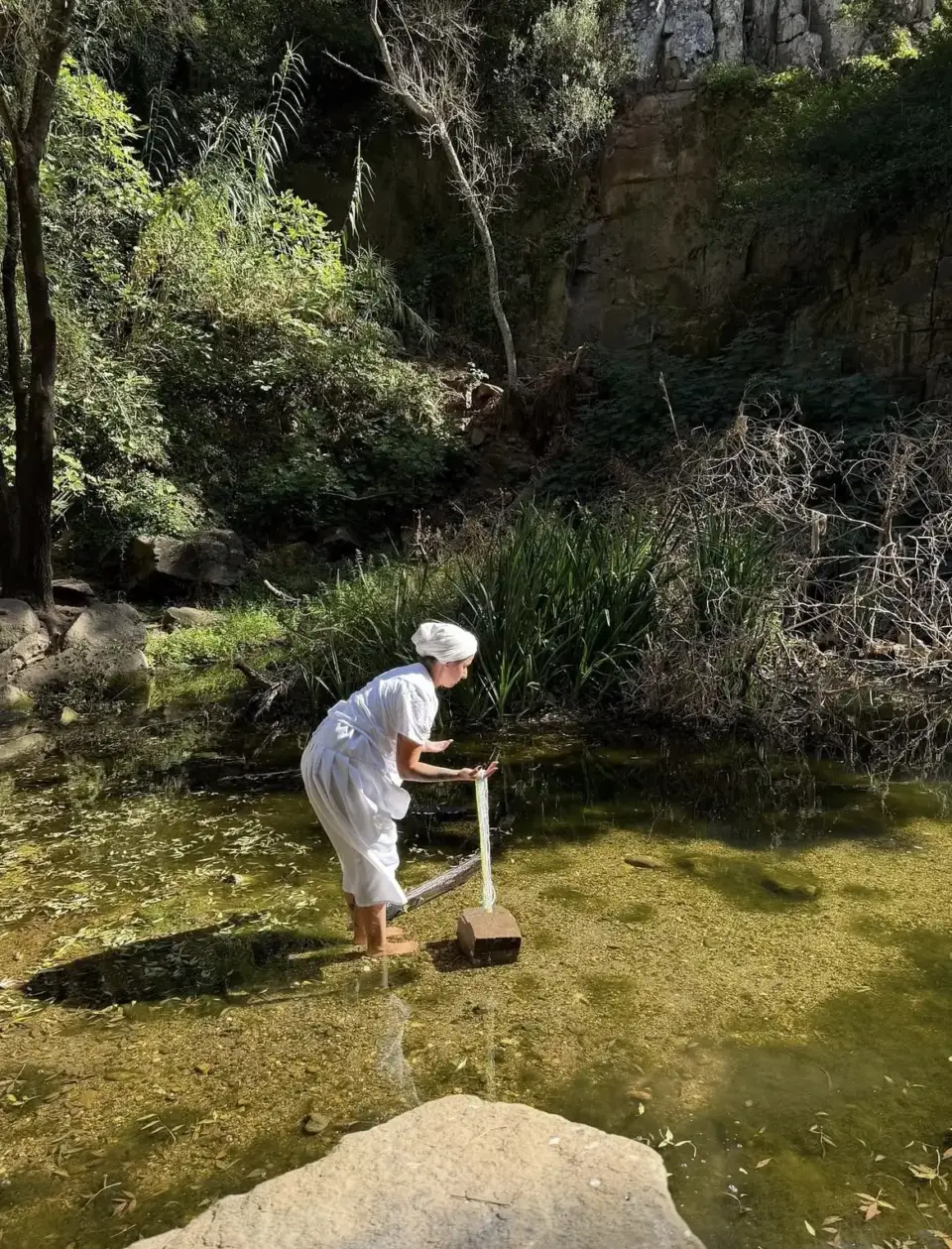 The springAt the spring, dressed in white
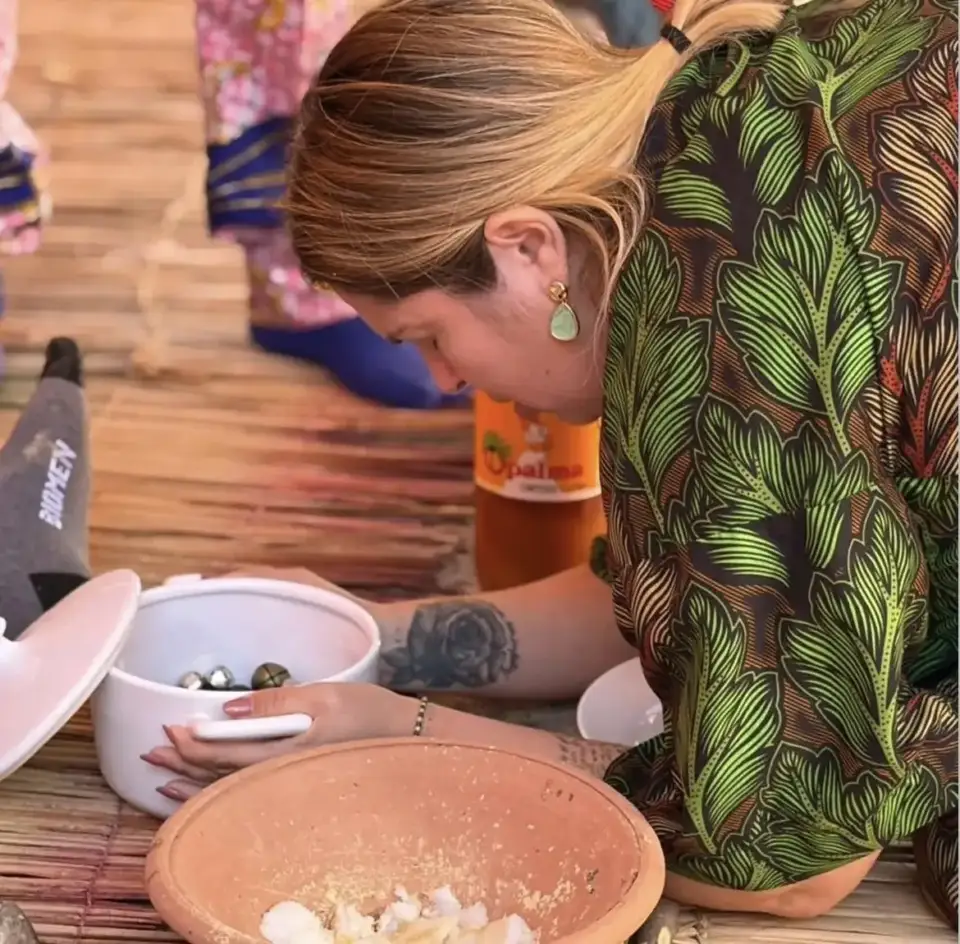 The offeringsCalabashes prepared for the ritual
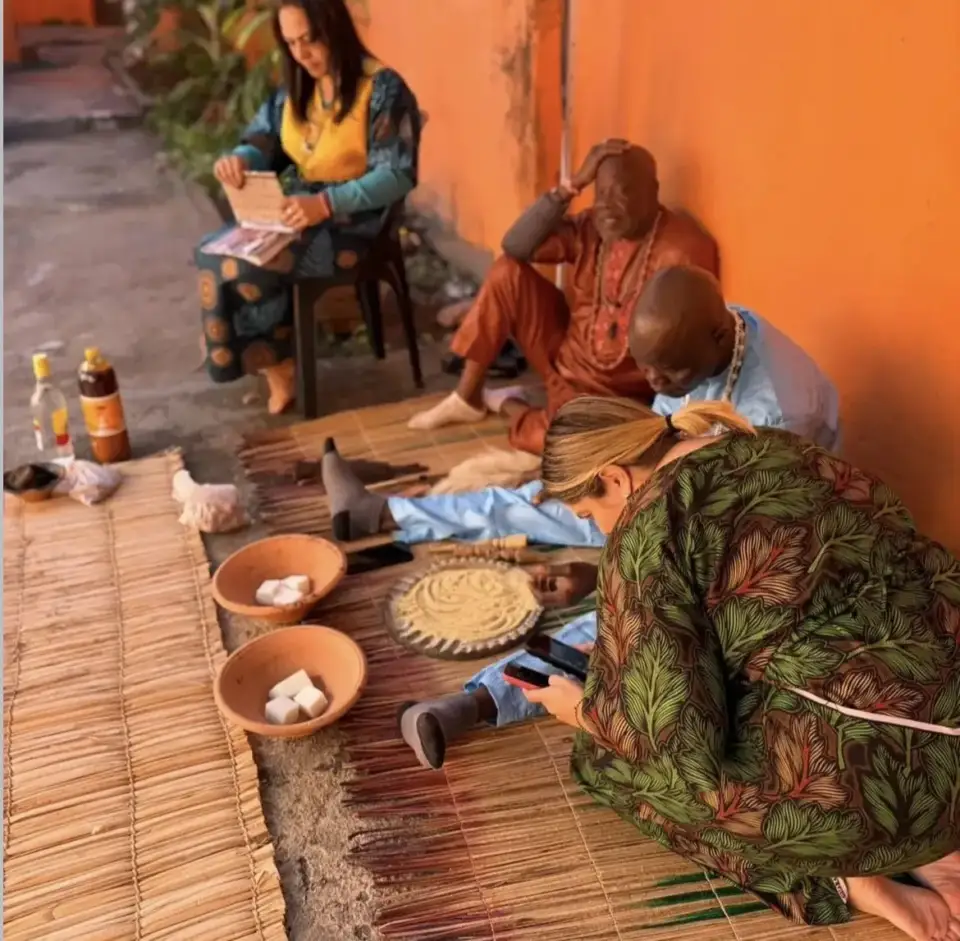 The matOn the mat, before the calabashes
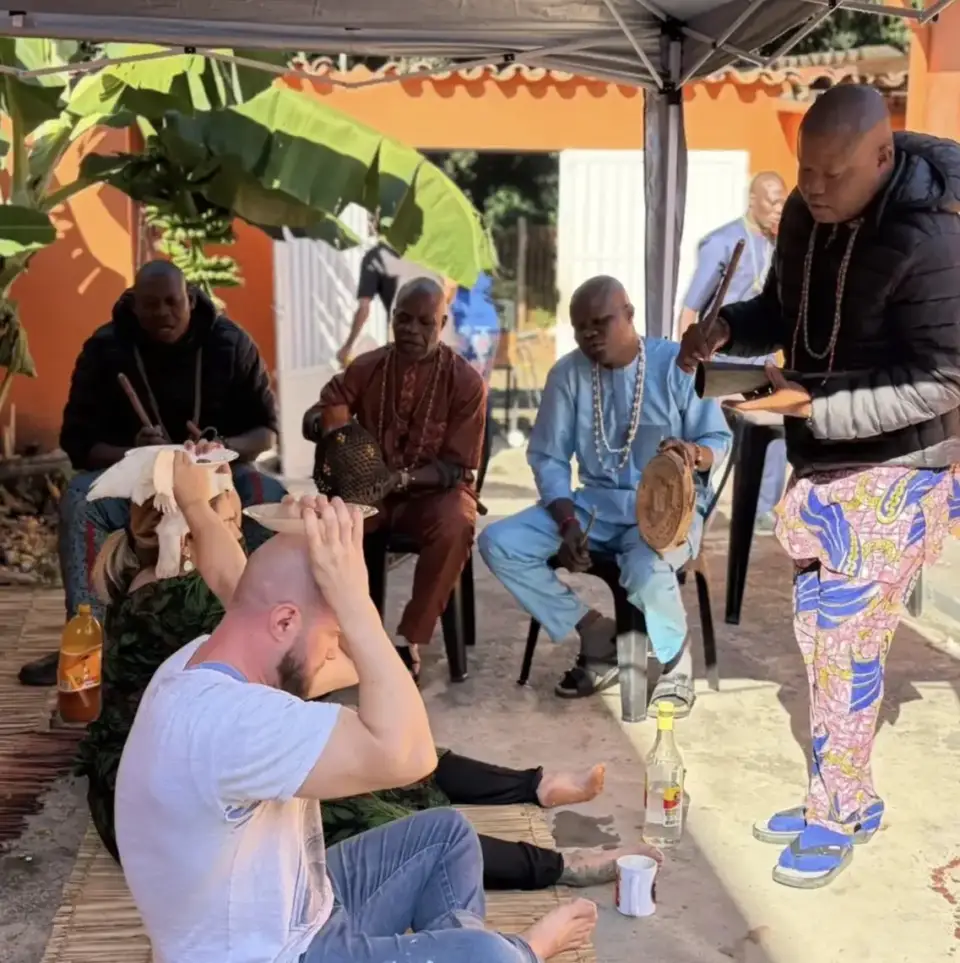 The courtyardThe consultation, in the temple courtyard
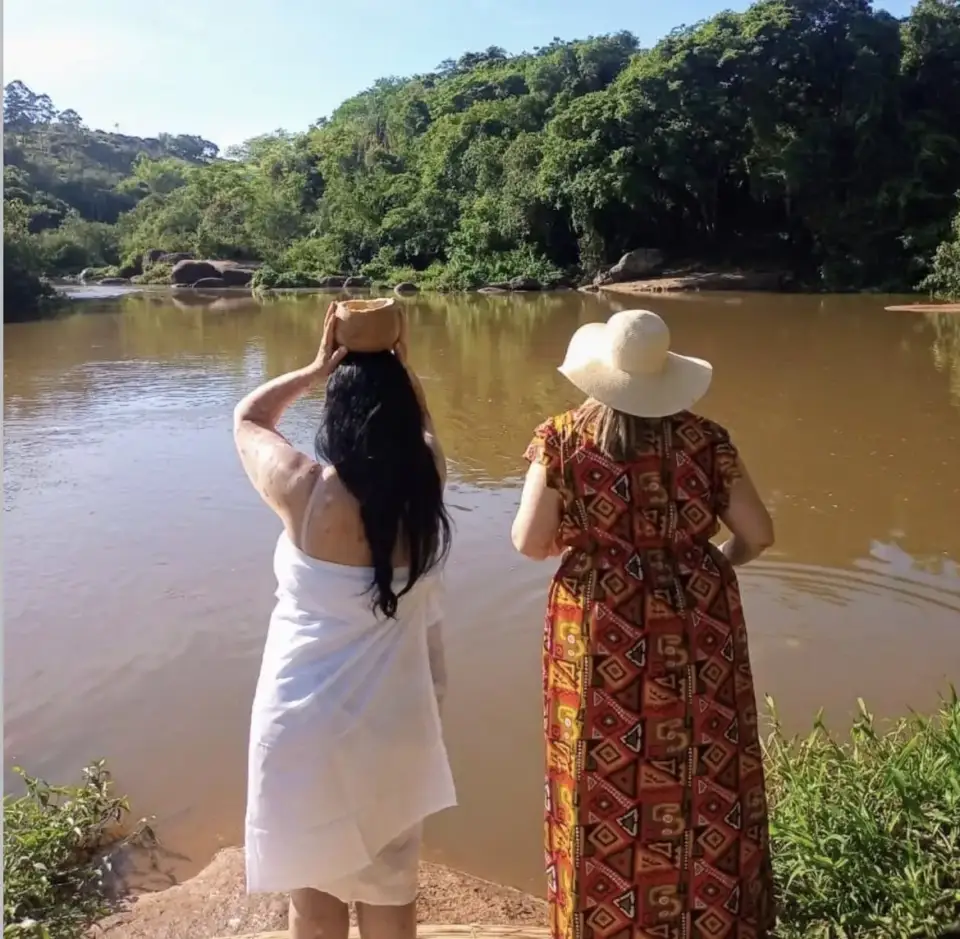 The riverThe ritual bath, in the river
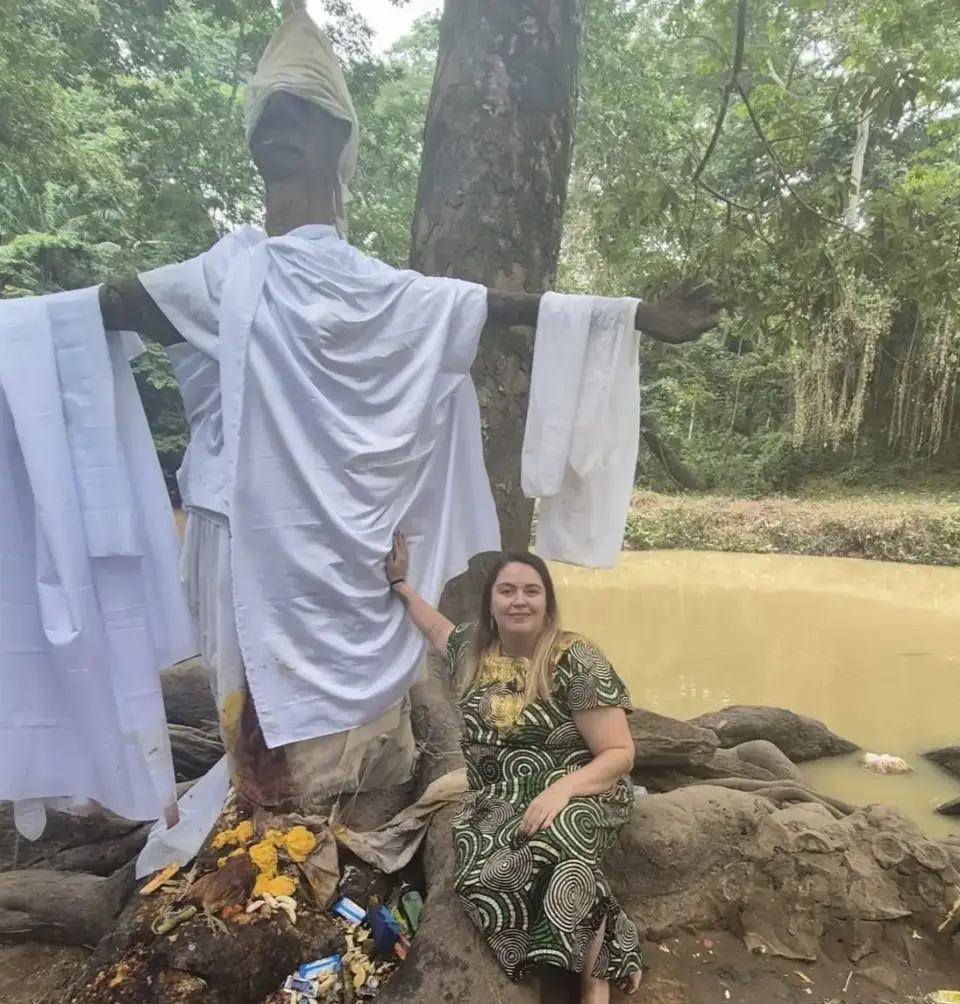 The sacred placeAt the sacred place, draped in white
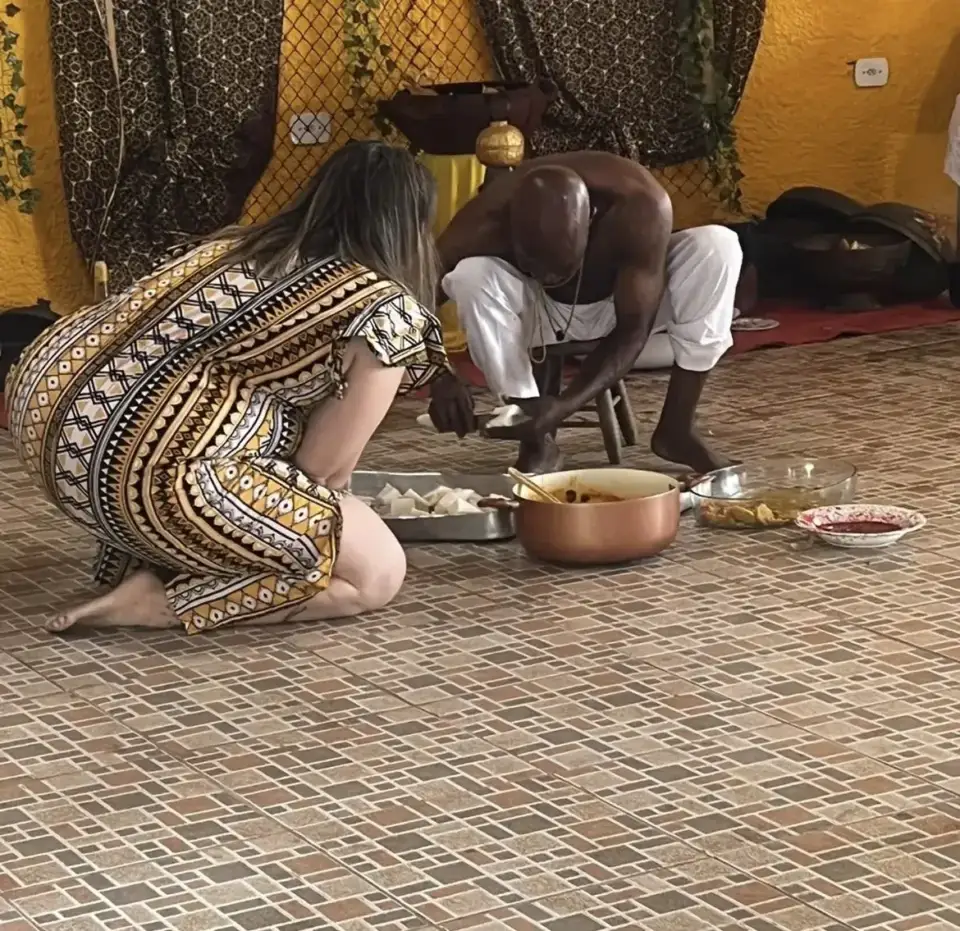 The ritualBefore the offerings of her ritual
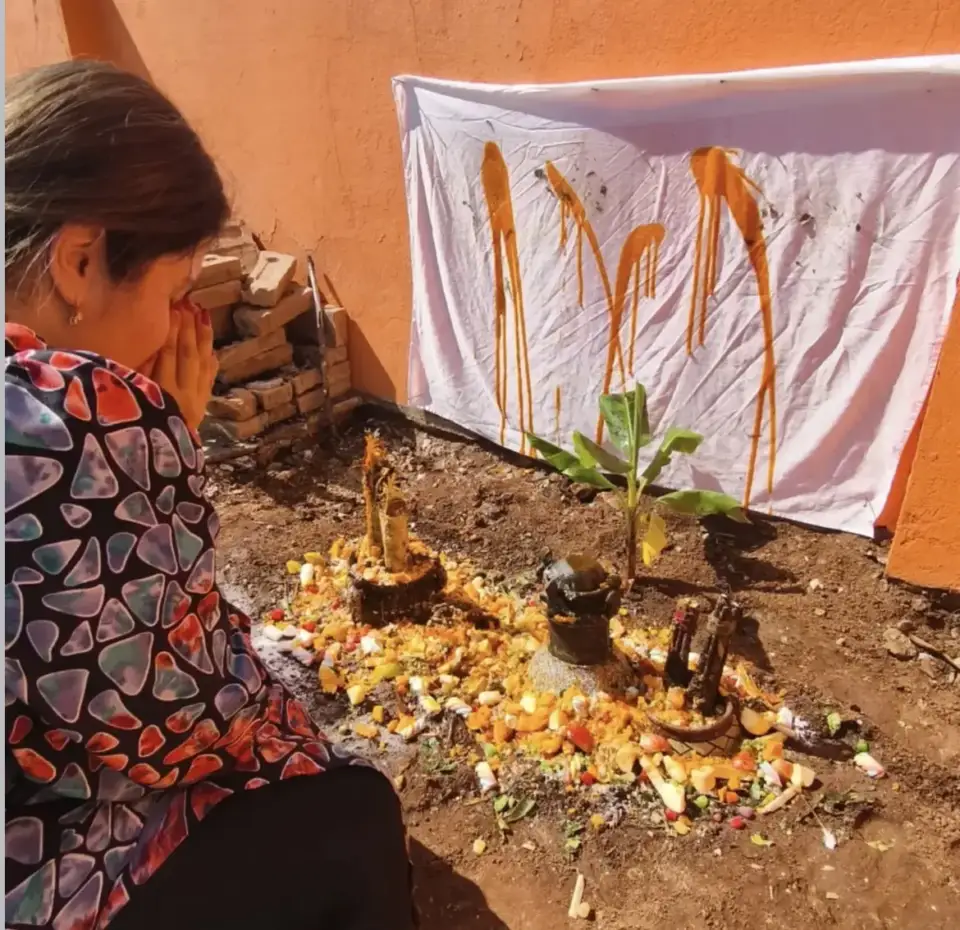 The altarBefore the altar, among the offerings
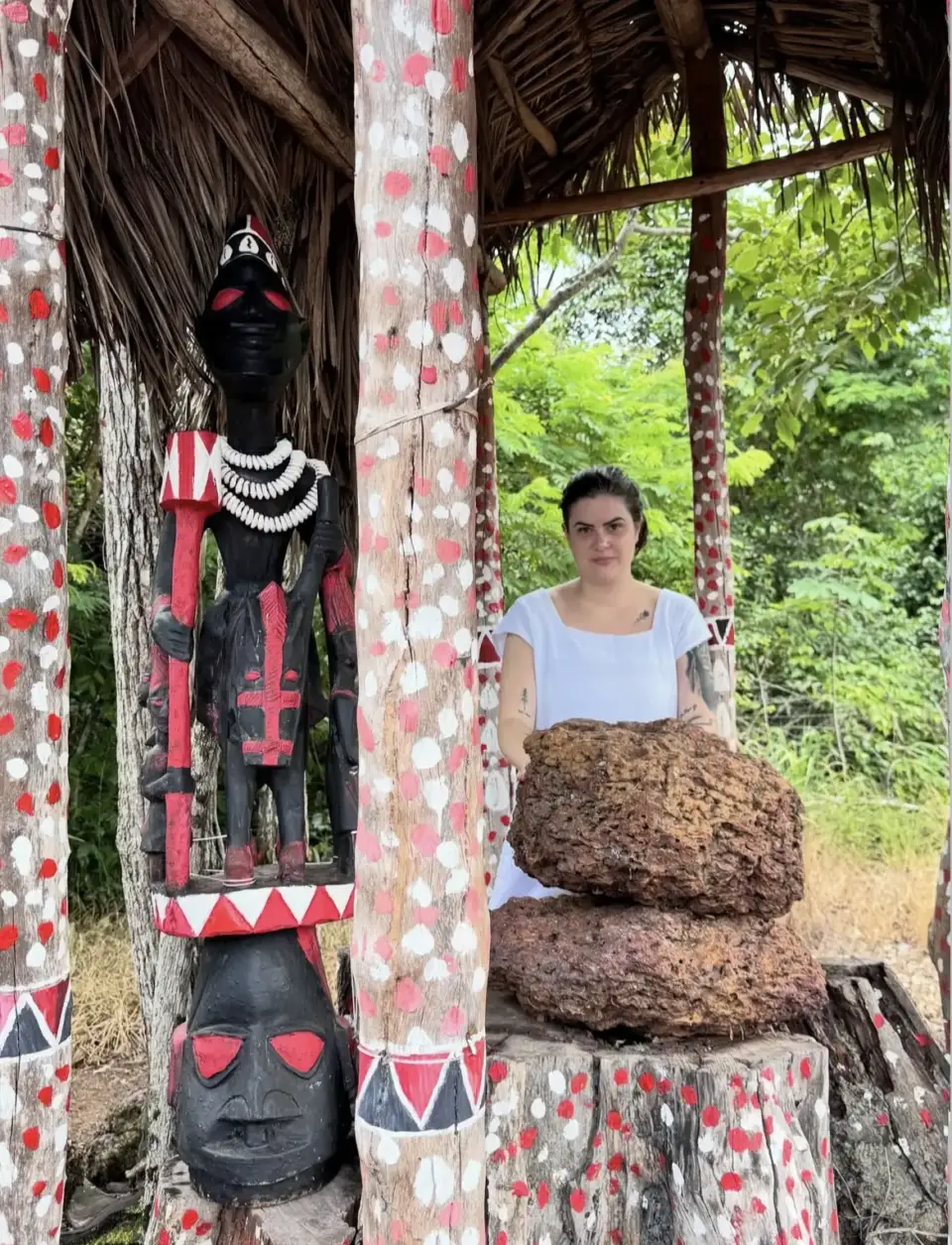 The statuesBeside the temple statues
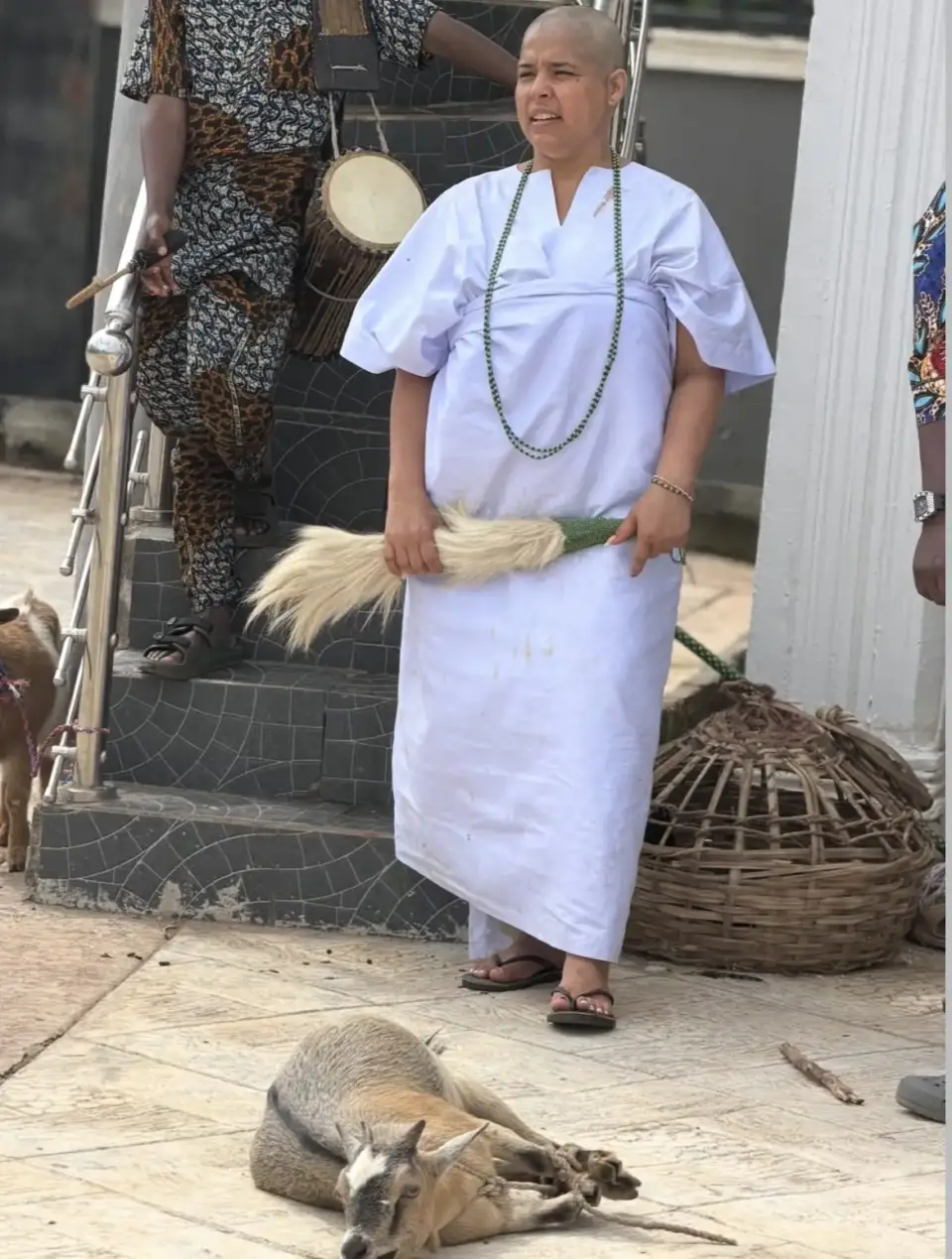 The drumDressed in white, fly whisk in hand
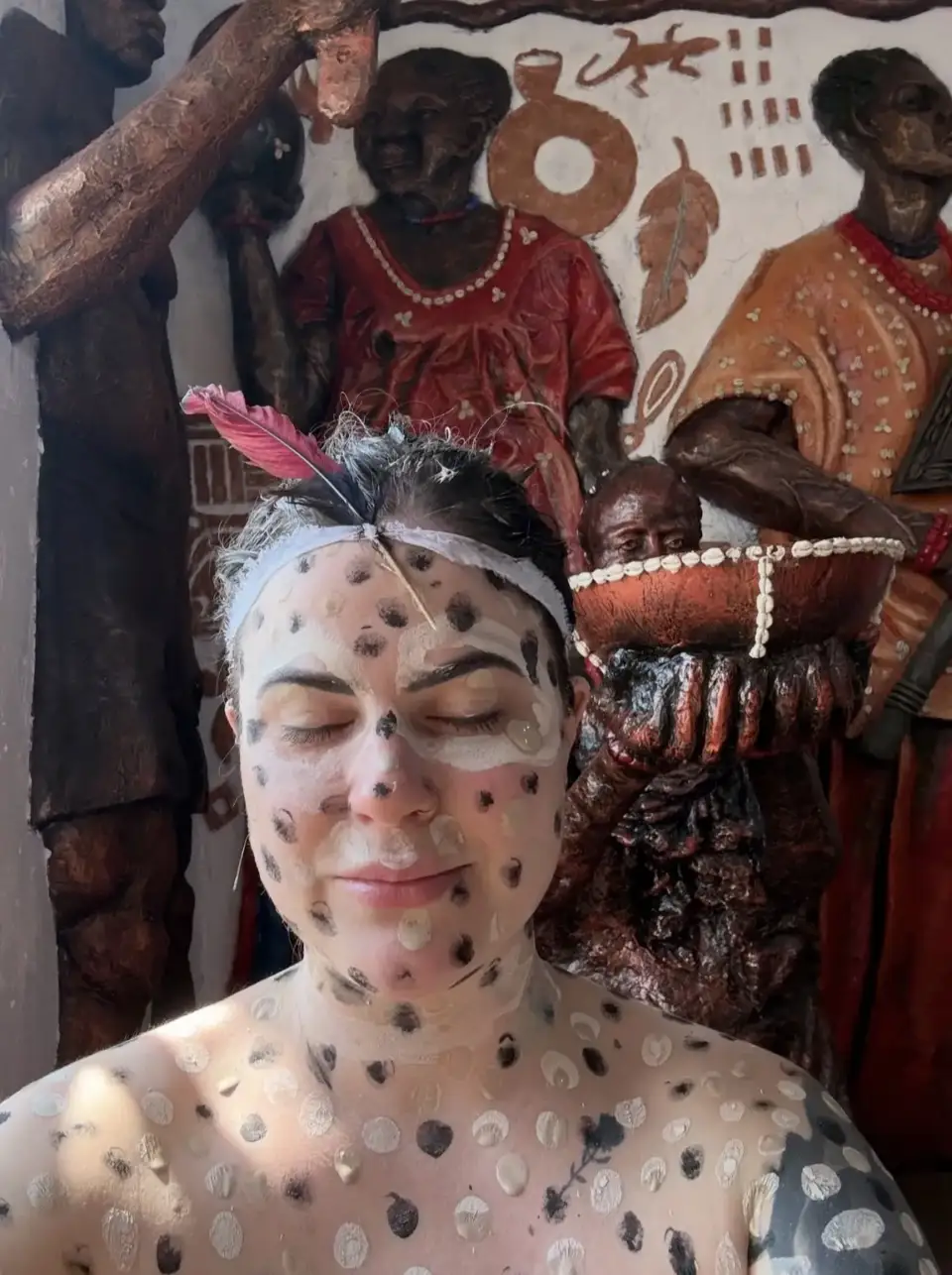 The kaolinMarked with kaolin, during the ceremony
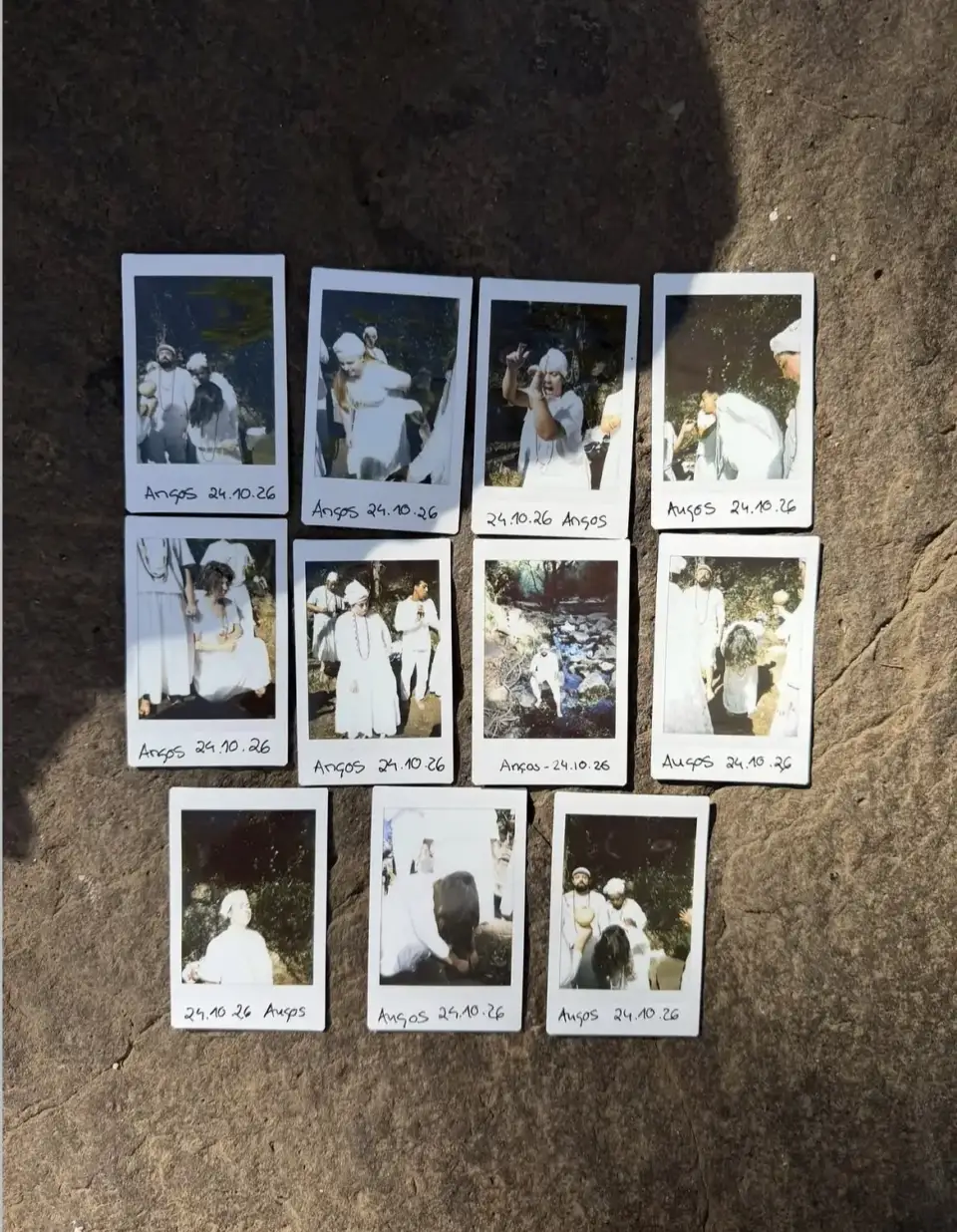 MemoryTheir photographs, dated, kept at the temple
What clients remember from the journey
Those who made the journey rarely talk about the ritual alone. They talk about the welcome, the temple courtyard, the river, the white clothes, and the feeling of having seen with their own eyes what they had only read about online. Many keep their photographs as a precious memory; some, dated, are kept at the temple.
Coming is never an obligation: a ritual led from a distance is worth one you attend. But for those who can, voodoo in Benin is understood better on site, at a temple, than in any book.
Coming alone, as a couple or as a family
You can come alone, as a couple or with someone close. Say so in your first message: the Fâ consultation is done for each person concerned, and the ritual is prepared accordingly. Children do not take part in rituals; let him know if you travel with them, and he will advise you.
Questions
Before the journey
When is the voodoo festival in Benin in 2027?
The Vodun Days are announced in Ouidah from 2 to 9 January 2027. The national voodoo holiday falls on 10 January.
Do I need to come to Benin for a ritual?
No. Rituals are led at the Sakété temple whether you attend or not, and he reports back to you either way. Coming is your choice.
When should I come?
The Fâ consultation says when the ritual should take place. Agree on the dates before booking your flight.
Can I attend the Vodun Days and come to the temple?
Yes, if the Fâ gives a date that fits. Write early, the January period is busy.
How long should I stay?
It depends on the ritual the Fâ has designated. Wêtê Agbonon tells you with the quote, so you can plan your stay.
Where should I stay?
Porto-Novo and Cotonou offer accommodation within reasonable distance of the temple; Ouidah is the place to stay during the festival.
Is the voodoo festival safe for visitors?
The celebrations are public and attended by hundreds of thousands of people. The usual rules apply: respect the places, ask before photographing, and avoid intermediaries offering rituals in the street.
Are the Vodun Days free?
The public celebrations take place in the town; some spaces and services are organised separately. Check with the organisers before travelling.
Do I need a guide to reach the temple?
No. Wêtê Agbonon tells you how to reach Sakété and welcomes you there. Be wary of anyone presenting themselves as an intermediary and offering to take you there for a fee.
Is voodoo practised everywhere in Benin?
It is found throughout the south of the country, from the coast to the plateau, with temples, convents and sacred forests. Each place has its own voodoo spirits and its own celebrations.
Do I need to speak a local language?
No. During the festival, many visitors come from abroad. At the temple, Wêtê Agbonon explains each step of your ritual.
Read on
Before the journey
Write to him
He answers himself, within two hours
The first exchange is free and confidential. You set out your situation, he consults the Fâ, then you decide freely.
Message on WhatsApp