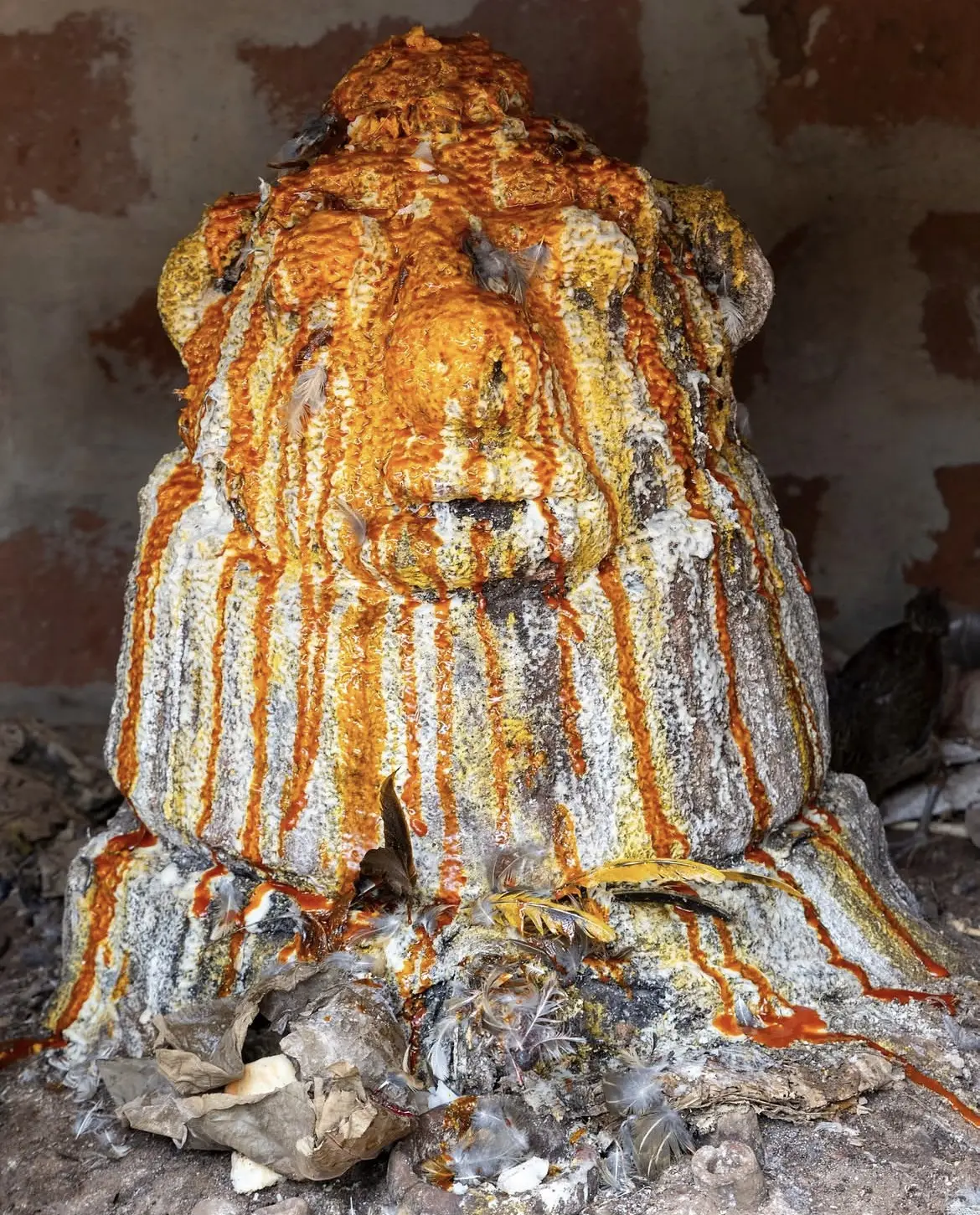
Voodoo temple · Sakété · Benin
The voodoo temple of Sakété
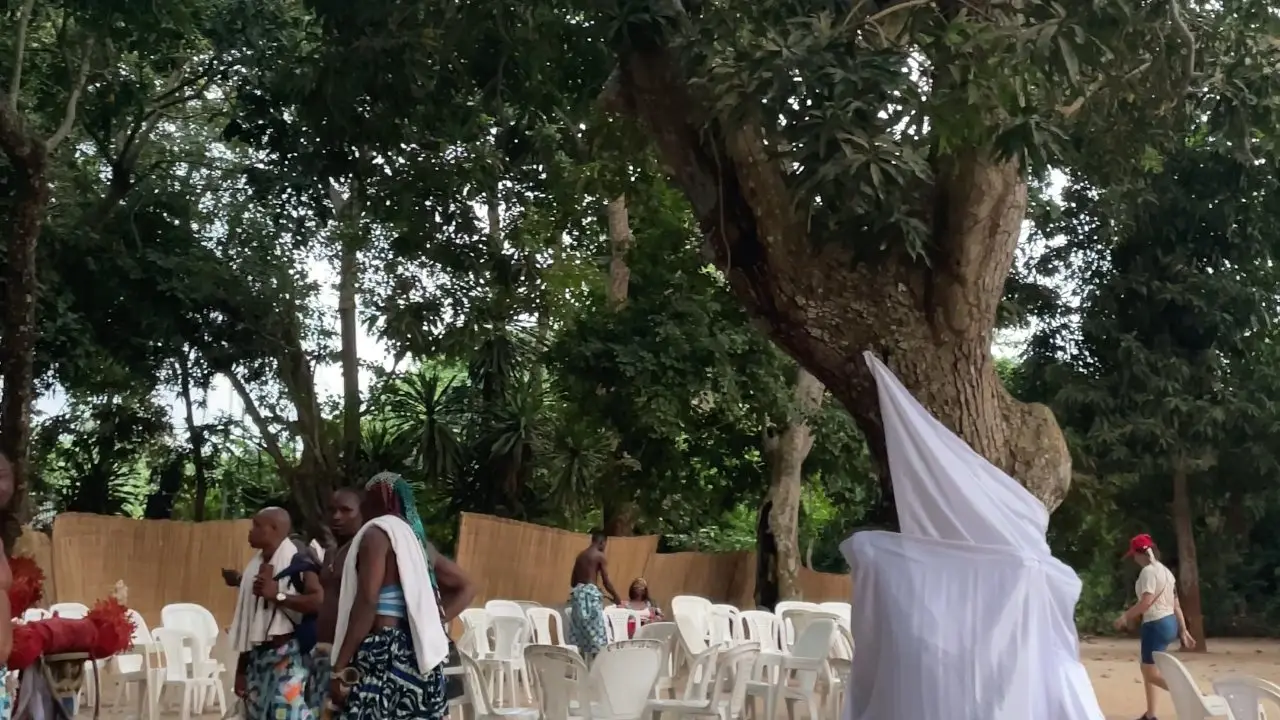
The voodoo temple of Sakété, in south-eastern Benin: this is where Wêtê Agbonon was born, where he serves the voodoo spirits and where he leads every ritual the Fâ asks for.
Filmed testimony
“I was skeptical at first, but I’m honestly so grateful I gave it a chance.”
A client, face shown, in her own words
The place
A temple where the vodun are served every day
The temple stands in Sakété, in the Plateau department of south-eastern Benin. Wêtê Agbonon was born there; he serves the vodun there and receives people for consultation.
Life at the temple is made of offerings, libations, prayers and night vigils. Lègba, guardian of passages, is greeted every morning. The rituals the Fâ asks for are led there by Wêtê Agbonon himself.
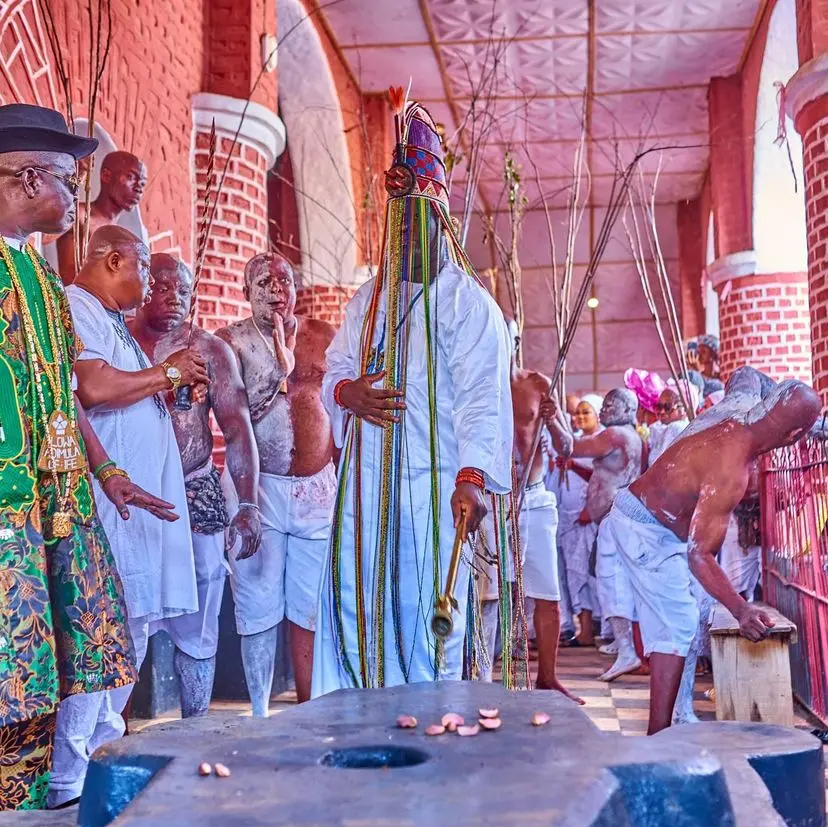
Where the voodoo temple of Sakété is
Sakété is a town and commune of the Plateau department in south-eastern Benin, about thirty kilometres north of Porto-Novo, the capital. The commune covers 432 square kilometres and had about 114,000 inhabitants at the 2013 census, as its Wikipedia page notes. Travellers arrive from Cotonou airport and take the Porto-Novo road. The voodoo temple stands where Wêtê Agbonon was born; he serves there and receives people for consultation.
A voodoo temple is not a single building. It is a whole: the courtyard where people gather, the earth altars, the jars, the statues and, around them, the sacred forest and the water. Each place has its voodoo spirit, its offerings and its taboos.
A day at the temple
The day begins with greetings to Lègba, guardian of passages: nothing is done at the temple before he has been greeted. Then come the day’s offerings, prepared according to what each voodoo spirit asks for, and the Fâ consultations for the people who have written.
The rituals the Fâ designated for clients are led on the altars concerned, by Wêtê Agbonon himself. Some continue into the night when the Fâ asks for a vigil. The photographs on this page show these places as they are, with the traces of the offerings.
The altars
The temple altars
Earth, red oil, kaolin, cowries: each altar carries the traces of the offerings made to it.
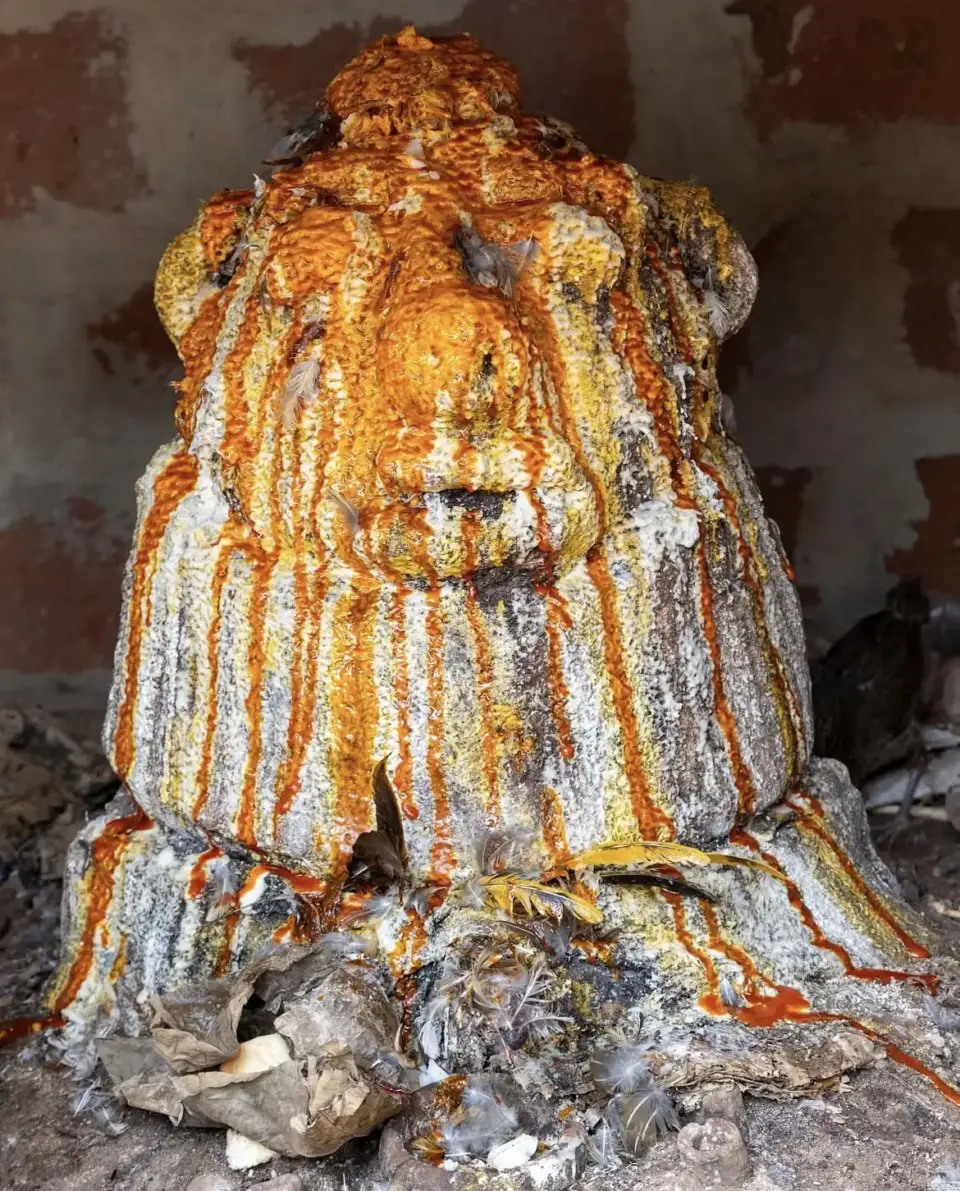 AltarAltar covered with offerings
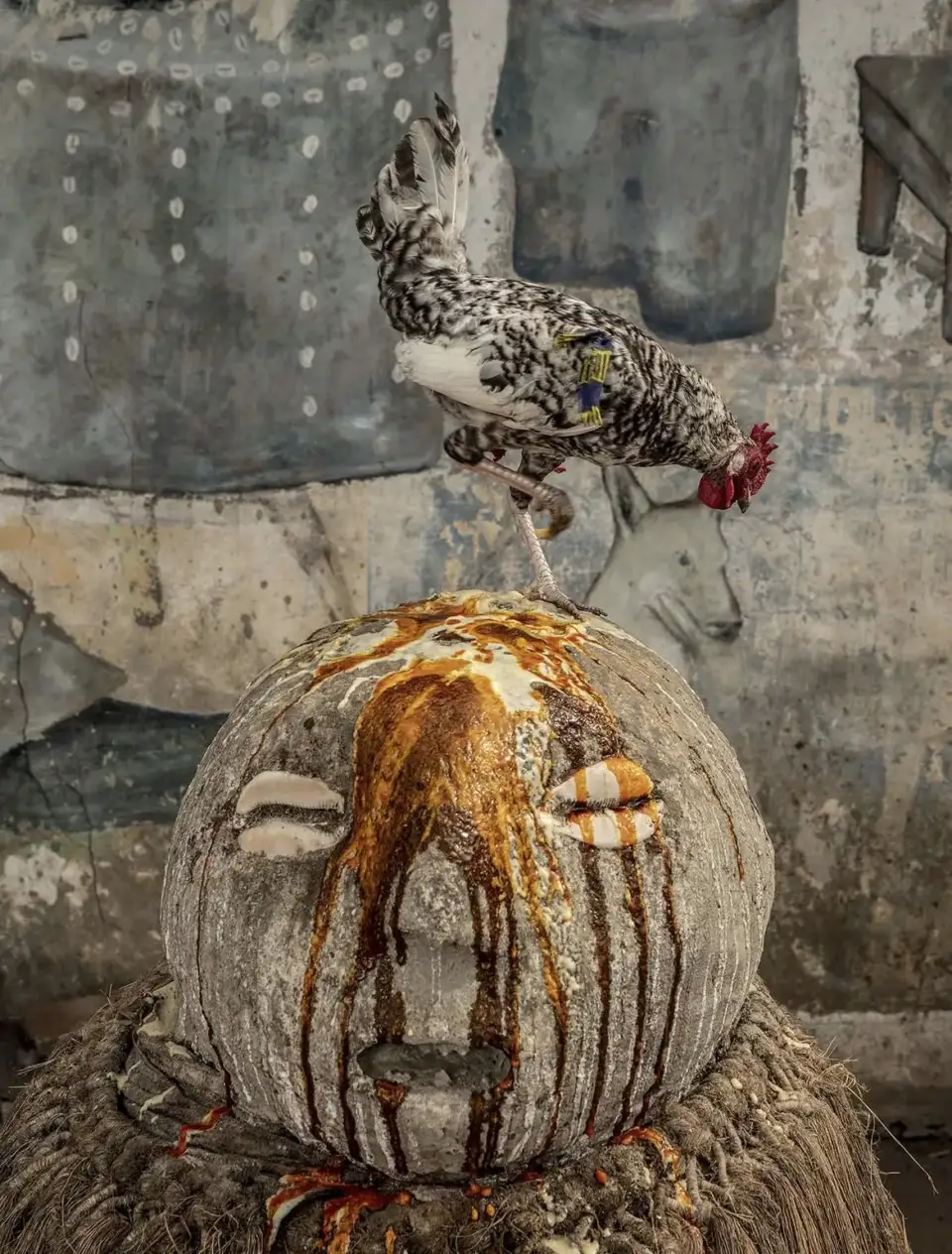 AltarVoodoo altar after an offering
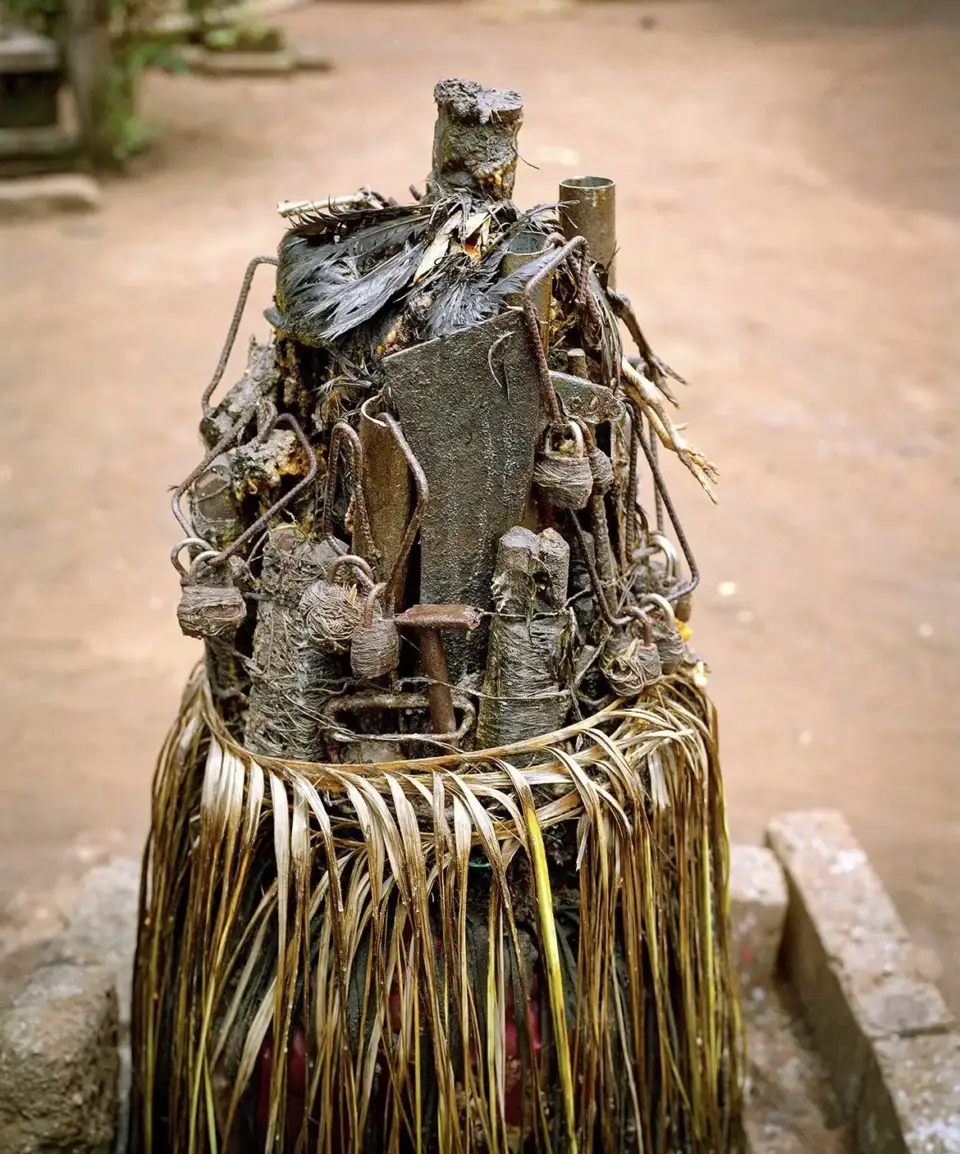 ProtectionProtective fetish, in the courtyard
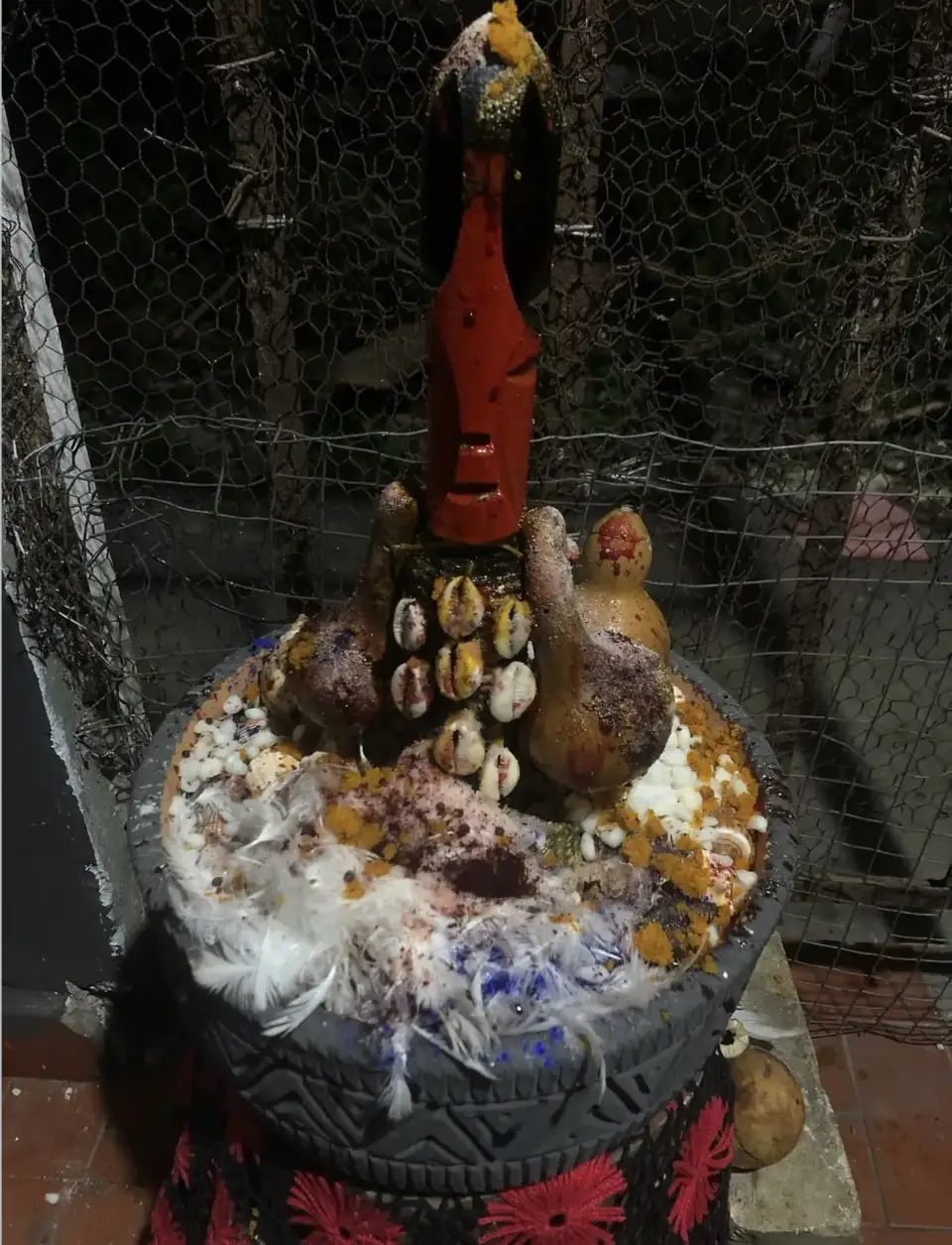 FetishFetish with a red face, adorned with cowries
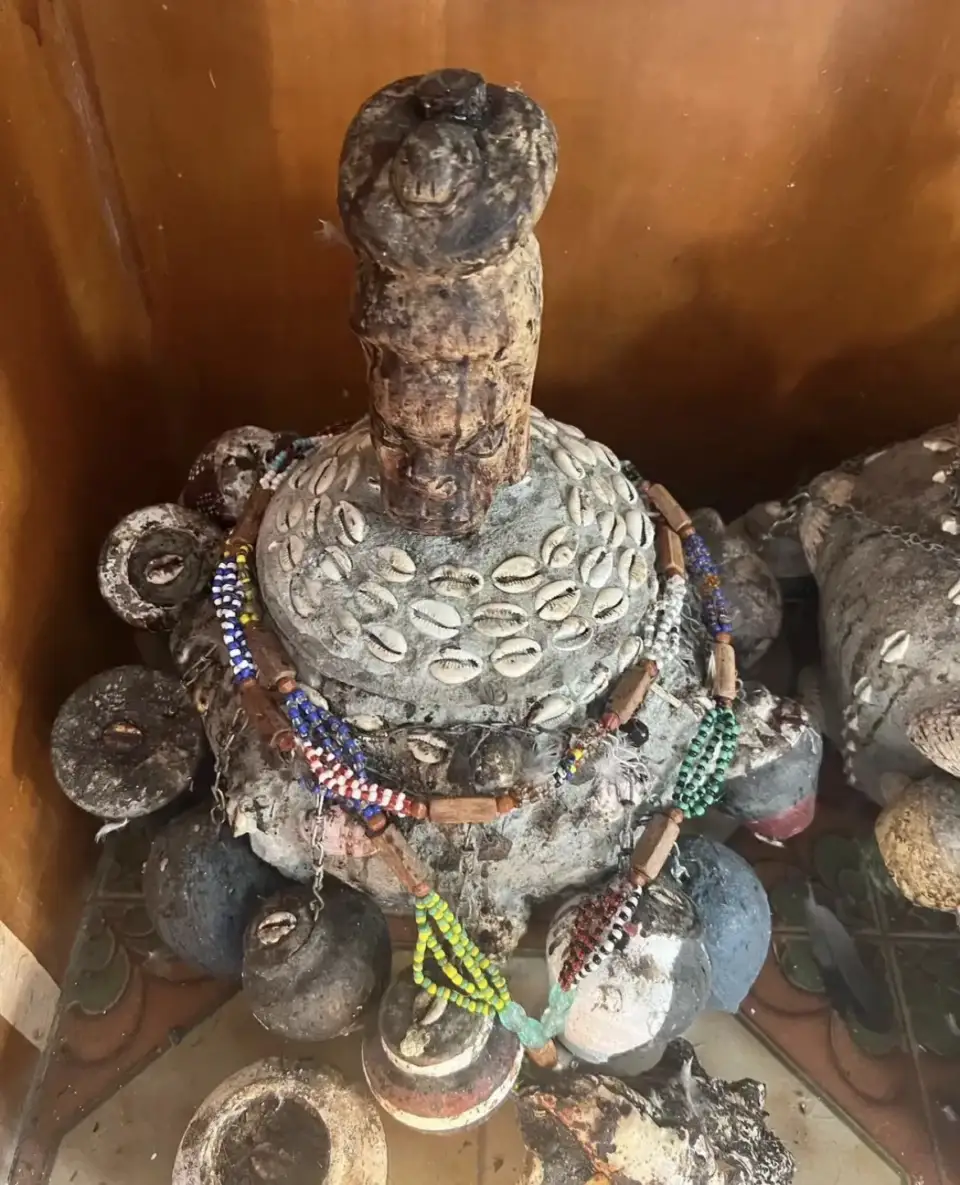 FetishFetish covered with cowries
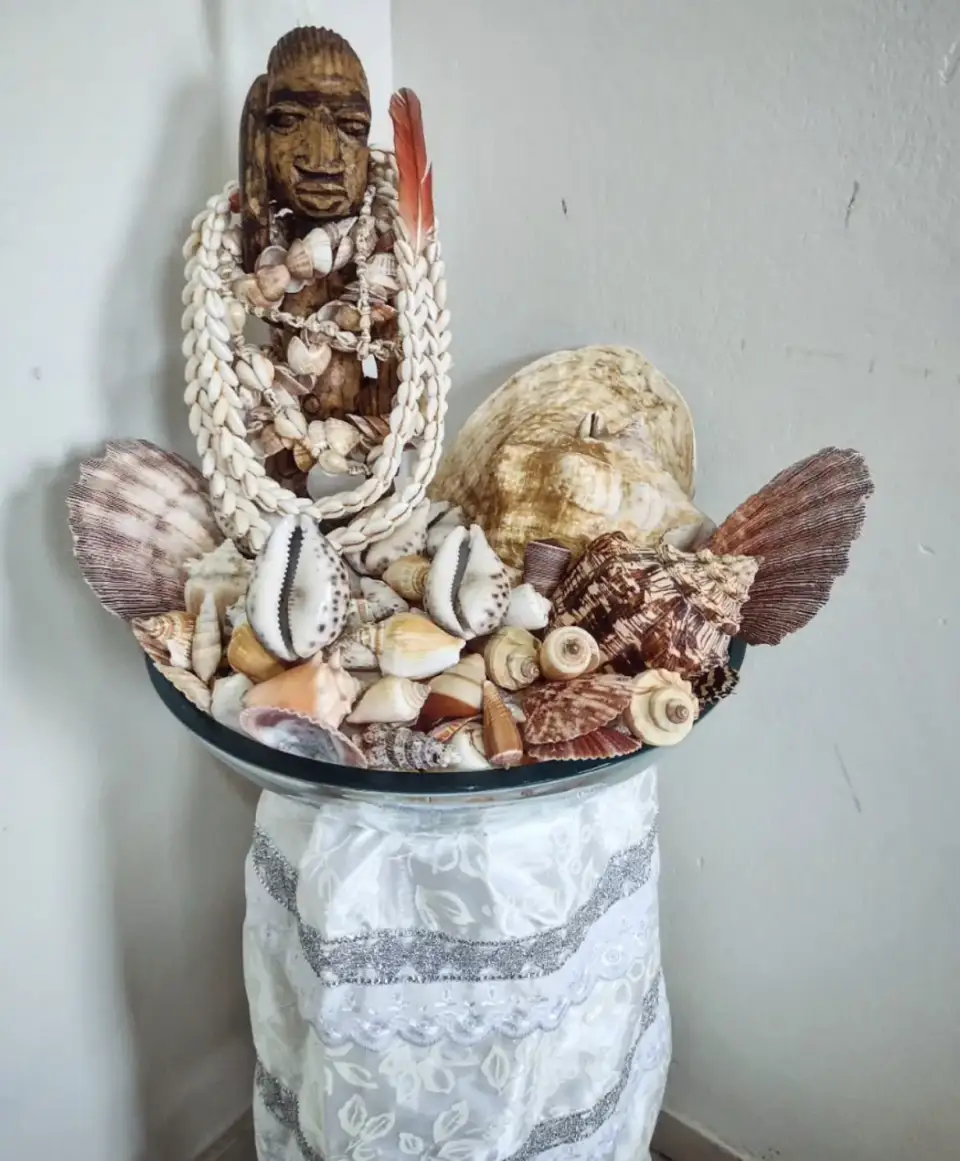 FigureFigure adorned with cowries and shells
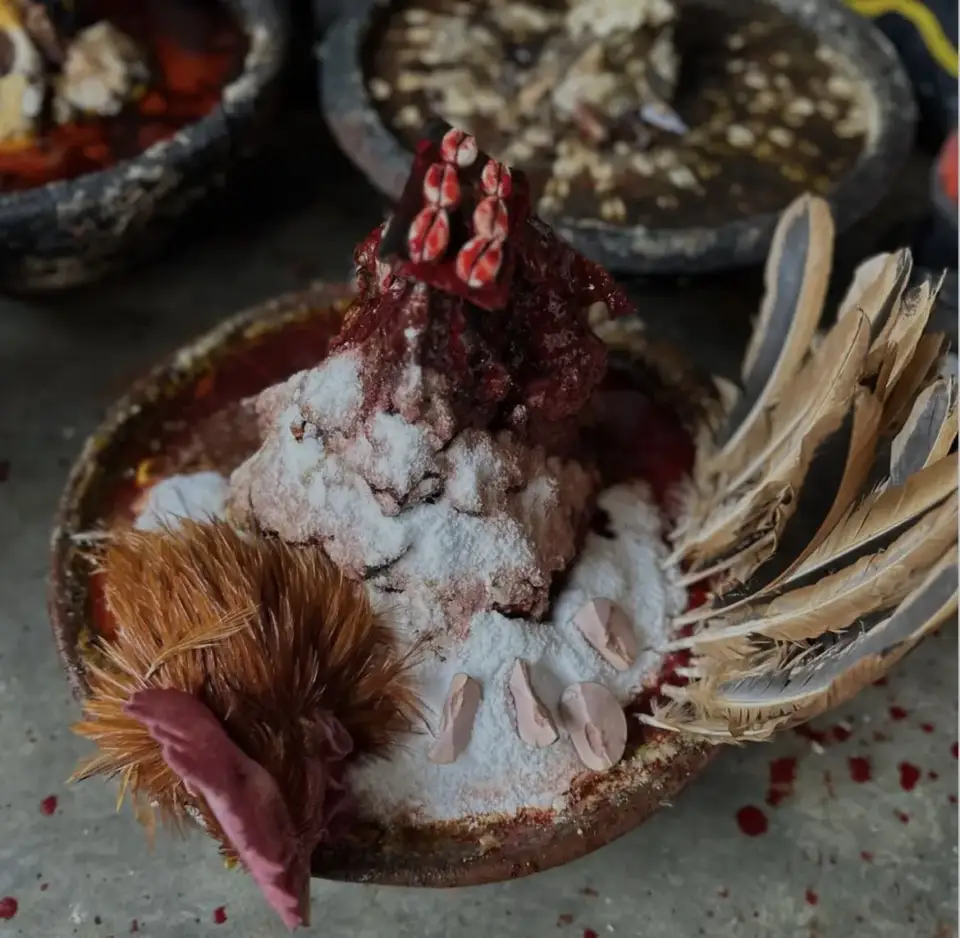 OfferingOffering bowl: kaolin, feathers and cowries
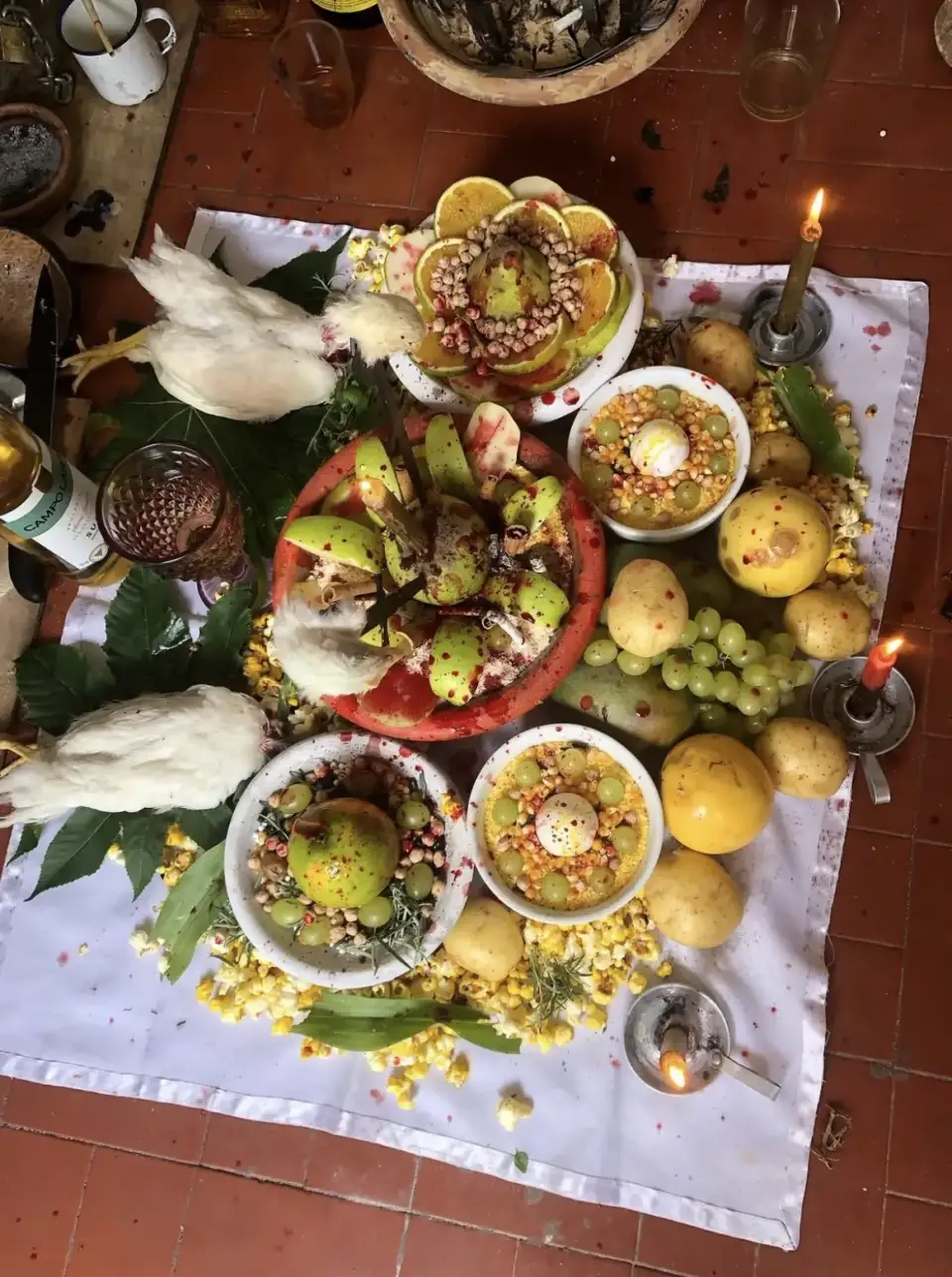 OfferingsTray of prepared offerings
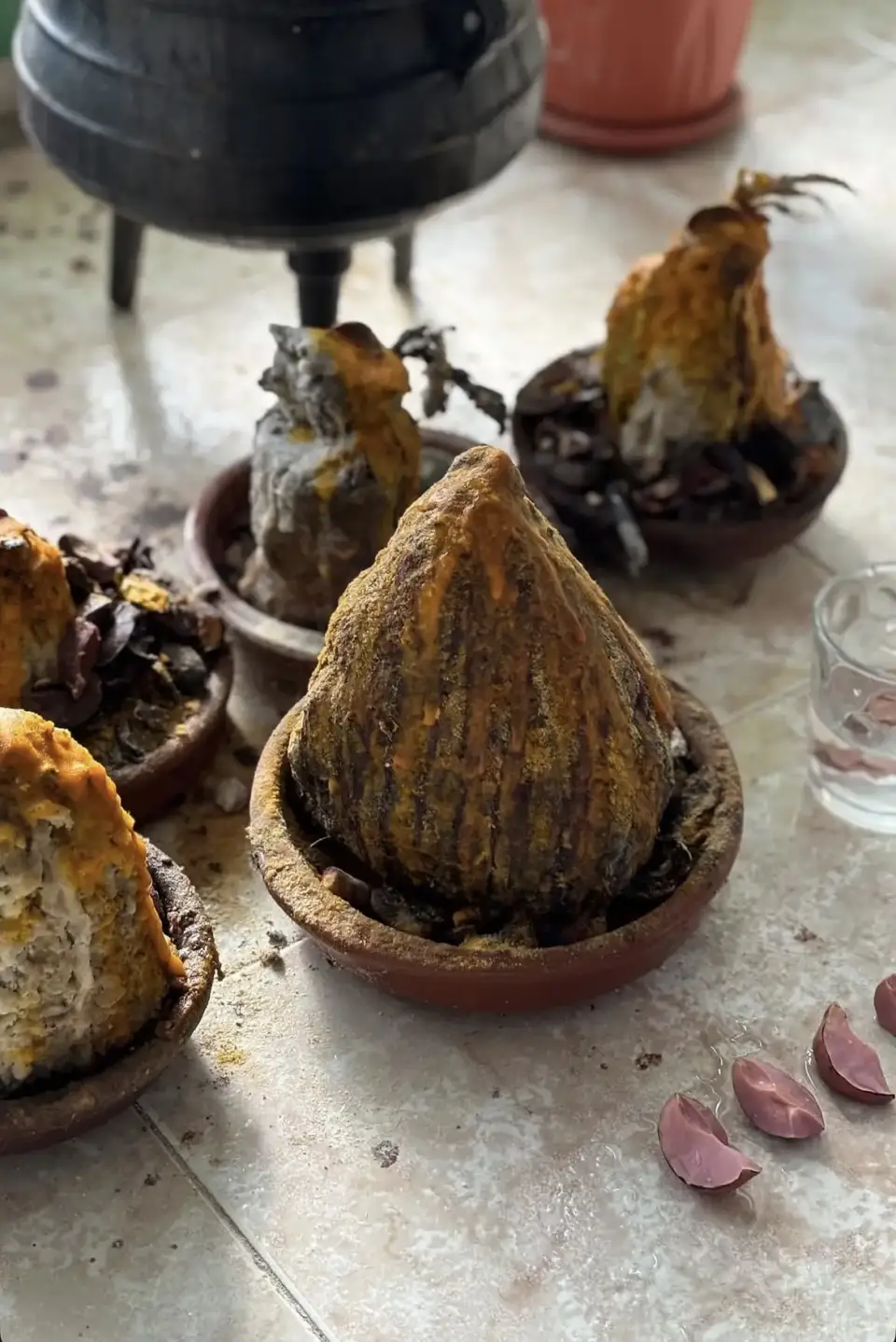 AltarsEarth altars covered in red oil
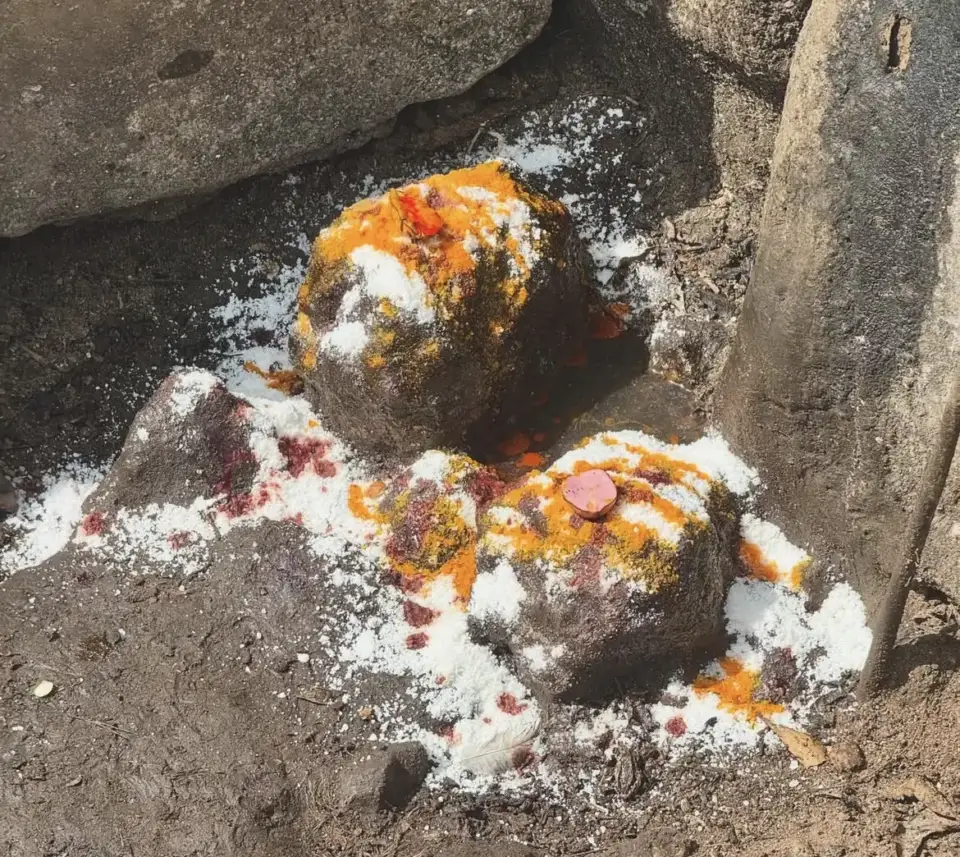 AltarsEarth altars and offerings
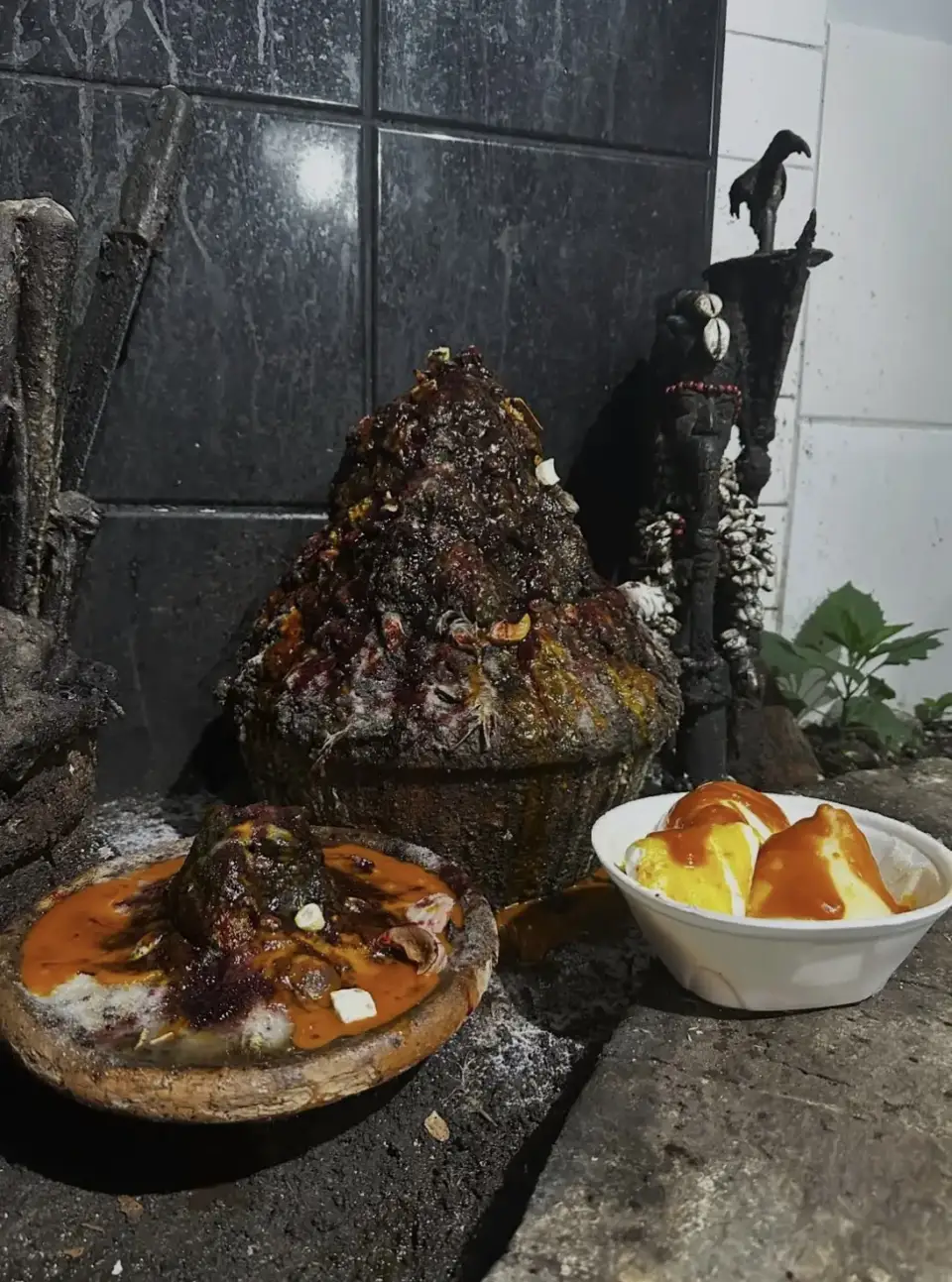 AltarsRed oil and offerings
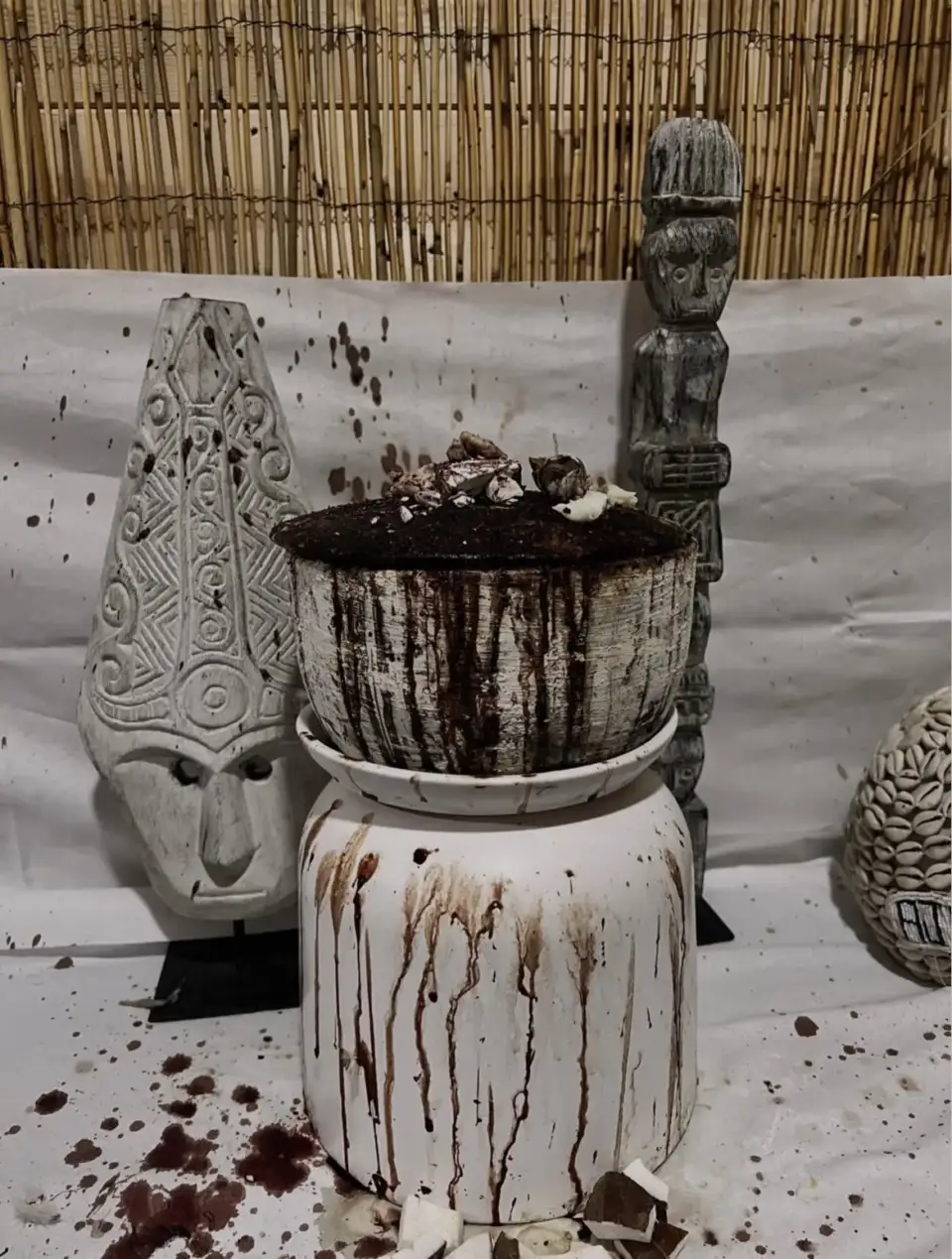 LibationWhite vase, after the libation
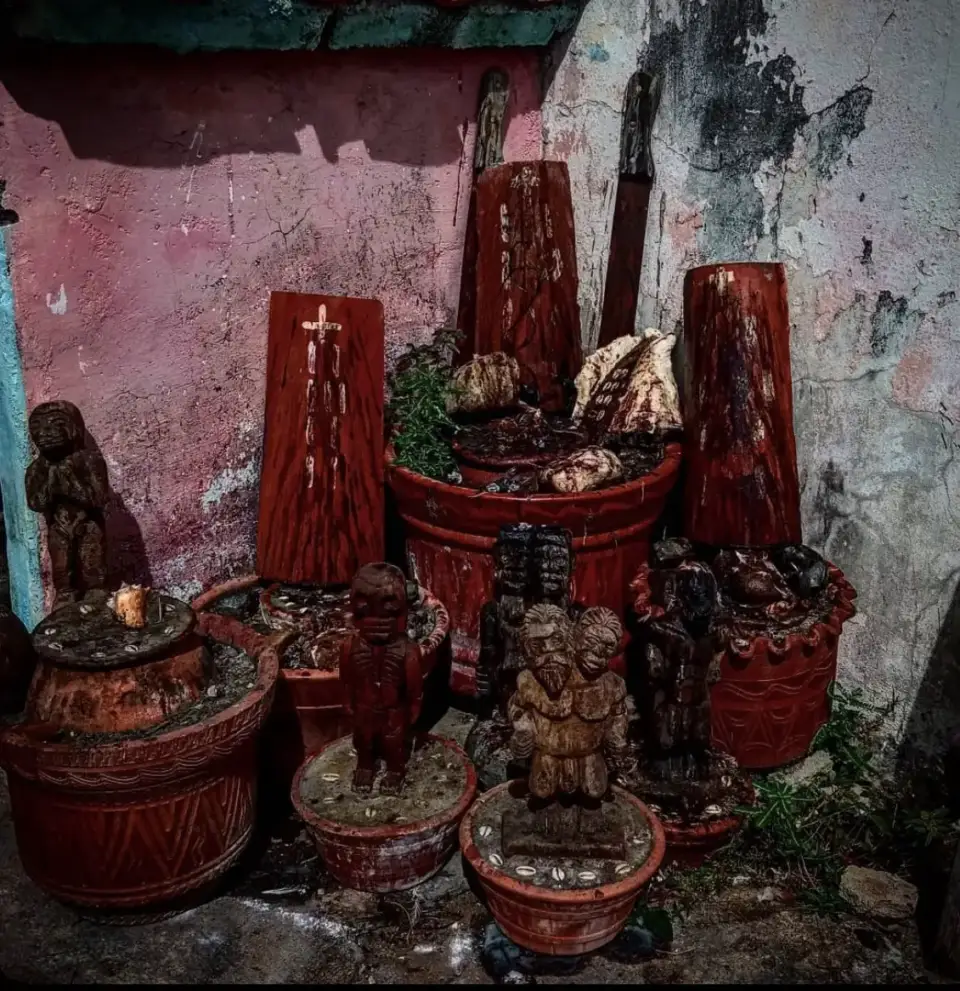 The templeRed jars of the temple
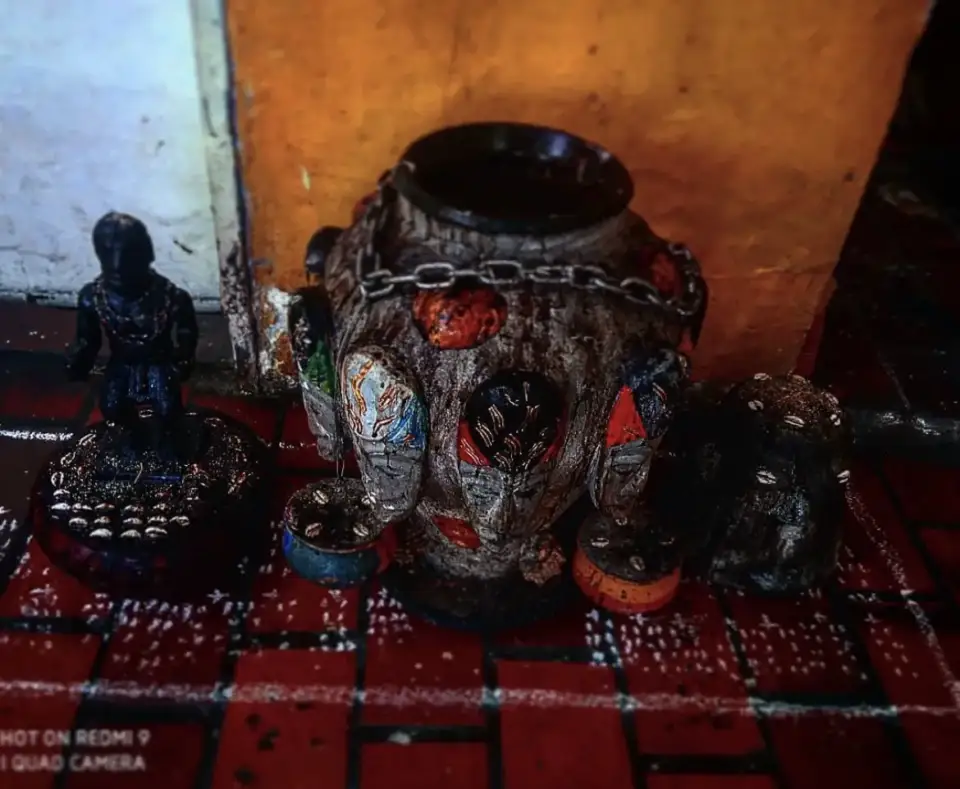 AltarBeaded vase on the altar
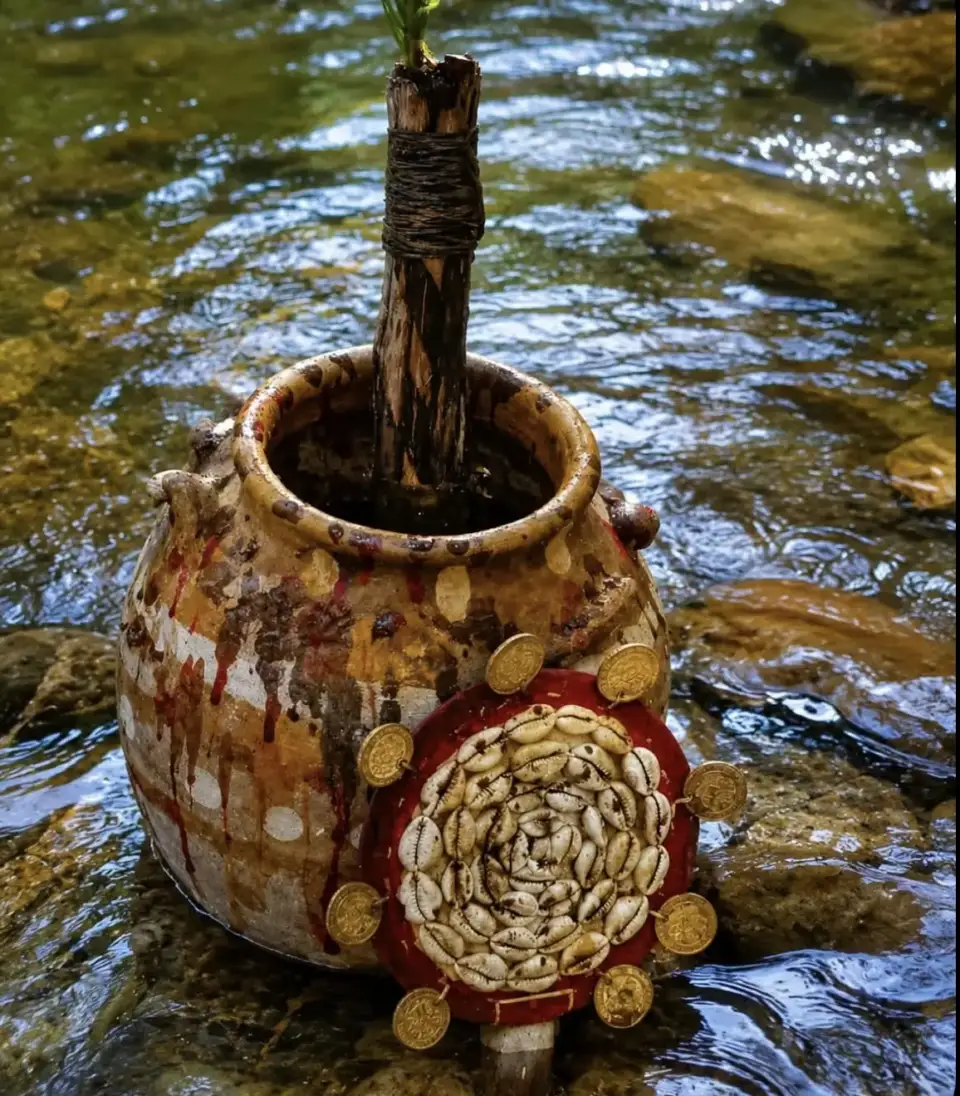 The waterJar adorned with cowries, in the stream
What is laid on the altars
On the temple altars, each material has its meaning. What follows gives the broad lines; the words and the recipes stay at the temple.
- Earth: many altars are mounds of shaped earth, fed and maintained.
- Red oil: palm oil, poured as an offering, which colours the altars.
- Kaolin: white clay, a sign of peace and purity, which also marks the skin during some ceremonies.
- Cowries: these shells, once used as money, adorn the sacred objects and accompany the offerings.
- Feathers and libations: they show that an offering has been made and received.
The sacred forest
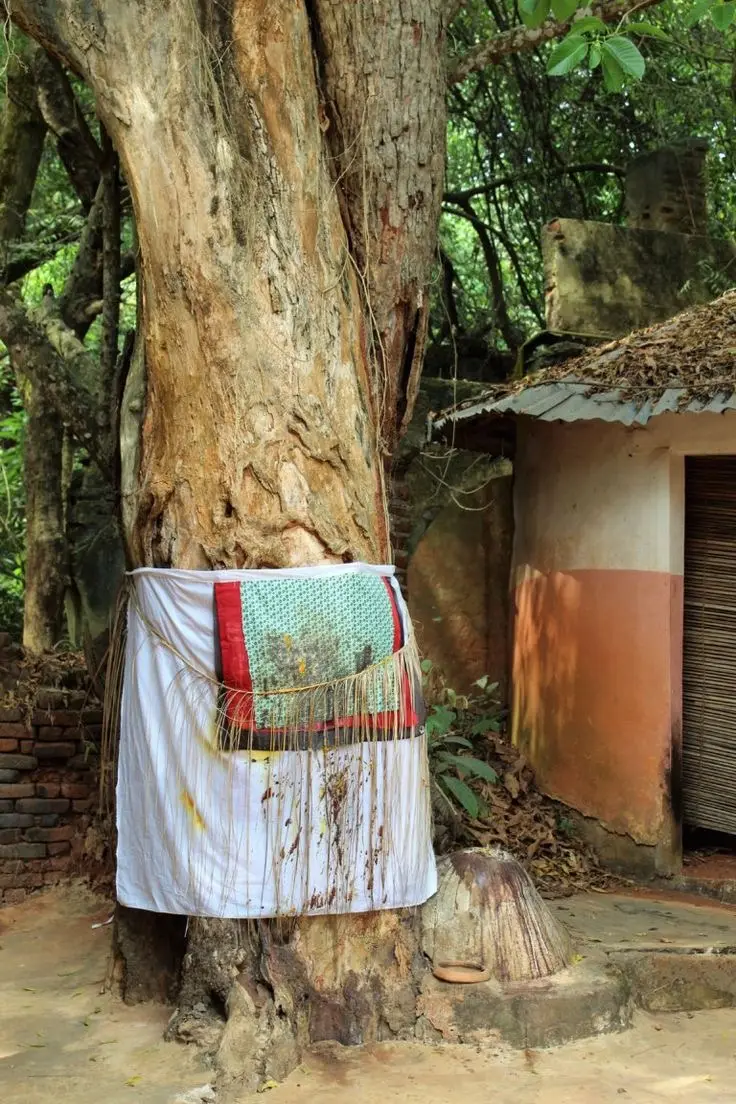
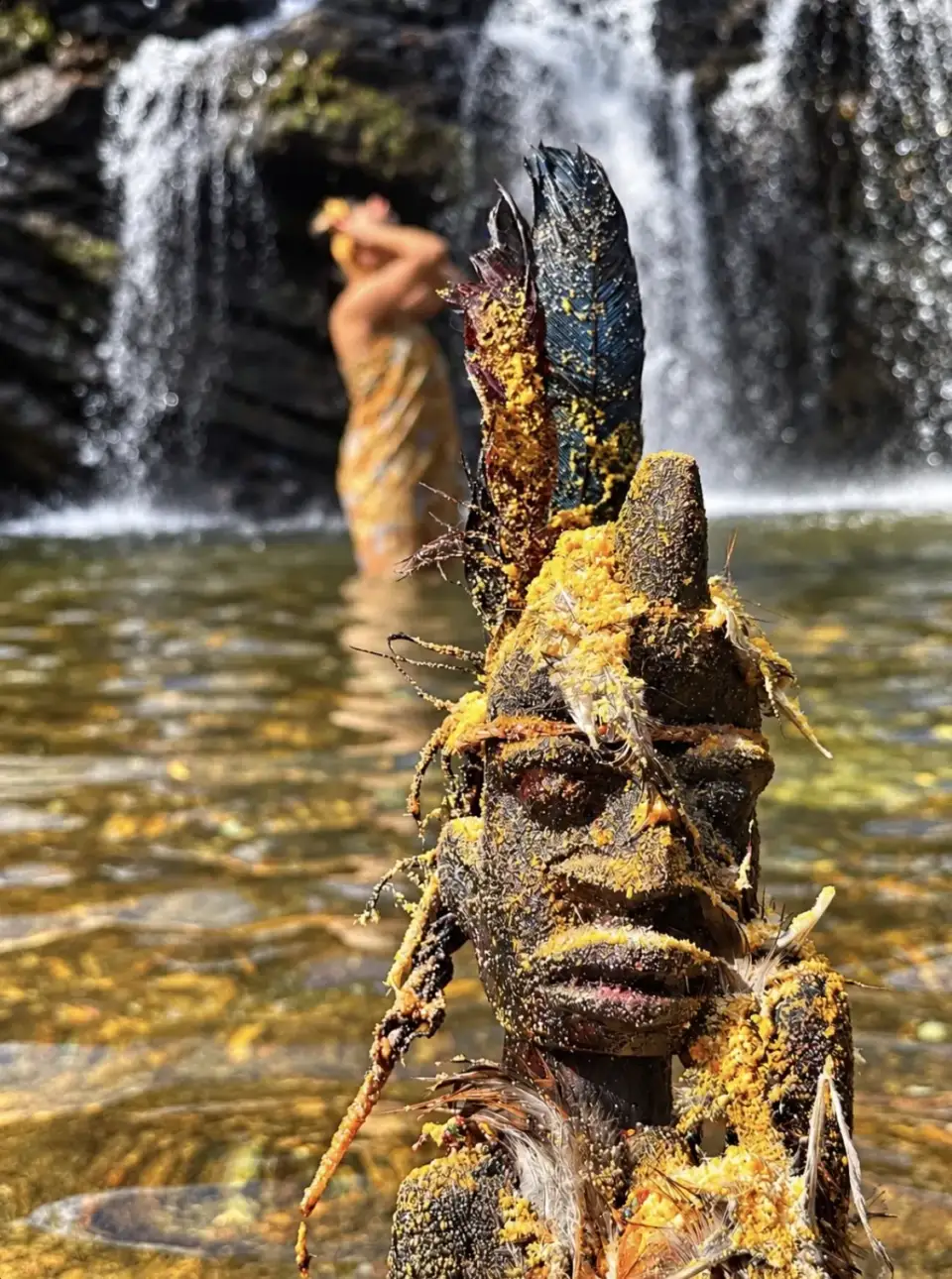
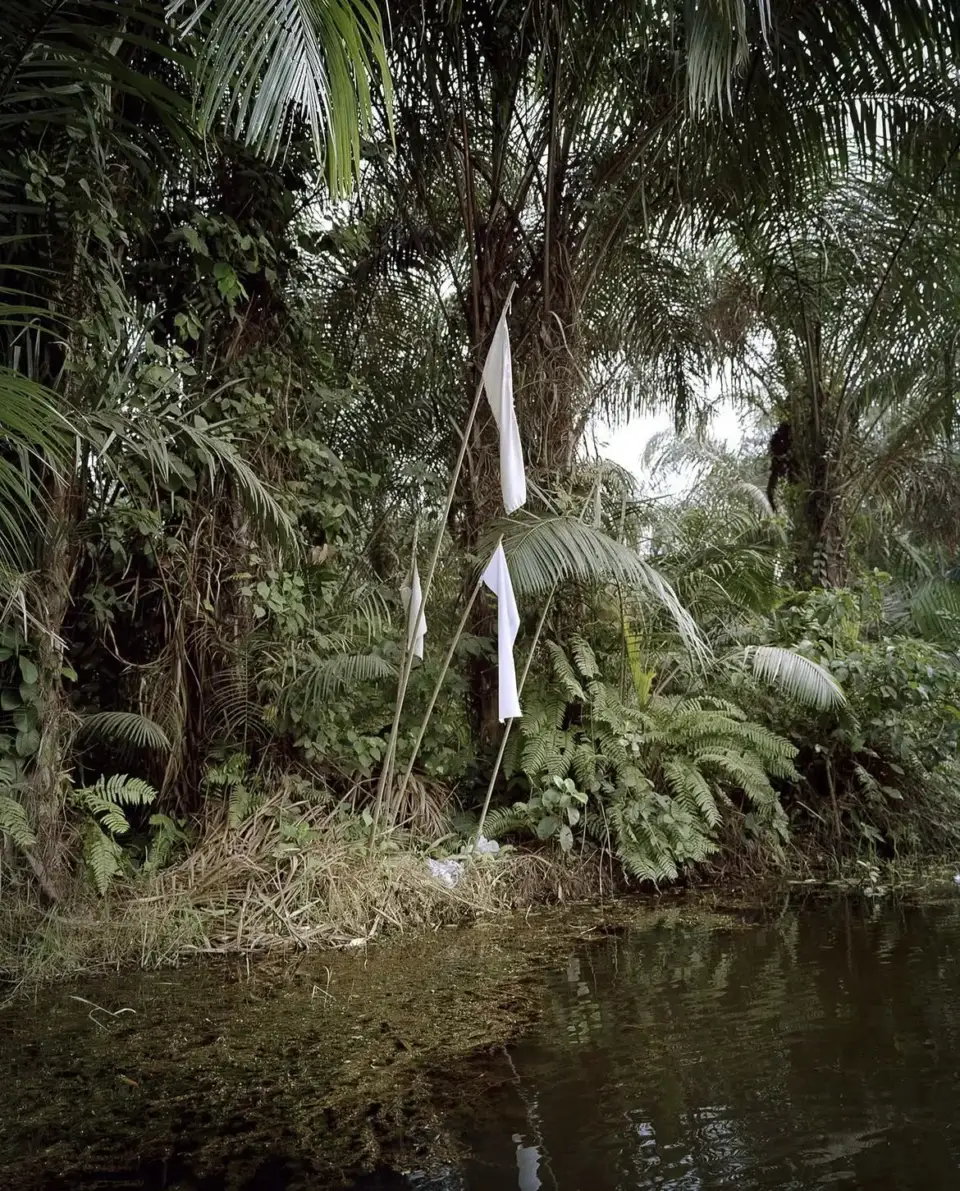
Around the temple, the sacred forest shelters the trees wrapped in white, the statues and the water places where some ceremonies are held. One does not walk in as a hiker: one enters accompanied, respecting what is asked. This is also where the ritual baths the Fâ sometimes prescribes take place.
The sacred forest
Trees, water and statues
Around the temple, the sacred forest holds the statues, the trees wrapped in white and the ceremonies by the water.
Ceremonies
Life at the temple
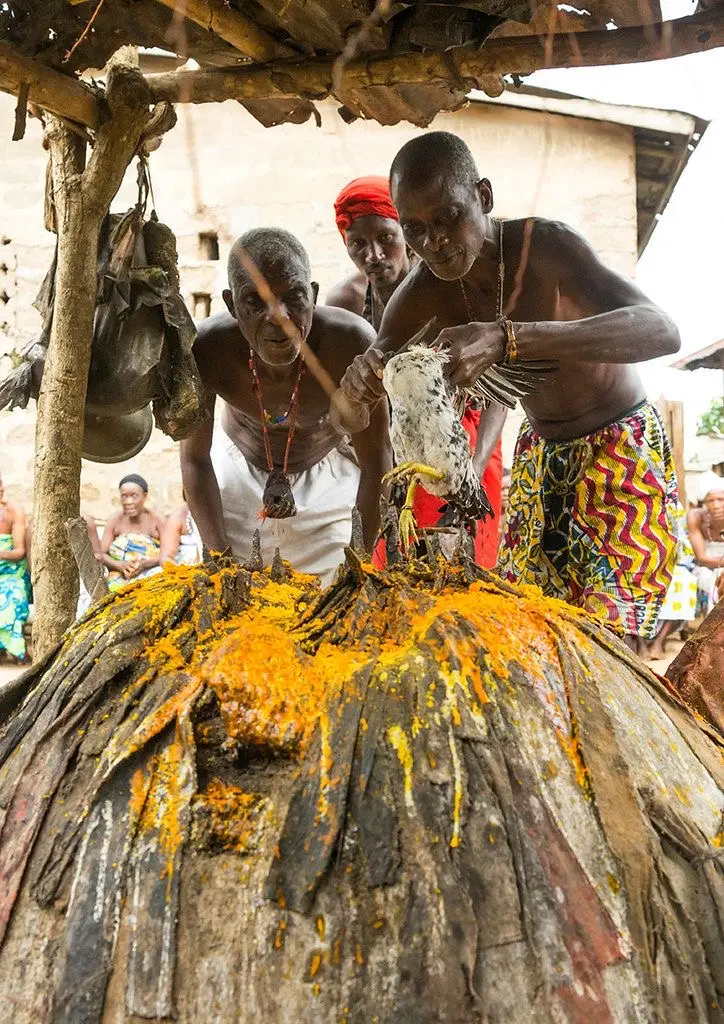 LibationLibation on an earth altar
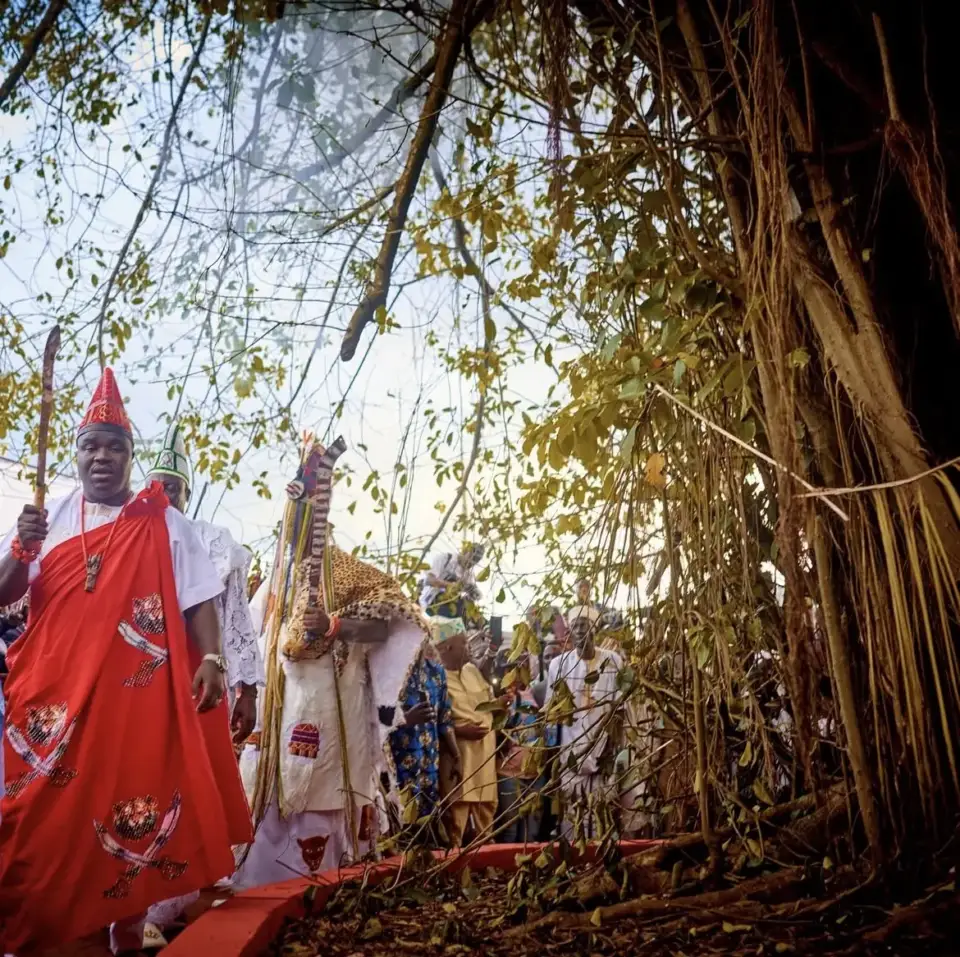 CeremonyCeremony under a great tree
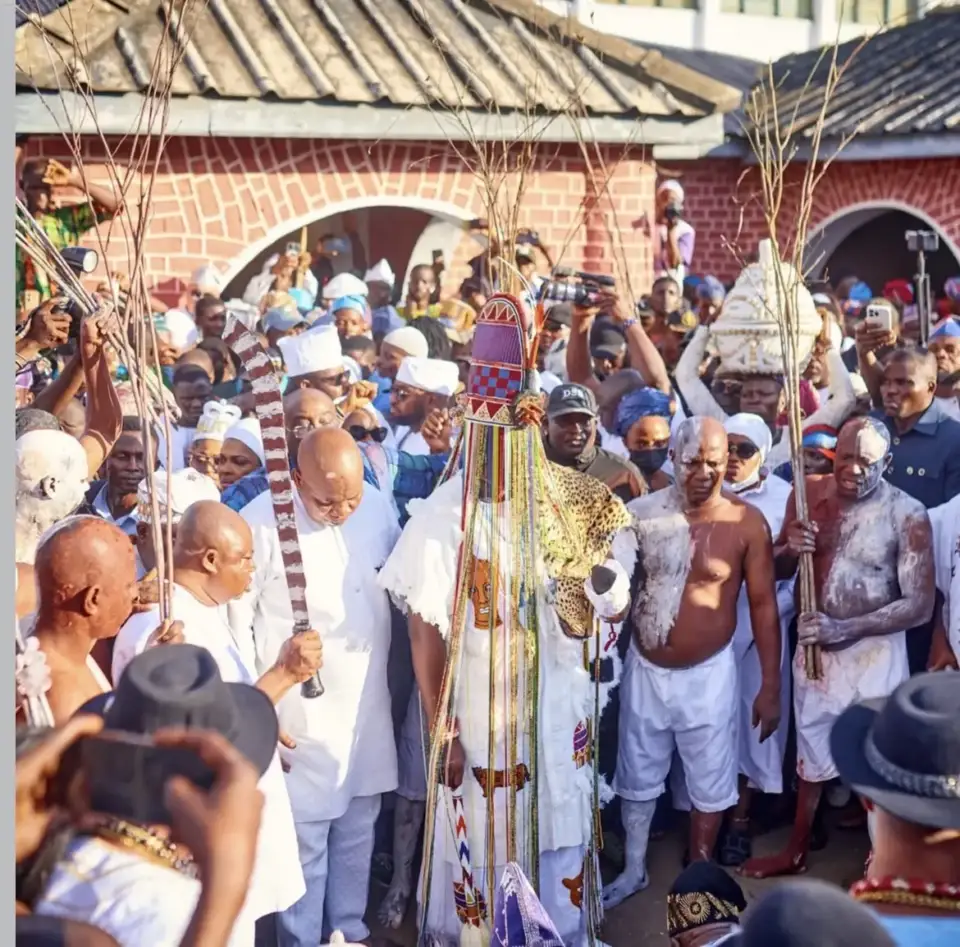 CeremonyA crowd in white, in a courtyard
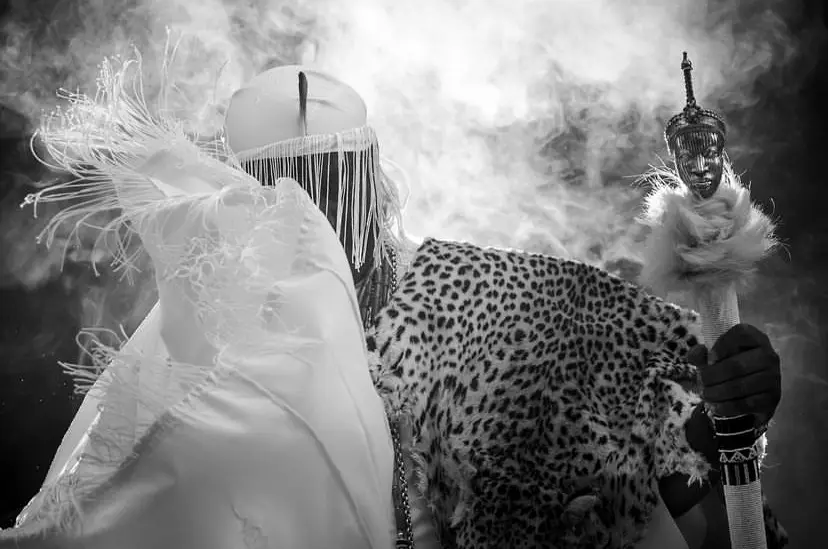 Black and whiteVeiled figure in the smoke
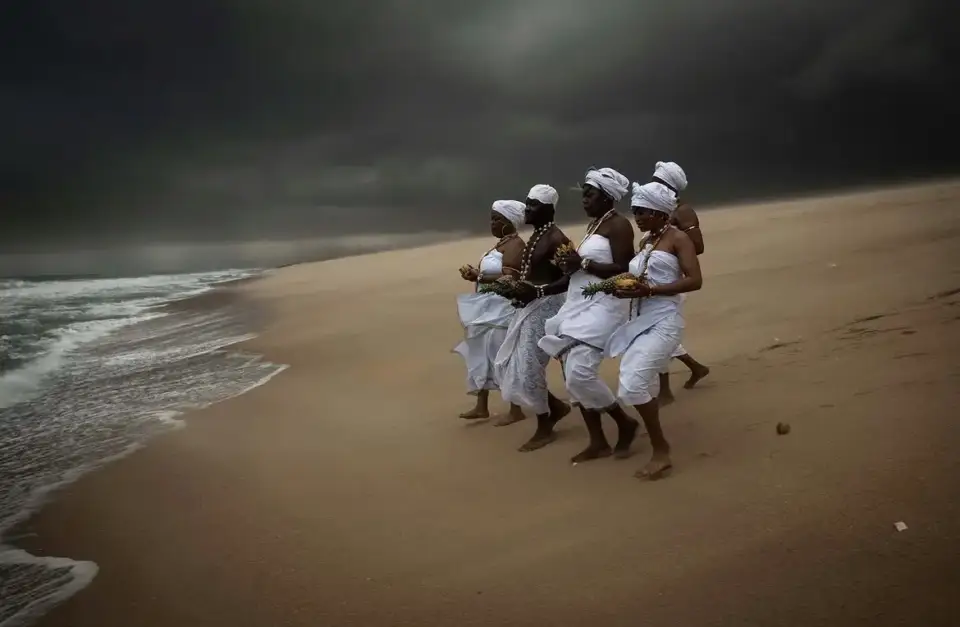 InitiatesInitiates dressed in white, on the beach
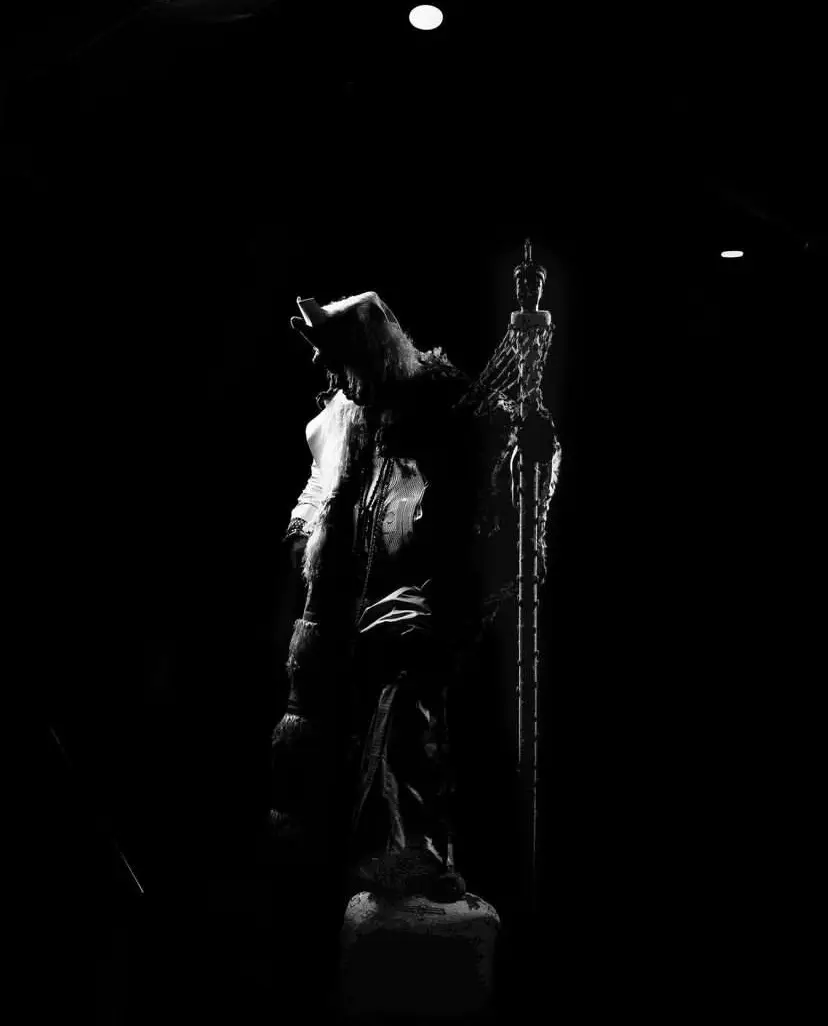 NightAt night, during a ceremony
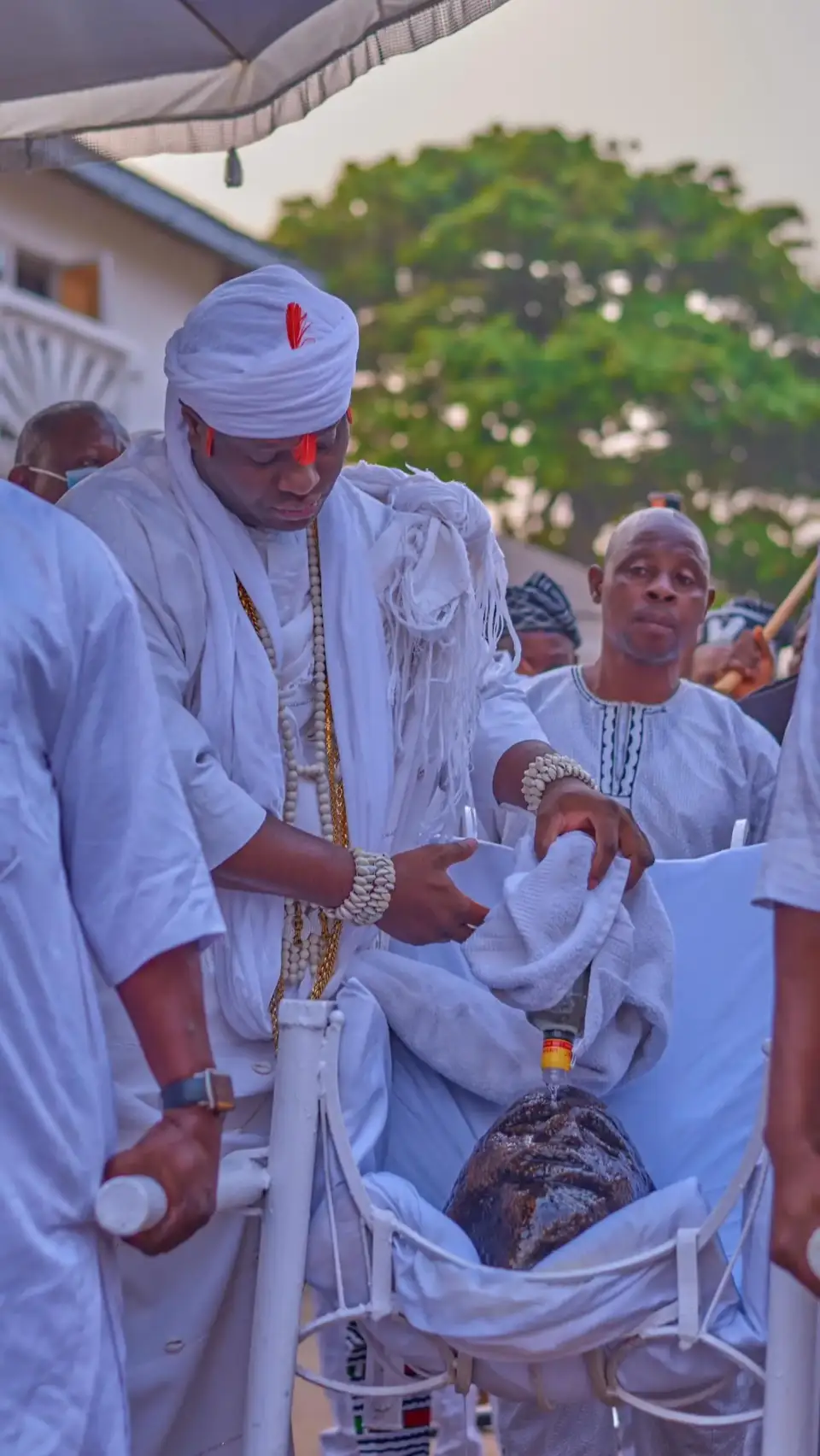 CeremonyIn ceremonial dress
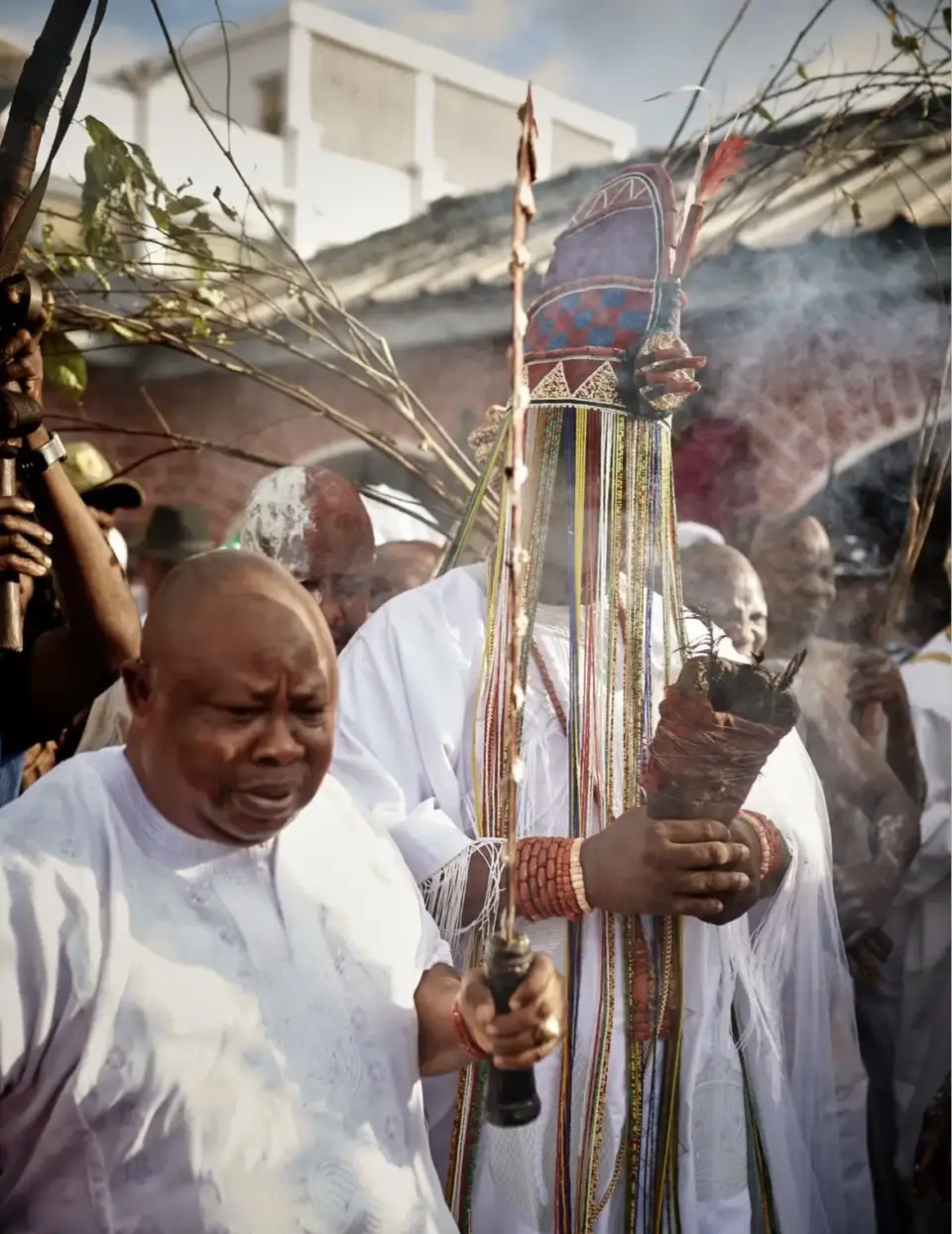 CeremonyThe cowrie staff
Visiting the voodoo temple
The temple receives people who come for their ritual or for an initiation, by appointment set with Wêtê Agbonon. Clients from Europe have done it, and their photographs at the temple are published with their consent.
- You come after writing and consulting the Fâ, on the date it indicates.
- You ask before photographing: some places and some gestures are not photographed.
- You follow the guidance given on site, for clothing as for moving around.
To prepare the journey, the page visiting Benin and the voodoo festival gives the steps, from your first message to the day of the ritual.
What you will see at the temple
Entering the courtyard, you first notice the earth altars, rounded or conical, carrying the traces of offerings: red oil, kaolin, feathers. Then the jars, some painted, some bound with chains, which keep consecrated water. Further on, the statues and the protective figures, adorned with cowries and shells.
Nothing is decorative. Each object has been consecrated to a voodoo spirit, fed and maintained. That is why they are not touched and not photographed without asking. Colours have their own language too, which the encyclopedia explains in the colours of vodun.
Why a real temple matters to you
A ritual requested from a distance raises a fair question: where will it be done, and by whom? Here the answer can be checked. The voodoo temple exists, in Sakété; you can see it in these photographs, come to it, meet Wêtê Agbonon there. Clients from Europe have lived their ritual there. That is what distinguishes a priest with a temple from a so-called practitioner with no address.
- Rituals are done on consecrated altars, not in an apartment.
- The one who consults is the one who leads the ritual.
- You can come and see, on the date the Fâ indicates.
The temple through the year
Life at the temple follows ordinary days, made of greetings, offerings and consultations, and feast days. In Benin, 10 January is the national voodoo holiday: temples receive visitors, initiates come out in ceremonial dress, drums play. Other ceremonies follow the calendar of each voodoo spirit, and the Fâ says when they must take place.
What people feel when they arrive
Clients from Europe often describe the same impression: calm. The noise of the road fades, you enter the courtyard, you greet, and time changes its rhythm. You notice the smell of red oil and earth, the white cloths tied to the trees, the jars in a row. Nothing is staged for the visitor: the temple lives as it lives every day.
Wêtê Agbonon takes time to explain what you see, what you may photograph and what remains reserved. For many, that is the moment voodoo stops being an image from a film and becomes what it is: a religion, served with care, in a precise place.
Questions
What people ask about the temple
Can I visit the temple without a ritual?
The temple is not a museum. People come for a consultation, a ritual or an initiation, by appointment set with Wêtê Agbonon.
Do I need to be initiated to enter?
No. Clients attend their ritual without being initiated. Some places remain reserved, and you are told on site.
Are distance rituals done in the same place?
Yes. Whether you are present or not, the ritual is led on the same altars, by Wêtê Agbonon, and you receive a report.
Where can I stay nearby?
Porto-Novo and Cotonou offer accommodation. Wêtê Agbonon advises you according to the date and length of your stay.
Is the voodoo temple open all year?
Yes. The temple lives every day, with its greetings, offerings and consultations. Visits are by appointment, on the date the Fâ indicates for your ritual.
Can I come for the 10 January celebrations?
Yes, if you say so early. January is a busy period, at the temple as in Ouidah during the Vodun Days.
Is Wêtê Agbonon a marabout or a priest?
He is a voodoo priest and a bokonon of the Fâ at the Sakété temple. In Europe his clients often look for him as a marabout: it is the same man, and the same temple.
Can I send an offering to the temple?
Offerings are prepared at the temple according to what the Fâ asked for; they are part of the written quote. You have nothing to send yourself.
Why is the temple in Sakété?
Because that is where Wêtê Agbonon was born and where his family’s charge is kept. The altars, the opèlè and the tablet of his ancestor are there.
To come
The temple is open to you
Write to him
He answers himself, within two hours
The first exchange is free and confidential. You set out your situation, he consults the Fâ, then you decide freely.
Message on WhatsApp