The bond · The Sakété temple
Voodoo love spells: what the Fâ says about the bond, and what is done at the temple
Voodoo love spells, at the Sakété temple, are rituals for a bond that has come undone. The Fâ first says whether it can be renewed, through which gestures and within what time. No will is ever forced.
Filmed testimony
“I was skeptical at first, but I’m honestly so grateful I gave it a chance.”
A client, face shown, in her own words
The Fâ first
What the Fâ says about the bond
Before any love ritual, Wêtê Agbonon consults the Fâ. He asks it whether the bond can be renewed, what holds it back, and through which gestures it can live again.
If the Fâ says no, he tells you and takes no money. If the Fâ says yes, it also gives the time, and Wêtê Agbonon commits to it in writing.
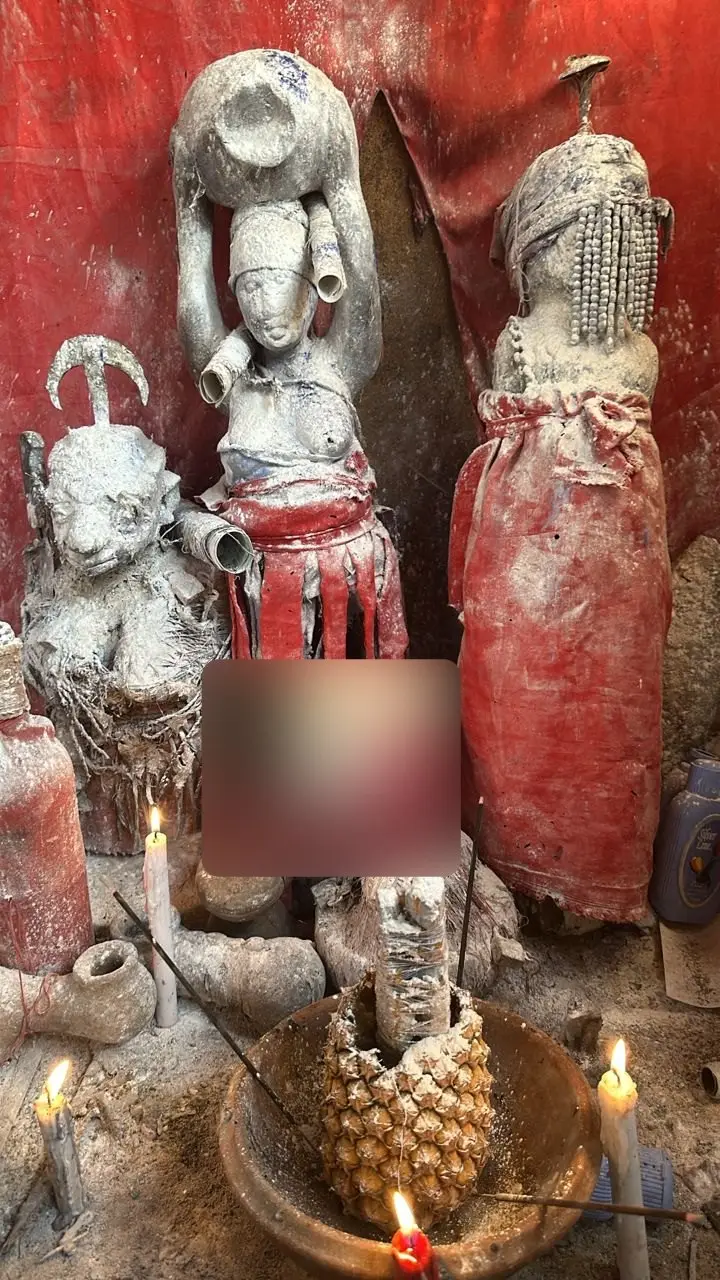
Voodoo love spells: the situations people bring to him
Most people who write to Wêtê Agbonon do so for love. Behind that word are very different stories, and the Fâ does not treat them the same way.
- A recent break-up you did not see coming.
- An old separation that does not heal.
- A couple drifting apart without a quarrel, day after day.
- A marriage in crisis after years together.
- Infidelity, discovered or suspected.
- A jealousy that spoils everything.
- A family opposed to the union.
- A long-distance love, or waiting for a commitment that does not come.
What the Fâ looks at in a bond
Before any love ritual, the Fâ says whether the bond is still alive. Then it shows what holds it back: words that hurt, a resentment kept, a person standing in between, a moment that has not yet come. Sometimes it answers “not now”, or says that the bond asked for is not the one waiting for the person. Wêtê Agbonon says it as it is.
His clients often notice it: the Fâ speaks about what they had not told. That is what allows the right gesture to be chosen, instead of a standard love spell.
The 5 steps of a love ritual at the temple
- You write: what happened, since when, what you wish for.
- He consults the Fâ, free of charge, and tells you what he saw.
- If the Fâ says yes, you receive a written quote: the rituals, the announced time, one single amount.
- He leads the ritual at the Sakété temple: candles, offering bowl, prayers to the voodoo spirits, in the person’s name.
- He reports back, gives you the instructions and remains reachable until the end of the announced time.
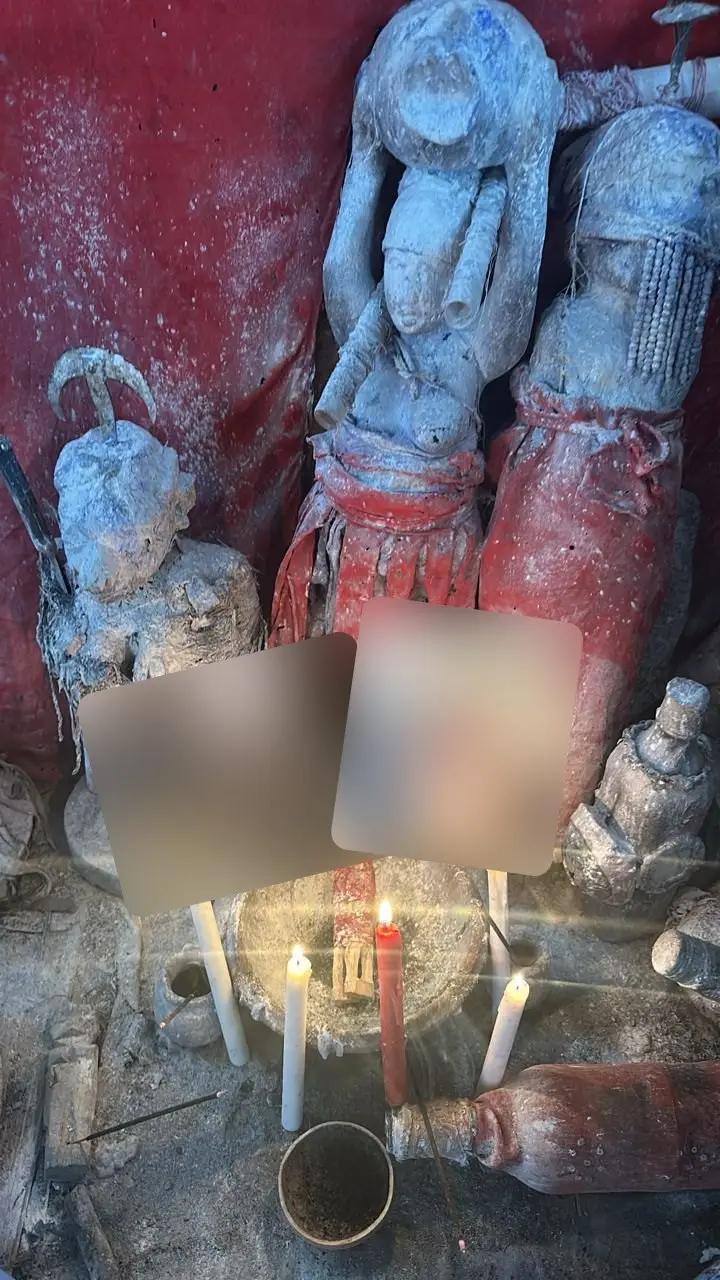
At the temple
The altars of love rituals
On the altar: candles, the offering bowl and the photographs people entrusted to him. The faces are blurred.
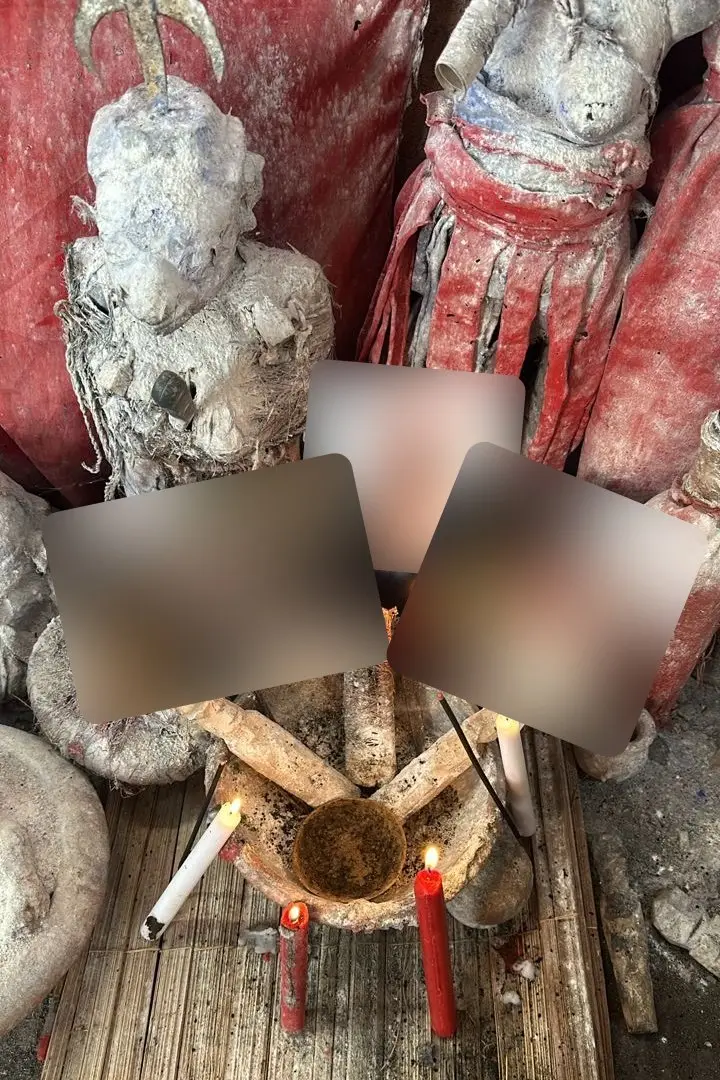 The bondCandles and photographs, on the altarThe bondThe photographs entrusted
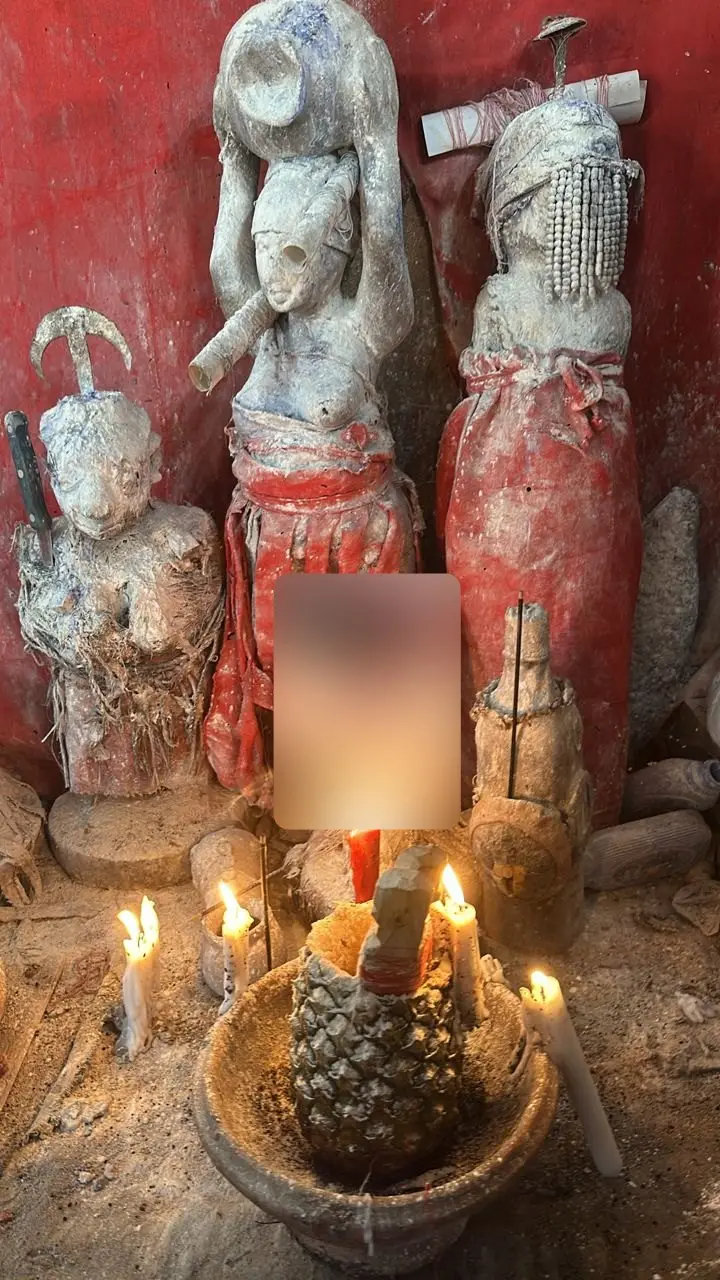 The bondThe bowl and the red candle
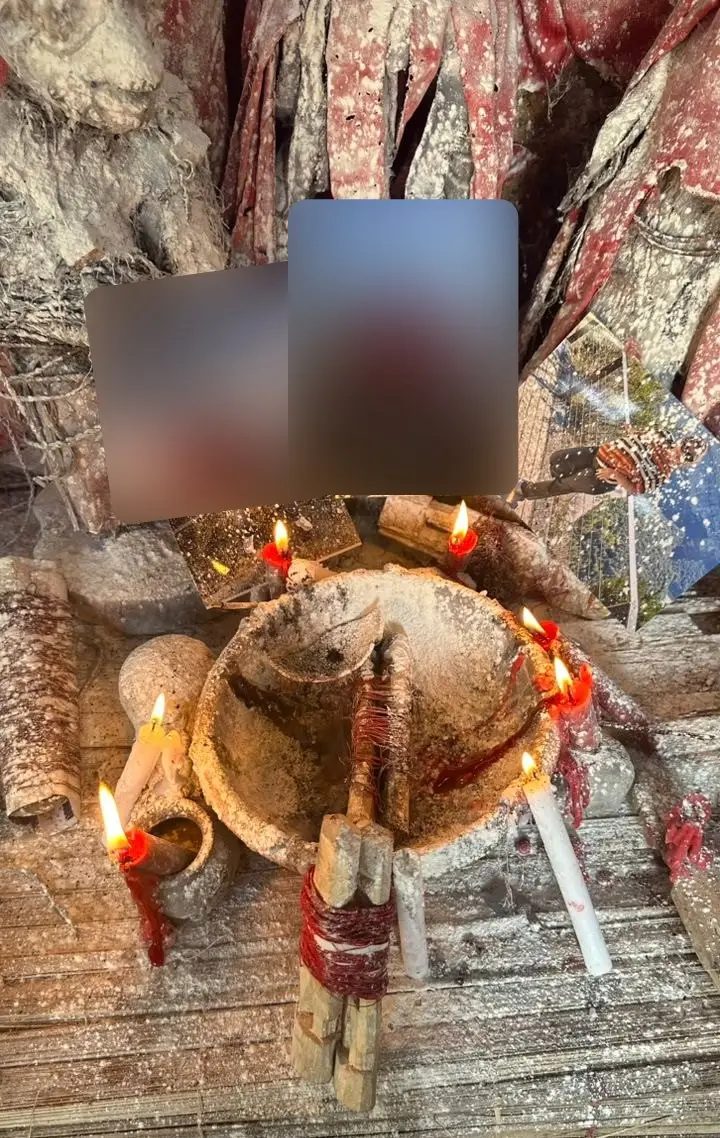 The bondBefore the altar statues
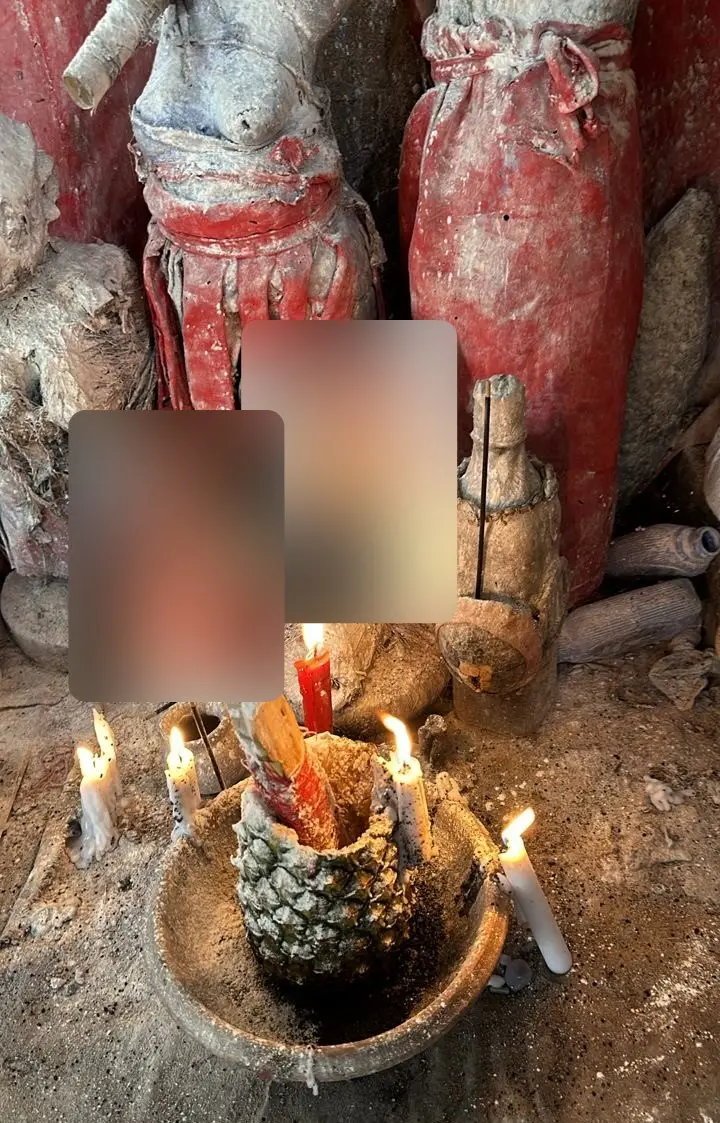 The bondWhite and red candles
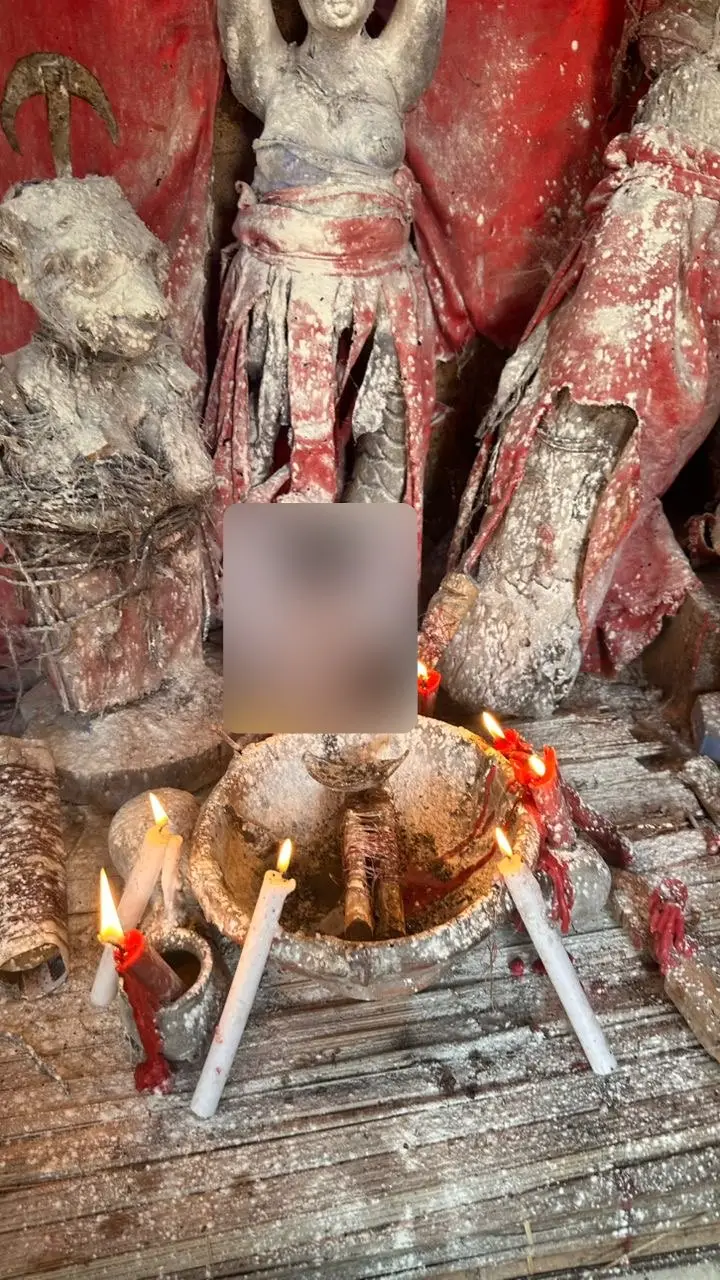 The bondThe offering bowl
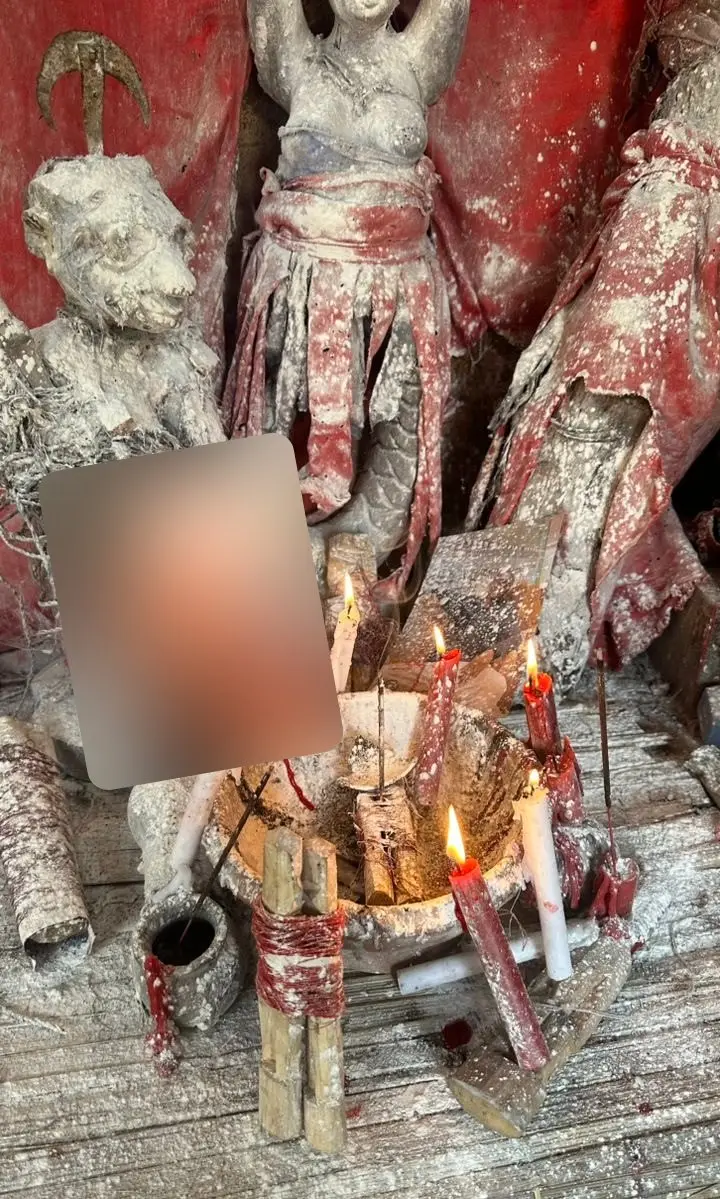 The bondAn entrusted photograph
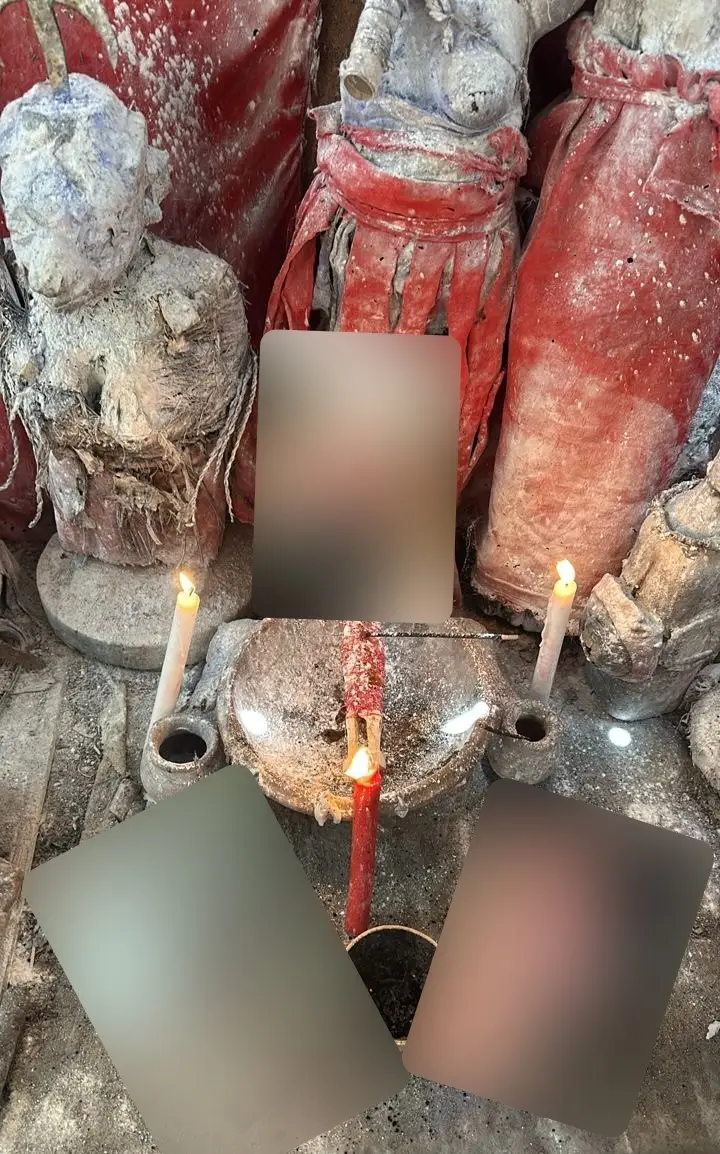 The bondThree photographs, one requestThe bondThe lit candles
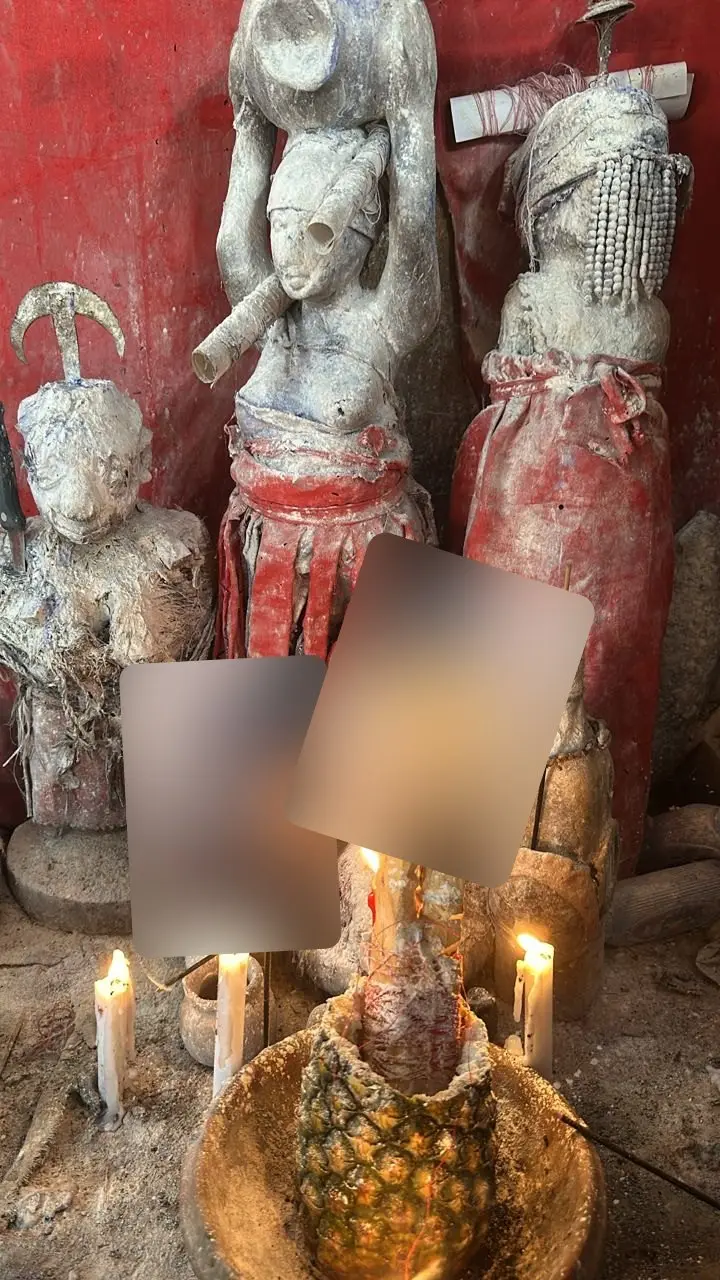 The bondAt the foot of the statues
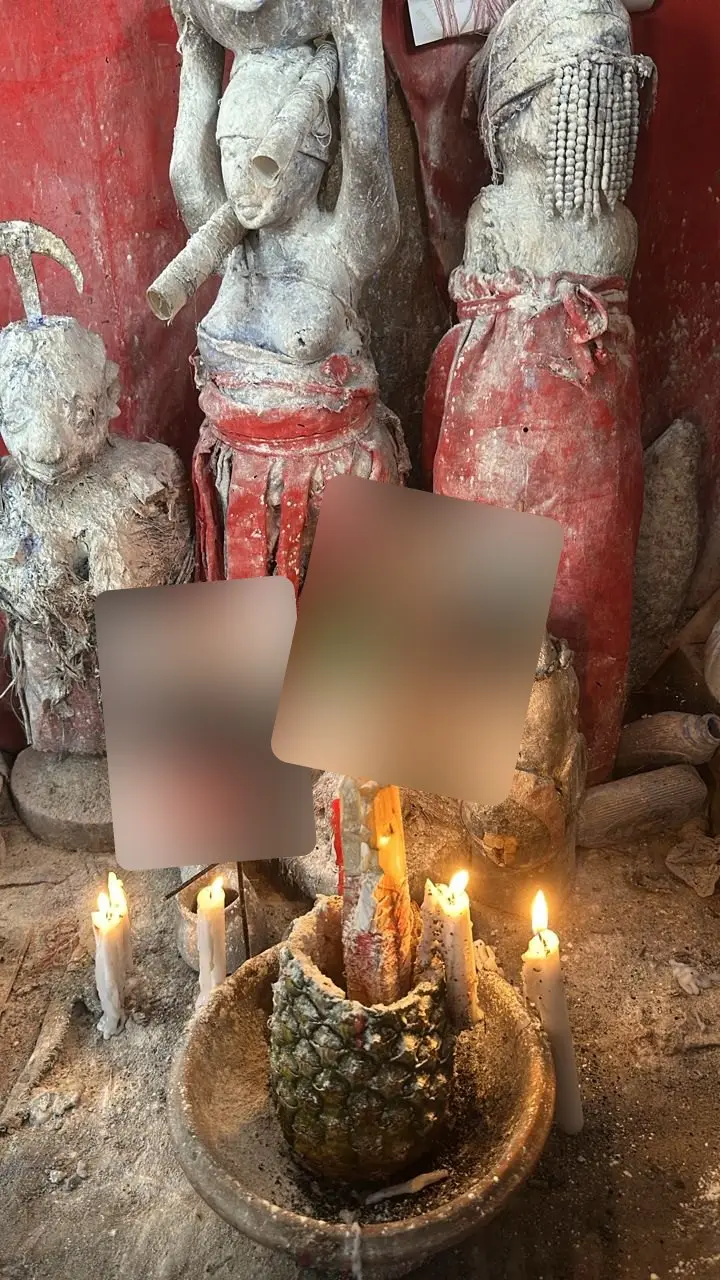 The bondThe offering and the candles
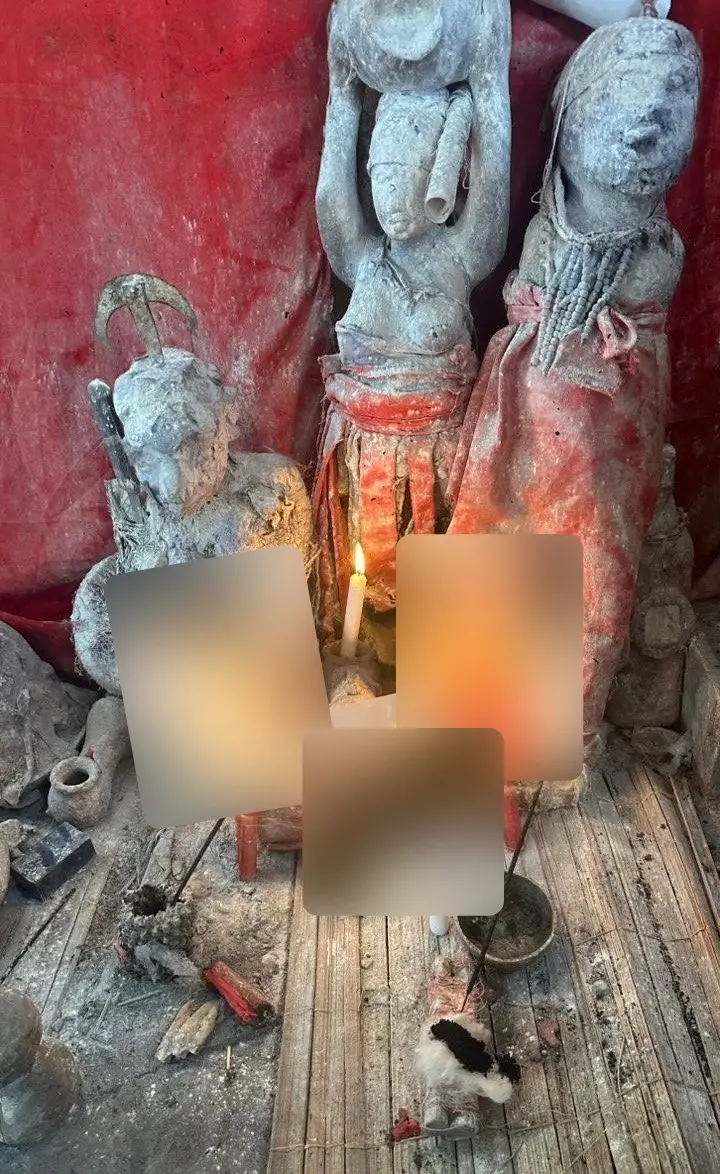 The bondOn the altar floor
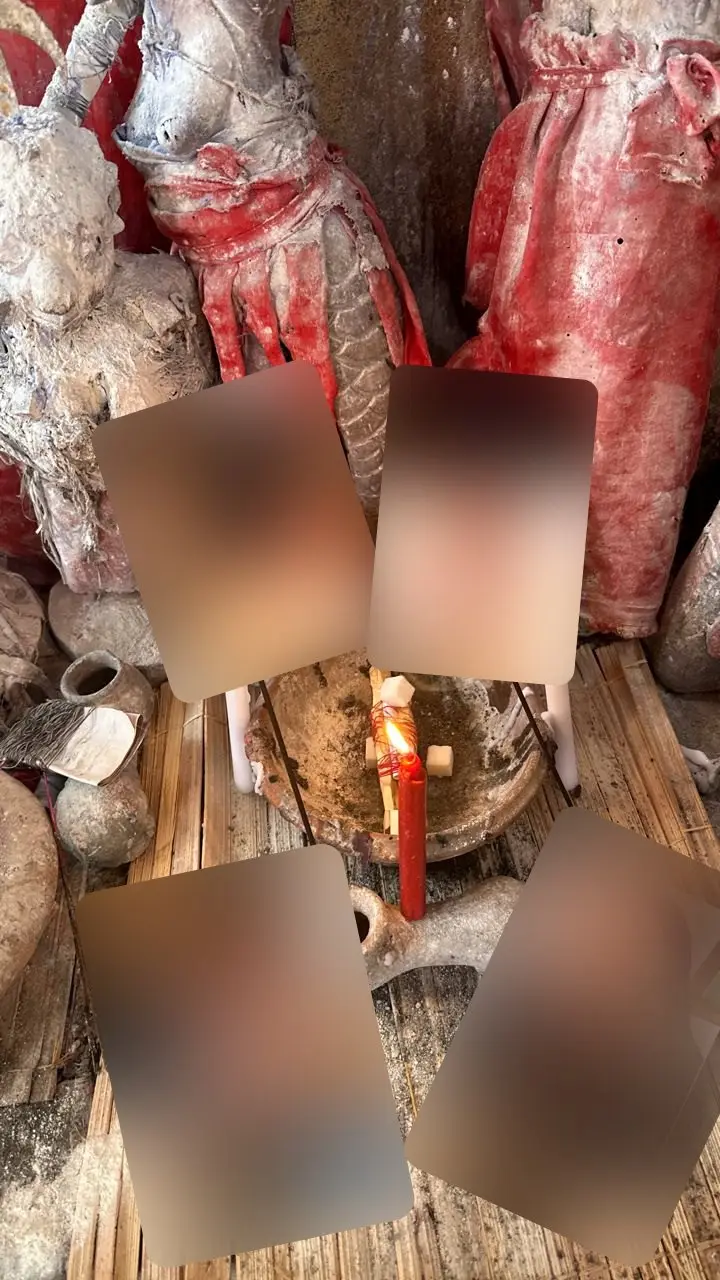 The bondFour photographs, four stories
The entrusted photographs
On the altar of a love ritual you see candles, the offering bowl and the photographs people entrusted for their ritual. On this site the faces are blurred. At the temple, the photographs stay on the altar for the time of the work, then are kept there; they are never published or passed on.
What you do in the meantime
- Follow the written instructions the Fâ gave for you.
- Do not force contact: a bond that renews itself cannot be rushed.
- Take care of yourself, your sleep, the people close to you.
- Write to Wêtê Agbonon if something changes, or if a question worries you.
Bringing back a lover: what voodoo can do, and what it does not
In the temple’s tradition, bringing back a lover means helping a bond that is still alive to renew itself. It does not mean forcing a will. That is why Wêtê Agbonon consults first, and refuses requests aimed at constraining someone.
In France, people often look for a marabout for this. The filmed testimonies of his clients, transcribed in French on the transcripts page, describe this work in their own words. Each story is theirs: none promises a result for yours.
When the Fâ says no
Sometimes the Fâ answers that the bond cannot be renewed, or not now. Wêtê Agbonon says so, and takes no money. It is not a door closed on you: the Fâ may indicate something else, a protection, a calming, time to let pass, sometimes an encounter that has not yet come.
Mistakes that damage a bond during the work
- Flooding the other person with messages to “check” whether the ritual works.
- Using several practitioners and rituals at the same time.
- Telling everyone about the work, instead of letting it be done.
- Dropping the instructions after a few days.
The Fâ gives a time; during that time, patience is part of the ritual. Wêtê Agbonon remains reachable to help you keep it.
His limits
What he refuses in love
Forcing someone’s will
“So that he can never leave you”: never, not even within a marriage.
Working against a third party
No ritual against your partner’s new companion.
Announcing a time the Fâ has not given
The time comes from the Fâ, and that is what he commits to in writing.
Promising a result
He tells you what the Fâ answered, and commits to the time it gave.
We listen first. Then we tell the truth. Then you decide, freely.The rule of Wêtê Agbonon
What those who went through it say
The filmed testimonies often come back to love, and they agree on one point: before consulting him, many had already paid elsewhere for love spells promised “in 48 hours”, without seeing anything happen. What struck them about him was the consultation first, the truth next, then a work followed through to the end.
None of these stories says what will happen for you. They say how he works. The rest, only the Fâ can say, and that is why the consultation is free.
Questions
What people ask about voodoo love spells
Can voodoo love spells bring my ex back?
The Fâ first says whether the bond is still alive and whether it can be renewed. If it says yes, it gives the gestures and the time, and Wêtê Agbonon commits to it in writing. If it says no, he tells you and takes nothing.
Do I need a photograph of the other person?
He tells you what the ritual needs after the consultation. For the consultation itself, he asks for your name, your date of birth and a photograph of you.
Will the other person know a ritual was done?
The ritual is done at the temple. It does not aim to constrain the other person, but to help a bond that is still alive to renew itself.
How much does a love ritual cost?
The Fâ consultation is free. If the Fâ says yes, the written quote gives one single amount, payable after acceptance, in instalments if you ask.
How long does it take?
The time the Fâ announces, and nothing else. If that time passes without satisfaction, instructions followed, he resumes the work at no cost.
Can a couple be separated so I can get someone back?
No. He never works against a third party, nor against the other person’s new partner.
Can a ritual help a couple that is still together?
Yes, if the Fâ indicates it. Many couples still together write to him about what pulls them apart: jealousy, routine, in-laws, distance.
Can anyone guarantee a love spell?
Be wary of anyone guaranteeing a return on a fixed date before even listening to you. Wêtê Agbonon only commits after the Fâ consultation, to the time the Fâ gave, in writing.
Why candles on the altar?
They accompany the prayer and the length of the work. Their colour and arrangement follow what the Fâ asked for the person.
Does it work if the other person has moved on?
The Fâ says whether the bond is still alive. Sometimes the answer is yes despite appearances, and sometimes it is no. Either way, he tells you what he saw.
Can I ask for a ritual to keep my couple together?
Yes, if the Fâ indicates it. The ritual then addresses what pulls the couple apart, never the will of the other person.
What if I have already paid for love spells elsewhere?
Say so in your message, with what was done. He does not judge: he consults the Fâ to see where your bond stands today, and tells you frankly.
Read on
Before you write to him
Write to him
He answers himself, within two hours
The first exchange is free and confidential. You set out your situation, he consults the Fâ, then you decide freely.
Message on WhatsApp