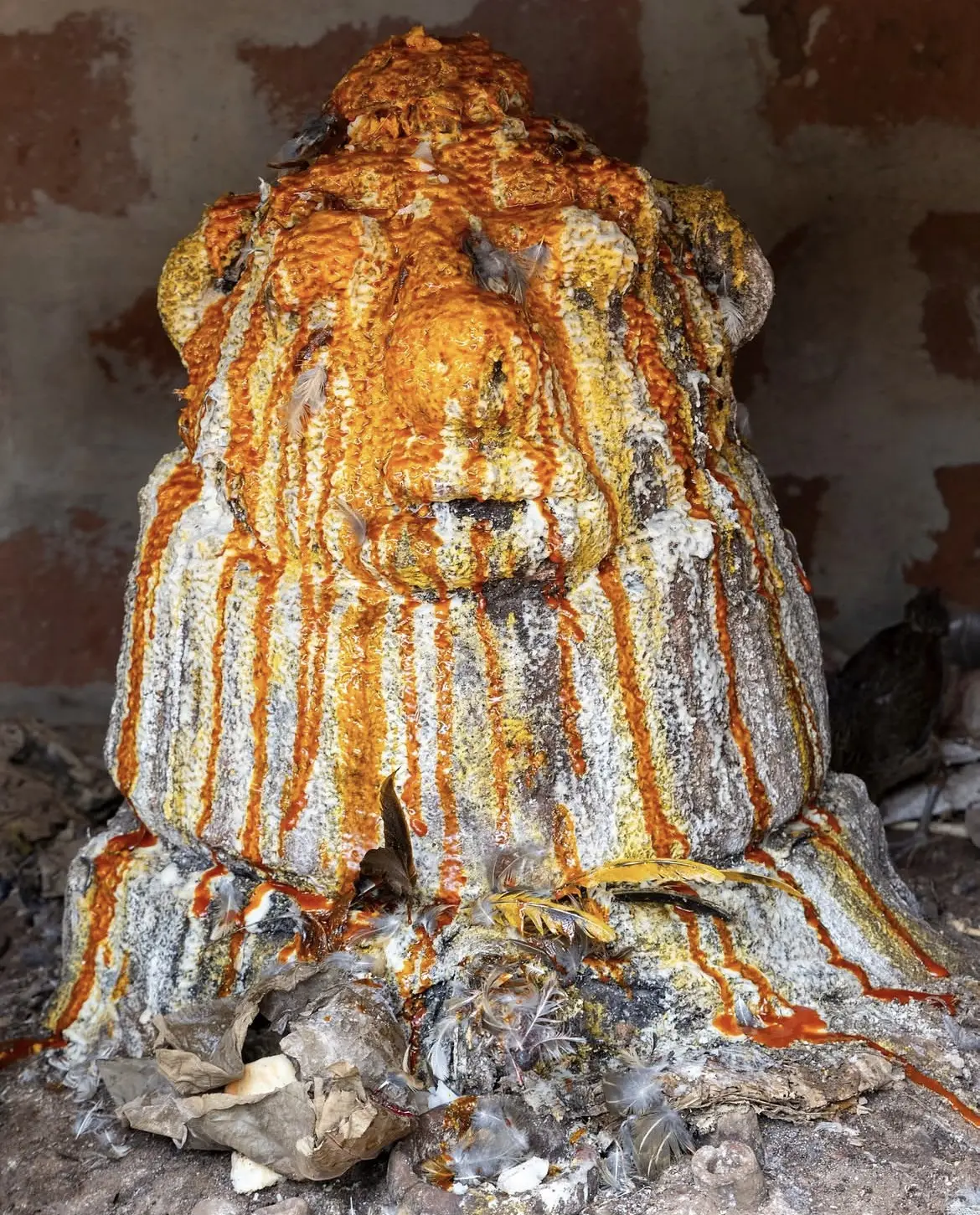
African voodoo · Benin
African voodoo: the religion of Benin, explained by a voodoo priest
African voodoo is a religion born among the Fon and Ewe peoples of Benin and Togo, with its priests, its temples, its spirits and its divination. Wêtê Agbonon, voodoo priest at the Sakété temple, explains what it is, what it is not, and how it is lived today.
Filmed testimony
“I was skeptical at first, but I’m honestly so grateful I gave it a chance.”
A client, face shown, in her own words
From the inside
African voodoo, as a priest lives it
At the Sakété temple, voodoo is a daily practice: the altars are greeted every morning, the Fâ is consulted for each person who writes, offerings are prepared for the spirits it designates. Wêtê Agbonon serves this religion as a priest and a bokonon, the way his family has served it for generations.
This page explains the religion as it is lived in Benin, far from the images of cinema. It is written by someone who practises it, and every section links to what you can check.
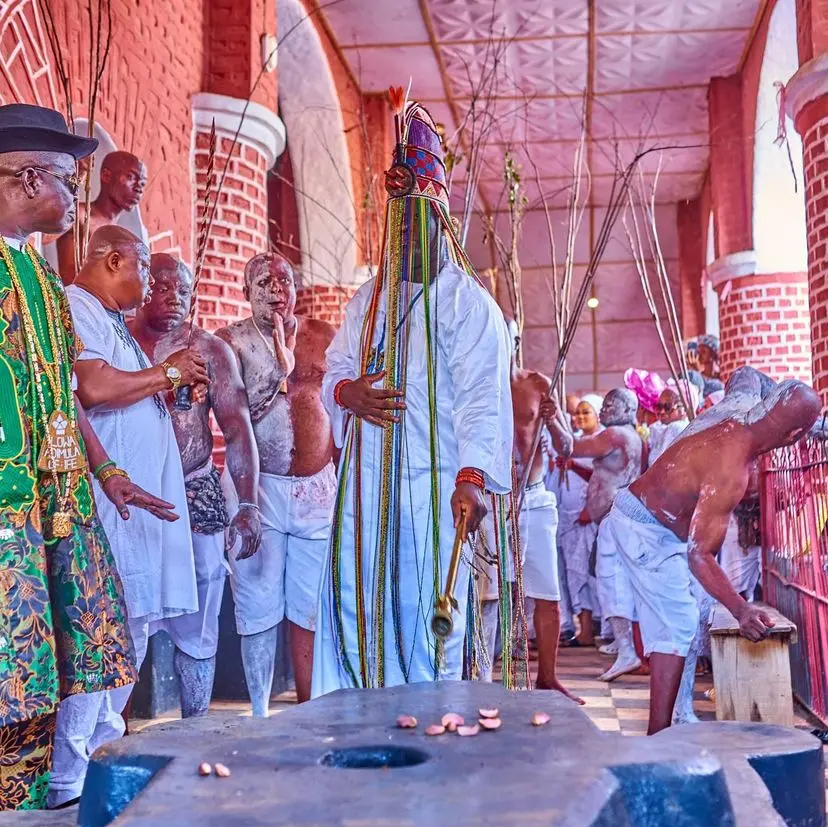
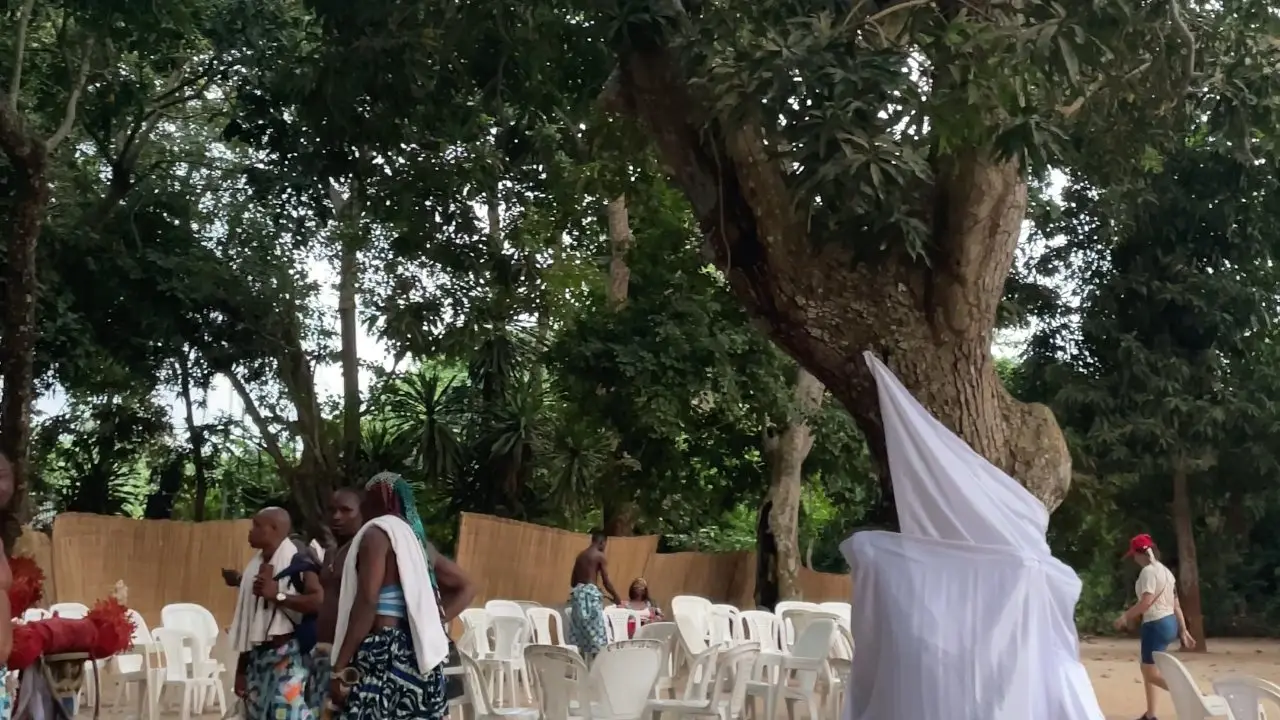
Voodoo festival in Benin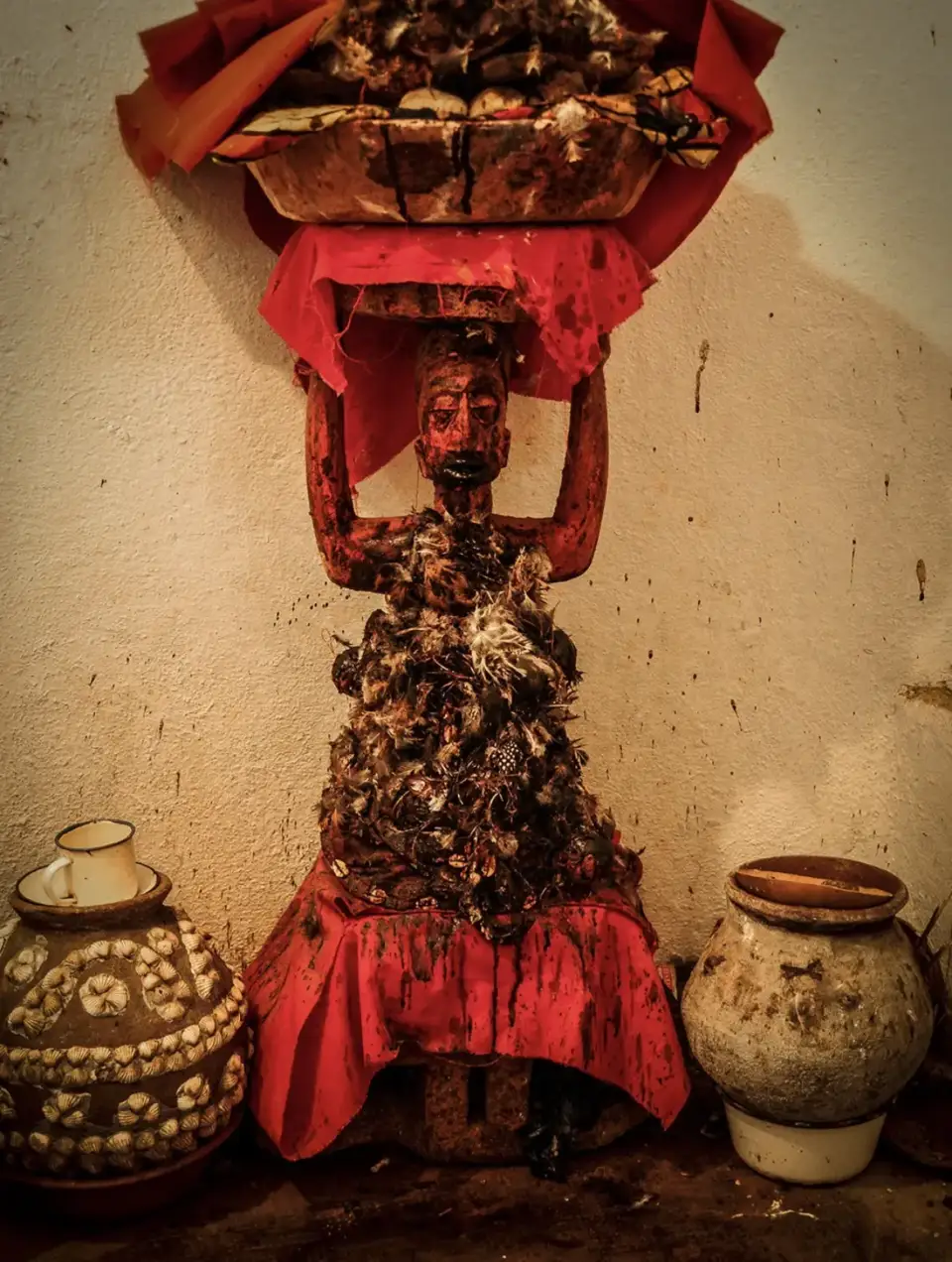
African voodoo, defined
African voodoo, or vodun, is the traditional religion of the Fon, Ewe, Aja, Gun and Mina peoples, in southern Benin and Togo, with related forms in Ghana and Nigeria. The word vodun designates the spirits themselves: forces linked to nature, to the ancestors and to the life of the community, which people honour, consult and ask for help. Above them stands a distant creator, Mawu-Lisa in the Fon tradition.
Vodun has its priests, who keep the altars; its diviners, the bokonon, who read the Fâ; its initiates, the vodunsi; its temples, its convents and its sacred forests. It is passed on from generation to generation, within families and houses, with its songs, its gestures and its prohibitions. For an encyclopedic overview, see the Wikipedia page on West African Vodun and the encyclopedia vodunbenin.org, written by Wêtê Agbonon.
West African voodoo religion: the spirits
Each voodoo spirit has its domain, its colours, its offerings and its days. Some are known well beyond Benin:
- Legba, the messenger, guardian of crossroads and doorways, greeted first in every ceremony.
- Hèviosso, the spirit of thunder and justice.
- Sakpata, linked to the earth.
- Dan, the serpent, associated with continuity and prosperity.
- Mami Wata, the spirit of the waters.
- Gu, the spirit of iron and work.
The ancestors also hold a central place: they are honoured, consulted and fed, because the living remain bound to them. Societies such as Zangbeto, the guardians of the night, watch over the order of the community; the Beninese newspaper Le Rural reported in January 2026 how Zangbeto was entrusted with protecting a mangrove.
The Fâ: the divination of African voodoo
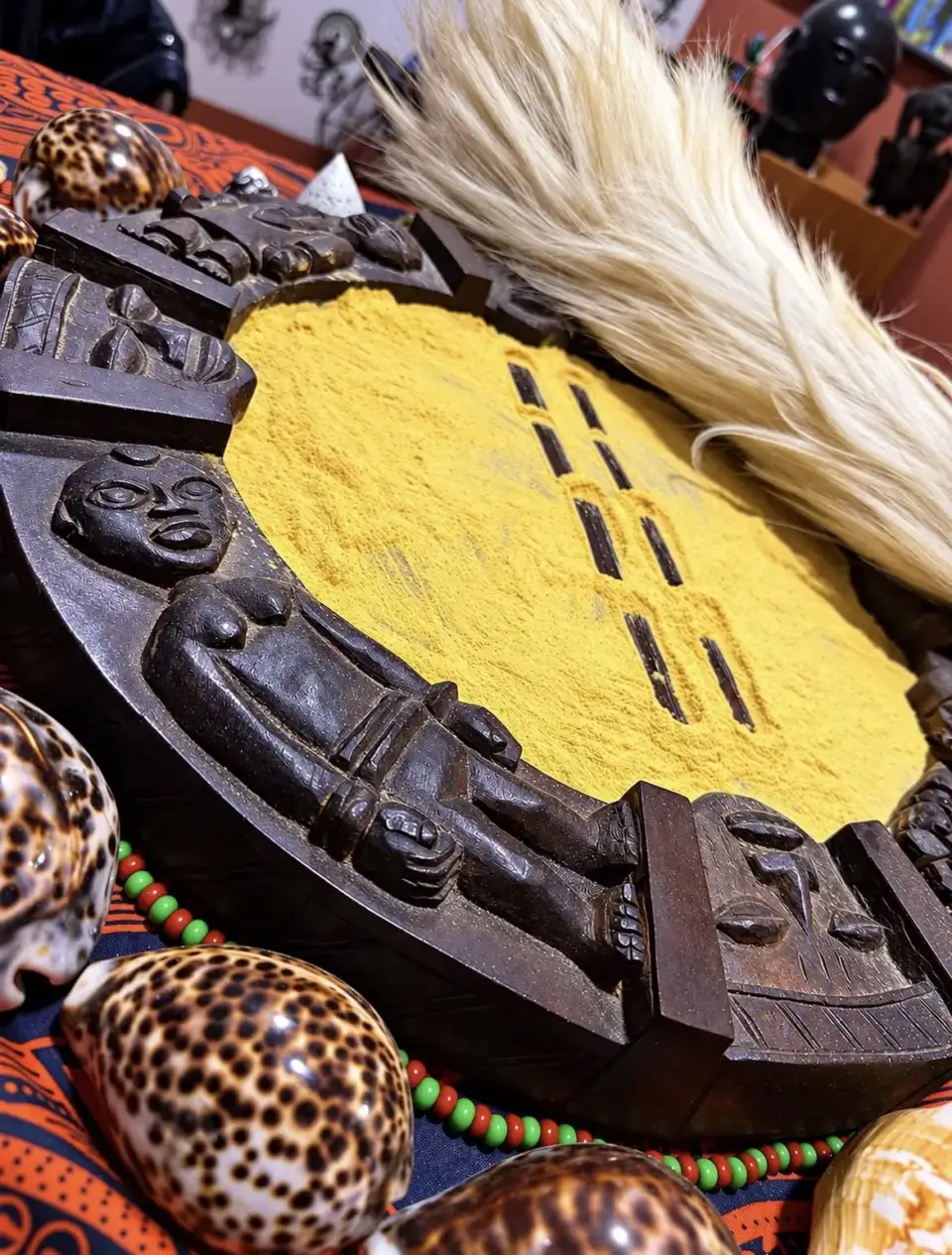
Nothing important is done in vodun without consulting the Fâ. The bokonon casts the opèlè, a divination chain, or traces signs on a tablet covered with powder, and reads the answer. The Fâ of the Fon is a relative of the Ifá of the Yoruba, which UNESCO has inscribed on its list of the intangible cultural heritage of humanity: the UNESCO page on the Ifa divination system describes this system of signs.
At the Sakété temple, Wêtê Agbonon consults the Fâ for each person who writes to him. The Fâ says what is really happening, what can be done, through which spirit and within what time. It is this answer that decides whether a ritual takes place.
In practice
How the religion is lived
Six elements found in every temple of southern Benin.
The altars
Each spirit has its altar, made of earth, statues and the traces of past offerings.
The offerings
Kaolin, red palm oil, drinks, feathers, cowries: each spirit receives what it asks for.
The prayers and songs
Spoken and sung by the priest and the initiates, in the language of the house.
The ceremonies
Some at night, with a vigil; some at the river; some during the great annual festivals.
The initiation
Women and men enter the service of a spirit, for life, when the Fâ calls them.
The Fâ
Consulted before every important decision, by a bokonon who received the charge.
A short history of African voodoo
Vodun grew over centuries among the peoples of the Gulf of Guinea, long before the kingdoms that made it famous. The kingdom of Dahomey, whose capital was Abomey, organised the cults of its royal spirits and its ancestors, while Ouidah, on the coast, became a great centre of voodoo, and also a port of the slave trade. During the colonial period, missionaries and administrators fought the cults, burned altars and called the priests witch doctors. Voodoo survived in families, in villages and in sacred forests.
Since the 1990s, the Beninese state has recognised vodun as a religion in its own right, and dedicates a national holiday to it: 10 January for many years, then, since a 2024 law, the second Friday of January. Today, temples are rebuilt, festivals draw visitors from around the world, and researchers, journalists and priests write about it openly. The encyclopedia vodunbenin.org is part of this movement: a priest writing down what he knows, for everyone to read.
Living with the spirits
For those who practise it, voodoo is a daily relationship. Families keep altars for their spirits and their ancestors; children grow up knowing the prohibitions of their house; important moments of life, births, marriages, deaths, journeys, are marked by consultations and offerings. When a difficulty arises, people go to the bokonon to understand what is happening, and to the priest to set things right with the spirits.
This relationship is made of exchange and respect. The spirits protect and guide; in return, people honour them, keep their prohibitions and feed their altars. A forgotten obligation, in this logic, can explain why things go badly, and the Fâ is the way to find out.
What the rituals of African voodoo are for
A ritual always answers a precise situation designated by the Fâ: to protect a person, a house or a business; to lift a charge laid by someone; to repair a bond between two people; to settle an obligation towards a spirit or the ancestors; to welcome an initiate. Each ritual combines offerings, prayers and songs, sometimes a vigil or a bath at the river, and it is led by the one who received the charge. The page voodoo rituals describes what is done at the Sakété temple.
Women in African voodoo
Women hold a large place in voodoo. Many vodunsi, the initiates, are women, and some women lead convents or serve as priestesses, notably in the cults of the waters such as Mami Wata. The page voodoo priestess looks at their role, in Benin, in Haiti and in New Orleans.
African voodoo in Benin today
In Benin, vodun is a recognised religion. Every year, a national holiday is dedicated to it in January, on the second Friday of the month since 2024, and the Vodun Days gather crowds in Ouidah, on the coast. Many Beninese live it alongside Christianity or Islam: they go to church or to the mosque, and they also honour their family spirits and consult the Fâ. The page the voodoo festival in Benin explains how to attend.
Voodoo also takes part in public life. The protection of sacred forests and mangroves is a well-known example: by placing a place under the protection of a spirit, communities forbid cutting its trees. Wêtê Agbonon appeared in a France 24 report on this subject, broadcast on 12 January 2026.
African voodoo across the Atlantic
The voodoo of Benin crossed the Atlantic with the people deported during the slave trade. In Haiti, it gave birth to Vodou; in Louisiana, to Voodoo and, alongside it, to hoodoo; in Brazil, the Candomblé Jejé keeps the memory of the Fon vodun; in Cuba, the Arará tradition does the same. These are related religions, each with its own history. The page voodoo vs hoodoo explains one of the most frequent confusions.
African voodoo and nature
Many voodoo spirits are bound to a place: a river, a lagoon, a tree, a forest, a stretch of mangrove. Honouring the spirit means protecting the place where it lives. Sacred forests, where only initiates may enter, have kept trees that would otherwise have been cut; rivers and springs have their prohibitions; some fish and animals are never eaten by the followers of a given spirit.
This link between faith and nature is one of the reasons why voodoo draws the attention of ecologists and journalists today. When a community places a mangrove under the protection of a spirit, nobody dares to cut its wood. Wêtê Agbonon took part in such a protection, filmed by France 24 in Gogotinkpon, his mother’s village, and quoted by Le Rural. For him, it is simply what a priest does: keep the balance between people, spirits and the land they share.
The words of African voodoo
A few words come back in every conversation about voodoo in Benin. Knowing them helps to understand what a priest says, and to spot those who only borrow the vocabulary.
- Vodun: the spirits, and by extension the religion itself.
- Vodunon: the priest who keeps the altars of a spirit.
- Bokonon: the diviner who reads the Fâ.
- Vodunsi: the initiates, women and men, in the service of a spirit.
- Fâ: the divination system, and the voice that answers through it.
- Opèlè: the divination chain cast by the bokonon.
- Bo and bocio: the active forces and the consecrated statues that protect.
Visiting a temple of African voodoo
Visitors are welcome in many temples of Benin, provided they respect a few simple rules: ask before taking photographs, never touch an altar, follow the instructions given by those who receive you, and avoid go-betweens who offer an express ritual in the street. A ritual is designated by the Fâ; it is never improvised for a tourist in a hurry. Those who want to live a ritual at the Sakété temple prepare it with Wêtê Agbonon, on the date the Fâ indicates.
What African voodoo is not
The doll stuck with pins, the zombie and the curse bought online come from cinema and from trade, far from Benin. In African voodoo, a statue is prescribed by the Fâ and consecrated on an altar, usually to protect; a ritual is designated for one person, at one moment; a priest answers for what he does. The pages voodoo doll and is voodoo dangerous? answer the most common fears.
Consulting a priest of African voodoo
Those who live far from Benin can consult a priest at a distance. Wêtê Agbonon consults the Fâ with your name, your date of birth and a photograph of you, which stays at the temple. If the Fâ opens the way, he sends a written quote, then leads the ritual himself at the Sakété temple, where you can be present or which you can follow from a distance. The page voodoo priest describes his role, and voodoo consultation each step.
He commits only after consulting the Fâ. When he commits, he leads the work himself, to the end, and stays reachable afterwards. He takes your money only if he can act.
In short
African voodoo in eight facts
What anyone can check.
- Where
- Southern Benin and Togo; related forms in Ghana and Nigeria
- Peoples
- Fon, Ewe, Aja, Gun, Mina
- The spirits
- The vodun: Legba, Hèviosso, Sakpata, Dan, Mami Wata, Gu and others
- Divination
- The Fâ, relative of the Yoruba Ifá
- Priests
- Vodunon (priests), bokonon (diviners), vodunsi (initiates)
- In Benin
- Recognised religion, national holiday every January
- Diaspora
- Haiti, Louisiana, Brazil, Cuba
- To read
- vodunbenin.org, the encyclopedia of Wêtê Agbonon
His limits
What a priest of African voodoo refuses
Harming anyone
No revenge, no “return to sender”: a priest who serves by the rules protects.
Selling rites as products
A ritual is designated by the Fâ, for one person, never chosen from a price list.
Publishing sacred words
Songs, formulas and initiatory teachings stay at the temple.
Coming before a doctor
When a story calls for medical care, he says so before any rite.
Questions
What people ask about African voodoo
What is African voodoo?
The traditional religion of the Fon, Ewe and related peoples of Benin and Togo, built around the vodun spirits, the ancestors and the Fâ divination, with its priests, temples and initiates.
Is African voodoo a religion?
Yes. In Benin it is a recognised religion, with a national holiday every January, its priests, its temples and its convents.
What is the difference between African voodoo and Haitian Vodou?
Haitian Vodou was born from African voodoo carried across the Atlantic, mixed with other African traditions and with Catholicism. They are related religions, each with its own history.
Who are the gods of African voodoo?
Above all stands a distant creator, Mawu-Lisa in the Fon tradition. The vodun are the spirits that people honour: Legba, Hèviosso, Sakpata, Dan, Mami Wata, Gu and many others, along with the ancestors.
Is African voodoo real?
It is a living religion, practised every day by millions of people in West Africa. What is not real is the image of cinema: pins, zombies and curses bought online.
Is African voodoo dangerous?
Served by the rules, by a priest who received his charge, it prays, protects and repairs. The real danger comes from impostors who use its name.
Is African voodoo the same as witchcraft?
No. In Benin, voodoo is a religion served by priests who pray, protect and repair; witchcraft is knowledge turned to harm, which those priests fight and refuse to practise.
What does the word vodun mean?
In the Fon language, vodun designates the spirits that people honour, and by extension the whole religion. Voodoo is the usual English spelling.
Can a foreigner be initiated into African voodoo?
Yes, when the Fâ says the way is open. People from Europe and elsewhere have received initiation at the Sakété temple. See voodoo initiation.
Where is African voodoo practised?
Mainly in southern Benin and Togo, among the Fon, Ewe, Aja, Gun and Mina peoples, with related forms in Ghana and Nigeria and descendants in Haiti, Louisiana, Brazil and Cuba.
Do people in Benin practise voodoo and another religion?
Many do. They go to church or to the mosque, and they also honour their family spirits and consult the Fâ.
Can I consult a priest of African voodoo from abroad?
Yes. Wêtê Agbonon consults the Fâ at a distance, free of charge, and leads the rituals at the Sakété temple.
Write to him
He answers himself, within two hours
The first exchange is free and confidential. You set out your situation, he consults the Fâ, then you decide freely.