
Voodoo priest · The Sakété temple
Voodoo priest: who he is, what he does, and how to consult one in Benin
A voodoo priest serves the voodoo spirits on the altars of a temple, consults, prays and leads the rituals. Here is what the role means in Benin, how a priest is trained, and how Wêtê Agbonon, voodoo priest at the Sakété temple, works for those who write to him.
Filmed testimony
“I was skeptical at first, but I’m honestly so grateful I gave it a chance.”
A client, face shown, in her own words
The Fâ first
A voodoo priest begins by consulting
Every morning at the Sakété temple starts with the same gestures. Wêtê Agbonon greets the voodoo spirits, checks the altars, then consults the Fâ for those who have written to him. With the opèlè and the tablet of his ancestor, he asks what is really happening in each life, what can be done, and through which spirit. This consultation is free.
When the Fâ opens the way, he prepares the offerings, prays on the altars and leads the ritual himself, then reports back on what was done. That is the work of a voodoo priest in Benin, and it has been his for more than thirty years.
African voodoo: the religion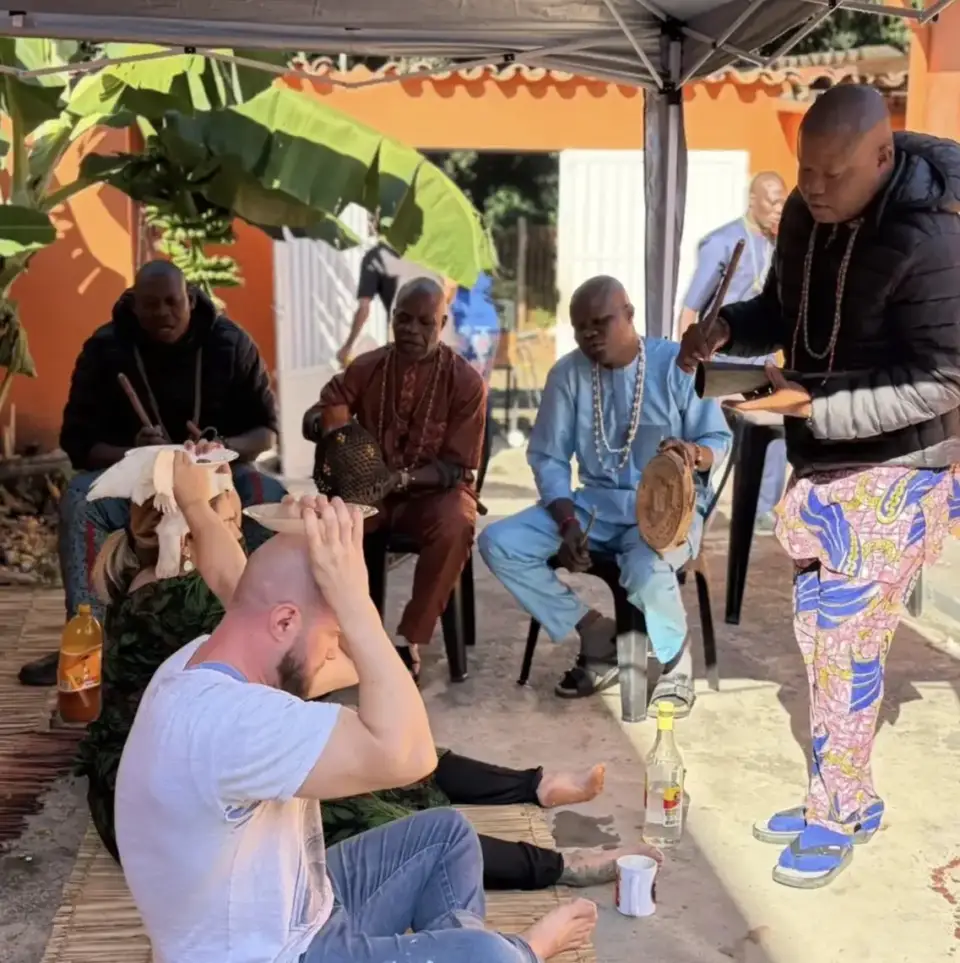
What is a voodoo priest?
A voodoo priest serves one or several voodoo spirits in a temple or a convent. He holds the charge of their altars: he keeps them, feeds them with the offerings each spirit asks for, leads the ceremonies, and speaks to the spirits on behalf of those who come to him. In the Fon language of Benin, the priest is called vodunon, the one who keeps the vodun.
The role is received, never self-proclaimed. A priest is initiated, learns for years from those who hold the knowledge, and receives from them the charge of the altars, with its rules and its prohibitions. In many houses, as in the family of Wêtê Agbonon, that charge passes from one generation to the next. For an overview of the religion he serves, see the Wikipedia page on West African Vodun and the page African voodoo.
Voodoo priest, bokonon, initiate: three roles
- The priest serves the spirits: he keeps the altars, prays, prepares and presents the offerings, leads the rites.
- The bokonon is the diviner of the Fâ: he consults with the opèlè and the tablet, reads the signs and says what must be done.
- The vodunsi are the initiates, women and men, in the service of a voodoo spirit. See voodoo initiation.
Wêtê Agbonon holds two of these charges: he is a voodoo priest and a bokonon. This matters for those who consult him, because the one who reads the Fâ is also the one who leads the ritual it asks for. Nothing is lost between the answer and the work.

How a voodoo priest is trained
There is no school and no diploma. A future priest is chosen, often by the Fâ itself, then initiated. He spends years at the side of an elder, learning the songs, the gestures, the colours and the prohibitions of each spirit, the composition of offerings, the order of a ceremony. He learns to read the Fâ, which alone takes a long apprenticeship. Only then does he receive the charge of altars, and with it the duty to answer for them.
Wêtê Agbonon grew up in this way, in the house of his family in Sakété, where the Fâ and voodoo are passed down from generation to generation. He still consults with the opèlè and the tablet that belonged to his ancestor.
A day in the life of a voodoo priest
Days at the temple follow the needs of the spirits and of the people who consult. In the morning, the altars are opened and greeted. Then come the consultations of the Fâ, one person at a time, often at a distance for clients abroad. In the afternoon, the priest prepares what the rituals of the coming days require: kaolin, red palm oil, drinks, feathers, cowries, everything the designated spirit asks for. Some rituals take place at night, with a vigil; others at the river, with a ritual bath.
Between these moments, he answers the messages of those who wrote to him, explains to them what the Fâ said, sends the instructions to follow, and reports back after each ritual. A priest who serves well is reachable: those who consult him are never left without news.
What a voodoo priest works with
His tools are simple and old: the opèlè, a divination chain; the Fâ tablet, on which signs are traced in a fine powder; the altars of earth and their statues; the offerings that each spirit receives. What gives them their force is the consecration, the word of the priest and the answer of the Fâ. None of this can be bought online, and none of it is published as a recipe: these practices are learned in a house, from someone who passes them on.
At the temple
What a voodoo priest does for those who consult him
Six gestures, always in the same order, whatever the request.
He listens
He asks the questions that help him understand the situation: since when, what changed, who lives under the same roof.
He consults the Fâ
With the opèlè and the tablet of his ancestor. The consultation is free.
He tells the truth
He says what the Fâ answered, frankly, without softening or dramatising anything.
He prays to the spirits
On the altars, to the voodoo spirit the Fâ designated, with the offerings it asks for.
He leads the ritual
Himself, at the temple, sometimes with a vigil or a ritual bath at the river.
He reports back
He tells you what was done and which instructions to follow, and stays reachable afterwards.
The voodoo priest in Benin, the land of voodoo
Benin is often called the cradle of voodoo. There, voodoo is a recognised religion, celebrated every year with a national holiday in January, and practised openly in temples, convents and sacred forests. The priest has a respected place in his community: people come to him for advice, for protection, for the ceremonies of birth and death, for the problems that medicine and the law do not settle.
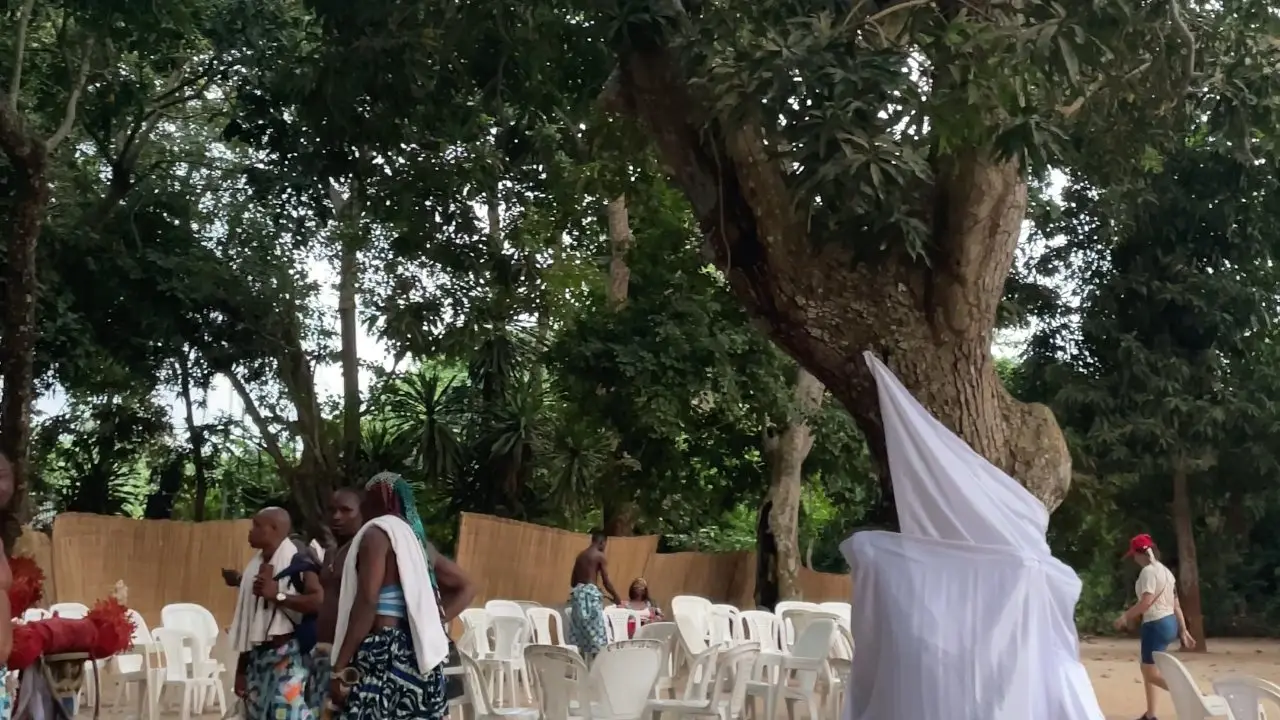
Wêtê Agbonon serves in Sakété, in the Plateau department, about thirty kilometres north of Porto-Novo. Clients from Europe have travelled there to live their ritual on site. The page the Sakété voodoo temple shows the temple in pictures, and the voodoo festival in Benin explains how to combine a visit with the Vodun Days.
Voodoo priest, Haiti and New Orleans
The voodoo of Benin crossed the Atlantic with the people deported during the slave trade. In Haiti, it became Vodou, where the priest is called houngan and the priestess mambo. In New Orleans, Voodoo took yet another form, alongside hoodoo, a folk magic of the American South. These are related traditions with their own histories. The pages voodoo priestess and voodoo vs hoodoo explain the differences.
How to consult a voodoo priest from abroad
Most of the people who write to Wêtê Agbonon live in Europe or North America. The consultation of the Fâ is done at a distance, with your name, your date of birth and a photograph of you, which stays at the temple and is never published. If the Fâ opens the way, he sends a written quote with one single amount and the time the Fâ gave. The ritual is then performed at the temple, by his own hand; you can come and attend, or follow it from a distance and receive a report.
How to recognise a real voodoo priest
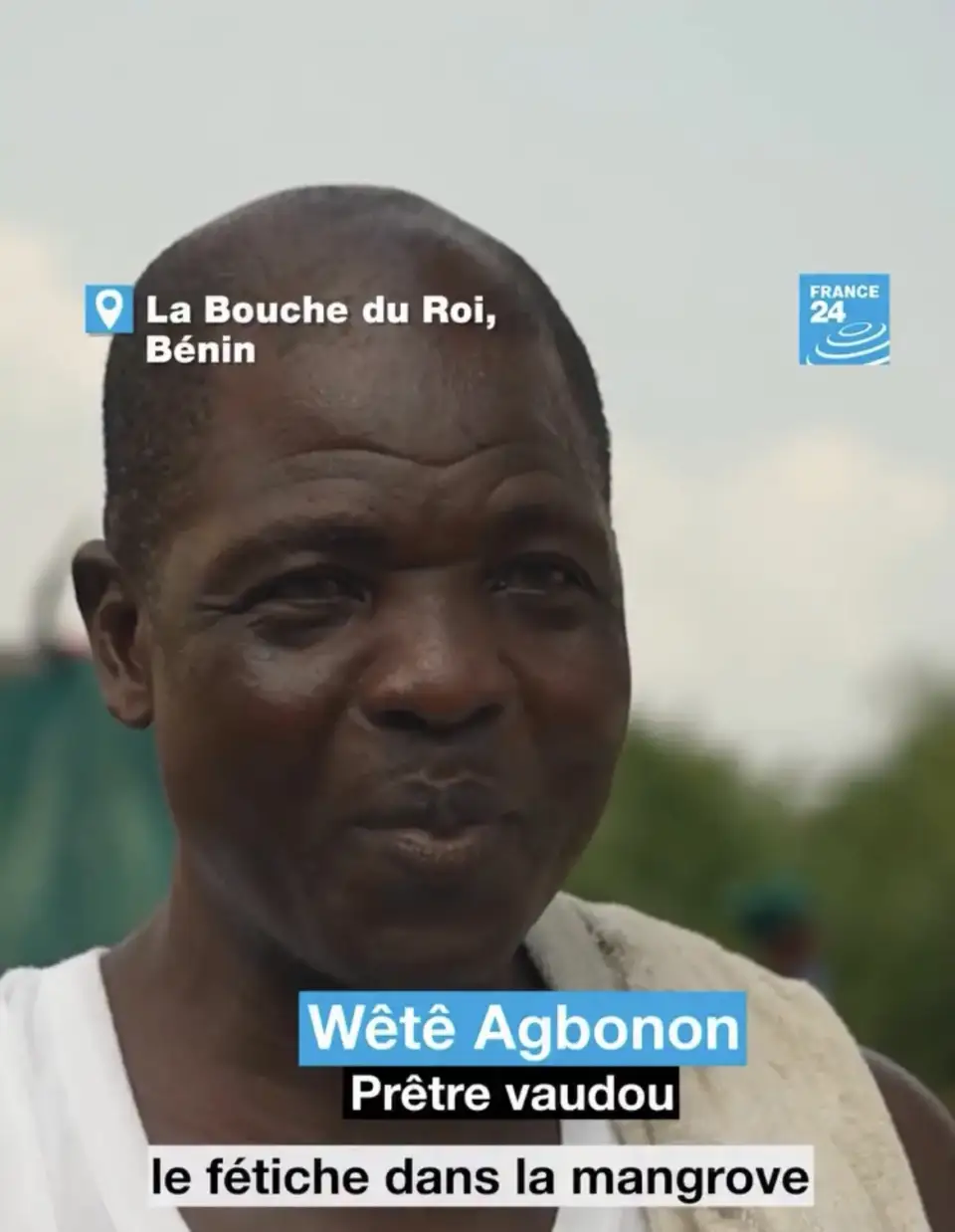
A real priest has things that cannot be invented: a lineage, a temple people have visited, a consultation before any payment, a written commitment, and people who speak about him with their faces visible. Wêtê Agbonon appeared in a France 24 report and was quoted by the Beninese newspaper Le Rural in January 2026. The page real voodoo priest lists what to check, and best voodoo priest explains why some of his clients give him that title.
He commits only after consulting the Fâ. When he commits, he leads the work himself, to the end, and stays reachable afterwards. He takes your money only if he can act.
In short
Wêtê Agbonon, voodoo priest
What anyone can check before writing to him.
- Birth name
- Wêtê Agbonon
- Known in Europe as
- Maître Luc
- Temple
- Sakété, Plateau department, Benin
- Mother’s village
- Gogotinkpon
- His charges
- Voodoo priest, Fâ diviner (bokonon)
- In the tradition for
- More than 30 years
- Testimonies
- 22 filmed testimonies, faces visible
What people ask a voodoo priest for
- Love and relationships: a couple drifting apart, a separation, a bond to repair. See voodoo love spells.
- Lifting a curse or a charge placed against them or their home. See curse removal and black magic.
- Protection for themselves, their family or their business. See protection spell.
- Luck and work, when every door seems to close.
- Family: conflicts that keep coming back, obligations towards the ancestors.
- Initiation, for those the Fâ calls.
In each case, the priest begins by consulting. It is the Fâ, and not the request, that decides what will be done. Two people who come for the same reason do not always receive the same ritual.
What the Fâ consultation reveals
People are often surprised by what the consultation brings out. The Fâ says where a difficulty comes from: an ordinary trial of life, a charge laid by someone, a forgotten obligation towards a spirit or towards the ancestors. It says what can be done, through which spirit and within what time. It also says when nothing should be done, and a serious priest respects that answer, even when the person insists.
Voodoo priest, marabout, spell caster: the words people use
People who look for help from Europe or America rarely type the words of Benin. In France, they say marabout; in English, they search for a spell caster or an african witch doctor. Wêtê Agbonon answers to all these words, because they are the words of those who are looking. In Benin, he is a priest and a bokonon, and that is what he remains whatever the word used. The pages spell caster and african witch doctor explain where these words come from and what to check behind them.
Why the Fâ comes before the ritual
A priest who acts without consulting works blind. The same complaint, a partner who left or a run of bad luck, can have very different causes, and each cause calls for a different answer. That is why, at the Sakété temple, the consultation always comes first: it avoids lifting a charge that does not exist, praying to the wrong spirit, or promising what cannot be done. When the Fâ has spoken, the work has a direction, a spirit and a time, and the priest can commit to it in writing.
The voodoo priest and money
In Benin, a priest is not paid for his word: the consultation of the Fâ is free. What has a cost is the ritual itself, because the offerings, the time at the altars and the work of the priest are real. With Wêtê Agbonon, that cost appears in a written quote with one single amount, sent only if the Fâ opens the way. Payment can be made in instalments, and the quote states the time the Fâ gave, with a free resumption if that time passes without satisfaction, instructions followed. See the written terms.
His limits
What a voodoo priest refuses
Promising before the Fâ
He commits to nothing before consulting; afterwards, he commits in writing.
Working against anyone
He works for the person who consults him, never to harm another.
Naming a culprit
No name comes out of a consultation, among the living or the dead.
Coming before a doctor
When a story calls for medical care, he says so before any rite.
Questions
What people ask about a voodoo priest
What is a voodoo priest called?
In the Fon language of Benin, a voodoo priest is called vodunon, the one who keeps the vodun. The diviner of the Fâ is called bokonon. In Haiti, the priest is called houngan and the priestess mambo.
Can anyone become a voodoo priest?
No. A priest is chosen, initiated and trained for years, then receives the charge of altars from those who held it. The Fâ says whether such a path is open for someone.
What does a voodoo priest do?
He consults, prays to the voodoo spirits, prepares the offerings, leads the rituals and protects those who come to him. Wêtê Agbonon also reads the Fâ, as a bokonon.
How much does a voodoo priest charge?
With Wêtê Agbonon, the first exchange and the Fâ consultation are free. If the Fâ opens the way, the ritual is quoted in writing, with one single amount, before any payment.
Can a voodoo priest help with love?
Yes, when the Fâ says the bond can be renewed. The ritual works on the bond and on what blocks it; it never forces anyone’s will.
Do voodoo priests do black magic?
A priest who serves voodoo by the rules prays, protects and repairs. Wêtê Agbonon never works against anyone.
Where can I find a voodoo priest?
Voodoo is practised openly in Benin, in temples and convents. Wêtê Agbonon serves at the Sakété temple and answers people from any country on WhatsApp.
Is there a voodoo priest near me?
You do not need one nearby: the Fâ consultation is done at a distance, and the ritual is performed at the temple by his own hand.
Can a voodoo priest see the future?
In his tradition, it is the Fâ that sees; the priest reads its answer. Wêtê Agbonon consults it for each person, and commits only on what it says.
Does a voodoo priest work for women and men alike?
Yes. Women and men consult him, from many countries, for love, protection, family or work. The Fâ is consulted in the same way for everyone.
Is it safe to consult a voodoo priest?
Yes, if you check who you are talking to. Use his official lines only: he answers himself and never writes first. See official accounts.
Read on
Before you write to him
Write to him
He answers himself, within two hours
The first exchange is free and confidential. You set out your situation, he consults the Fâ, then you decide freely.