Voodoo doll · What a priest says
Voodoo doll: what it really is in Benin, and what to do if you fear one
The voodoo doll stuck with pins owes a lot to cinema. In Benin, the statues of the altars protect. Wêtê Agbonon, voodoo priest, explains what they are, and what he does when someone fears being targeted.
Filmed testimony
“I was skeptical at first, but I’m honestly so grateful I gave it a chance.”
A client, face shown, in her own words
What he sees at the temple
On the altars, statues that protect
People often write to Wêtê Agbonon about a voodoo doll: out of curiosity, because they bought one, or because they fear a doll is being used against them. He answers first with what he knows: in Benin, the statues placed on voodoo altars are made to protect.
When someone fears being targeted, he neither reassures them lightly nor frightens them. He consults the Fâ, free of charge, and tells them how things stand.
Curse removal: how it is done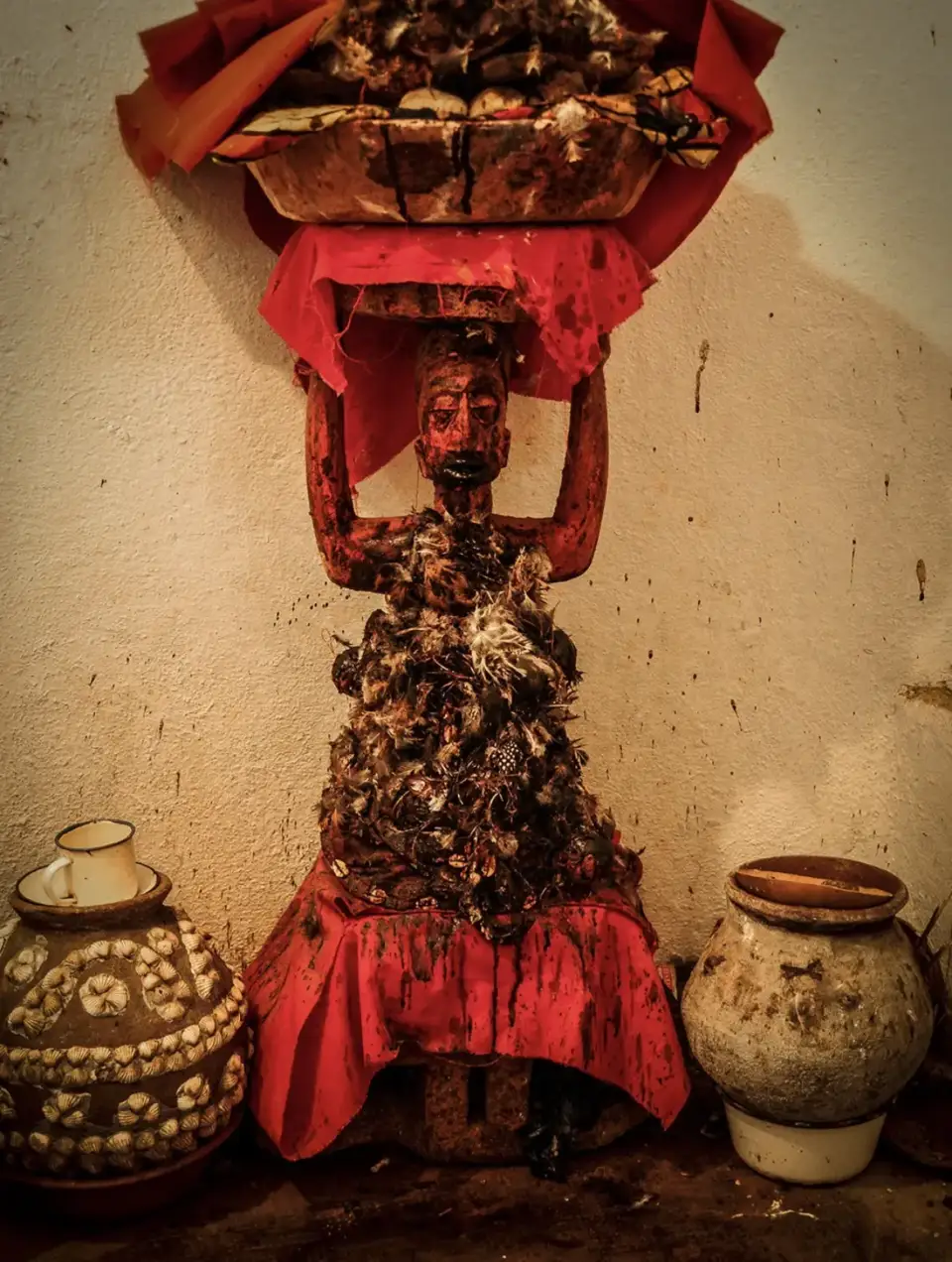
The voodoo doll: an image from the cinema
The rag doll stuck with pins, sold in souvenir shops, owes a lot to films and to trade, far from Benin. At the Sakété temple, no one sticks pins into a voodoo doll, and no one sells objects at a distance as if they worked on their own.
In Benin, the bocio: protective statues
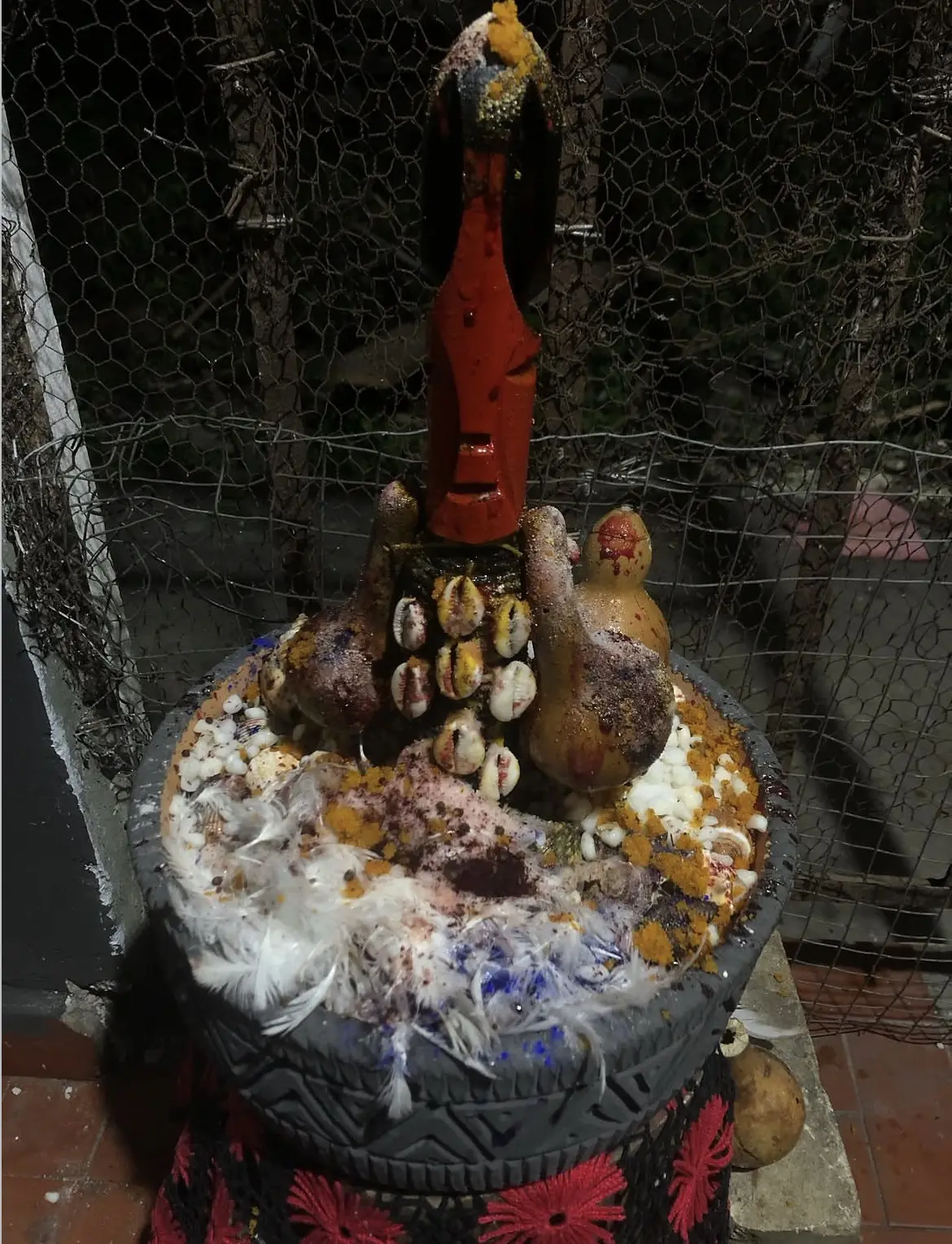
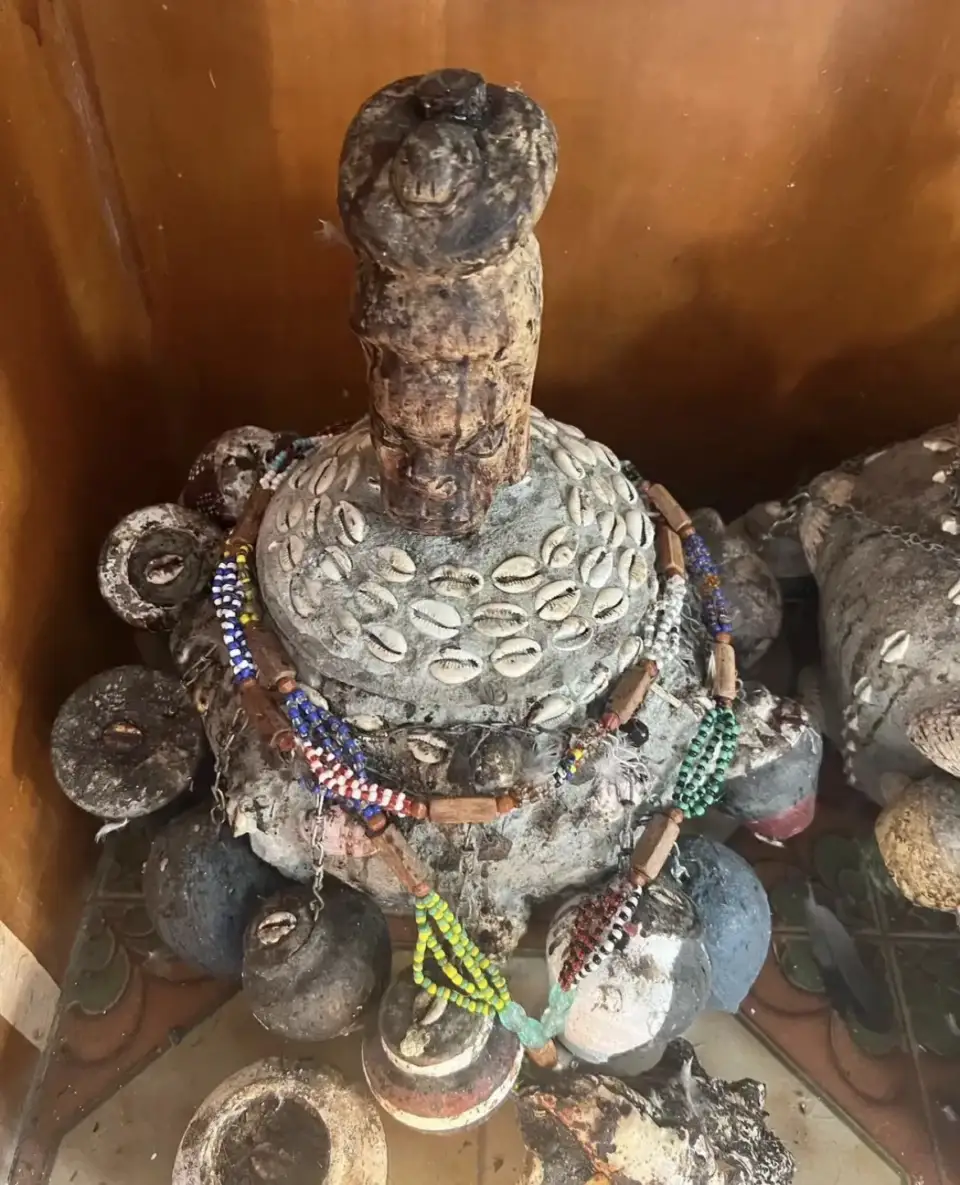
What most resembles a voodoo doll in Benin are the bocio: wooden statues placed near altars and in the courtyards of houses. The word joins bo, the active force, and cio, the corpse: the statue acts as a double, onto which what threatens the person is turned away, as art historian Suzanne Preston Blier explains at the Metropolitan Museum.
A statue becomes a bocio when the bokonon prescribes it, after consulting the Fâ, and consecrates it on the altar with offerings and prayers. Without that consecration, it remains a piece of wood.
What these statues do
- Protect a person or a family, by turning away what targets them.
- Guard a house, a courtyard or a business.
- Accompany a request made to a voodoo spirit, when the Fâ has prescribed it.
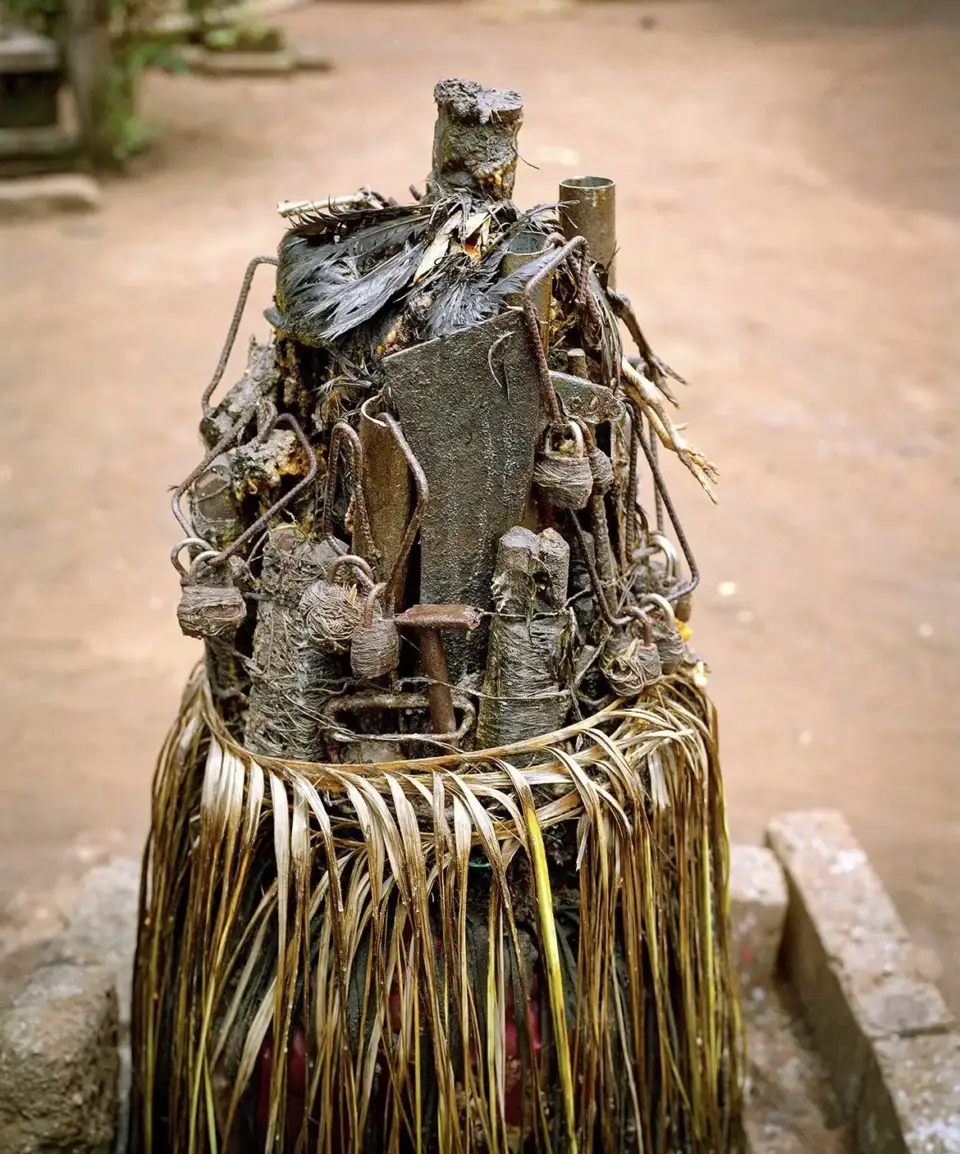
Some old statues kept in museums carry padlocks or bindings: they were used to “close” a matter. That part of the knowledge exists, and it is the reason it is not entrusted to just anyone. Wêtê Agbonon never works against anyone.
Where the voodoo doll we know comes from
The knowledge of the Fon and Ewe peoples, in Benin and Togo, crossed the Atlantic with the people deported during the slave trade. In Haiti, then in the United States, it changed through contact with other traditions, including hoodoo in Louisiana. The souvenir-shop doll was born much later, from that mixture and from the imagination of cinema: it kept the name of voodoo and drifted away from what is done on its altars.
That is why people who write to Wêtê Agbonon after seeing a doll in a film or online are often relieved by his answer. At the Sakété temple, a statue is prescribed, consecrated, and used to protect.
Who decides on a statue: the Fâ
A protective statue is never prepared at random. The Fâ first says whether the person needs one, which voodoo spirit must be prayed to, and what must be placed on the altar. Wêtê Agbonon then prepares the statue, consecrates it with the right offerings, and tells the person how to keep it and which instructions to follow.
What he answers
Voodoo doll: 5 truths from a priest
A bought doll does nothing
In voodoo, what acts is the consecration of the object, the offerings and the priest’s word, after the Fâ.
The pins do not come from Benin
The image of the doll stuck with pins owes a lot to films and souvenir shops.
Altar statues protect
In Benin, the bocio serve first to guard a person, a family or a house.
Fear is handled at the temple
If you fear being targeted, the Fâ says whether there is something, and how it is lifted.
Nothing is done against a will
At the Sakété temple, a statue is never used to harm anyone or to force anyone to love.
Why voodoo dolls became souvenirs
Voodoo dolls are easy to make, easy to sell and easy to understand: a figure, pins, a story. That is why they became souvenirs in New Orleans and toys in gift shops. The statuettes of the temples of Benin follow another logic: they are prescribed for one person, consecrated, cared for, and their purpose is to protect. Confusing the two is like confusing a postcard of a church with the church itself.
What a protective statuette asks of you
A statuette consecrated at the temple is not an object you put down and forget. It is placed where the Fâ indicates, and looked after according to the instructions Wêtê Agbonon gives in writing. These instructions are simple, and they are part of the work: the protection lives as long as it is respected.
Voodoo doll: where the image really comes from
The idea of a figure you pierce to reach someone is far older than cinema, and it was not born in Benin. In Europe, at the time of the witch trials, people were already accused of piercing wax figures to cause harm. In Louisiana, these European images met the knowledge brought from Africa; souvenir shops and films then fixed the voodoo doll we know today.
At the Sakété temple, none of this applies: a statuette is prescribed by the Fâ, consecrated on an altar, and most often used to protect. The rag doll stuck with pins belongs to cinema, not to altars.
Pins and their colours
Dolls sold in shops often come with coloured pins, each tied to a meaning: love, money, luck, protection. These meanings come from manufacturers and shops, not from the temples of Benin. They have nothing to do with the consecration of a statuette, which happens on an altar, with offerings and prayers, by the one who has received the charge.
How to make a voodoo doll?
Many people search for how to make a voodoo doll at home. Wêtê Agbonon gives no instructions: a protective statuette is not made like a craft object. It is prescribed for one person, after the Fâ, and consecrated at the temple. Made at home, without consultation or consecration, a doll remains an object; made to harm, it belongs to what voodoo priests fight against.
The dolls of New Orleans
In New Orleans, Louisiana voodoo took shape where knowledge from West Africa, often by way of Saint-Domingue, met Catholicism. In the nineteenth century, priestesses such as Marie Laveau were famous there. The dolls sold today in the shops of the French Quarter belong mostly to the souvenir trade, which grew with tourism in the twentieth century.
Statuettes in museums
Museums around the world keep many statuettes from Benin and Togo: wooden bocio, figures loaded with materials, statuettes bound with cords or padlocks. They bear witness to an old knowledge that collectors long called fetishism. Looking at them helps understand that a voodoo statuette is a religious object, made to protect, not an evil toy.
Children and shop dolls
Parents sometimes worry when a child brings home a small doll bought on holiday or won at a fair. A souvenir of this kind has no power: it was mass-produced, without consultation or consecration. The best thing is to explain to the child where the image comes from, and that you do not pierce a doll to hurt someone, even in play.
When a doll is used as a threat
Some people receive a doll, a pierced photograph or a message with a figure, as a threat. Fear is the goal. Keep the object without handling it, photograph it, keep the messages, and do not hesitate to report the threats to the police. To know whether there is a charge, the Fâ consultation, free of charge, says what it is, and the temple does what must be done.
You fear a voodoo doll is being used against you
A doll found at the door, a threat overheard, a dream that keeps coming back: the fear is real, even when its cause is not. Here is what Wêtê Agbonon advises, in this order.
- Do not throw the object away in a hurry, and do not show it to just anyone.
- Photograph it, together with the place where you found it.
- Write to him on WhatsApp, with the photograph and a few lines about your situation.
- He consults the Fâ for you, free of charge, and tells you how things stand.
- If a charge weighs on you, the Fâ says how it is lifted and what protects afterwards.
How to counter a voodoo doll
People often look for a formula, a prayer or a gesture to perform at home. Wêtê Agbonon gives none: these practices are learned in a house, from someone who passes them on, with the prohibitions that go with them. What he does is consult, then lift at the temple whatever needs lifting.
When the Fâ confirms that a charge weighs on someone, the work is done on the altars: offerings and prayers addressed to the voodoo spirit the Fâ designates, sometimes a ritual bath or a vigil. The charge is lifted, and it ends there: nothing is sent back to anyone. The page curse removal describes this work step by step.
Voodoo doll and love
Many searches link the voodoo doll to love: people want someone to come back, or to be loved by someone. At the Sakété temple, work on a bond goes through the Fâ, which says what the bond can become again, then through rituals led on the altars. It never means forcing a will. The page voodoo love spells explains how he works.
Buying a real voodoo doll?
Dolls sold online as “real”, “activated” or “consecrated” are trade objects. In Benin, a protective statue is prescribed after the Fâ and consecrated at the temple, for one specific person. If you are looking for protection, first ask what the Fâ says.
People who write to him from abroad are often looking for a spell caster. They find a voodoo priest and Fâ diviner who answers himself: the page spell caster: 7 checks lists what to verify before paying anyone.
At the temple
Protective statues and fetishes
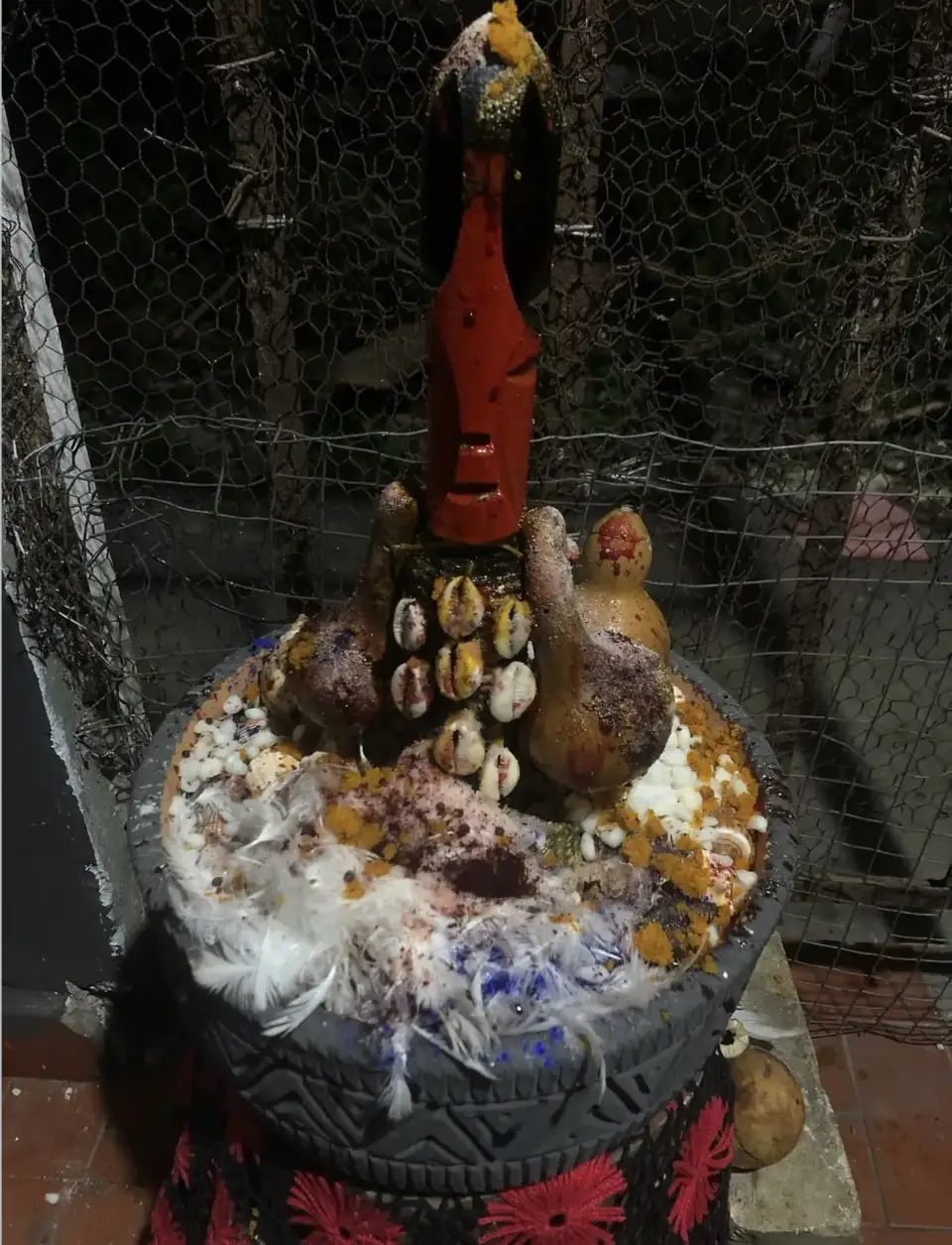 FetishFetish with a red face, adorned with cowriesFetishFetish covered with cowriesProtectionProtective fetish, in the courtyard
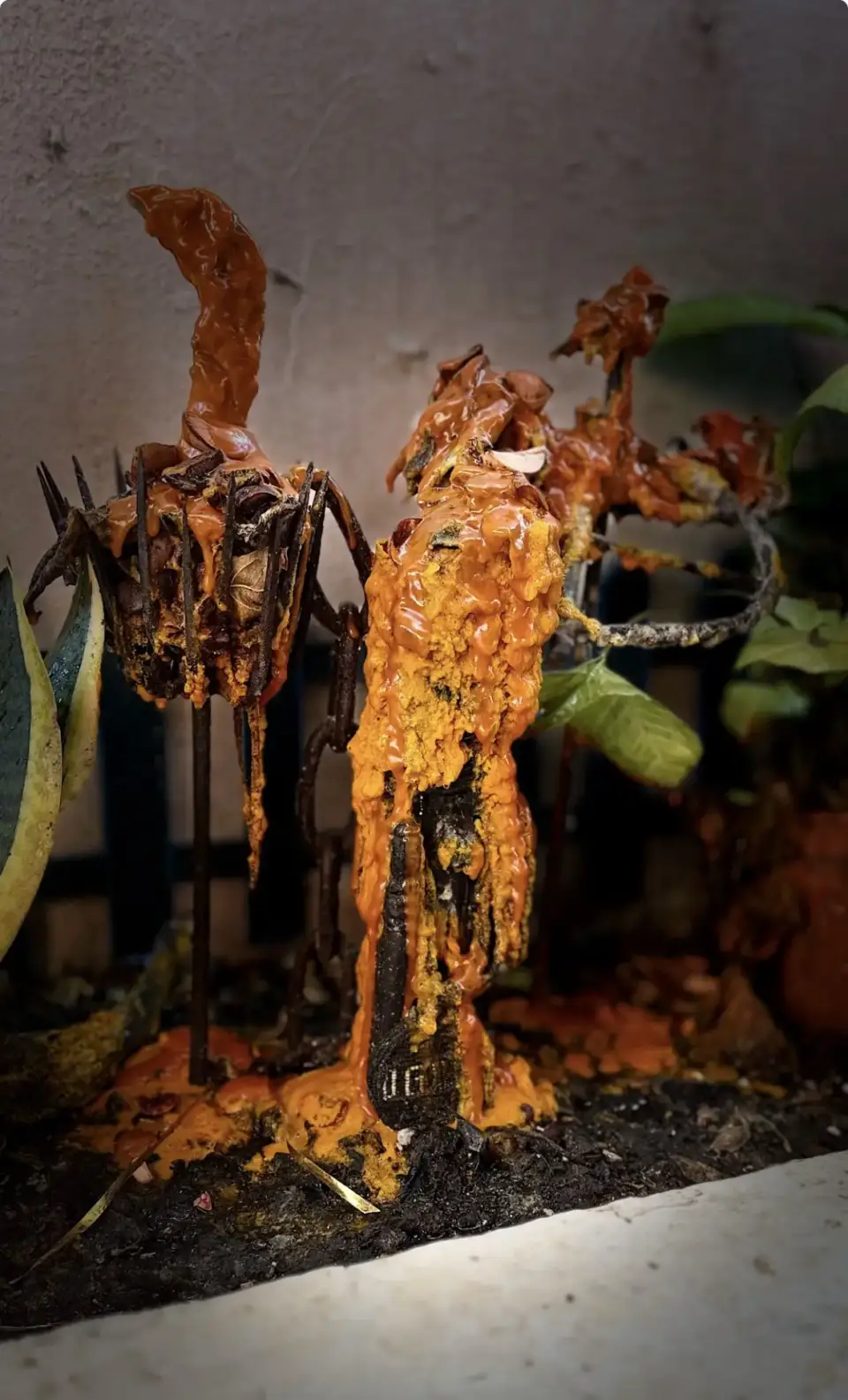 AltarFetishes, red oil and feathers
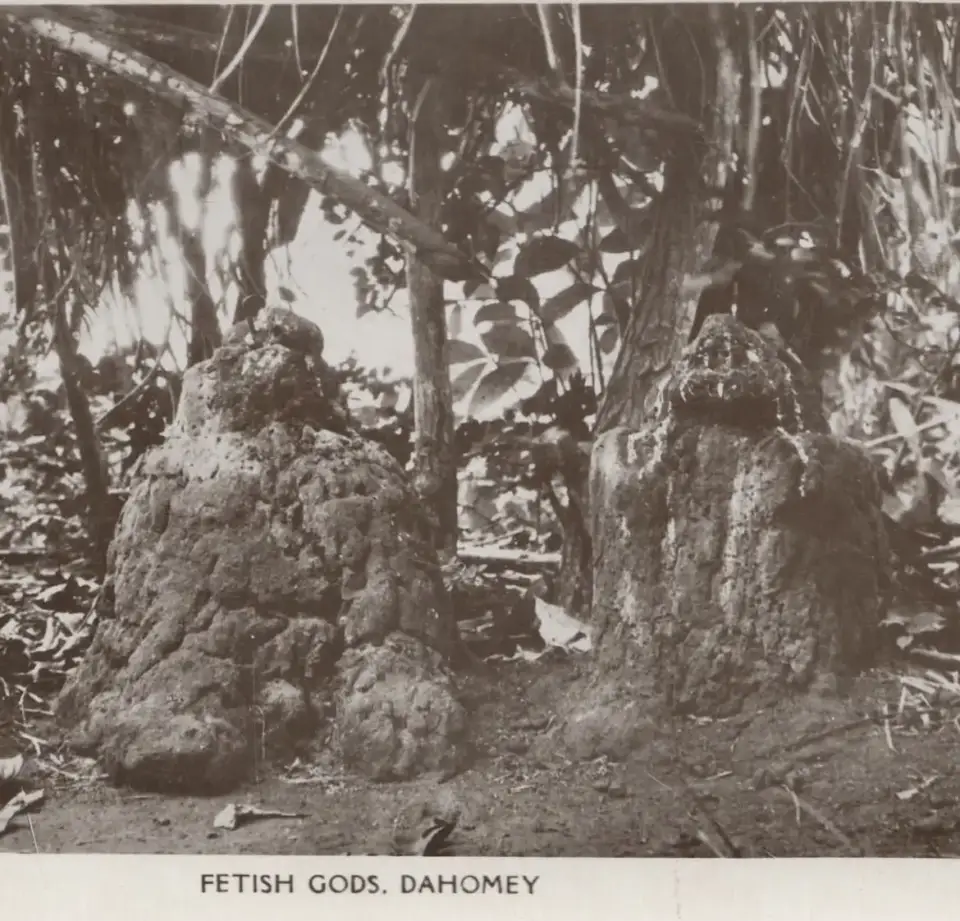 Archives“Fetish gods, Dahomey”, old photograph
Questions
What people ask him about the voodoo doll
Do voodoo dolls really work?
A bought object does nothing by itself. In voodoo, what acts is the consecration performed by a priest, after the Fâ consultation, with the right offerings and prayers.
How do I know if a voodoo doll is being used against me?
The signs you notice prove nothing on their own. Send Wêtê Agbonon a photograph of what you found: the Fâ consultation, which is free, says whether there is a charge and how it is lifted.
Should I burn or throw away a voodoo doll I found?
Do nothing in a hurry. Photograph it and write to him: the Fâ says what should be done with it.
How do you activate a voodoo doll?
He gives no instructions: a consecration is a priest’s act, done at the temple, for one specific person, after the Fâ.
Can he make a voodoo doll to hurt someone?
No. He never works against anyone.
Can a voodoo doll bring back a lover?
Work on a bond goes through the Fâ and through rituals at the temple, never through an object that would force a will.
How do you make a voodoo doll?
Wêtê Agbonon gives no instructions. A voodoo statuette is prescribed by the Fâ and consecrated at the temple, for one person; made at home, it remains an object.
What do the colours of voodoo doll pins mean?
These meanings come from souvenir shops, not from the temples of Benin. They have nothing to do with consecrating a statuette.
Can a voodoo doll bring bad luck?
A bought object does nothing by itself. If you fear a doll was made against you, the free Fâ consultation says whether there is a charge.
Are New Orleans voodoo dolls consecrated?
Most are souvenirs made for visitors. A protective statuette is consecrated at the temple, for one person, after the Fâ.
My child bought a voodoo doll: should I worry?
No. A souvenir has no power. Simply explain where the image comes from and that you do not pierce a doll to hurt anyone.
What should I do if a pierced doll was left at my home?
Do not handle it, photograph it, keep any messages, and write to Wêtê Agbonon. Report threats to the police as well.
Can a statuette protect my home?
Yes, when the Fâ asks for it: it is prepared and consecrated at the temple, with instructions for those who live in the house.
Can I give a voodoo doll as a gift?
A souvenir given as a joke remains an object. Simply avoid giving it to someone the image might frighten.
Does a protective statuette have to be hidden?
It is placed where the Fâ indicates, and Wêtê Agbonon tells you in writing how to keep it.
Does a homemade voodoo doll have any power?
Made at home, without the Fâ or consecration at the temple, a voodoo doll remains an object. A protective statuette is prescribed for one person and consecrated on an altar.
Do voodoo dolls come from Africa?
Protective statuettes come from Benin and Togo; the doll stuck with pins owes much to European witchcraft, Louisiana and cinema.
Where are bocio statuettes made?
In Benin and Togo, by those who serve the vodun. Each one is made for a purpose, often protection, and consecrated.
Should I throw away a voodoo doll I bought?
There is no need: a souvenir has no power. If it frightens you, simply put it away or give it away.
Is it bad luck to own a voodoo doll?
No. A shop doll is a souvenir. Only a statuette consecrated at a temple has a religious role, usually protection.
Read on
Before you write to him
Write to him
He answers himself, within two hours
The first exchange is free and confidential. You set out your situation, he consults the Fâ, then you decide freely.