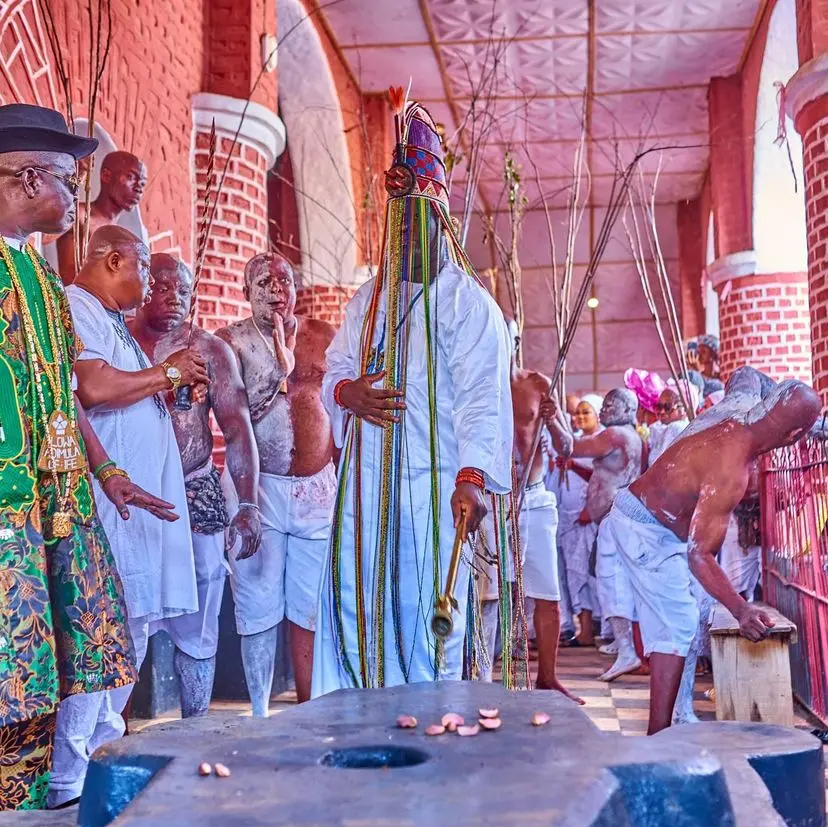
Spell caster · The Sakété temple
Spell caster: a voodoo priest from Benin, his temple and his method
A real spell caster can be recognised by what he does before asking for anything: he listens, he consults, he tells you what he sees. Here is how Wêtê Agbonon, voodoo priest at the Sakété temple in Benin, works.
Filmed testimony
“I was skeptical at first, but I’m honestly so grateful I gave it a chance.”
A client, face shown, in her own words
The Fâ first
A spell caster who starts by consulting
People who look for a spell caster from the United States, the United Kingdom or Canada want someone who can act. Wêtê Agbonon acts, at the Sakété temple in Benin: he prays to the voodoo spirits, prepares the offerings and leads the rituals with his own hands. He always begins with the same step: consulting the Fâ.
The Fâ is the divination art of his lineage. It says what is really happening, what can be done, and through which voodoo spirit. This consultation is free, and it decides what comes next.
His method: the Fâ first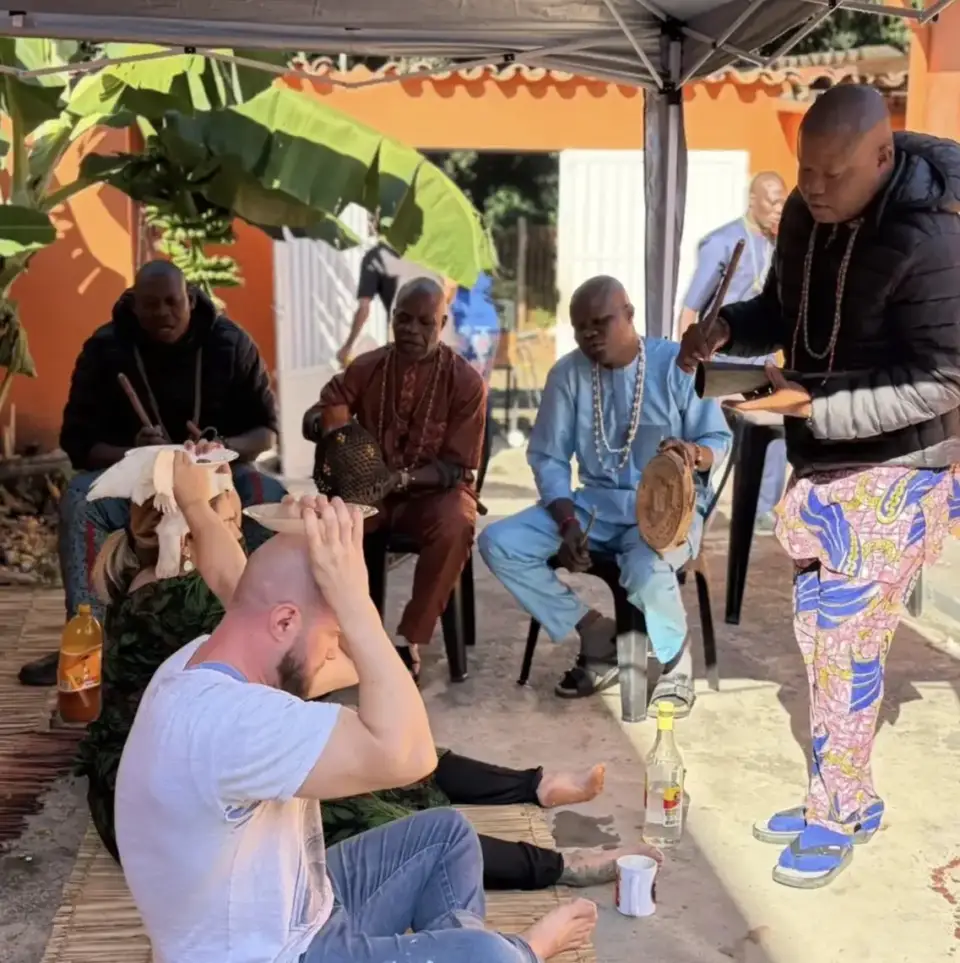
Spell caster: what the word means in Benin
In English, a spell caster is anyone who prays, consults or performs rituals on behalf of others. In Benin, people use more precise words: a bokonon is the one who consults the Fâ, and a priest is the one who serves a voodoo spirit. Wêtê Agbonon is both. His clients in Europe call him a marabout, and those who write in English often call him a spell caster. He answers to both.
Behind the word, practices differ widely. Many sellers online offer rituals like products, with a price list and a promised delay. In the voodoo tradition of Benin, a ritual is designated by the Fâ, for one person, and performed on consecrated altars by the one who received the charge to do it. For an overview of the religion, see the Wikipedia page on West African Vodun.

What this spell caster does at the temple
- He consults the Fâ with the opèlè, the divination chain, and the tablet inherited from his ancestor.
- He prays to the voodoo spirits the Fâ designates, on the temple altars.
- He prepares the offerings each spirit asks for: kaolin, red palm oil, drinks, feathers.
- He leads the rituals himself, sometimes with a night vigil or a ritual bath at the river.
- He reports back to the person on what was done, and gives the instructions to follow.
People consult him mostly about love and relationships, protection, lifting a curse, luck and work, and family matters. The page voodoo spells: what Wêtê Agbonon does presents these areas one by one.
Why a spell caster from Benin
Benin is widely called the cradle of voodoo, and there it is practised openly: it is a recognised religion, celebrated every year with a national holiday in January. Temples, convents and sacred forests pass on knowledge that cannot be learned from books. A priest trained in a Beninese house received this knowledge from those who held it before him, with its rules and its prohibitions.
Sakété lies in the Plateau department, about thirty kilometres north of Porto-Novo, as its Wikipedia page notes. Wêtê Agbonon was born there, and he serves there.
What the Fâ consultation reveals
People consulting for the first time are often surprised by his questions. He asks what is wrong, since when, what changed just before, who lives under the same roof, what you dream about, whether you received or found something. Then he casts the opèlè, and the Fâ answers with signs he reads in the order they fall.
The Fâ says where the difficulty comes from: an ordinary trial of life, a charge placed by someone, a forgotten obligation towards a voodoo spirit or towards the family’s ancestors. It also says what can be done, through which spirit, and within what time. Wêtê Agbonon commits on that answer, and on that answer alone.
In short
The spell caster you are writing to
Facts, places and dates: what anyone can check before writing to him.
- Birth name
- Wêtê Agbonon
- Known in Europe as
- Maître Luc
- Country
- Benin
- Temple
- Sakété, Plateau department
- His charges
- Fâ diviner (bokonon), voodoo priest
- In the tradition for
- More than 30 years
- Testimonies
- 22 filmed testimonies, faces visible
From abroad
How working with him goes
Six steps, always in the same order. Nothing is asked of you before the fourth.
You write to him
On WhatsApp. He answers himself, within two hours, seven days a week.
He listens
He asks the questions that help him understand your situation.
He consults the Fâ
Free of charge, with your name, your date of birth and a photograph of you.
He tells you what the Fâ said
Frankly, without softening or dramatising anything.
He sends a written quote
If the Fâ opens the way: one single amount, and the time the Fâ gave, in writing.
He leads the ritual at the temple
You can come or follow from a distance; he reports back on what was done.
A spell caster or a priest?
Searching for a spell caster usually means searching for someone who can act on a situation that seems stuck. In Benin, that person is a priest who consults the Fâ before anything else. The difference matters: a spell caster sells a spell; a priest first asks whether a work is right for you, then commits in writing to what the Fâ has shown.
Where the word marabout comes from
Many people who look for a spell caster end up reading the French word marabout. It comes from the Arabic murabit, the man of the ribat, the fortified post where people withdrew to pray and defend the faith; the Almoravid dynasty takes its name from the same root. In North and West Africa, it first meant Muslim saints and scholars. Under colonial rule, the French extended it to all African healers and diviners, and Europe kept it for those who consult, protect and carry out rituals.
The promises of online spell casters
Online, spell caster pages promise everything: the return of a lover in 24 hours, success in exams, a driving licence, luck at gambling, healing. This pile of promises is reason enough to be wary. A serious spell caster does not promise before consulting, and says clearly what he refuses to do. Wêtê Agbonon never writes first: you contact him, on his official lines, when you have decided to.
Consulting from the United Kingdom, the United States or Canada
Most of those who write to him live far from Benin. The process is the same for everyone: a first message on WhatsApp, the Fâ consultation, free of charge, then, if a work is indicated, a written quote. The ritual takes place at the Sakété temple, by his hand, and you receive a report.
African families in the diaspora
Many families from West Africa keep ties abroad with the traditions of home: a family vodun, ancestors to honour, a ceremony promised and never held. Distance makes these obligations hard to keep. The Fâ can be consulted from a distance to know what is asked, and the gestures are performed at the Sakété temple on behalf of the family. Wêtê Agbonon explains what each person has to do on their side.
A spell caster who accepts being checked
A real spell caster does not ask for blind trust. The name of Wêtê Agbonon appears in a France 24 report and in the Beninese newspaper Le Rural; his clients testify with their faces visible; his temple appears in photographs on this site; his official accounts are published. Anyone can check these elements before writing a single word.
What he says from the first exchange
From the first messages, Wêtê Agbonon tells you how he works: the Fâ consultation first, free of charge; a written quote only if the Fâ opens the way; no work against anyone; no promise before the Fâ. This clarity is part of what his clients describe as serious.
Real spell caster: 7 checks before you pay anyone
A real spell caster is judged on what can be verified. Here are the seven checks his clients make, and what they find with Wêtê Agbonon.
- A lineage: he consults with the opèlè and the tablet of his ancestor, received in his family of bokonon.
- A place: a real temple, in Sakété, where clients from abroad have lived their ritual. See the Sakété voodoo temple in pictures.
- A consultation before any payment: the Fâ is consulted free of charge, and nothing is asked before its answer.
- A written quote, with one single amount, sent only if the Fâ opens the way.
- A written commitment on the time the Fâ gave, with a free resumption if that time passes without satisfaction, instructions followed.
- Public proof: a France 24 report and 22 filmed testimonies, faces visible.
- One single voice: he answers himself, from his official accounts, and never writes first.

Warning signs of a fake spell caster
Impostors copy the words of genuine practitioners. A few signs should make you stop and ask questions:
- A result or a delay promised before any consultation.
- A price list of “spells”, the same for everyone.
- Payment demanded in gift cards or cryptocurrency.
- Fees that keep appearing after the first payment: “materials”, “a second ritual”, “an emergency”.
- An account that writes to you first, or that uses his name and photographs without being listed on his official page.
If someone presenting himself as Wêtê Agbonon contacts you first, close the conversation: he never writes first. The closed list of his lines is on the page official accounts.
Working with him from a distance
Most of his clients live abroad and do not travel. The Fâ consultation is done at a distance, with your name, your date of birth and a photograph of you; the photograph stays at the temple and is never published or passed on. The ritual is always performed at the Sakété temple, on the altars, by his own hand.
Those who wish can come and live it on site, on the date the Fâ indicates. The page voodoo in Benin: visiting the temple explains how to prepare the trip.
He commits only after consulting the Fâ. When he commits, he leads the work himself, to the end, and stays reachable afterwards. He takes your money only if he can act.
His limits
What he refuses
Promising before the Fâ
He commits to nothing before consulting; afterwards, he commits in writing.
Working against anyone
He works for the person who consults him, never to harm another.
Coming before a doctor
When a story calls for medical care, he says so before any rite.
Questions
What people ask a spell caster
What is a spell caster?
In English, the word covers anyone who prays, consults or performs rituals for others. Wêtê Agbonon is a voodoo priest and a Fâ diviner in Benin; his English-speaking clients often call him a spell caster.
How do I find a real spell caster?
Check what can be verified: a real place, a lineage, a free consultation before any payment, a written quote, public testimonies and a single official contact. The seven checks above apply to anyone, including him.
Where is this spell caster based?
At the Sakété temple, in the Plateau department of south-eastern Benin. He was born there and performs all his rituals there.
Do I need to travel to Africa?
No. The Fâ consultation is done at a distance, and the ritual is performed at the temple by his own hand. You can come and attend if you wish.
How much does a consultation cost?
The first exchange and the Fâ consultation are free. If the Fâ opens the way, he sends a written quote with one single amount before any payment.
Does he answer in English?
Yes. He answers himself, in French or in English.
How can I be sure I am talking to him?
Use his official lines only: he answers himself and never writes first. The closed list is kept up to date on the page official accounts.
Why is a voodoo priest called a marabout?
The word comes from Arabic and first meant Muslim saints. Europe extended it to all African diviners and healers, including voodoo priests.
Are online spell caster ads trustworthy?
Be wary of promises in bulk: a lover back in 24 hours, exams, licences, gambling. A real spell caster consults before saying what is possible.
Can a spell caster in Africa work for someone abroad?
Yes. The Fâ consultation is done from a distance, and the ritual takes place at the Sakété temple, with a report.
Can a spell caster help with an exam or a licence?
The Fâ says what blocks, and protection or opening the way may be indicated. Personal effort remains essential, and nothing is promised.
How quickly will I get an answer?
Wêtê Agbonon answers himself, usually within two hours, seven days a week.
Is the consultation with a real spell caster paid?
No. The first exchange and the Fâ consultation are free. A written quote is given only if a work is indicated.
Can a real spell caster refuse a work?
Yes. Wêtê Agbonon refuses any work meant to harm, and says plainly when the Fâ does not allow him to act.
Does a real spell caster answer at weekends?
Wêtê Agbonon answers himself, seven days a week, usually within two hours.
Can I consult a spell caster discreetly?
Yes. Exchanges remain strictly private and are passed on to no one.
What is the difference between a spell caster and a psychic?
A psychic describes what they perceive. A priest consults the Fâ according to a knowledge passed down, then carries out the ritual indicated at the temple.
Does a real spell caster ask for photos?
For the consultation, a photograph of you, with your name and date of birth. Never an intimate photograph.
Can I pay a spell caster in instalments?
With Wêtê Agbonon, yes: the written quote can be paid in several instalments. Nothing is asked before the quote.

Write to him
He answers himself, within two hours
The first exchange is free and confidential. You set out your situation, he consults the Fâ, then you decide freely.