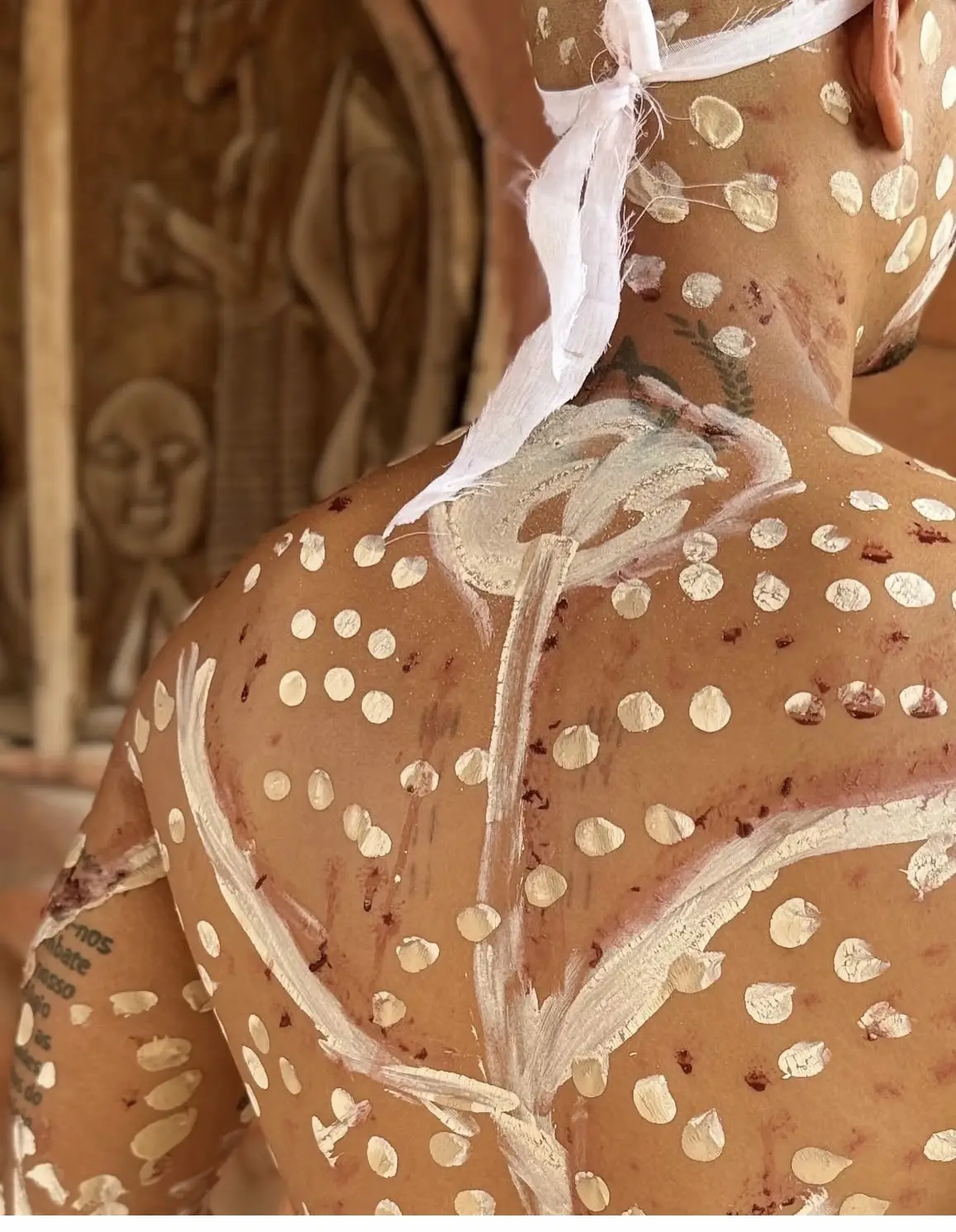
Curse removal · The Sakété temple
Curse removal: what the Fâ shows, and how a curse is lifted at the temple
Curse removal starts with a question: is there really a curse? Wêtê Agbonon consults the Fâ, free of charge, says how things stand, then lifts at the Sakété temple what needs lifting, and says what protects afterwards.
Filmed testimony
“I was skeptical at first, but I’m honestly so grateful I gave it a chance.”
A client, face shown, in her own words
The Fâ first
Knowing whether a curse really weighs on you
Many people write to Wêtê Agbonon convinced that a curse has been put on them. He neither starts by believing them nor by contradicting them: he consults the Fâ, free of charge, because the Fâ sees what neither they nor he can guess.
If a charge weighs on the person, the Fâ says how it is lifted and what protects afterwards. If there is none, he tells them frankly, and sells them nothing.
Voodoo curse: the signs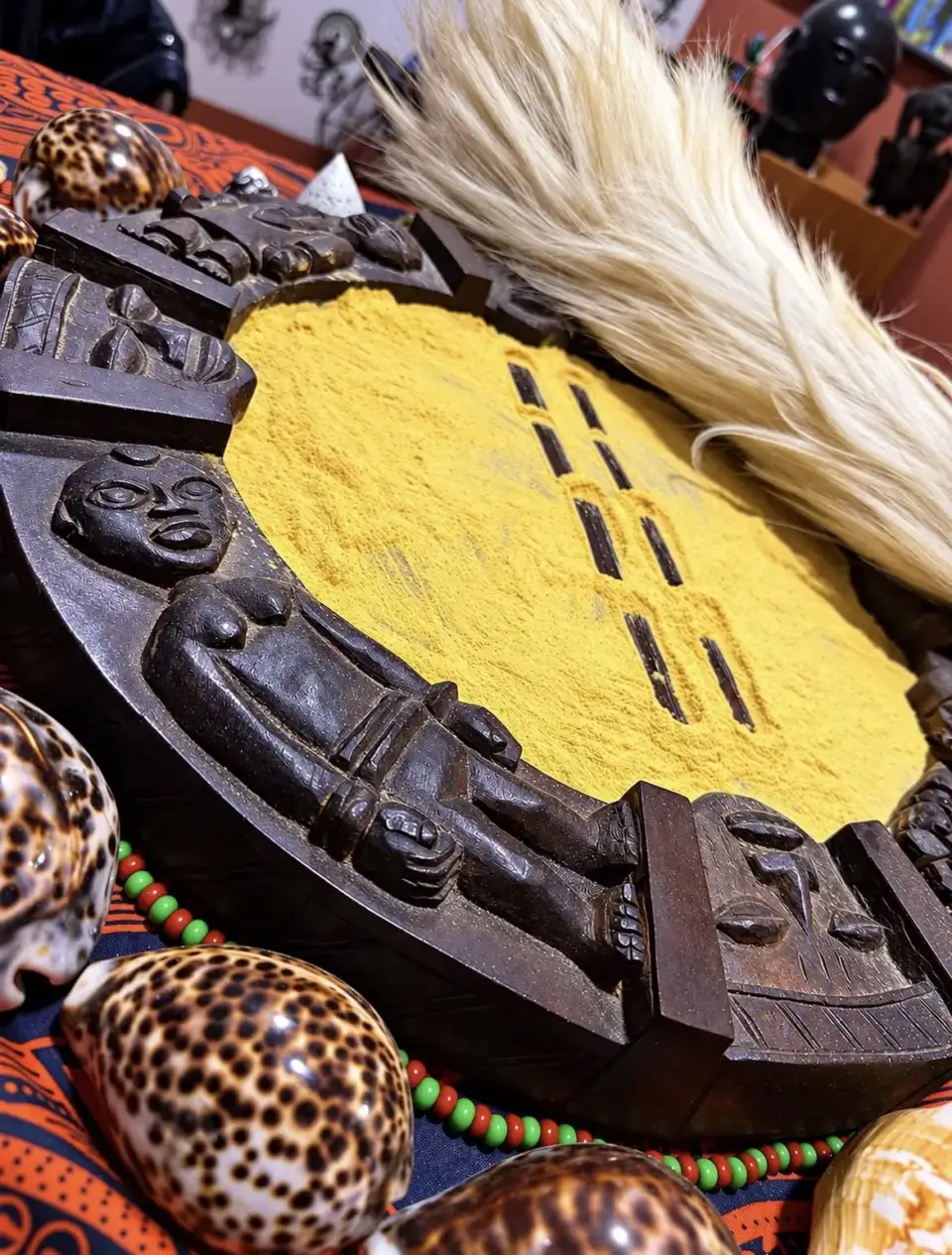
Curse removal: what it means at the temple
A curse is work done to act on a person from a distance: binding them to someone, weakening them, separating them from their family, making them fail. In Benin, people speak of a charge placed against someone. Removing it means lifting that charge on the altars, then protecting the person so that nothing comes back. Voodoo itself is a religion: a priest who serves it by the rules prays, protects and repairs. For an overview, see the Wikipedia page on West African Vodun.
Curses go by many names: voodoo curse, hex, evil eye, bewitchment, a spell cast on someone. Whatever the word, the question is the same: is there really something, and how is it lifted? For the signs in detail, see the page voodoo curse: the signs.
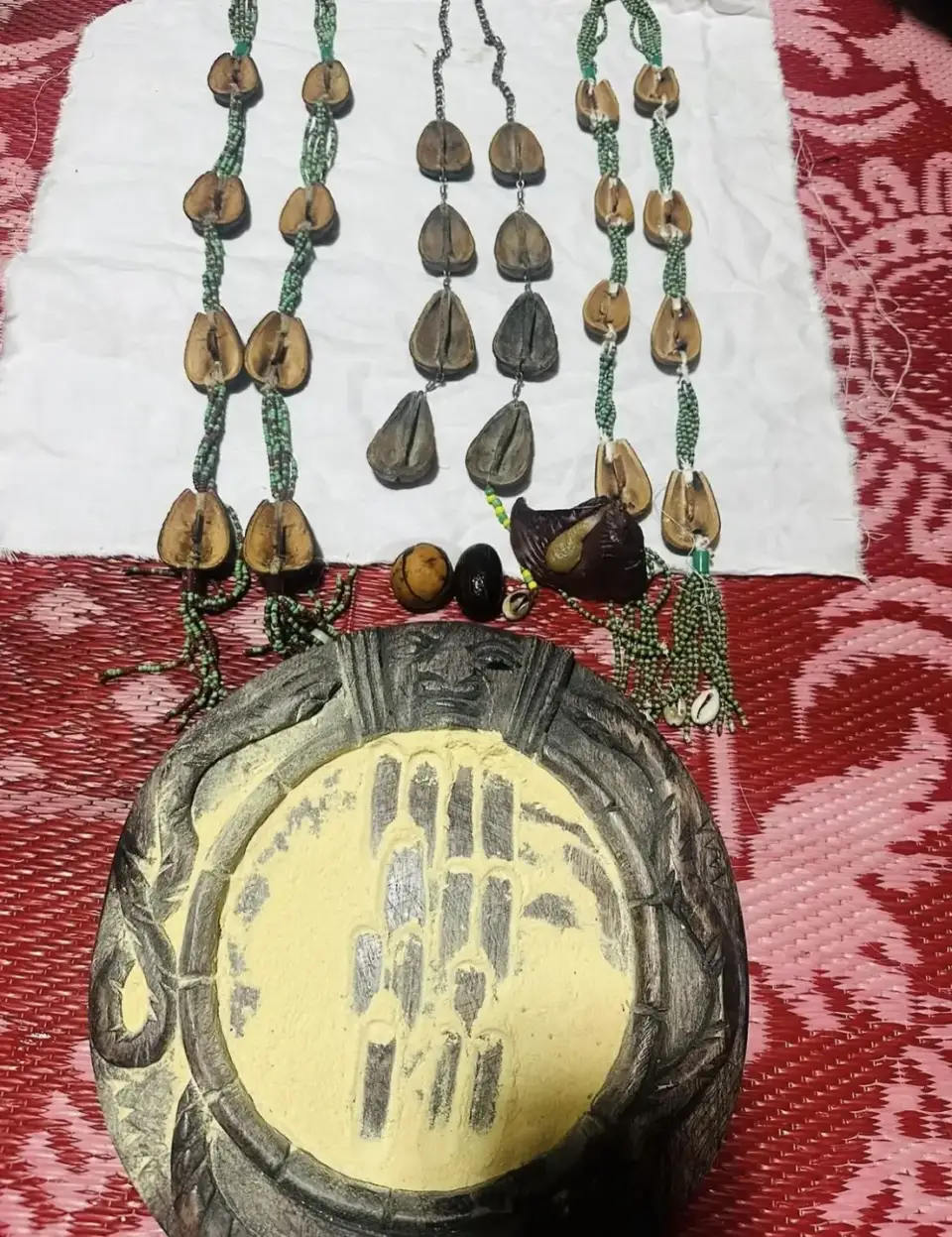
Signs that make people ask for curse removal
People who ask him to remove a curse often describe the same things. None of these signs proves on its own that a charge weighs on them: many have an ordinary cause, and some first call for a doctor.
- Bad luck that will not stop, at work or in every project.
- A couple that suddenly comes apart, for no visible reason.
- Troubled nights: recurring nightmares, sudden awakenings.
- A tiredness or sadness that nothing explains, once a doctor has been seen.
- Quarrels breaking out all around, at work as at home.
- An unknown object found at the door or in the house.
- A threat overheard, then a fear that will not leave.
What the Fâ tells apart
The Fâ consultation sorts out a charge really placed against you, an ordinary trial of life, a forgotten obligation towards a voodoo spirit or the ancestors, and a health matter. This sorting avoids lifting a charge that does not exist, and leaving in place a charge that does.
How long does a curse last?
There is no fixed length. Some charges wear off; others weigh on a person as long as they are not lifted. Wêtê Agbonon announces no delay before the consultation. The Fâ says how long the work will take to show its effect, and he commits to it in writing.
Who places a curse, and why
Those who write to him often think of someone in particular: hostile in-laws, a former partner, a jealous colleague. Wêtê Agbonon neither confirms nor denies these suspicions. The Fâ says whether a charge weighs on you and how to lift it, without giving any name. This rule protects everyone: the suspected person, who may have nothing to do with it, and you, who could break a bond over a false suspicion.
When a charge exists, it was almost always asked for out of an ordinary motive: jealousy, an inheritance, a breakup that went badly. Lifting it is enough, and the protection the Fâ indicates afterwards closes the door to whatever might come back.
At the temple
How a curse is removed
When the Fâ confirms that a charge weighs on you, curse removal is done on the altars of the Sakété temple, by his own hand.
The consultation
The Fâ says what weighs on you and which voodoo spirit must be prayed to. No name is given.
Offerings and prayers
He prepares the offerings the designated spirit asks for, and prays on the altars.
The bath or the vigil
When the Fâ asks for it, a ritual bath at the river or a vigil goes with the work.
Protection
Once the charge is lifted, the Fâ says what protects the person, and sometimes their home.
How to remove a curse yourself?
People often look for a prayer to say or a gesture to perform at home. Wêtê Agbonon gives no formula: these practices are learned in a house, from someone who passes them on, with the prohibitions that go with them. You can pray in your own faith, and that belongs to you. The work he does for you, he does at the temple, after the Fâ.
Home tests and remedies
A cut lemon, oil poured into water, salt on the threshold, an egg cleansing, a candle: these gestures do not tell you whether you are cursed, and lift nothing. They reassure or worry people wrongly, and waste time. The only answer that counts, at the temple, is the Fâ’s, consulted by the one who received the charge to do it.

Love curses
Some people fear they have been bound to someone against their will; others want to know whether their couple was separated by such work. The Fâ says how things stand, and a charge placed on a bond is lifted at the temple like any other. Then the Fâ says what the bond can become again: see voodoo love spells.
Curse removal from a distance
Most of his clients live abroad. The Fâ consultation is done at a distance, with your name, your date of birth and a photograph of you, which stays at the temple. The work itself is always done on the altars of Sakété; you can come and live it, or follow it from a distance, and he reports back. People who write to him looking for a spell caster find a voodoo priest and Fâ diviner: see spell caster: 7 checks.
He commits only after consulting the Fâ. When he commits, he leads the work himself, to the end, and stays reachable afterwards. He takes your money only if he can act.
What you send
For the Fâ consultation
Four things, sent on WhatsApp. Nothing else is asked before the Fâ has answered.
Your name
As it appears on your civil records.
Your date of birth
The day, the month and the year.
A photograph of you
Recent, with your face clearly visible. It stays at the temple.
What you are going through
The facts, since when, and what changed just before. Your messages remain private.
The forms of curse people describe
Those who think they are cursed do not all describe the same thing. Some speak of a love curse, which would tie them to someone or separate them from their partner; others of a curse blocking work, money or health; others again of a curse on the house, where nothing goes right any more. The Fâ first says whether there is a charge, then of what kind, and how it is lifted.
Hexes, jinxes and being “marabouted”
Words change from one country to another. In English, people speak of hexes, jinxes or the evil eye; in France and Belgium, of being “marabouted”, when they believe a marabout was paid to work against them. In Benin, people speak of a charge that was placed. Whatever the word, Wêtê Agbonon consults the Fâ and tells you plainly what it is.
The curse and fear
The fear of being cursed can damage a life as much as a real curse: you no longer dare to start anything, you suspect your loved ones, you sleep badly. Wêtê Agbonon takes this fear seriously. When the Fâ says there is no charge, he says so clearly, and that answer often frees as much as a removal. When the Fâ confirms a charge, he says how it is lifted, and the work begins.
Curse removal: the steps at the temple
When the Fâ confirms a curse, the work follows a precise order. Wêtê Agbonon prepares the offerings the designated vodun asks for, prays at the altars and carries out the gestures the Fâ has indicated, sometimes a vigil, sometimes a ritual bath at the river. He then closes the ritual properly, reports back to you, and gives you the instructions to follow. Finally, the Fâ says what protects you afterwards.
Why curse removal should be done by a priest
A curse half lifted, or lifted by someone who has not received the charge, can leave traces. That is why removal takes place at the temple, by the one who consulted the Fâ and who answers for what he does. Wêtê Agbonon has practised for more than thirty years, in the house where his family has served the vodun for generations; his proofs are gathered on the page best voodoo priest.
Preparing the consultation: a record of events
Before writing, many people benefit from noting what they are going through. When did the difficulties begin? What changed at that time: a move, a break-up, a conflict, an inheritance? What objects did you find, and where? Which doctors have you already seen? These notes do not replace the Fâ, but they help Wêtê Agbonon ask the right questions and explain the answer clearly.
Talking about it with loved ones
Many hesitate to share their fears with their partner or family, afraid of being mocked or of sowing discord. The consultation remains strictly confidential, and you decide what you share. When the Fâ says the charge touches the whole house, Wêtê Agbonon advises you on how to talk about it, without accusing anyone.
Curse removal scams
Curse removal attracts many crooks, because fear makes people pay quickly. Be wary of removals promised in a few minutes by phone, of eggs or lemons to “analyse” for a fee, of lists of objects to buy urgently, of practitioners who discover a new curse at every exchange. At the temple, the Fâ consultation is free, the quote is written and the amount does not change.
His limits
What he refuses
Sending the curse back
No revenge, no “return to sender”: the charge is lifted, and it ends there.
Naming a culprit
No name comes out of a consultation, among the living or the dead.
Coming before a doctor
When a story calls for medical care, he says so before any rite.
Questions
What people ask him about curse removal
How do I know if I need curse removal?
The signs you notice prove nothing on their own. The Fâ consultation, which is free, says whether a charge weighs on you or whether the cause lies elsewhere.
How long does curse removal take?
No delay is announced before the consultation. The Fâ says how long the work will take to show its effect, and that time is written in the quote.
How much does curse removal cost?
The Fâ consultation is free. If the Fâ confirms a charge, he sends a written quote with one single amount before any payment.
Can I remove a curse myself?
He gives no formula to reproduce at home. The work is done at the temple, by the one who received the charge to do it, after the Fâ.
Can a curse come back once it is lifted?
The Fâ says what protects once the charge is lifted. Wêtê Agbonon stays reachable after the work if anything worries you.
Can he tell me who cursed me?
No. No name comes out of a consultation: the work consists in lifting the charge.
Does he remove any kind of curse?
He consults the Fâ whatever the name given to the curse: voodoo curse, hex, evil eye or another. The Fâ says whether there is a charge and how it is lifted.
How do I know if I have been cursed by a marabout?
The signs people notice prove nothing on their own. The free Fâ consultation says whether a charge was placed against you, or whether the cause lies elsewhere.
Can a curse affect a whole family?
The Fâ says whether the charge weighs on one person or on the house. When the whole family is concerned, the removal and the protection take it into account.
Can someone be cursed without knowing it?
Yes, according to the tradition. It is often a series of unexplained difficulties that leads people to consult; the Fâ then says what it is.
Is curse removal painful or dangerous?
No. The work is done at the temple, on the altars; what is asked of you are simple instructions, sometimes a bath or a vigil if the Fâ asks.
What should I do while waiting for the consultation?
Write down what happens to you, with dates, throw nothing away, and see a doctor if your health is involved. Then write to Wêtê Agbonon.
Can I ask for curse removal for a relative?
The consultation is done for the person concerned, with their name, date of birth and photograph; they must be informed.
How do I recognise a curse removal scam?
A removal promised in minutes, urgent payments, a new curse discovered at every exchange: these are alarm signals.
Is bad luck the same as a curse?
No. A period of bad luck may have an ordinary cause. The Fâ tells a real charge apart from a trial of life.
Should I tell my family about the curse?
You decide what you share; the consultation remains confidential. If the charge touches the house, Wêtê Agbonon advises you on how to talk about it.
Can a family member place a curse on me?
The Fâ says whether there is a charge, without ever naming anyone. This rule avoids breaking a family over a suspicion.
What should I note before the consultation?
The dates of the difficulties, what changed at that time, objects found and doctors already seen. These notes help ask the right questions.
Does curse removal work from a distance?
Yes. The removal takes place at the Sakété temple, by the hand of Wêtê Agbonon, who reports back and gives you the instructions in writing.
Read on
Before you write to him

Write to him
He answers himself, within two hours
The first exchange is free and confidential. You set out your situation, he consults the Fâ, then you decide freely.