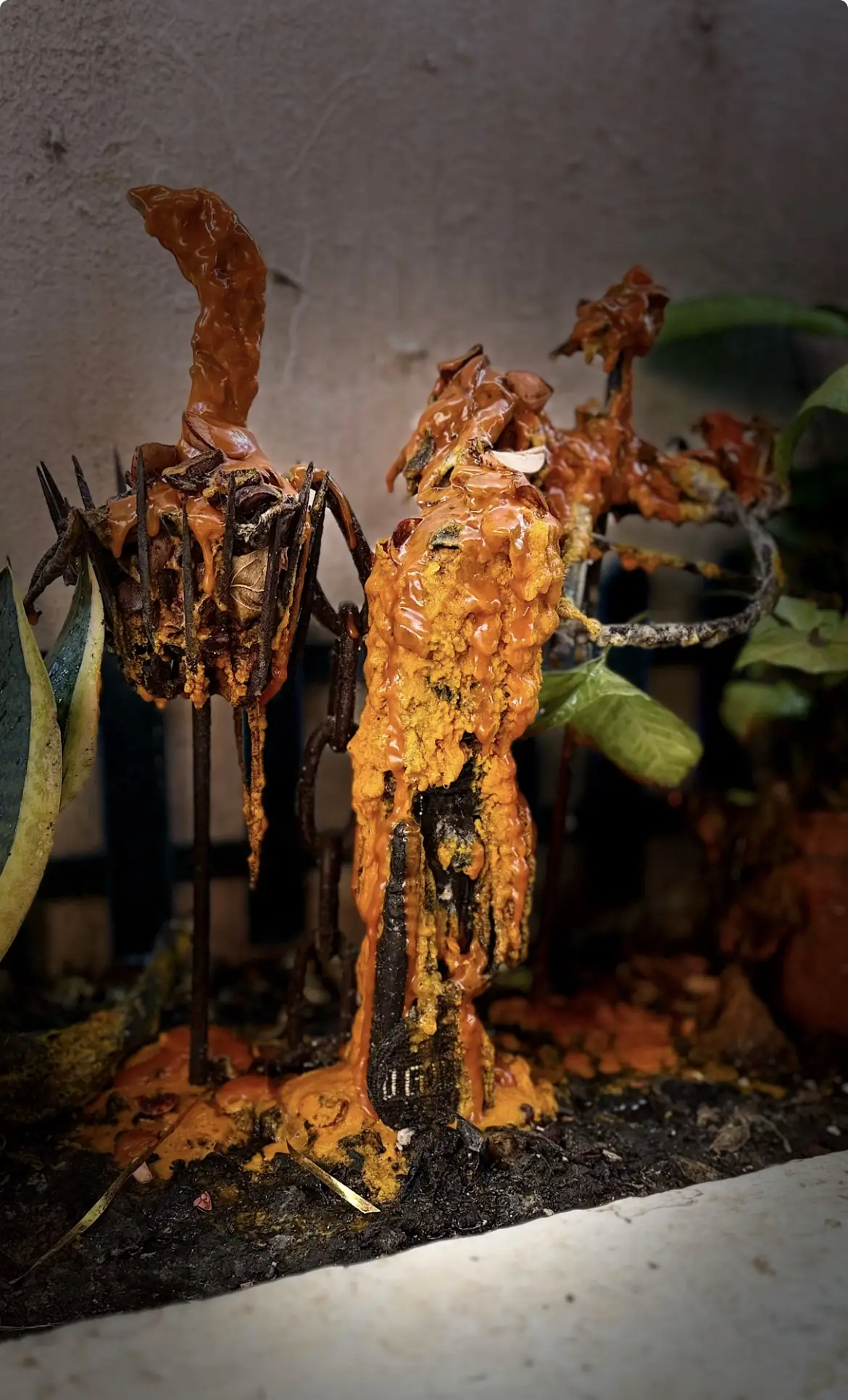
Voodoo vs hoodoo · The Sakété temple
Voodoo vs hoodoo: the difference, explained by a voodoo priest from Benin
Voodoo and hoodoo are often confused. One is a religion born in West Africa, with its spirits, its priests and its initiations; the other is a folk magic of the American South. Wêtê Agbonon, voodoo priest at the Sakété temple in Benin, explains what separates them.
Filmed testimony
“I was skeptical at first, but I’m honestly so grateful I gave it a chance.”
A client, face shown, in her own words
Two words, two traditions
A voodoo priest answers the hoodoo question
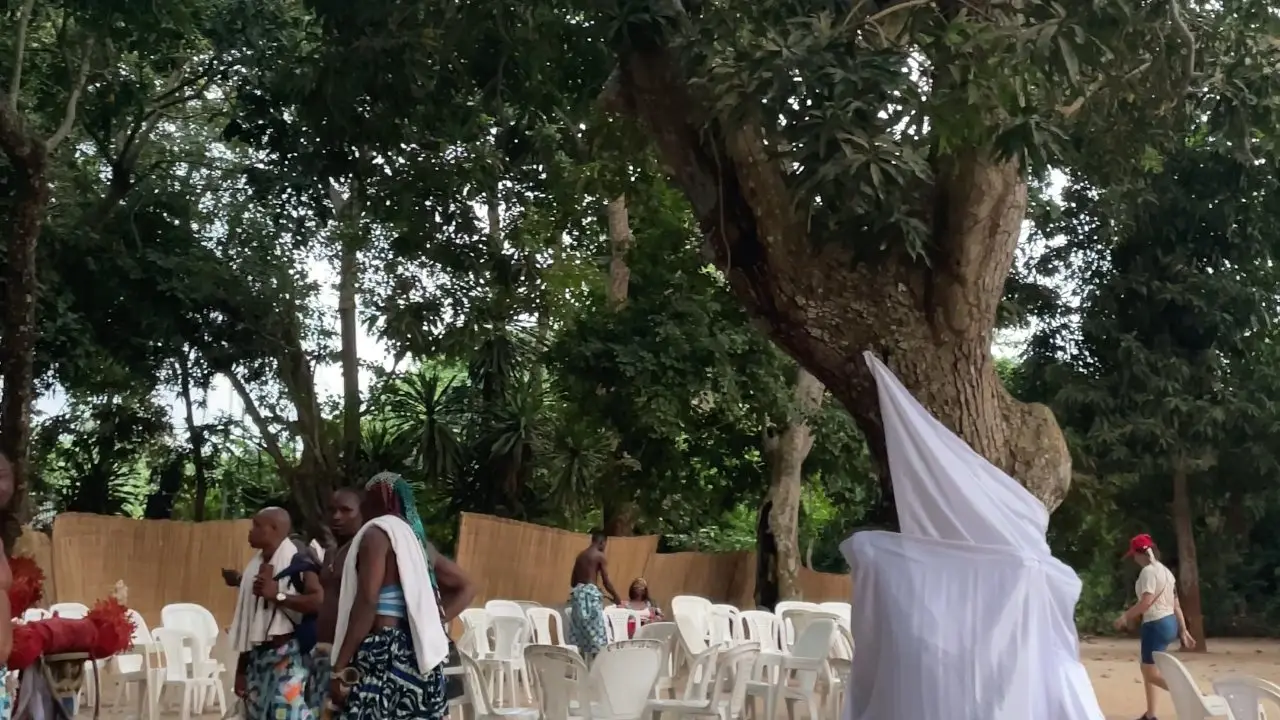
At the Sakété temple, Wêtê Agbonon serves voodoo the way his family has served it for generations: he consults the Fâ, prays to the spirits on the altars and leads the rituals the Fâ designates. People who write to him from America often ask the same question first: is this hoodoo?
It is not, and the difference matters for anyone looking for help. This page explains voodoo and hoodoo side by side, from the point of view of a priest who practises voodoo every day.
African voodoo: the religion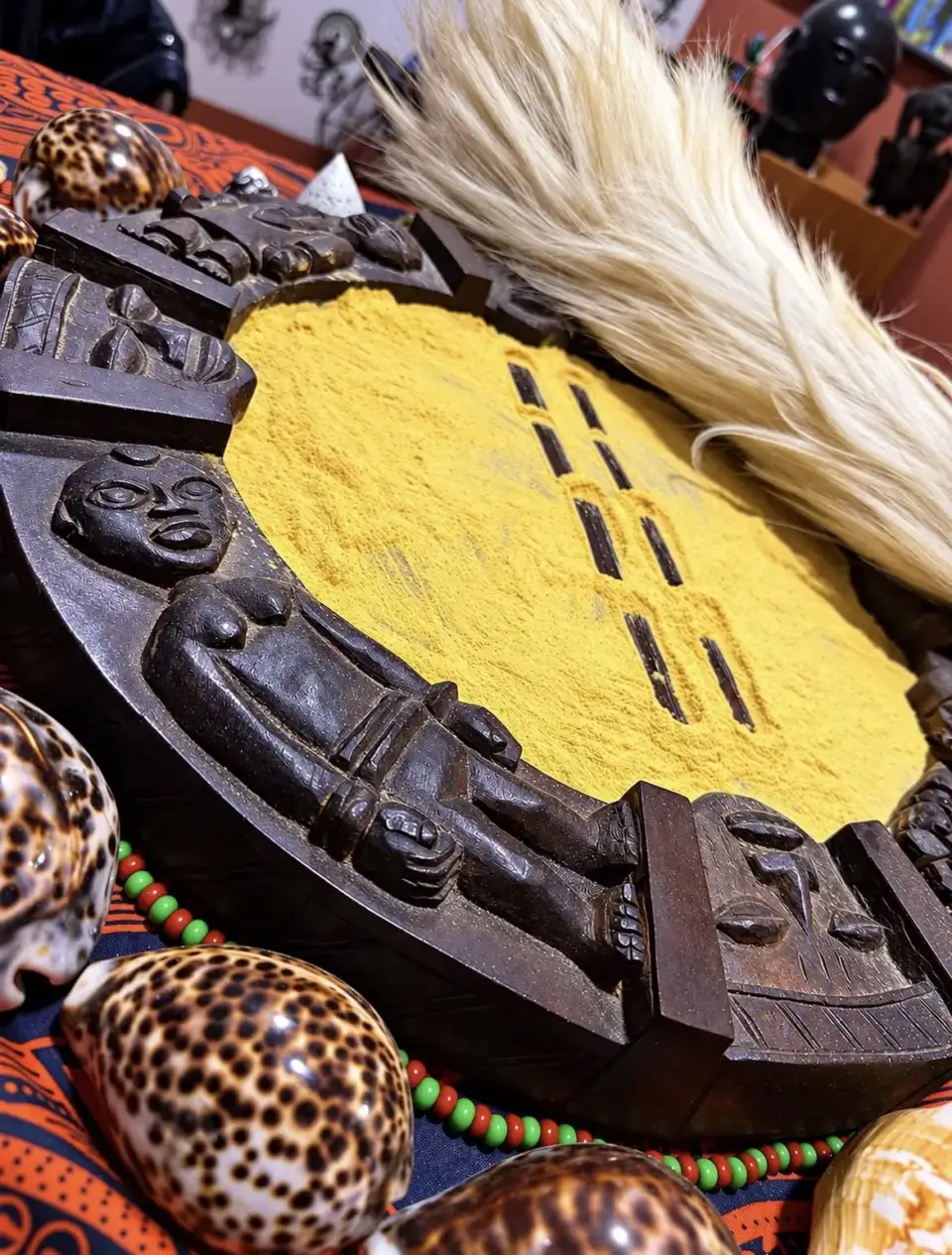
Voodoo vs hoodoo: the short answer
Voodoo is a religion. It was born among the Fon and Ewe peoples of Benin and Togo, it honours spirits called vodun, it has priests, diviners and initiates, temples and convents, and it consults the Fâ before every important act. Its descendants across the Atlantic, Haitian Vodou and Louisiana Voodoo, are religions too.
Hoodoo is a folk magic. It grew in the American South among enslaved Africans and their descendants, who combined what they remembered of African practices with the plants they found, with European folk magic and with the Bible. Hoodoo has no priesthood and no initiation: it is practised by individuals, often Christians, called rootworkers or conjure doctors.
What voodoo is
In Benin, voodoo is lived as a relationship with the spirits and the ancestors. Each spirit has its altar, its offerings, its days and its prohibitions; the priest keeps the altars and speaks to the spirits; the bokonon reads the Fâ, the divination system that says what is happening and what must be done. People are initiated into the service of a spirit for life. The page African voodoo describes the religion in detail, and the Wikipedia page on West African Vodun gives an encyclopedic overview.
What hoodoo is
Hoodoo, also called rootwork or conjure, is a set of practices meant to act on daily life: attracting luck or love, protecting a home, winning a court case, sending back harm. Its tools are roots, herbs, minerals, oils, candles, written petitions, and small cloth bags called mojo bags. Verses of the Psalms are often read during the work. Hoodoo does not ask anyone to serve a spirit for life; it is a craft, passed on within families and communities, and today widely discussed online.
Scholars trace hoodoo to several sources: practices from Central Africa, especially the Kongo region, knowledge of plants shared with Native Americans, European grimoires and folk magic, and the Christian faith of those who practised it. That mixture is what makes hoodoo distinctly American.
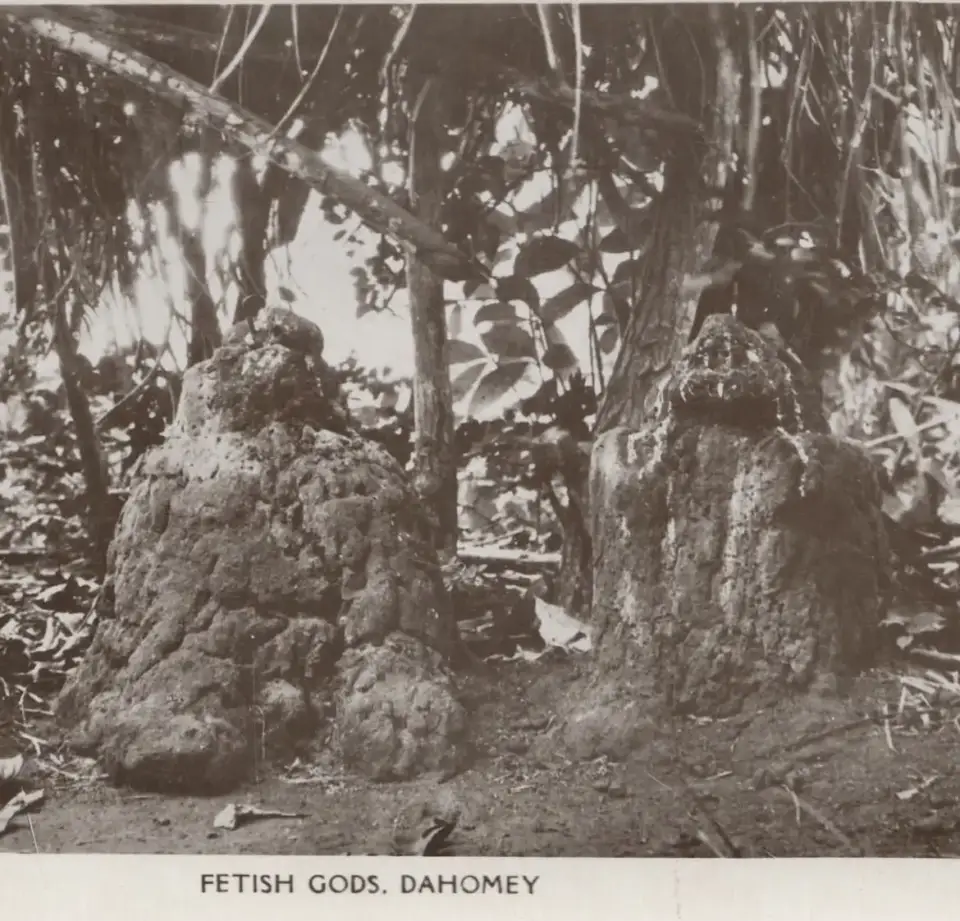
Where the confusion comes from
The two words sound alike, and in Louisiana the two traditions lived side by side. New Orleans had Voodoo priestesses, the most famous of whom was Marie Laveau in the nineteenth century, and hoodoo doctors working in the same streets. Tourism, films and novels later used the word voodoo for anything magical, while hoodoo was often left unnamed. Today, many people say voodoo when they mean hoodoo, and the other way round.
Side by side
Voodoo vs hoodoo: 7 important differences
What separates a religion from a folk magic.
Nature
Voodoo is a religion; hoodoo is a practical magic, without a church.
Origin
Voodoo comes from Benin and Togo; hoodoo grew in the American South.
Spirits
Voodoo serves the vodun spirits and the ancestors; hoodoo calls on many sources, often Christian.
Clergy
Voodoo has priests and diviners; hoodoo has rootworkers, without a hierarchy.
Initiation
Voodoo initiates for life; hoodoo can be practised without initiation.
Divination
Voodoo consults the Fâ before acting; hoodoo uses cards, signs or intuition.
Place
Voodoo lives in temples and convents; hoodoo is practised at home.
The spirits of voodoo, and why they matter
The heart of voodoo is the bond with the spirits. Each vodun has its altar, its colours, its days, the offerings it accepts and the ones it refuses. Those who serve a spirit keep its prohibitions, feed its altar and honour it at the moments it requires. In return, the spirit protects, guides and answers. A priest does not command the spirits: he serves them, and he speaks to them for those who come to him.
This is why a voodoo ritual cannot be copied from a book. The same request, addressed to the wrong spirit or with the wrong offering, goes unanswered. Knowing which spirit is concerned, and what it asks, is the work of the Fâ.
The Fâ: what voodoo consults before acting
Before any ritual, the bokonon consults the Fâ. He casts the opèlè or traces signs on a tablet covered with powder, and reads the answer in the order the signs fall. The Fâ of the Fon is a relative of the Ifá of the Yoruba, inscribed by UNESCO on its list of the intangible cultural heritage of humanity: the UNESCO page on the Ifa divination system describes it. At the Sakété temple, this consultation is free, and it decides whether anything should be done.
How a ritual unfolds at the Sakété temple
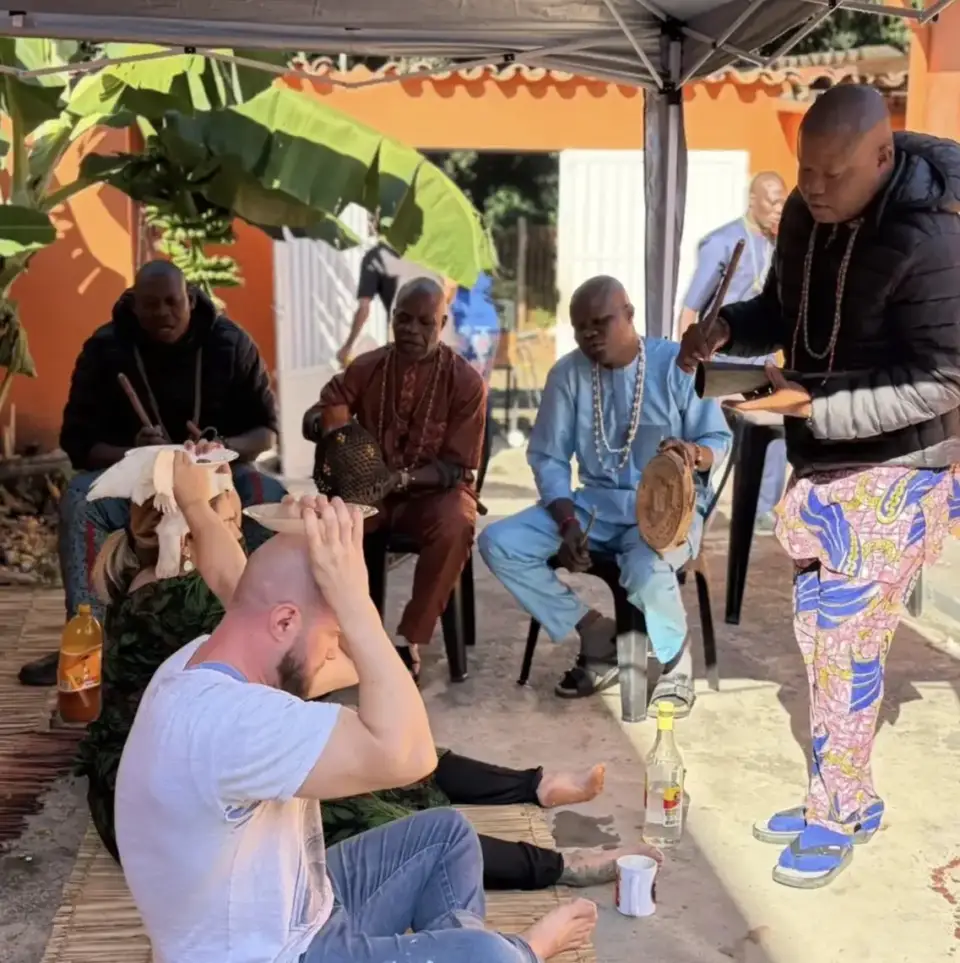
Once the Fâ has spoken, the ritual follows a precise order. The priest prepares the offerings the designated spirit asks for: kaolin, red palm oil, drinks, feathers, cowries. He greets the spirits, opens the altars, prays and presents the offerings, sometimes during a night vigil, sometimes at the river with a ritual bath. He closes the ritual properly, then reports to the person on what was done and gives the instructions to follow. You can be present, or follow from a distance.
The words of each tradition
Each tradition has its own vocabulary, and the words are a good way to know what you are dealing with. Voodoo speaks of vodun, priests, bokonon, initiates, altars, offerings and the Fâ. The American practice speaks of rootwork, conjure, workings, mojo bags, oils and petitions. When someone mixes the two vocabularies to sell you a ritual, ask which tradition he actually received, and from whom.
What to ask before paying anyone
Whatever the tradition, the same questions protect you. Where do you practise, and can I see it? Who taught you, and who passed the charge on to you? Do you consult before asking for money? Will I receive a written quote with one single amount? What happens if nothing changes? A serious practitioner answers without hesitation. Wêtê Agbonon answers these questions on this website, page after page, and lists his only official lines on the page official accounts.
A priest’s view of the two traditions
Wêtê Agbonon speaks of both with respect. Voodoo is the religion he received and serves; the American folk practice is the memory of Africans who kept what they could, in a land where their gods were forbidden. They share a root and a history of survival. They are different paths, and knowing the difference is the first step to finding the help you are looking for.
Haitian Vodou, Louisiana Voodoo, hoodoo: a family tree
All these traditions share an African root, but they grew apart. Haitian Vodou was born on the plantations of Saint-Domingue, from the voodoo of Benin mixed with other African traditions and with Catholicism; its priests are called houngan and its priestesses mambo. Louisiana Voodoo developed in New Orleans with its own priestesses and its own rites. Hoodoo, finally, spread across the American South as a practical magic, without temples. The page voodoo priestess looks at the women who led these traditions.
Voodoo, hoodoo and the gris-gris
The word gris-gris shows how close the traditions came. In West Africa, a gris-gris is a protective amulet; in Louisiana, a gris-gris bag is a small bag of objects carried for protection or luck, close to the hoodoo mojo bag. At the Sakété temple, a protection is never chosen from a catalogue: the Fâ says whether the person needs one, which spirit must be prayed to, and how it is prepared and consecrated. The page protection spell describes this work.
Is hoodoo dangerous? Is voodoo?
Both have been painted as dark arts. Voodoo, served by the rules by a priest who received his charge, prays, protects and repairs; hoodoo, in the hands of honest practitioners, is a craft of daily life. The real danger, in both cases, comes from impostors who sell rites online, promise results by a date and ask for more money at every step. The page is voodoo dangerous? answers these fears.
Can a voodoo priest do hoodoo?
Wêtê Agbonon practises the voodoo of Benin, not hoodoo. When someone writes to him after trying hoodoo work for love, protection or a curse, he does what a voodoo priest does: he consults the Fâ, says what is really happening, and tells the person whether a ritual can help. If the Fâ opens the way, the work is done at the temple, by his own hand. The pages curse removal and voodoo love spells explain how.
Why the difference matters for you
If you are looking for a ritual, the difference tells you what to expect. A hoodoo practitioner will usually sell you a working, or teach you one to do at home. A voodoo priest will first consult, then tell you whether anything should be done, which spirit is concerned and how long it will take; the ritual is performed on consecrated altars, by the one who received the charge. That is why, at the Sakété temple, nothing is asked of you before the Fâ has answered.
He commits only after consulting the Fâ. When he commits, he leads the work himself, to the end, and stays reachable afterwards. He takes your money only if he can act.
At a glance
Voodoo and hoodoo in eight lines
The essentials, side by side.
- Voodoo
- A religion of West Africa, with spirits, priests and initiation
- Hoodoo
- A folk magic of the American South, practised without initiation
- Voodoo clergy
- Priests (vodunon), diviners (bokonon), initiates (vodunsi)
- Hoodoo practitioners
- Rootworkers and conjure doctors
- Voodoo divination
- The Fâ, relative of the Yoruba Ifá
- Hoodoo tools
- Roots, herbs, candles, mojo bags, Psalms
- Voodoo today
- Recognised religion in Benin, national holiday every January
- Hoodoo today
- A living tradition in the United States
His limits
What a voodoo priest refuses
Giving formulas
No ritual is taught to be done at home: these practices are learned in a house.
Harming anyone
No curse, no “return to sender”: he works for the person who consults him.
Promising before the Fâ
He commits to nothing before consulting; afterwards, he commits in writing.
Coming before a doctor
When a story calls for medical care, he says so before any rite.
Questions
What people ask about voodoo and hoodoo
Is hoodoo the same as voodoo?
No. Voodoo is a religion with spirits, priests and initiation, born in West Africa; hoodoo is a folk magic that grew in the American South, practised without initiation.
Is hoodoo a religion?
Hoodoo is usually described as a practice or a craft, not a religion. Many of those who practise it are Christians.
Where does hoodoo come from?
From the American South, among enslaved Africans and their descendants, who combined African practices, especially from Central Africa, with Native American plant knowledge, European folk magic and the Bible.
Is voodoo older than hoodoo?
Voodoo grew over centuries in West Africa; hoodoo took shape in North America from the period of slavery. In that sense, voodoo is the older tradition.
What is a rootworker?
A hoodoo practitioner, also called a conjure doctor, who works with roots, herbs and other materials for clients or for themselves.
What is a mojo bag?
A small bag of herbs, roots and objects carried for luck or protection in hoodoo. In Louisiana it is also called a gris-gris bag.
Does Wêtê Agbonon practise hoodoo?
No. He is a voodoo priest and a bokonon of Benin. He consults the Fâ and leads rituals at the Sakété temple.
Can I consult a voodoo priest from the United States?
Yes. The Fâ consultation is done at a distance, free of charge, and the ritual is performed at the temple by his own hand. He answers himself, in English or in French.
Is voodoo evil?
No. Voodoo is a religion; served by the rules, by a priest who received his charge, it prays, protects and repairs. Its dark image comes from films and from impostors.
Do voodoo priests use candles and herbs?
Offerings in Benin are mostly kaolin, red palm oil, drinks, feathers and cowries, chosen by the spirit concerned. Candles, oils and petitions belong more to the American folk tradition.
Can a Christian consult a voodoo priest?
Yes. Many people in Benin live voodoo alongside Christianity, and clients of every faith write to Wêtê Agbonon. The question is asked for your situation, with him.
Why do people confuse the two?
The words sound alike, the two traditions lived side by side in Louisiana, and films used the word voodoo for anything magical. Many people now use one for the other.
Is Louisiana Voodoo the same as the voodoo of Benin?
They share a root, but Louisiana Voodoo developed its own rites in New Orleans, with its own priestesses. The voodoo of Benin is the older, West African religion.
What should I do if a practitioner promises results by a date?
Be careful. A serious priest consults before committing, gives a written quote with one amount, and never threatens those who hesitate. Keep the messages and check his official lines.
Can the Fâ tell me if a working done on me is real?
Yes. The consultation says whether a charge weighs on you, whatever the tradition of the person who laid it, and how it can be lifted at the temple.
Where can I learn more about voodoo?
The encyclopedia vodunbenin.org, written by Wêtê Agbonon, describes the spirits, the Fâ and the rites of Benin, in French and English.
Write to him
He answers himself, within two hours
The first exchange is free and confidential. You set out your situation, he consults the Fâ, then you decide freely.