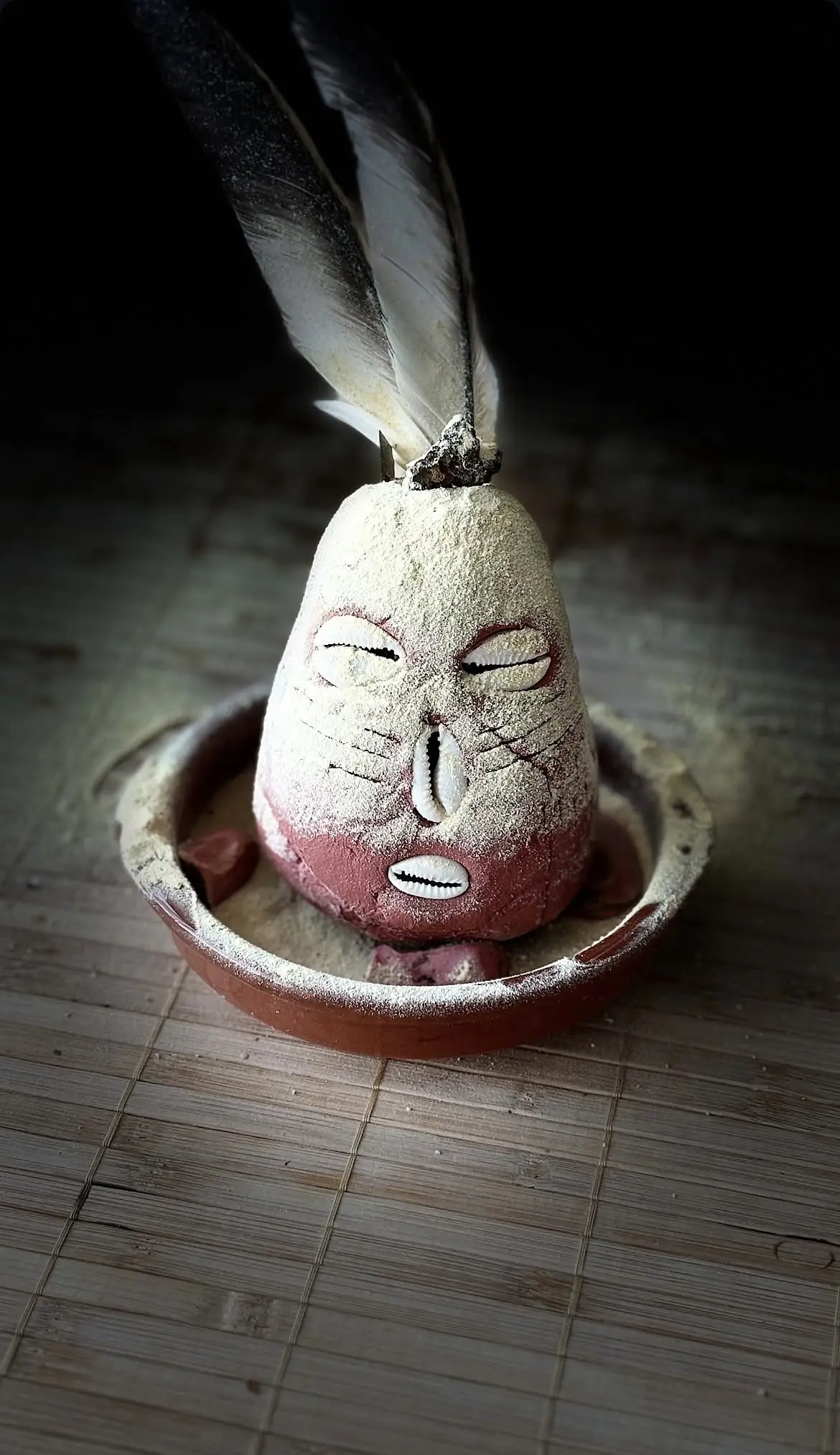
The question · The Sakété temple
Is voodoo dangerous? A voodoo priest from Benin answers
Is voodoo dangerous? Wêtê Agbonon, voodoo priest at the Sakété temple in Benin, answers plainly: what voodoo is, what it refuses to do, and the real dangers to watch out for.
Filmed testimony
“I was skeptical at first, but I’m honestly so grateful I gave it a chance.”
A client, face shown, in her own words
A religion
Voodoo is a recognised religion in Benin
In Benin, voodoo is a recognised religion, honoured every year in January with a national day. It has its priests, its temples, its festivals and its prohibitions.
Practised within this framework, by priests who received their charge, it is used to pray, to protect and to repair. Wêtê Agbonon serves it in this way at the Sakété temple.
Official accounts: avoid fakes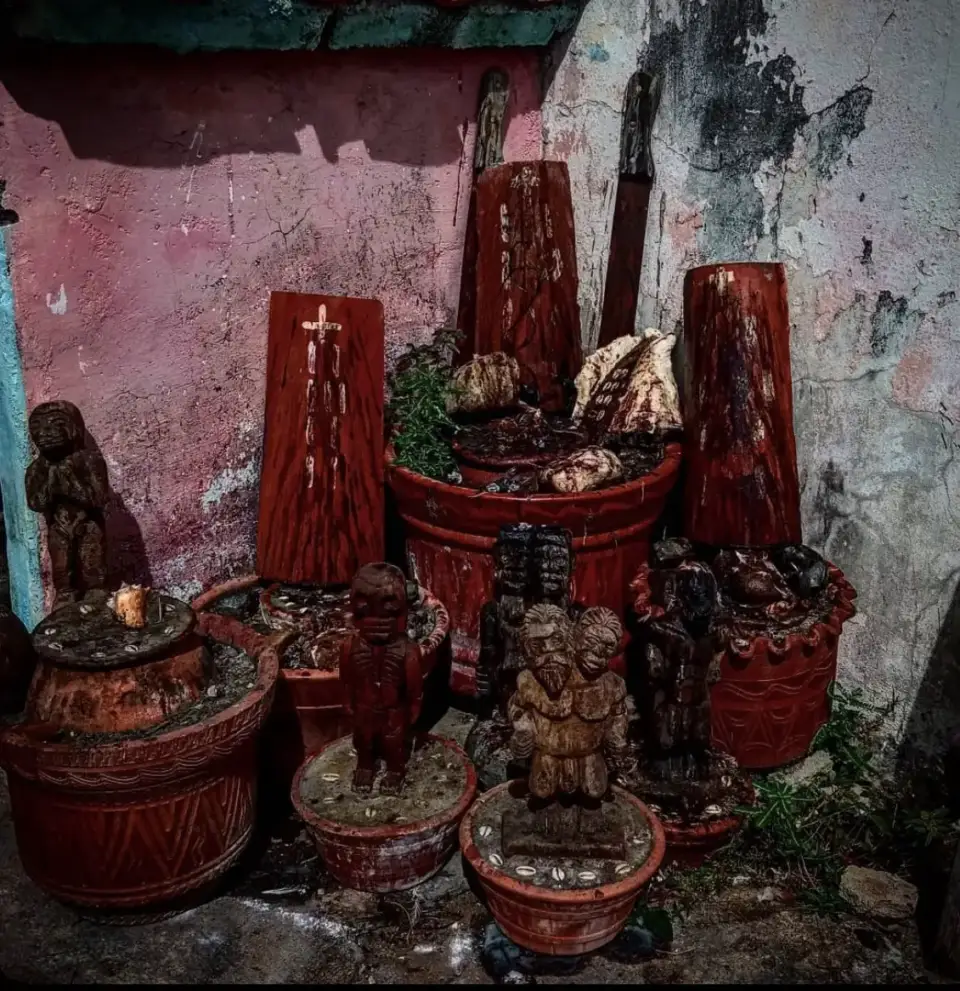
Is voodoo dangerous? The short answer
The question comes back again and again. For a voodoo priest from Benin, the answer fits in one sentence: served by the rules, by someone who received the charge, voodoo protects; the danger lies in what some people do in its name.
Why people think voodoo is dangerous
When people speak of the dangers of voodoo, they usually have films in mind. The fear comes from an outside view. Colonial writers saw “fetishes” where there were altars, and “witch doctors” where there were priests. Cinema did the rest, with its zombies and its dolls stuck with pins. At the Sakété temple, people pray, make offerings and consult the Fâ. For the history of the word, see african witch doctor: where the word comes from.
The voodoo of Benin also crossed the Atlantic and took new forms, in Haiti and in Louisiana. Haitian Vodou is a religion in its own right, with its own history; the films that frightened the world borrowed its images without understanding them.
What voodoo asks of those who serve it
Voodoo has its prohibitions, and it makes them respected. Those who serve it learn for years what is done and what is not. The real risk, for a person alone, is playing with what they do not know: a ritual copied from a video, a recipe found online. That is why no formula is given on this website: these practices are learned in a house, from someone who passes them on.
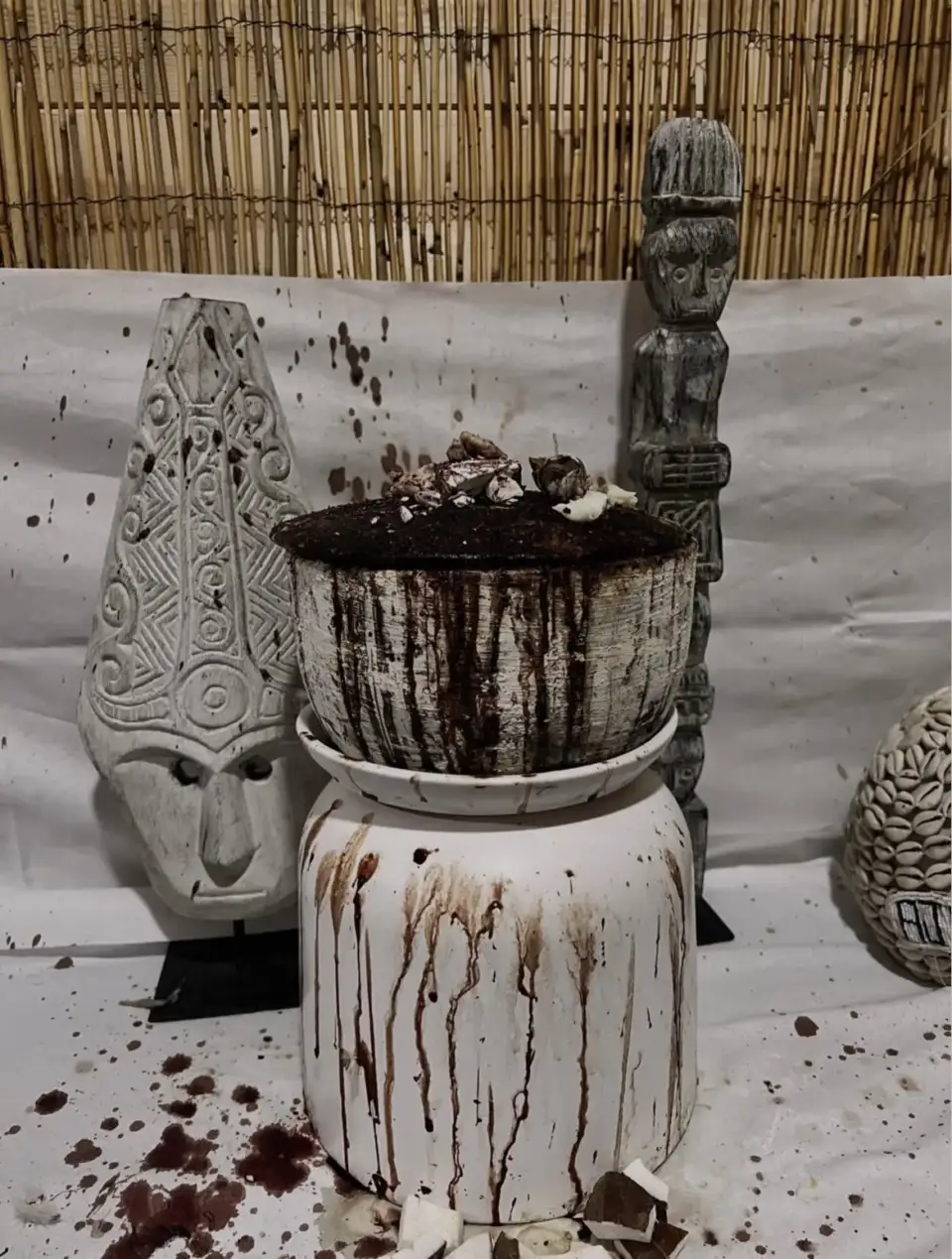
The real danger
What to watch out for
Most of the time, the danger comes from people who use the word “voodoo” to get money.
The unsolicited message
A “spell caster” who writes to you first. A serious priest never writes first.
Money through messaging apps
A deposit asked for straight away, a transfer to a third party, gift cards.
The promise and the urgency
A guaranteed result, a date before any consultation, a threat if you wait.
The secret
“Tell no one”: the sentence of impostors.
Backlash: a fear that often comes back
Many people ask whether voodoo work can turn against them. The fear comes from stories of backlash: a ritual done badly, or ordered to harm, would come back to strike the person who asked for it. At the Sakété temple, Wêtê Agbonon answers with three rules. The Fâ first says whether a work is indicated. The work never aims to harm. It is carried out by the one who has received the charge, then closed according to the rules. These three conditions keep away what people fear.
The danger lies elsewhere: with anyone who accepts any request, works against a third party or leaves a ritual open. It is one of the reasons a serious voodoo priest refuses some requests, even when people insist, even when they offer to pay more.
The money trap, the most common danger
The danger Wêtê Agbonon meets most often among those who write to him is financial. The scenario repeats: a modest first payment, then a “complication”, an “angry spirit”, an “object to buy back”, and new payments, always urgent. Some people have paid considerable sums to a fake marabout without ever receiving a report.
At the temple, the rule protects against this trap. The Fâ consultation is free. The quote is written, with a single amount and the time given by the Fâ; it does not change along the way. If that time passes without satisfaction, instructions followed, the work is redone free of charge. An extra payment demanded urgently by private message is an alarm signal, whoever asks for it.
What makes a ritual safe, in four points
- The Fâ has spoken first. No ritual is decided at random, or simply on request.
- The officiant has received the charge, in a temple that exists and can be visited.
- The ritual targets no one: no revenge, no forcing of a will.
- The ritual is closed according to the rules, and you receive a report and written instructions.
When one of these four points is missing, the danger people talk about becomes real: it comes from the way things are done, and almost always from the person doing them.
Taboos: rules of life
After some rituals or an initiation, the Fâ may point to taboos: a food to avoid, a gesture not to make, a day to respect. They have always been part of the religion and protect the person who keeps them. Wêtê Agbonon explains them in writing, with their duration, and remains reachable for any question. A taboo never serves to put pressure on anyone.
Voodoo, Christianity and Islam
In Benin, many people go to church or to the mosque and also consult the Fâ; most families live with this plurality without drama. Those who write to Wêtê Agbonon from Europe often come from a Christian or Muslim family and wonder whether they are betraying their faith. He asks no one to give up their religion for a consultation or a ritual: the Fâ is consulted for you, as you are.
What the law says
In Benin, voodoo is a religion recognised by the state, with a national holiday every January, on the second Friday of the month since a 2024 law. In Europe, freedom of worship protects religious practice, and the law punishes fraud and the abuse of vulnerable people, which are precisely the weapons of fake marabouts. If you have been the victim of a fake account, the official accounts page explains what to do.
7 answers from a voodoo priest
- Can voodoo hurt me? Served by a priest who received his charge, it targets no one. Wêtê Agbonon never works against anyone.
- Can a ritual turn against me? A ritual designated by the Fâ, led by the rules and properly closed leaves nothing open.
- What happens if I stop? A client is bound to nothing: a work is done, then it ends. Only initiation commits, and it is decided knowingly.
- Do I have to pay every month? No. One written quote, one single amount, for a defined work. Beware of anyone who asks for money without end.
- Is voodoo compatible with my religion? Many people in Benin live voodoo alongside another religion. The question is asked for your case, with him.
- Can I do a ritual myself with a video? That is where the real risk begins. A ritual cannot be copied.
- How do I recognise a serious priest? He has a temple and a lineage, consults before acting, does not write to you first and never asks for secrecy.
The most common danger: fake practitioners
If you ask a priest whether voodoo is dangerous, he will tell you that the most common danger is financial. Fake practitioners write first, promise a result on a fixed date, demand a deposit straight away and threaten people who hesitate. Some even use the name and photographs of Wêtê Agbonon. His closed list of addresses is published on the page official accounts. In France, fraudulent content can be reported on the Pharos platform; elsewhere, report it to the platform and to the police of your country.
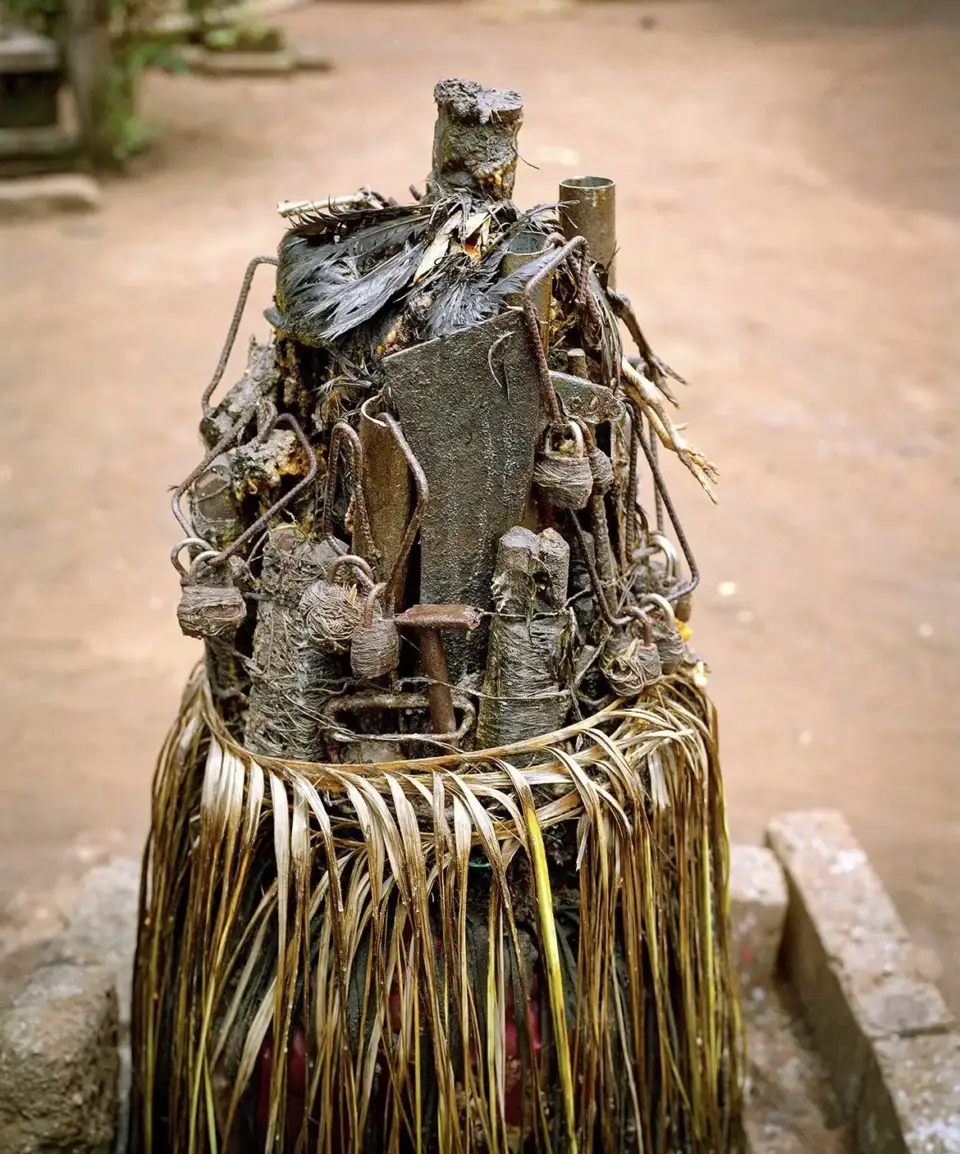
Is voodoo dangerous for your health?
A serious priest never comes before a doctor. When a story calls for medical care, Wêtê Agbonon says so before any rite, and asks the person to see a doctor. Voodoo accompanies life; diagnosis and treatment belong to medicine. Anyone who asks you to stop a treatment in order to follow a ritual is putting you in danger.
Is voodoo dangerous for your family?
Many people hesitate to talk about voodoo with their relatives, for fear of being judged. There is no secret to keep: Wêtê Agbonon never asks for secrecy, and you can talk about your request with anyone you wish. Often, it is relatives who ask whether voodoo is dangerous; this page can help them understand that the dangers of voodoo they fear come from films and impostors.
Is voodoo dangerous for visitors to Benin?
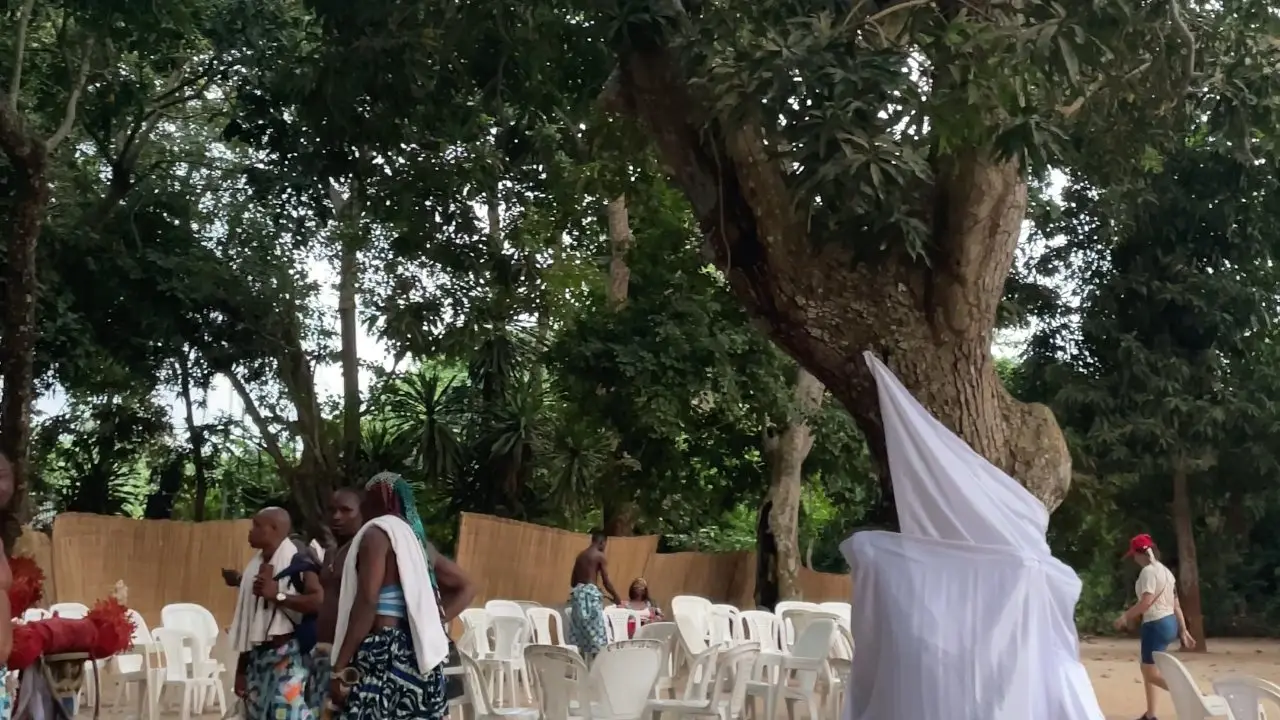
For a traveller, voodoo in Benin is safe too. The rules are those of respect: ask before taking photographs, do not touch the altars, follow the instructions given on site, and be wary of go-betweens offering an express ritual in the street. See the voodoo festival in Benin.
Questions to ask any practitioner
Whether you write to him or not, a few simple questions protect you from most dangers.
- Where is your temple, and can I come to it?
- Do you consult before offering a ritual, and is it free?
- Will you send me a written quote, with one single amount?
- Who will lead the ritual, and where?
- What happens if the announced time passes without a result?
A serious priest answers these questions without hesitation. Wêtê Agbonon answers them on this website, page after page: the Sakété temple, the free Fâ consultation, the written quote, the ritual led by his own hand, and a free resumption if the announced time passes without satisfaction, instructions followed.
His limits
What a serious priest refuses
Harming anyone
No revenge, no “return to sender”.
Forcing a will
Never, even within a couple.
Naming a culprit
No name comes out of a consultation.
Coming before a doctor
When a story calls for medical care, he says so before any rite.
Questions
What people still ask
Is voodoo black magic?
No. In Benin, voodoo is a recognised religion, with its priests and temples. Black magic means what some people do to harm, which a serious priest refuses. See black magic: signs and protection.
Is it dangerous to go to the temple?
No. Clients who come to the Sakété temple are welcomed, accompanied and guided at every step.
Can voodoo drive someone mad?
No. That image comes from cinema. Fear kept alive by fake practitioners can damage a life, though: consult someone serious, or no one.
What should I do if a fake practitioner threatens me?
Do not pay, keep the messages, block the account and report it. Warn Wêtê Agbonon on the temple line if his name is being used.
Can I stop a work in progress?
A work is decided with you, in writing, after the Fâ consultation. If you have a doubt, write to Wêtê Agbonon: he answers frankly.
Is voodoo dangerous to practise alone?
Copying a ritual from a video or a book is where the real risk begins: these practices are learned in a house, from someone who passes them on.
Can children attend a ritual?
Children do not take part in the rituals led for clients. If you are travelling as a family, tell Wêtê Agbonon in advance.
Is voodoo dangerous for a beginner?
No. The Fâ consultation is free and commits you to nothing. Nothing is asked of you before the Fâ has spoken and you have accepted a written quote.
Can a voodoo ritual turn against the person who asks for it?
At the temple, a ritual is done only when the Fâ points to it, never to harm, and it is closed according to the rules. These conditions keep away the backlash people fear.
Is it dangerous to consult a marabout online?
The risk comes from fake accounts and urgent demands for money. Write only to the official lines and never send money without a written quote.
Can I be cursed for consulting the Fâ?
No. Consulting the Fâ means asking a question. A consultation commits you to no ritual and creates no debt towards anyone.
Is it dangerous to keep a voodoo object at home?
An object bought as a souvenir remains an object. A consecrated object is kept according to the instructions given at the temple. If in doubt, photograph it and write to Wêtê Agbonon.
Is voodoo legal in Benin?
Yes. It is a religion recognised by the state, with a national holiday every January.
Can a voodoo priest refuse a request?
Yes, and it is a good sign. Wêtê Agbonon refuses any work meant to harm, to force a will or to name a culprit.
Can I stop consulting whenever I want?
Yes. Consulting the Fâ commits you to nothing, and you remain free not to follow up on its answer.
Can a fake marabout really curse me?
The threats of fake marabouts are meant to get money. If you fear a charge, the free Fâ consultation says what it is.
What do I risk if I do not follow the instructions?
The work may lose its strength, and the free redo written in the quote assumes the instructions were followed. Wêtê Agbonon remains reachable for any question.
Are the dangers of voodoo the same in Benin and in Haiti?
Each tradition has its own rules. In Benin, voodoo is a recognised religion served in temples; the real danger comes from fake practitioners.
Can children attend a voodoo ritual?
Some moments are open to them, others are not: the priest says so in advance, and children are always accompanied.
Why do people say voodoo is dangerous?
Because of colonial writing, horror films and scams. Served according to its rules, voodoo prays, protects and repairs.
Does consulting the Fâ create an obligation?
No. You ask a question, you receive the answer, and you decide freely what to do next.
What is the safest way to start?
Write to the official lines shown on this site, ask your question, and read the answer of the Fâ before deciding anything.
Can voodoo harm someone who simply visits a temple?
No. Visitors are welcomed with simple rules of courtesy: greet, ask before taking photos, touch nothing on the altars.
Read on
Before you write to him
Write to him
He answers himself, within two hours
The first exchange is free and confidential. You set out your situation, he consults the Fâ, then you decide freely.