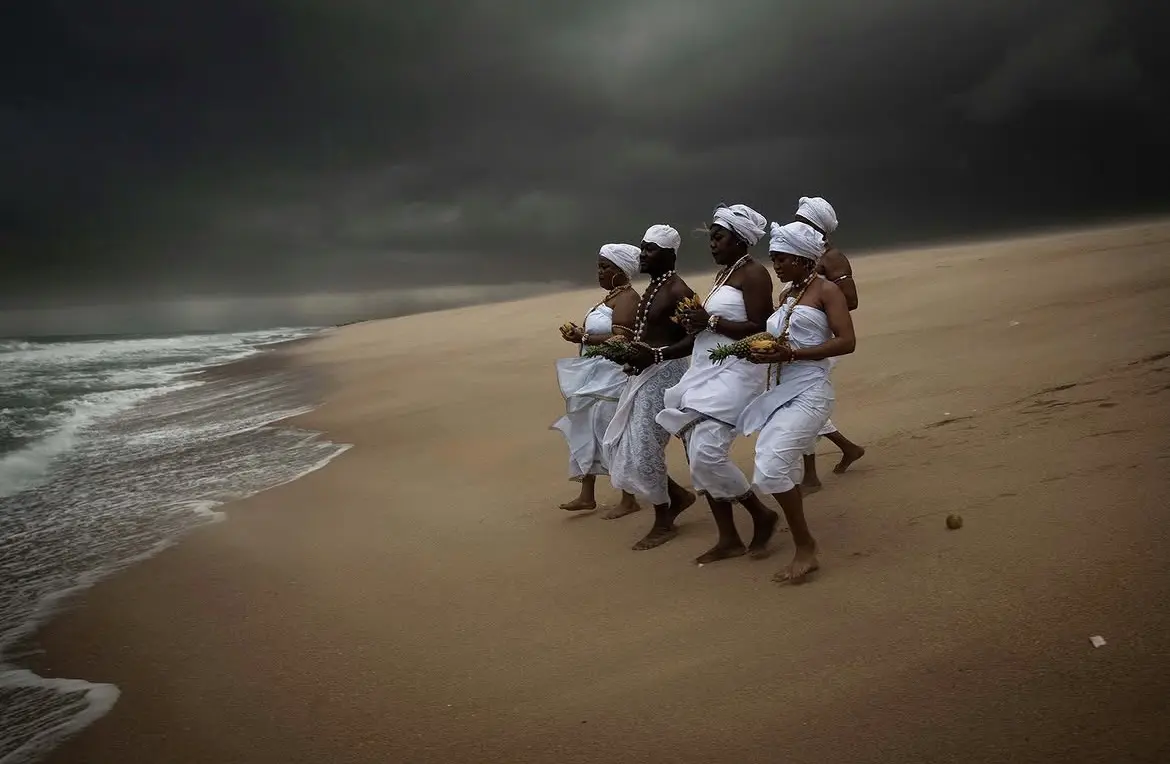
Voodoo priestess · Women in voodoo
Voodoo priestess: the women who serve voodoo, in Benin and beyond
Who is a voodoo priestess? In Benin, women hold a large place in voodoo, as initiates and as priestesses; in Haiti, the priestess is called mambo; in New Orleans, Marie Laveau became a legend. Wêtê Agbonon, voodoo priest at the Sakété temple, explains their role.
Filmed testimony
“I was skeptical at first, but I’m honestly so grateful I gave it a chance.”
A client, face shown, in her own words
In the temples of Benin
Women at the heart of voodoo
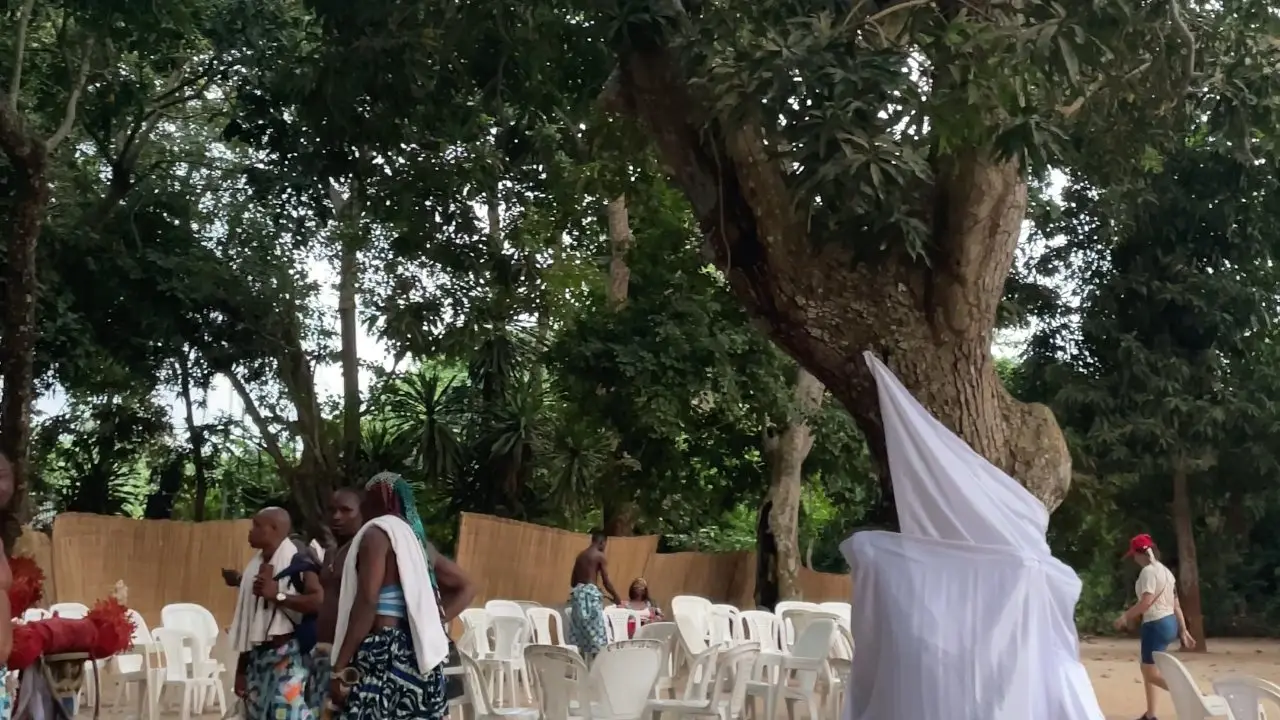
At the Sakété temple, as in most temples of southern Benin, women are present at every ceremony: they sing, dance, prepare offerings, keep altars, and many of them are initiates. Wêtê Agbonon serves as priest and bokonon; the women of the house serve the spirits with him.
Many people looking for a voodoo priestess are, in fact, looking for someone who will listen and help. This page explains who the priestesses of voodoo are, in Benin, in Haiti and in New Orleans, and what to check before consulting anyone.
Voodoo initiation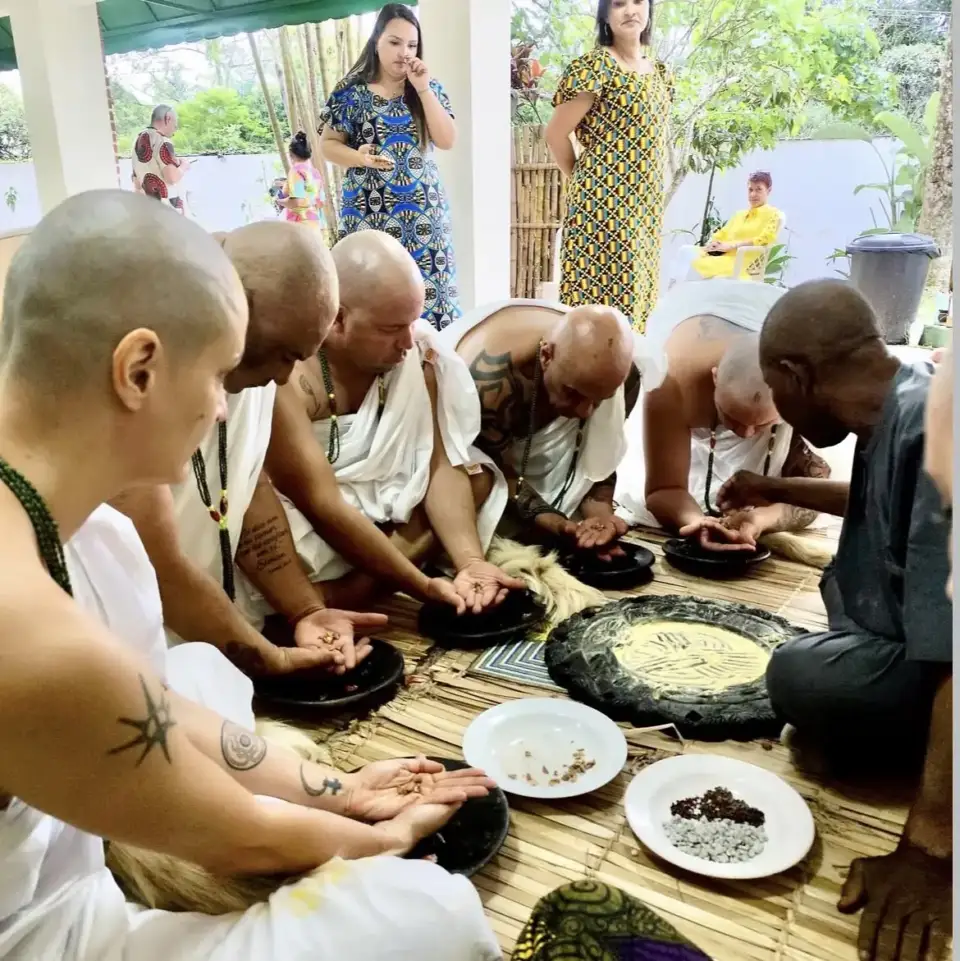
What is a voodoo priestess?
A voodoo priestess is a woman who has been initiated into the service of one or several voodoo spirits and who holds a charge in their cult: she keeps altars, leads ceremonies, teaches initiates, and speaks to the spirits on behalf of those who come to her. Like a priest, she receives this charge from those who held it before her, after years of learning, with its rules and its prohibitions.
The title is never self-proclaimed. A voodoo priestess belongs to a house, a temple or a convent, and the community knows her role. That is the first thing to check when someone presents herself as a priestess online.
Women in the voodoo of Benin
In Benin, a large share of the vodunsi, the initiates, are women. Some convents are led by women, and in certain cults, such as those of the waters, priestesses hold the highest charges; the followers of Mami Wata, the spirit of the waters, are often women. Women also play a central role in the great ceremonies and in the transmission of songs and gestures within families.
At the Sakété temple, the women of the house take part in the rituals Wêtê Agbonon leads: they prepare the offerings, sing for the spirits and accompany the initiates. The page African voodoo describes the religion and its roles, and voodoo initiation explains how women and men enter the service of a spirit.
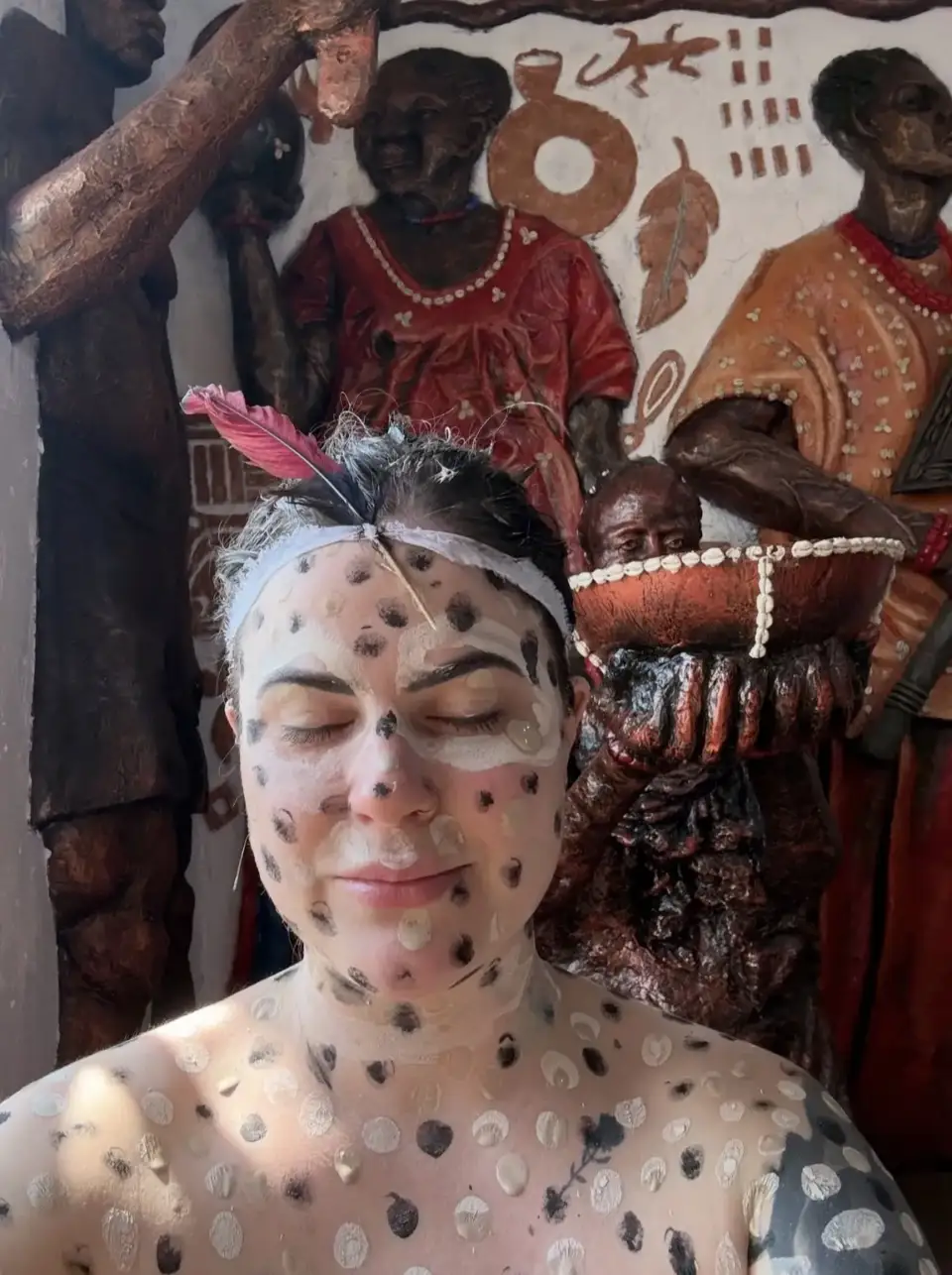
The mambo, voodoo priestess of Haiti
In Haitian Vodou, born from the voodoo of Benin carried across the Atlantic, the priestess is called mambo and the priest houngan. A mambo leads ceremonies in her temple, called a peristyle, initiates new members, and serves the spirits of Haitian Vodou, the lwa. The highest rank of priesthood is called asogwe. Haitian Vodou is a religion in its own right, with its own spirits and its own history.
Marie Laveau and the priestesses of New Orleans
In nineteenth-century New Orleans, Marie Laveau became the most famous Voodoo priestess of Louisiana, consulted by people of every background and still remembered today. Louisiana Voodoo developed its own rites, alongside hoodoo, a folk magic of the American South. The page voodoo vs hoodoo explains how these traditions differ.
Her role
What a voodoo priestess does
The charge of a priestess, in the temples of Benin and beyond.
She keeps the altars
She greets the spirits, feeds their altars and watches over their prohibitions.
She leads ceremonies
Songs, dances, offerings and prayers, in the order the tradition requires.
She teaches the initiates
She passes on the gestures, the songs and the rules of the house.
She receives people
She listens to those who come, and speaks to the spirits on their behalf.
She works with the Fâ
In Benin, the answer of the Fâ, read by a bokonon, guides every ritual.
Becoming a voodoo priestess
A woman does not decide alone to become a voodoo priestess. Most often, a spirit calls her: through dreams, signs, an illness that a doctor could not explain, a family charge left without a keeper. The Fâ confirms the call. She is then initiated, spends time in a convent, and learns for years from the women and men who hold the knowledge: songs, dances, offerings, prohibitions. Only then can she receive a charge, and with it the duty to answer for her altars.
The priestesses of the waters
The cults of the waters hold a special place for women. Mami Wata, the spirit of the sea and of rivers, is served by many women, recognisable in ceremonies by their white or brightly coloured clothing, their mirrors and their jewellery. Their priestesses receive people who come for love, prosperity or protection, and lead the dances during which the spirit makes itself felt.
Mothers of the convents
In the convents where initiates live during their training, women often hold the role of mothers: they teach, they watch over the initiates, they keep the rhythm of the days. Their authority is great, even when the head of the cult is a man. Many families of Benin owe the transmission of their songs and gestures to these women.
What women ask a voodoo priest for
Many of the people who write to Wêtê Agbonon are women. They write about a couple that drifted apart, a husband who left, a family in conflict, a business that does not take off, a fear of having been targeted. Some had already consulted elsewhere, paid and waited. He listens, consults the Fâ, and tells them frankly what can be done; when the Fâ says no, he takes nothing.
Priestesses in Haitian Vodou today
In Haiti, mambo lead temples across the country and in the diaspora, from New York to Montreal and Paris. Their role is described in the Wikipedia page on Haitian Vodou. Haitian Vodou has its own spirits, the lwa, and its own rites; it shares with the voodoo of Benin a root, a respect for the ancestors and the place given to divination.
Choosing who to consult
Whether you prefer a woman or a man, choose someone you can check: a temple, a house that passed the charge on, a free consultation before any payment, a written quote, testimonies with faces visible. At the Sakété temple, Wêtê Agbonon answers himself and never writes first; his only official lines are on the page official accounts.
Priest or priestess: does it matter for a consultation?
What matters is the charge, the house and the method. In Benin, the Fâ answers in the same way whoever consults it, and a ritual is designated for the person, never chosen from a list. Wêtê Agbonon consults for women and men alike; many of the people who write to him are women, for love, family, protection or work. Some prefer to speak with a woman; they can say so, and he answers with the same care.
Voodoo priestess near me?
Searches for a voodoo priestess nearby often lead to shops, tarot readers or online sellers using the title. You do not need someone nearby: the Fâ consultation is done at a distance, with your name, your date of birth and a photograph of you, which stays at the temple, and the ritual is performed at the Sakété temple. What you need is someone you can check.
How to recognise a real voodoo priestess, or priest
The same questions apply to anyone. Where is your temple, and can I see it? Who passed the charge on to you? Do you consult before asking for money? Will I receive a written quote with one single amount? What happens if the divination says no? Can I see people you have worked for, with their faces visible? A real priestess or priest answers all of them without hesitation. The pages real voodoo priest and spell caster: 7 checks go through them one by one.
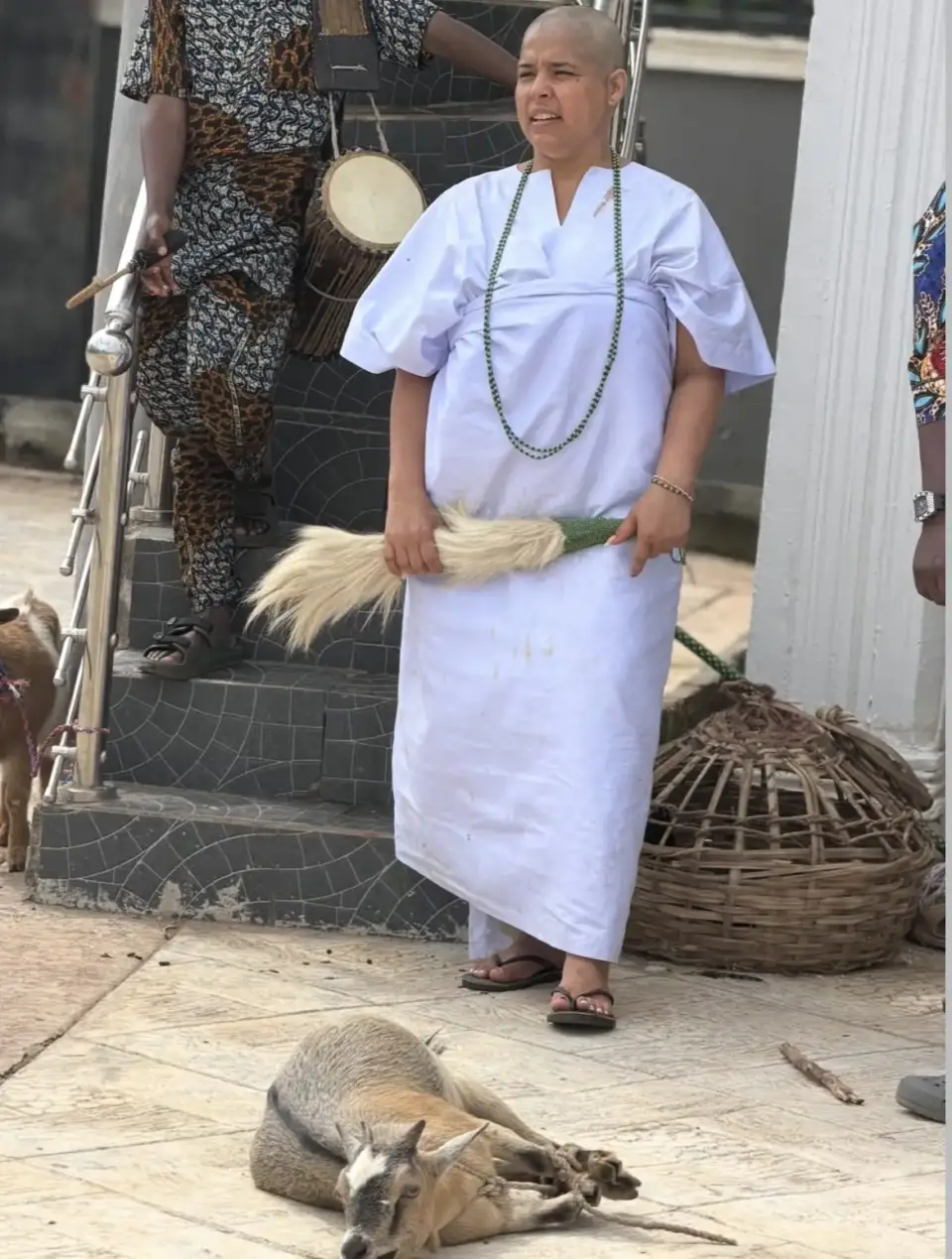
The voodoo priestess of films and costumes
The voodoo priestess of Halloween costumes and fantasy art, with skulls and pins, comes from cinema and from trade. Real priestesses dress according to their spirits and their house, often in white for ceremonies, with the colours and objects their tradition requires. Their authority comes from their initiation and their community, never from a costume.
Consulting at the Sakété temple
Those who write to the Sakété temple are answered by Wêtê Agbonon himself, within two hours, seven days a week. He consults the Fâ free of charge; if the Fâ opens the way, he sends a written quote, then leads the ritual at the temple, with the women and men who serve the spirits with him. You can come and attend, or follow it from a distance and receive a report.
He commits only after consulting the Fâ. When he commits, he leads the work himself, to the end, and stays reachable afterwards. He takes your money only if he can act.
The voodoo priestess in the eyes of her community
In the villages of southern Benin, a priestess is a respected figure. People come to her for advice, for protection, for the ceremonies of birth and death. She knows the families, their spirits and their history, and she keeps the memory of the cults she serves. Her authority does not depend on fame: it rests on what she received and on how faithfully she serves.
This respect also means responsibility. A priestess who misuses her charge, who promises what the spirits have not granted or who works to harm, loses the trust of her community. The same rule applies to a priest, and it is the rule Wêtê Agbonon follows: the Fâ decides, and he does what it asks, nothing more.
Voodoo priestesses and initiation today
More and more women from Europe and the Americas travel to Benin to learn about voodoo, and some ask to be initiated. At the Sakété temple, the answer always comes from the Fâ: it says whether the way is open, towards which spirit, and what the initiation will ask. Initiation is a commitment for life; it is never sold as a weekend experience. The page voodoo initiation explains the four steps.
A voodoo priestess for love?
Many searches for a voodoo priestess concern love. In Benin, love rituals are designated by the Fâ, for one person, and led on the altars by the one who received the charge, whether a woman or a man. They work on the bond and on what blocks it, never on the will of the other person. The page voodoo love spells describes what is done at the Sakété temple.
In short
Voodoo priestesses in eight lines
Who they are, where they serve.
- In Benin
- Initiated women who keep altars and lead cults
- Initiates
- Many vodunsi are women
- Cults of the waters
- Priestesses hold high charges, as with Mami Wata
- In Haiti
- The priestess is called mambo; the highest rank is asogwe
- In New Orleans
- Marie Laveau, nineteenth century
- Their authority
- An initiation, a house, a community
- At Sakété
- Women serve the spirits alongside Wêtê Agbonon
- To consult
- Free Fâ consultation, at a distance
His limits
What a serious priest or priestess refuses
Promising before divination
Nothing is promised before the Fâ has answered.
Working against anyone
A ritual is made for the person who consults, never to harm another.
Asking for secrecy or urgency
You can talk about your request with anyone, and take your time.
Coming before a doctor
When a story calls for medical care, it is said before any rite.
Questions
What people ask about a voodoo priestess
What is a voodoo priestess called?
In Haitian Vodou, a priestess is called mambo. In Benin, women who serve the spirits are initiates, vodunsi, and some hold the charge of priestesses in their cult.
Can a woman be a voodoo priest?
Yes. In Benin, women are initiated and some lead convents and cults; in Haiti, the mambo has the same rank as the houngan.
Who was the most famous voodoo priestess?
Marie Laveau, in nineteenth-century New Orleans, is the most famous Voodoo priestess of Louisiana.
Is there a voodoo priestess at the Sakété temple?
Women serve the spirits alongside Wêtê Agbonon, who is the priest and bokonon of the temple and answers those who write.
How do I find a real voodoo priestess?
Check what cannot be invented: a temple, a house that passed the charge on, a consultation before any payment, a written quote and testimonies with faces visible.
Can I consult from abroad?
Yes. The Fâ consultation is done at a distance, free of charge, and the ritual is performed at the Sakété temple.
How does a woman become a voodoo priestess?
She is called by a spirit, confirmed by the Fâ, initiated, and trained for years before receiving a charge from those who held it.
What does a voodoo priestess wear?
It depends on her spirits and her house: often white for ceremonies, with the colours and objects her tradition requires. The costumes of films are fiction.
Do voodoo priestesses do love rituals?
Some do, in their tradition, as priests do. In Benin, a love ritual is designated by the Fâ and led on the altars; it never forces anyone’s will.
Is Mami Wata served by priestesses?
Many followers and priestesses of Mami Wata, the spirit of the waters, are women. Their ceremonies are among the best known in Benin and Togo.
What is the difference between a mambo and a houngan?
In Haitian Vodou, the mambo is the priestess and the houngan the priest. They hold equal ranks and lead temples in the same way.
Can a voodoo priestess be initiated abroad?
Initiation is received in a temple, on site, after the divination has said the way is open. It cannot be done by video or by mail.
Why do so many women serve voodoo?
In Benin, women have always carried the songs, the dances and the care of the altars. Many are called by a spirit, and the Fâ confirms the call.
Does Wêtê Agbonon answer women himself?
Yes. He answers every message himself, within two hours, and consults the Fâ in the same way for women and men.
Write to him
He answers himself, within two hours
The first exchange is free and confidential. You set out your situation, he consults the Fâ, then you decide freely.