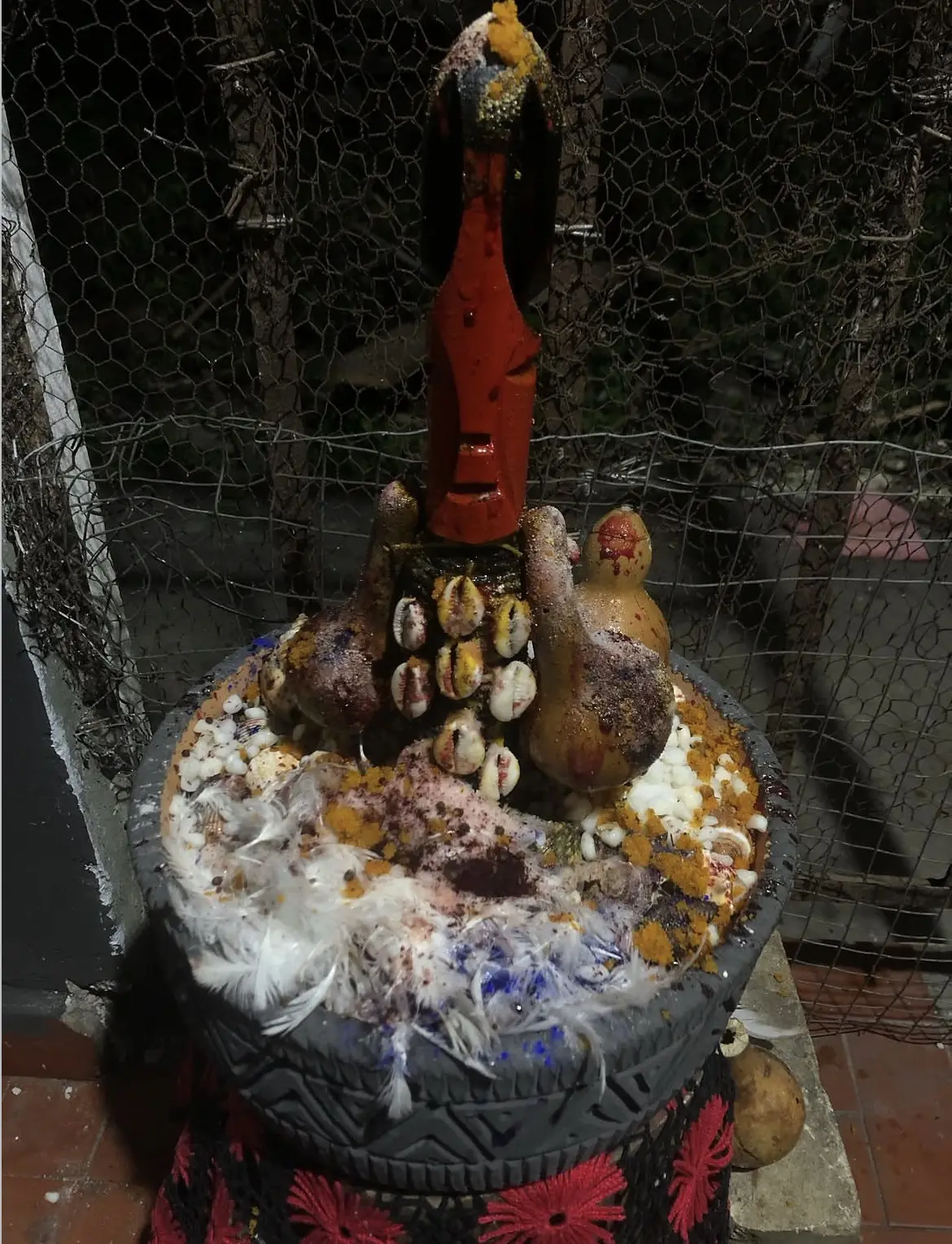
Signs of witchcraft · Sakété temple
Signs of witchcraft: what a voodoo priest from Benin looks for, and how it is lifted
When misfortune piles up, many people wonder whether witchcraft is at work. Wêtê Agbonon, who keeps a voodoo temple in Sakété, Benin, goes through what people notice, what the Fâ actually reveals, how a charge is removed on his altars, and why he never points at anyone. The first consultation is free.
Filmed testimony
“I was skeptical at first, but I’m honestly so grateful I gave it a chance.”
A client, face shown, in her own words
Start with the reading
Signs of witchcraft: first, find out whether it is really there
Fear of witchcraft can poison a family as surely as witchcraft itself. That is why Wêtê Agbonon starts from you, never from a suspect: he casts the opèlè and reads whether a charge truly weighs on you, or whether your troubles have causes that no ritual can touch.
When the sign confirms a charge, it is lifted on the altars of the temple and followed by a protection; the work is quoted in writing and paid before it begins. When it does not, he tells you, and the reading, which is free, ends there. In no case will a name come out of it.
Read how a curse is lifted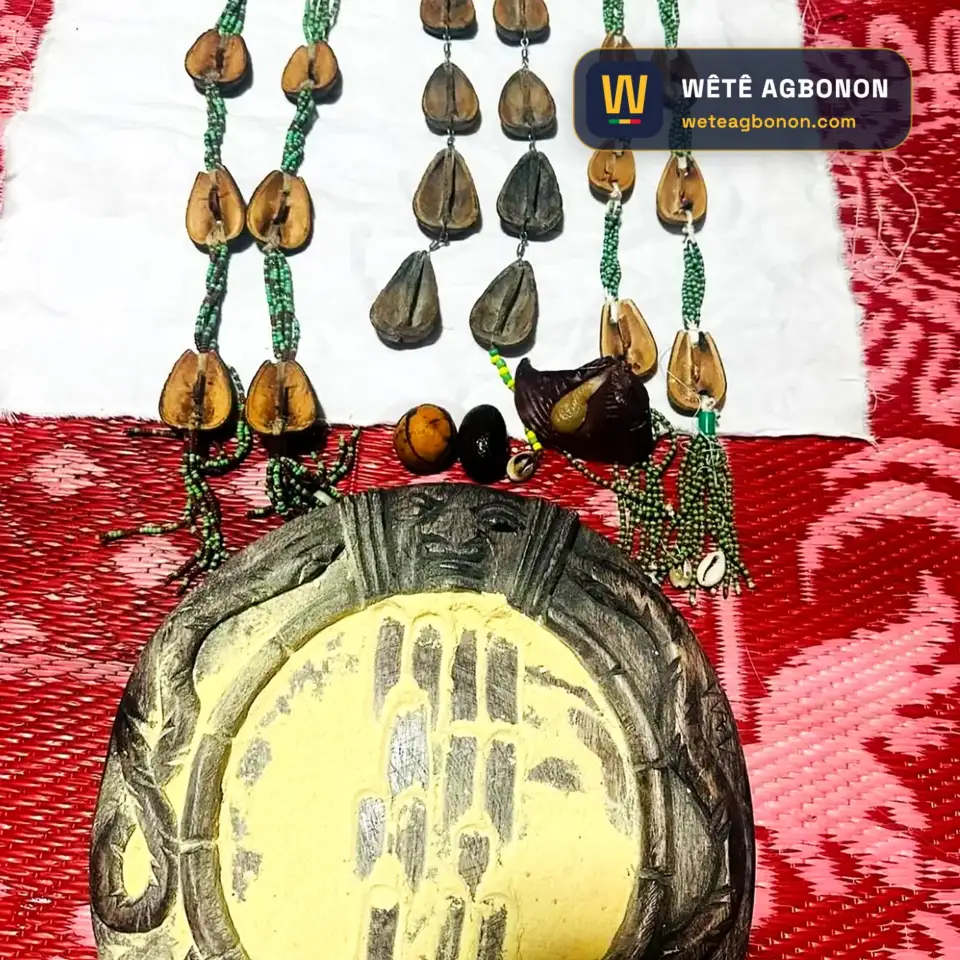
What people mean by witchcraft
In West and Central Africa, and across the African diaspora, witchcraft usually means harm done to a person through spiritual means, out of jealousy, hatred or greed. It is distinguished from the work of a priest, who serves spirits openly at a temple and answers to his community. A person accused of witchcraft is thought to act in secret, sometimes at night, sometimes without even being aware of it.
In Benin, the voodoo tradition has its own ways of recognising and lifting such harm, and the Fâ is the first of them. It starts from the person who consults, and from what the signs show about their life, with no suspicion cast on a neighbour.
Signs of witchcraft people report
Letters about witchcraft repeat certain complaints. Taken one by one, none is proof, and ordinary explanations must be checked before any other:
- Repeated misfortune that strikes several areas of life at once: work, money, love, health.
- Projects that collapse at the last moment, again and again.
- Disturbing dreams that return: being chased, eating in a dream, being visited at night.
- Sudden conflict in a family that used to be united.
- A business that empties for no visible reason.
- A feeling of being drained, watched or followed.
- Misfortune that began after a specific event: a quarrel, a gift, a visit, an inheritance.
- Several members of the same family affected in the same way.
- Strange objects turning up on the doorstep or inside, with no one admitting to them.
Pain, weight loss, fever, sleepless nights: these go to a physician before anyone else. He repeats it to everyone who writes, because a rite never replaces treatment.
What the Fâ distinguishes among the signs of witchcraft
Situations that look alike get separated by the reading. A deliberate charge differs from envy nobody meant, the black magic someone paid for differs from a curse carried by a family, and all of them differ from an ordinary bad year. Frequently it clears the spirits altogether and points elsewhere: a decision to make, a place to leave, a doctor, a lawyer.
When it does confirm witchcraft, it says what kind, whether it targets a person, a couple, a family or a home, which spirit must be prayed to, and what will protect you once it is lifted. It never says who did it.
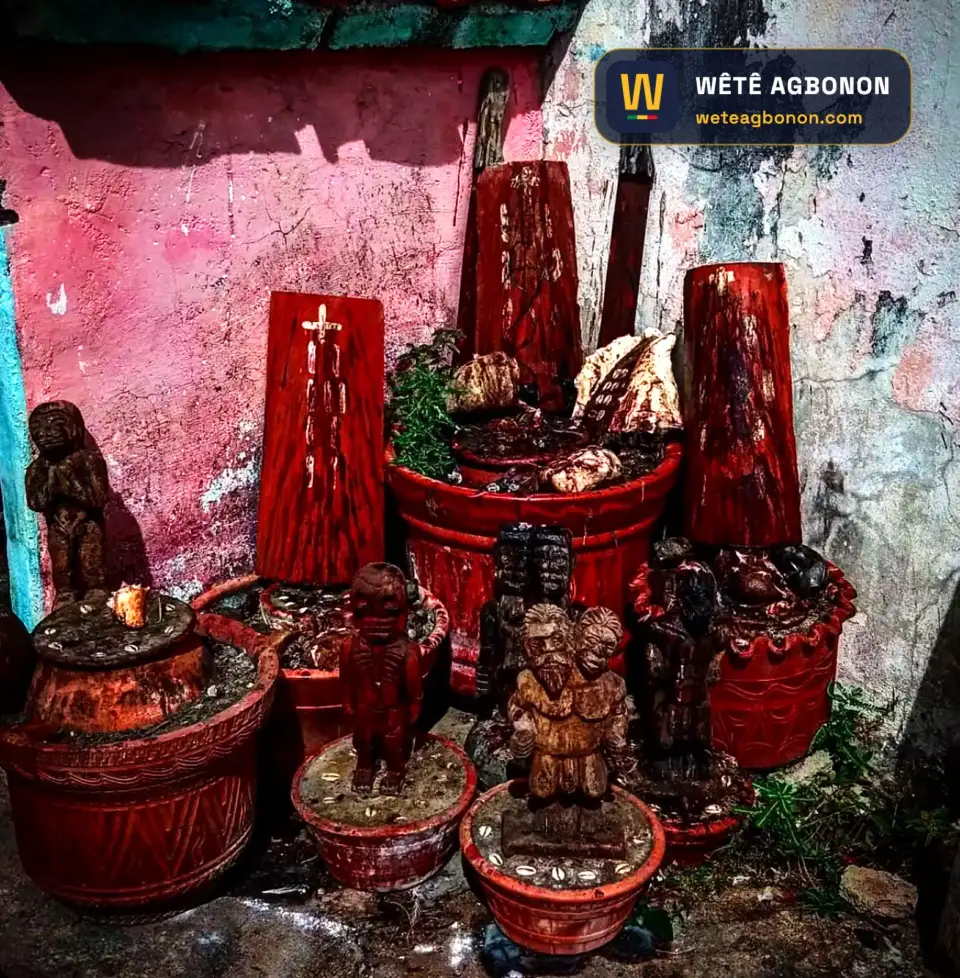
Why he never accuses anyone
In parts of Africa, accusations of witchcraft have led to terrible abuse: children driven from their homes, elderly women attacked, families torn apart by suspicion. Wêtê Agbonon refuses any part in this. No name comes out of a Fâ consultation, neither among the living nor among the dead, and he does not help anyone identify a supposed witch. His work is to lift what weighs on you and to protect you, not to designate someone to blame.
This rule protects you too. A practitioner who “reveals” that your aunt, your neighbour or your child is bewitching you creates a conflict that can last for years, and often charges you again to “fight” the person he named.
Children accused of witchcraft: a line he never crosses
In parts of Africa and its diaspora, children have been accused of witchcraft, beaten, abandoned or forced through brutal deliverances. Organisations such as UNICEF have documented the harm these accusations cause. At Sakété, the rule is absolute: no child is ever designated as the source of a family’s misfortune, and no reading is used to blame one. Accusing a child protects no one.
If someone has told you that your child is a witch, do not let anyone touch, isolate or punish that child. A child whose behaviour changes needs a doctor, a teacher, a listening adult. When a family believes it is under attack, the Fâ looks at the situation as a whole, and the protection prepared at the temple covers the children too.
Signs of witchcraft in dreams
Dreams hold a large place in the stories people tell about witchcraft: being chased, being fed in a dream, waking up exhausted after a night visit. The Fâ takes these dreams seriously without interpreting them mechanically. Some point to a real charge; many reflect anxiety, grief or fear. The reading tells you which, and what to do.
Signs of witchcraft at work
Some of the most common signs of witchcraft people describe concern work: a promotion that slips away at the last minute, colleagues who suddenly turn hostile, a business that loses its clients one after the other, contracts that fall through for no reason. These signs of witchcraft often appear after a success that attracted envy. The Fâ shows whether a charge weighs on the person or on the activity, or whether the difficulty comes from a decision to revisit or a partner who does not deserve trust.
Signs of witchcraft in a marriage
A marriage that was peaceful and suddenly fills with arguments, a spouse who becomes cold or distant overnight, a family-in-law that turns hostile: such signs of witchcraft are among the most painful, because they touch the home. The Fâ distinguishes an outside charge from the ordinary wear of a couple and from a relationship that is ending. When a charge is confirmed, it is lifted for both partners, and the protection that follows concerns the household.
Signs of witchcraft in the home
Some signs of witchcraft are tied to a place: a house where nobody sleeps well, where objects break, where tension rises as soon as people come home. Objects found at the door or buried in the yard frighten families most. Whether the charge sits on the walls or on the people inside them is for the reading to say, and the protection is shaped accordingly.
Signs of witchcraft in a family
When several members of a family suffer in the same way, people often suspect a family curse or a relative acting in secret. The Fâ may show a charge, but it may also show a debt toward the ancestors, a promise left unfulfilled, a conflict over land or inheritance. Each calls for a different response, and some require a gesture from the family itself.
What to do if you see signs of witchcraft
Start with calm. Write down what has happened, in order, and what changed just before. Bring any health concern to a doctor. Avoid accusing anyone, even in your mind; suspicion poisons relationships whether or not witchcraft is real. Do not pay several practitioners at once, and do not follow anyone who frightens you into an urgent ritual. Then ask for a Fâ consultation: it is free, and it will tell you what is really happening.
What not to do when you suspect witchcraft
Fear pushes people toward decisions they regret. Do not confront a relative or a neighbour on the strength of a suspicion. Do not pay a stranger online who contacted you first, promising to reveal your enemy. Do not stop medical treatment because someone told you the illness is spiritual. Do not burn or bury objects you found before a reading has said what they are, if anything. If you feel in danger, contact the police or another trusted authority first, and keep any threatening messages.
Above all, do not let the fear spread through the family. A household whose members start watching each other for signs of witchcraft can be harmed more by suspicion than by any charge. Confide in one trusted person.
Signs of witchcraft: home remedies and prayers
Salt at the door, protective verses, holy water, charms bought online: people try everything when they feel attacked. Some of these gestures bring comfort. Do-it-yourself remedies are not something he hands out: without a reading, no one knows what the charge is or what it asks for. Many of those who write to him are also people of faith who pray in their church or mosque; he respects that, and the two do not exclude each other.
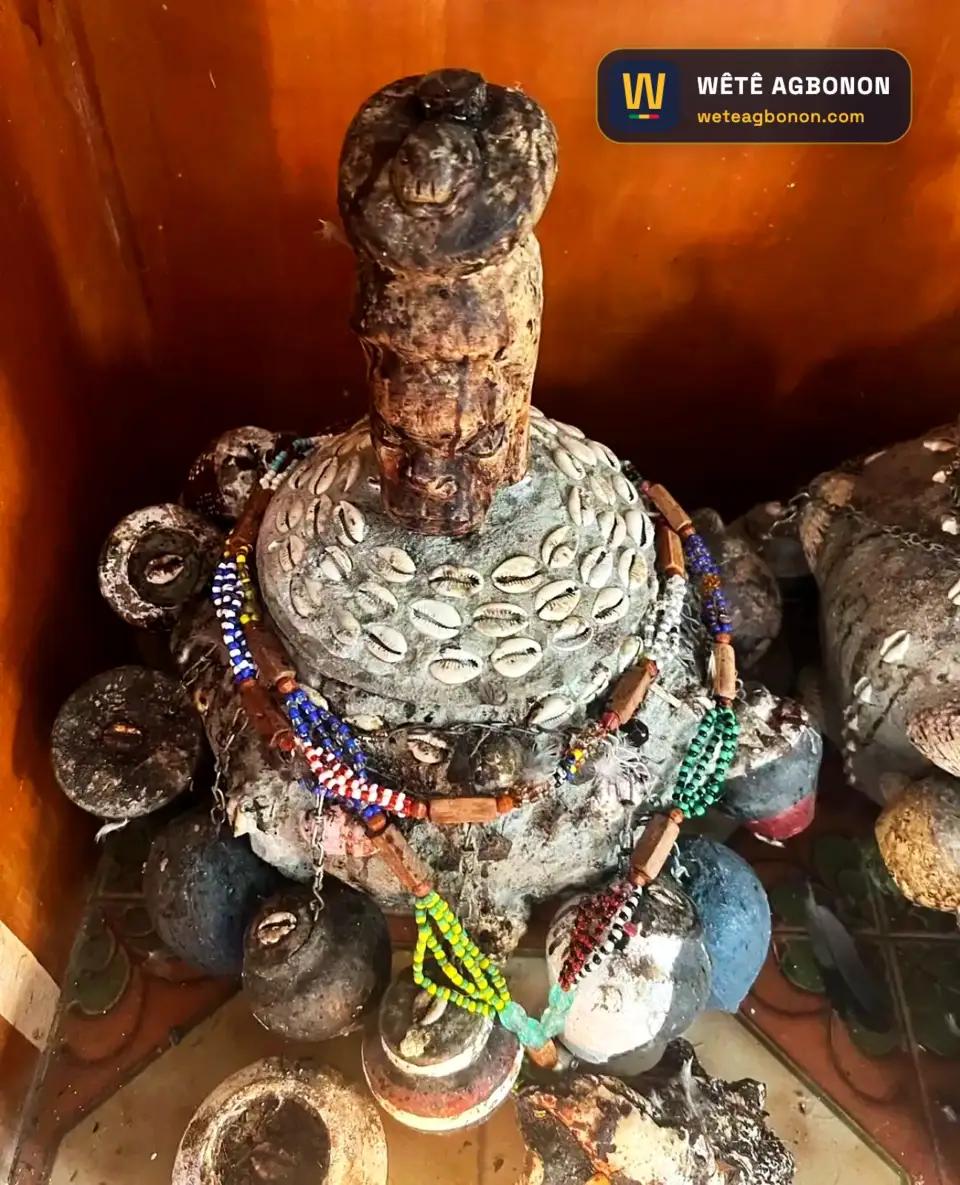
Signs of witchcraft or a hard season?
Before concluding that you are bewitched, ask yourself a few honest questions. Did the trouble start after a clear event, or slowly, as life became harder? Is your body exhausted from stress, grief or overwork? Have you made decisions that explain part of what is happening? Are there people around you who truly wish you harm, or is fear making you suspect everyone? The signs of witchcraft and the signs of a hard season look very much alike, and confusing them can cost you months and money.
The Fâ answers these questions with you. Very often, it shows that no charge weighs on you, and that what you need is rest, a change, a doctor or a lawyer. When it does show witchcraft, you know where you stand, and what the temple can do.
How long does it take to lift witchcraft?
There is no fixed time. Some charges lift quickly once the right spirit is prayed to; others, older or deeper, take longer, especially when the conditions that fed them remain. How long the lifting takes is read in the Fâ, and you get that answer unchanged.
What happens during the lifting
After the quote is settled, he assembles what the sign requested and prays in person before the spirit concerned, naming you at the altar. When the Fâ asks for it, a ritual bath at the river or a vigil at the temple accompanies the work. You do not need to be present; most clients follow the work from home, and he tells them how it is going. Those who write to him afterwards often describe calmer nights, a family that finds its peace again, projects that move once more. No outcome is promised.
If the signs of witchcraft you described persist after the work, tell him. He can consult the Fâ again, for free, to see what remains and what it asks for.
Protection after the work
Once a charge is lifted, protection keeps it from returning. If the reading calls for it, a protection is made at Sakété for a person, a household or a house; the protection spell page shows how. The Fâ also gives advice: people to keep at a distance, promises to honour, habits to change. Following it matters as much as the ritual.
Witchcraft, black magic, curse: which one?
The words overlap in everyday speech. In practice, the Fâ distinguishes a charge placed by someone, black magic commissioned from a practitioner, a curse that weighs on a family, and the jealousy that some call the evil eye. Each is lifted differently. The pages on curse removal, voodoo curse and black magic describe these cases.
How to recognise a serious practitioner
Anyone offering to lift witchcraft should pass four tests: they examine before charging, they put a fixed price in writing, they accuse no one, and their identity holds up. For him, see France 24, the accounts he runs and the clients filmed telling their story.
Witchcraft fears in the diaspora
People who left Africa to study or work abroad sometimes fear that jealousy back home follows them: a relative envious of their success, a family that expects money they cannot send. When things go wrong far from home, that fear grows, because the people suspected are out of reach. The Fâ helps separate a real charge from the strain of living between two worlds, with obligations on both sides.
Distance does not stop the work. The reading and, if needed, the lifting are done at Sakété under your name, and the advice often touches on how to keep ties with family without being crushed by them. Sending money out of fear, or cutting all contact out of anger, rarely settles anything; the reading helps find a fairer middle.
Consulting from abroad
Fear of a charge reaches far beyond Benin, and many who write about it live abroad. They do not need to come: the reading and the lifting take place at Sakété, under their name, and what they confide is kept. Messages through his contact page are answered by him, in English.
Questions
Signs of witchcraft: what people ask
What are the signs of witchcraft?
People describe repeated misfortune in several areas of life, disturbing dreams, sudden family conflict, drained energy. None of these proves anything on its own.
How do I know if I am bewitched?
A reading, free of charge, says whether there is a charge or another explanation.
Can witchcraft be removed?
Yes, when the Fâ confirms it. He lifts it at the temple with the offerings and prayers the Fâ asks for, then protects you.
Will he tell me who is bewitching me?
No. His readings never name a culprit, and he will not help anyone accuse a relative or a neighbour.
Are dreams signs of witchcraft?
Sometimes, but many reflect anxiety or grief. The Fâ shows which, and what to do.
Can signs of witchcraft appear in a whole family?
The Fâ may show a charge on a family, but also a debt toward the ancestors or a conflict over inheritance. Each calls for a different response.
Should I see a doctor?
Yes, whenever your body is affected. Medical care comes before any rite, and the two do not compete.
Is witchcraft the same as black magic?
The words overlap. The Fâ distinguishes a charge placed by someone, black magic commissioned from a practitioner, a family curse and jealousy that weighs without intent. Each is lifted differently.
Can I protect my children from witchcraft?
See a doctor first if a child is unwell. Once health is checked, the Fâ can say whether a protection for the family or the home is useful.
What if the signs of witchcraft continue after the work?
Tell him. He can consult the Fâ again, for free, to see what remains and what it asks for.

Write to him
He answers himself, within two hours
The first exchange is free and confidential. You set out your situation, he consults the Fâ, then you decide freely.