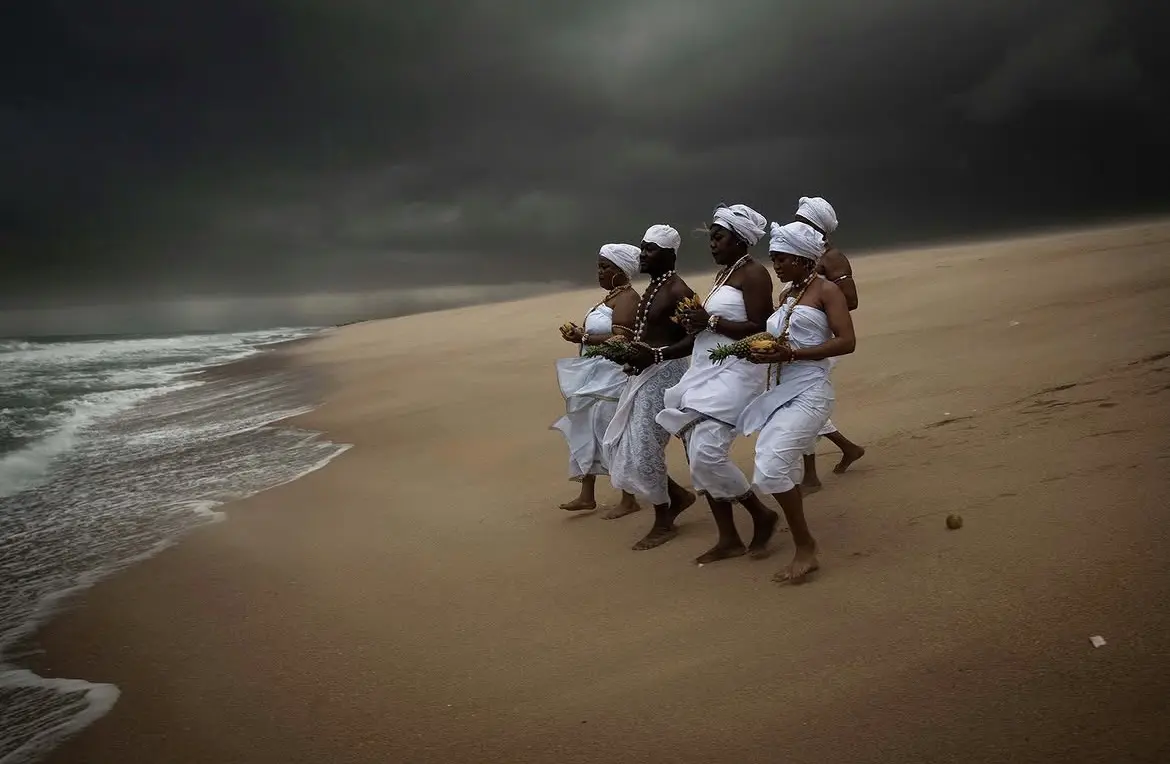
Voodoo · Sakété temple
Is voodoo real? A voodoo priest from Benin separates the religion, the myths and the promises sold online
People type “is voodoo real” for very different reasons: curiosity after a film, fear of a curse, hope that a ritual can change their life. Wêtê Agbonon, who serves as priest and Fâ diviner in Sakété, southern Benin, answers each version of the question, and says plainly what voodoo can and cannot do.
Filmed testimony
“I was skeptical at first, but I’m honestly so grateful I gave it a chance.”
A client, face shown, in her own words
The Fâ first
Is voodoo real? The answer starts with a consultation
At the Sakété temple, voodoo is neither a horror story nor a product. It is a religion lived every day, and its first gesture is a question asked of the Fâ, the oracle that guides every decision. Someone writes with a problem; Wêtê Agbonon asks for their name, birth date and portrait, casts the opèlè, and reads what the signs say.
Sometimes the signs call for a ceremony at the temple. Often they call for nothing of the kind, and point toward a doctor, a lawyer or a difficult conversation. That honesty is part of the answer to whether voodoo is real: a living tradition, practised by millions, that does not pretend to solve everything.
African voodoo explained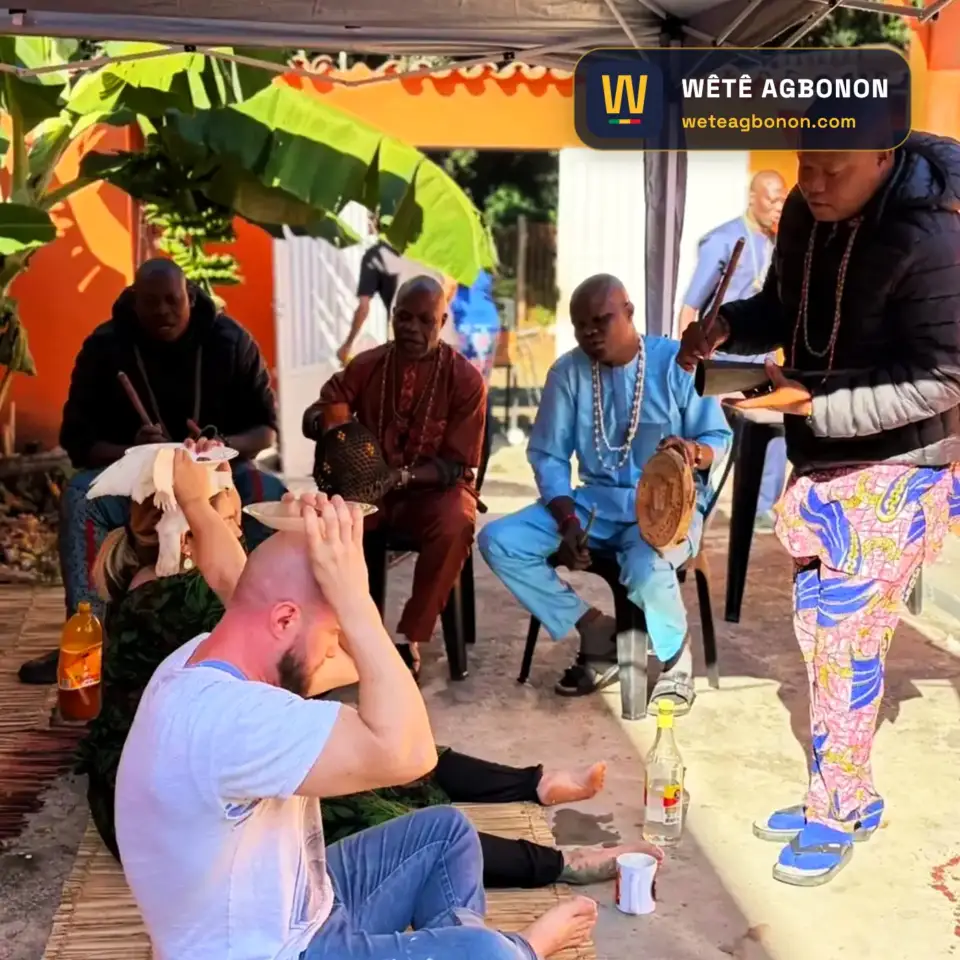
At a glance
Is voodoo real? The short answer
- As a religion
- Yes. Voodoo is practised by millions in Benin, Togo, Ghana, Nigeria, Haiti and the diaspora.
- In Benin
- A national holiday honours traditional religions every 10 January.
- The Fâ
- The divination system shared with the Yoruba Ifá is listed by UNESCO as intangible heritage.
- Dolls and zombies
- Mostly inventions of cinema and travel writers, far from temple practice.
- What no one can promise
- A guaranteed result, an obedient lover, a fortune overnight.
Is voodoo real? As a religion, yes
Voodoo, or vodun, took shape in the old kingdoms of the Bight of Benin, where Fon, Ewe and Aja communities lived. Its faithful honour a supreme being who stays distant, and the vodun, powers linked to the earth, thunder, water, iron and the crossroads, alongside the ancestors of each family. Priests and priestesses serve the vodun in temples and convents; diviners read the Fâ.
In Benin, traditional religions are celebrated every year on 10 January, a public holiday, and the town of Ouidah now hosts the Vodun Days festival. Across the Atlantic, the descendants of enslaved Africans carried the tradition to Haiti, where Vodou was officially recognised as a religion in 2003, and to Louisiana, Cuba and Brazil, where related faiths took other names. Asking whether voodoo is real, in this sense, is like asking whether Hinduism is real.
Is voodoo real, or a film invention?
Most of what the English-speaking world knows about voodoo comes from fiction. The 1932 film White Zombie launched the shambling undead; pin-stuck dolls became a cartoon shorthand for revenge. In 1985, the ethnobotanist Wade Davis published The Serpent and the Rainbow, arguing that a powder used in Haiti could induce a death-like state; scientists have disputed the claim ever since.
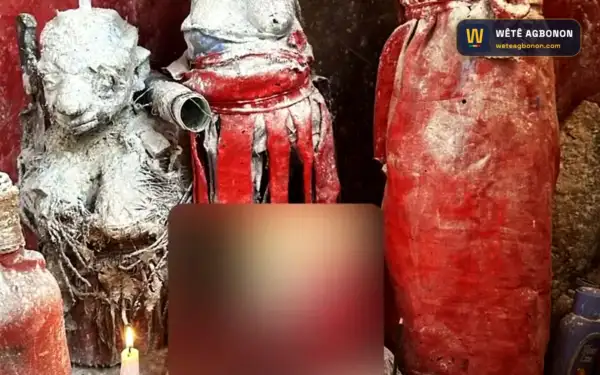
At a temple in Benin, none of this resembles daily practice. People come for a reading, for a ceremony for an ancestor, for protection before a journey, for help with a family quarrel, a marriage, a sickness that medicine is also treating. The ritual figures called bocio exist, but they serve to protect and to act on behalf of their owner, and the page on the voodoo doll explains what they really are.
Does voodoo work?
This is usually the question behind the question. The honest answer has several parts. A religion works for its faithful in the way every religion does: it gives meaning, community, rules for living, a relationship with the dead and the sacred. Rituals change how people feel, what they decide, how families talk to each other. Those effects are real, whatever one believes about the invisible.
Beyond that, voodoo priests say that the vodun act in the world, and many who consult them describe changes after a ceremony. No laboratory has measured such effects, and no honest priest claims otherwise. What can be said is that a work done at the temple is never a guarantee, that it does not override another person’s free will, and that it never replaces medical or legal help.
Six questions
6 forms of the question “is voodoo real”, and short answers
People ask “is voodoo real” in many ways. Each deserves its own answer.
Is voodoo a real religion?
Yes, with temples, priests, calendars, initiations and millions of faithful.
Can someone curse me with voodoo?
The tradition says a charge can be laid; a reading says whether one weighs on you.
Do voodoo dolls work?
Pin dolls are mostly fiction; real bocio figures belong to temple practice.
Are zombies real?
The Hollywood zombie is invented; the Haitian case studies remain disputed.
Can voodoo bring someone back?
A love work can be done when the Fâ allows it, never by forcing anyone.
Is voodoo evil?
No more than any faith. Some practitioners misuse it; the religion condemns harm.
Is voodoo real in America?
For many Americans, voodoo means New Orleans: shops selling dolls and gris-gris bags on Bourbon Street, walking tours, the tomb of Marie Laveau, the nineteenth-century priestess whose name still draws visitors. Louisiana Voodoo grew from African, Caribbean and Catholic roots, and some practitioners keep it alive today. Haitian communities in Miami, New York and Montreal practise Vodou in their homes and temples.
So is voodoo real in America? Yes, in its own forms, distinct from the vodun of Benin. Tourist shops are another matter: a doll sold as a souvenir has no more to do with religion than a plastic rosary sold at an airport.
Does voodoo work for love, money or protection?
Most people who ask whether voodoo works have a specific request in mind. For love, a work can be done when the Fâ allows it, and never to force another person; the page on voodoo love spells explains the limits. For money, a reading can reveal a blockage, and nothing creates wealth from nothing. For protection, the tradition is at its most constant: protections are prepared for people, homes and journeys when the sign calls for them.
In each case, the honest answer to “does voodoo work” is the same: a reading first, a clear account of what can and cannot be done, and a price in writing if a work is needed.
How to find out whether voodoo is real for you
Arguments rarely settle the question. Experience does. Ask one precise question about a situation that matters to you. Read the answer of the Fâ carefully, including what it says about your own choices. Note what happens in the weeks that follow. Many people who were skeptical say the reading described their situation with uncomfortable accuracy; others find it simply useful advice. Both are valid conclusions.
What you should never do is pay large sums out of fear, or let anyone convince you that voodoo is real only if you keep paying.
What science says about belief and the body
In 1942, the American physiologist Walter Cannon published a paper titled “Voodoo” Death, describing people who fell ill and died after being told they had been cursed. He argued that intense fear could exhaust the body. Modern medicine knows a gentler version of the same mechanism: the nocebo effect, in which expecting harm produces symptoms, just as the placebo effect lets expectation relieve them.
These findings cut both ways. They show that belief has real effects on health, and they warn against anyone who frightens people with curses in order to sell them a cure. A serious priest calms fear before anything else, and sends people to a doctor when the body is involved.
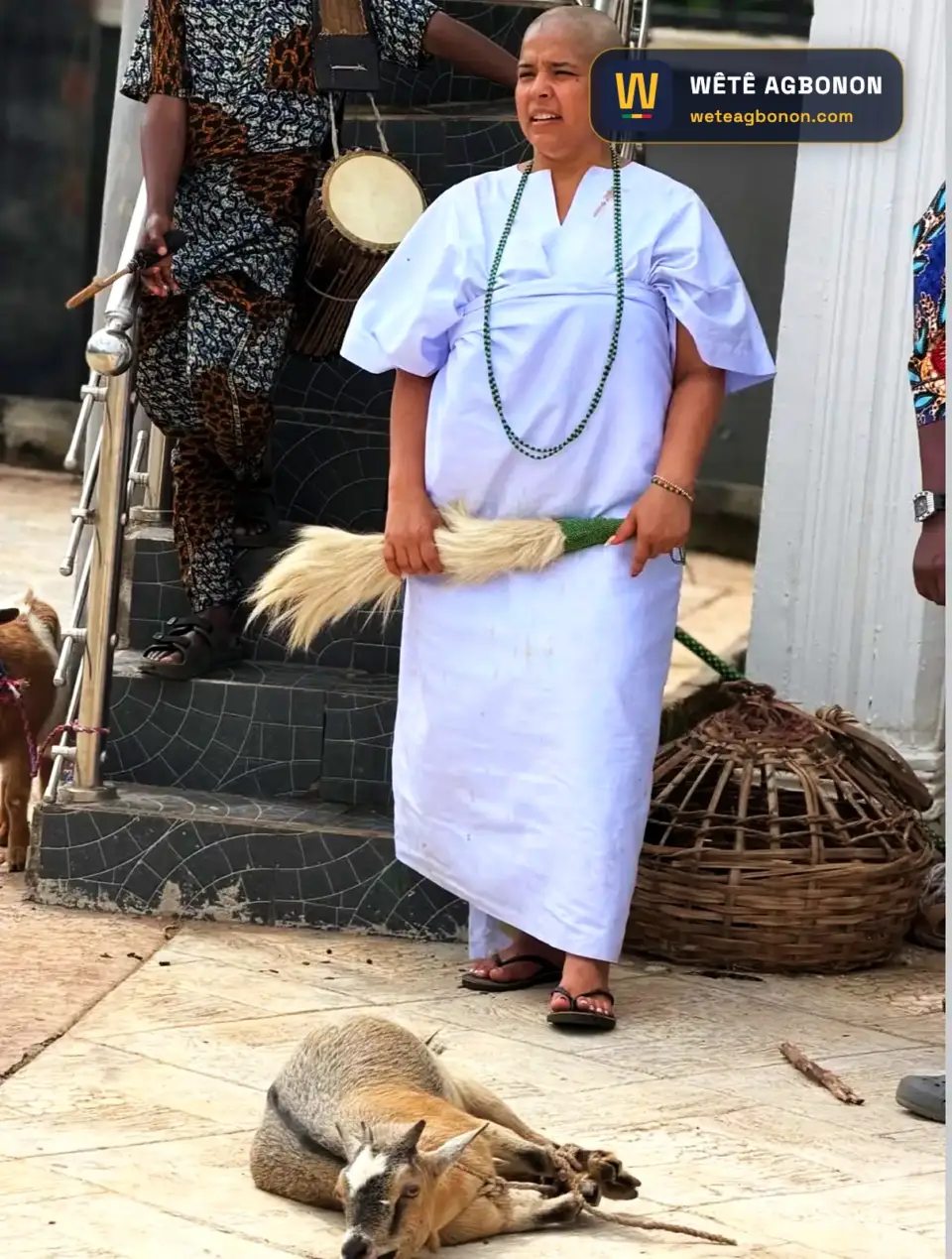
The Fâ: a divination system recognised worldwide
At the heart of the tradition stands the Fâ, which the Yoruba of Nigeria call Ifá. It rests on sixteen principal signs whose combinations give two hundred and fifty-six, each tied to stories, advice and prohibitions learned by heart over years of training. In 2005, UNESCO added the Ifá divination system to its list of masterpieces of humanity’s oral heritage, before moving it to the representative list of intangible cultural heritage.
For those who consult, the Fâ is the most concrete answer to whether voodoo is real: a question asked, signs cast, an answer given, written down, and checked against life in the months that follow.
What a voodoo priest really does
When people ask him whether voodoo is real, Wêtê Agbonon answers with his own practice. He serves the vodun at Sakété in the line of his ancestors. His days are made of readings, ceremonies for families, offerings at the altars, protections prepared when the Fâ asks for them, and advice that has nothing ritual about it. He refuses works meant to harm, promises of guaranteed results, and payment before a written quote.
A France 24 story about Benin’s coastal mangrove, broadcast on January 12, 2026, counts him among its guests, and read accounts from those he has helped. The page on the real voodoo priest lists what anyone can check about him.
Why fake practitioners love “is voodoo real”
Doubt is good business for impostors. Some answer “is voodoo real” with promises: your ex back in three days, a lottery win, an enemy destroyed. Others use fear: a curse detected over the phone, a ritual to buy before midnight. Both play on the same uncertainty, and both have nothing to do with the religion practised in Benin.
A few simple tests protect you. A real priest has a place, a lineage and a name you can verify. He reads before he proposes anything. He writes his price down, once. He accepts that you say no. And he refuses what the tradition forbids, starting with harm to others.
How a consultation works
Anyone can ask a question, believer or not. You send your name, your birth date, a portrait and a short account of what brings you. The opèlè is cast at Sakété, and you receive a written reply in English. When the signs call for a ceremony, the reply comes with a quote: a single price, a week to think it over, payment in instalments if you wish, and work only after payment. Should the sign’s timeframe run out without change, though you kept to its instructions, a request within thirty days earns you a second ceremony at no cost.
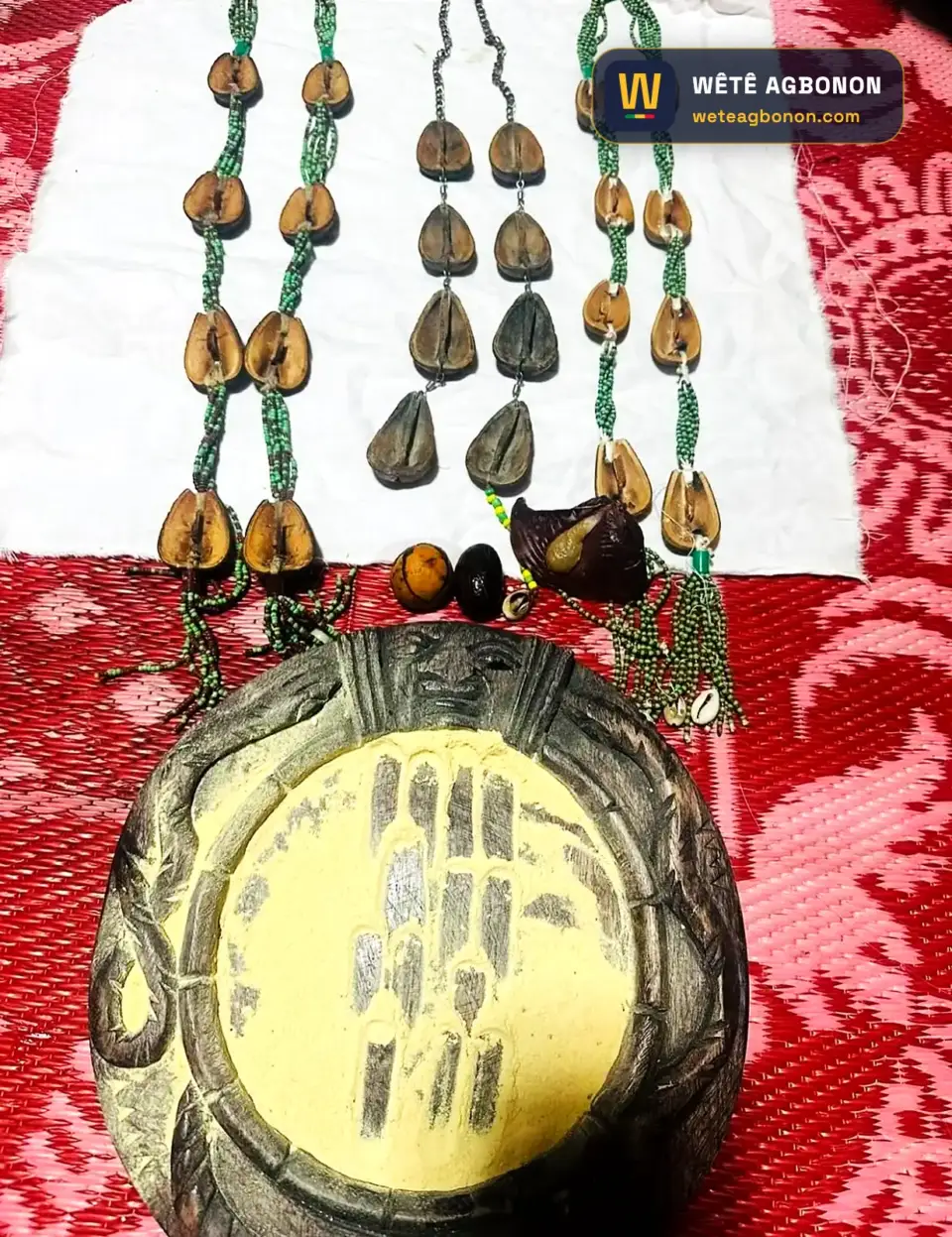
Respect for those who do not believe
Skepticism is welcome at the temple. Many people who write are not believers. They want an outside view of a confusing situation, or they are simply curious. Wêtê Agbonon answers them as he answers believers: with the reading, with honesty about its limits, and without pressure.
If you come from a church or a mosque, nothing in a consultation asks you to abandon it. Plenty of Beninese Christians and Muslims also consult the Fâ before a wedding or a journey, and see no contradiction in it.
A question for the children of the diaspora
Many of those who ask whether voodoo is real grew up between two worlds. Their parents or grandparents came from Benin, Togo, Nigeria or Haiti; they themselves were raised in Houston, London or Paris, often in churches that taught them to fear the old ways. At a funeral or a family crisis, the tradition suddenly returns: an aunt insists on a ceremony, a cousin speaks of a curse.
The question then becomes personal: does voodoo work, and does it concern me? Wêtê Agbonon answers these letters with particular care. A reading can explain what the family expects and why, and leave the person free to decide what to do with that knowledge.
An imagined letter
This example is invented from questions the temple often receives. A software engineer in Seattle, raised by a Haitian grandmother, writes that he has never believed in voodoo but that his family insists a relative cursed his late father. He asks, bluntly, whether any of it is real.
The reading may show an old family conflict that still weighs on the household and suggest a ceremony for his father, or it may show nothing spiritual at all and encourage him to talk with his grandmother about the quarrel. Either way, he receives an answer he can weigh with his own judgment, and a price only if a ceremony is required.
Asking from abroad
Most English-speaking visitors write from the United States, Canada, Britain, Nigeria or Ghana. They can stay at home: the details they share are enough for the oracle to be consulted in Sakété, and the reply is written by Wêtê Agbonon in person. Those who wish to come in person can visit the temple by appointment. Whether you are certain that voodoo is real, certain that it is not, or somewhere in between, your letter receives the same attention, and the same honesty about what a ceremony can and cannot change.
Only the consultation is free. It is also the best way to judge for yourself whether voodoo is real: ask a precise question, read the answer, and see what life does with it.
Questions
Is voodoo real? What people ask a priest
Is voodoo a real religion?
Yes. It is practised by millions in West Africa and the diaspora, with priests, temples, initiations and a yearly national holiday in Benin.
Is voodoo real or just superstition?
It is a religion with its own theology, clergy and rites. Superstitions grew around it in films and folklore; the faith itself is something else.
Does voodoo really work?
It works as a religion works, for meaning and community. Priests say the vodun act in the world; no honest one guarantees a result.
Can voodoo hurt someone?
The tradition says harm can be done, and condemns it. Wêtê Agbonon refuses every work meant to harm.
Are voodoo dolls real?
Pin dolls are largely fiction. Ritual figures called bocio exist and serve protection in temple practice.
Is voodoo the same as hoodoo?
No. Voodoo is a religion born in West Africa; hoodoo is an African American folk magic tradition.
Are zombies real?
The film zombie is invented. A few Haitian cases have been studied, and their explanation remains disputed.
Is voodoo evil or satanic?
No. It has its own gods, ancestors and ethics; it has nothing to do with Christian ideas of Satan.
Can I consult a voodoo priest without believing?
Yes. Many people who write are skeptical. The reading is offered all the same.
How much does a consultation cost?
Nothing. Only the consultation is free; a ceremony, if needed, comes with a written quote.
Where does voodoo come from?
From the lands that are now Benin and Togo, home of the Fon and the Ewe.
Who answers my questions?
Wêtê Agbonon, a voodoo priest and Fâ diviner in Benin, in English or French.
Can I visit the temple?
Yes, by appointment. Most people consult from home.