Justice · Sakété temple
Court case spell: how a voodoo temple in Benin helps people facing a judge, and why the lawyer stays essential
A custody hearing in three weeks, a quarrel over a family house, a dismissal contested before a tribunal. When a case is about to go before a judge, some people search for a court case spell. At Sakété, the first step is a Fâ reading, given without charge: Wêtê Agbonon casts the signs, sees whether a spiritual weight sits on the case, and says which protection or offering the temple can make, and which steps belong to you and your lawyer.
Filmed testimony
“I was skeptical at first, but I’m honestly so grateful I gave it a chance.”
A client, face shown, in her own words
Before any work
Court case spell: the questions put to the Fâ
People facing a trial often write in a hurry, with a hearing date already set. Before any ritual is discussed, Wêtê Agbonon puts one question to the Fâ: does something beyond the evidence weigh on this dispute? To ask it well, he needs the facts, the stage the proceedings have reached and your own account of how it all began, with a recent photograph and a date of birth.
The signs cast at Sakété may show a conflict fed by a charge laid against the person, an ancestor whose wishes were ignored, a fault that has to be repaired before any work can hold, or an old oath sworn lightly. Often they show nothing of the kind, and the case simply rests on evidence and law. Either way, the answer arrives in writing and nothing is billed for it.
How a Fâ reading works
In brief
Court case spells at a glance
- Cases people bring
- Custody, inheritance, dismissal, eviction, immigration appeals, false accusations.
- What decides
- A Fâ reading, free of charge, that says whether something spiritual weighs on the case.
- What the temple can do
- Protect the person, calm a conflict, lift a charge, ask for a fair hearing.
- What it refuses
- Works against a judge, a witness or the other party, and any promise of a verdict.
- What only you and your lawyer can do
- Evidence, documents, deadlines, and your presence in court.
When a case hangs over everything
Few things weigh on a life like a pending case. Hearings are postponed, legal fees accumulate, letters from the other side arrive at the worst moments. Parents wonder whether they will keep their children; heirs watch a family split over a house; workers dismissed without reason wait months for a tribunal date. Sleep goes first, then patience. It is often at night, after rereading the file, that people type “spell to win a court case” into a search engine.
What they find is a market of court case spells with promises attached: cases dismissed in three days, judges who will rule your way, opponents who will withdraw. Money spent there is money taken from the one person who can actually defend you in court, your lawyer.
Courts, oaths and prayers across the world
People have always brought their trials to the sacred. In Latin America, many keep the Prayer to the Just Judge, the Oración al Justo Juez, folded in a wallet or recited before a hearing. In Brittany and far beyond, Catholics invoke Saint Ivo, the thirteenth-century priest and judge who became patron of lawyers and defender of the poor. In American hoodoo, a court case spell is a well-known kind of work: petitions written with the judge’s name, a root chewed in the courtroom, an oil dressed on a candle.
In Benin, thunder belongs to Hêviosso, and lightning that strikes a house has long been read as a judgment on a lie or a theft. Long before modern courts, disputes in the region were heard by chiefs and elders, with the vodun as witnesses to the oaths sworn before them. Many quarrels ended before the oath, since few people dared to swear something untrue. A court case spell, in this tradition, starts from that respect for truth.
What the temple refuses to do
Some letters ask for a court case spell against the judge, for a witness to fall silent, or for the other party to fall ill before the hearing. Wêtê Agbonon refuses every one of them. The tradition teaches that justice bent by harm turns back on the one who bent it, and the law of every country treats pressure on a judge or a witness as a serious crime. Such a request receives a clear refusal and, if the reading allows it, an offer of protection for the person who wrote.
Six kinds of cases
6 legal battles behind requests for a court case spell
Each comes with its own fears. The reading separates what the temple can carry from what belongs to the court.
Custody of a child
A separation turned into a battle over where the children will live.
A family inheritance
Brothers and sisters divided over a house, land or savings left by a parent.
A dismissal contested
Months of waiting for a tribunal after losing a job unfairly.
An eviction or a debt
A landlord, a creditor, a bailiff’s letter and a hearing date.
An immigration appeal
A refused permit, an appeal, a life suspended on one decision.
A false accusation
Accused of something you did not do, and afraid no one will believe you.
What the signs can say about a case
When the Fâ confirms that something spiritual weighs on the case, it names it. A charge laid by someone who profits from the conflict. A relative or an ancestor offended by the way a property was shared. An oath sworn in anger years ago and never released. A fault of the person’s own, which the signs ask to repair before anything else.
The signs may also counsel agreement. In some disputes, especially between relatives, the reading shows that a judgment will leave a wound that lasts longer than the case, and that mediation, an offer or a family meeting will bring more peace. Wêtê Agbonon writes this advice plainly, even to someone who hoped to hear about a court case spell and nothing else.

Inside a court case spell at Sakété
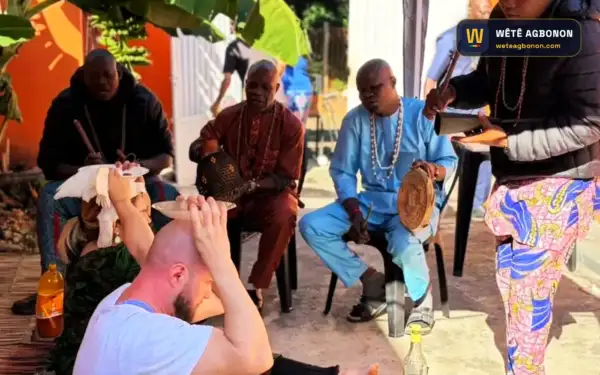
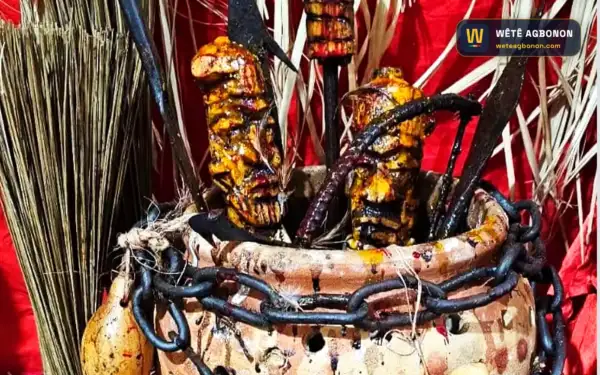
Every work the signs request is performed at the temple, by the hands of Wêtê Agbonon alone. The vodun the signs designated receives its offerings; your name, the nature of the case and the date of the hearing are pronounced before the altar. Depending on the reading, the work protects you against a charge, calms a conflict that has grown beyond reason, or accompanies you through the hearing.
The work is completed before the hearing date, and you know in advance when it will be done. Instructions may come with it: something to keep with you on the day, words to avoid, a relative to reconcile with before the judge hears the case.
Your lawyer comes first
A spell for a court case does not file a document, meet a deadline or question a witness. Find a lawyer who knows the area of law concerned, and if you cannot afford one, ask about legal aid: many countries fund advice and representation for people on low incomes, and public defenders take on criminal cases in the United States. Law school clinics and local advice centres can also help.
Keep copies of every letter and document, write down dates, and answer your lawyer’s questions honestly, including the uncomfortable ones. Never miss a hearing: in many courts an absence can lose the case on its own. If mediation is offered, consider it seriously.
On the day of the hearing
People who write afterwards often speak of the calm they felt. When the reading calls for it, the protection prepared as part of the court case spell goes with you to court, and the Fâ may add a simple instruction for the morning itself. Dress soberly, arrive early, let your lawyer speak when it is their turn, and tell the truth when you are questioned. Courts notice composure, and composure comes more easily when you know the temple stands with you.
Children and custody
Custody cases are among the most painful letters the temple receives. Here the work is never directed against the other parent: the children love both, and the tradition holds that harm sent toward one parent reaches the children too. The reading looks for what can bring the conflict down, protects the parent who wrote, and sometimes asks for an offering for the children themselves. The judge decides according to the child’s interest, and the temple works toward the same end.
Inheritance and family land
Many people in the diaspora fight over property at home: a house in Cotonou, a plot of family land, a shop left by a father. Courts in Benin hear a great many land disputes, and some last for years. The reading may show that the deceased’s wishes were never honoured with the proper ceremony, or that an ancestor expects the family to meet before any judgment can settle the quarrel. In such cases the court case spell often begins with that family offering; the land title, the surveyor and the lawyer remain essential.
When you are the one accused
Some letters come from people accused of something they did not do. The reading can confirm whether a charge or an enemy lies behind the accusation, and a court case spell can protect the person through the hearing. When the signs show that the person did wrong, they call for reparation and honesty, and the temple helps the person face what follows. Covering up a wrong is refused.
Preparing your letter to the temple
Say what kind of case it is and before which court, when the next hearing falls, and who stands on the other side. Explain what is being claimed, what your lawyer expects, and how the conflict began, with dates if you have them. Mention any ritual already done for the case, by whom and when, because a work done elsewhere may conflict with a new one. A concrete letter makes for a precise reading, and a precise court case spell if one is needed.
Guaranteed verdicts sold online
Some sites selling a spell to win a court case promise a case dismissed within days, a judge who will rule your way, or an opponent who will drop everything. Others ask for the judge’s name and a photo of the other party, which says enough about what they intend to do with them. The price rises with each new obstacle they discover, and every delay becomes a reason to pay again. A court case spell sold with a guaranteed verdict is a promise nobody can keep.
A serious practitioner asks about the case before speaking of any work, refuses to act against others, and gives one price in writing. That is the practice at Sakété.

What the temple charges, in writing
The Fâ reading costs nothing, whatever the case. When the signs call for a court case spell, Wêtê Agbonon sends one written quote with a single total, which you may accept within seven days and settle in several instalments; the work starts once the total is paid. If the period announced by the signs ends without the change they foretold, although every instruction was kept, a second performance is offered free of charge when you ask for it within thirty days.
A case like many others
The person here is invented; the situation is common. A nurse in Toronto has been fighting for two years over her late father’s house in Cotonou. Her brothers sold part of the land without telling her, and the case is before a court in Benin. Each hearing is postponed, and each postponement costs her a flight or a lawyer’s fee.
The reading may show that her father’s funeral rites were never completed, and ask for a family offering and a protection covering her and the case before the next hearing. It may also point to practical steps: a lawyer in Cotonou who handles land, certified copies of the title, a meeting with the eldest of the family. Her answer comes in writing, with a price attached only when the temple has something to perform.
Writing from abroad
Requests for a court case spell reach Sakété from London, Atlanta, Montreal, Paris and Lagos. Nobody needs to travel: the signs are read at the temple from the letter, and Wêtê Agbonon answers each one himself. France 24 filmed him for a segment about Benin’s mangrove and its guardians, and the testimonies of people he has helped are published on his site.
Only the consultation is free. Before a hearing, it tells you what weighs on the case, what the temple can do, and what remains in your hands.
Questions
Court case spell: questions people ask before a hearing
Can a court case spell guarantee a verdict?
Nobody can promise a verdict. The temple works on what the reading reveals, and the court decides.
What is a voodoo court case spell?
A work decided by the Fâ: a protection for the person, the calming of a conflict, or the lifting of a charge.
Can you make the judge rule in my favour?
Works aimed at a judge, a witness or the other party are refused. The temple protects you and asks for a fair hearing.
Is a spell to win a court case legal?
Praying and protecting yourself is a private religious matter. Pressuring a judge or a witness is a crime, and the temple takes no part in it.
Do I still need a lawyer?
Yes, always. The temple works alongside your defence.
How early should I write before a hearing?
As soon as the date is known. The reading, the quote and the work take time, and the work must be finished before the hearing.
How long does a court case spell take?
The signs fix the length of each work, and it always ends before the hearing date.
Can the temple help in a custody case?
Yes, for the parent who writes and for the children, and never against the other parent.
Can a spell for a court case help with an immigration appeal?
The reading can protect the person and open the road. The appeal itself rests on your adviser and the evidence.
What if I did something wrong?
The reading may call for reparation. The temple helps you face the consequences honestly. Hiding a wrong is refused.
How much does the reading cost?
It is free. A work, if one is needed, comes with a written total before anything begins.
Must I come to Sakété in person?
Your letter is enough. The work is performed at the temple with your name and your case before the altar.
In which language can I write?
English or French. Wêtê Agbonon reads and answers every letter personally.