Objects · Sakété temple
Cursed object: how to tell if a ring, a statue or a gift really carries misfortune, explained by a voodoo priest from Benin
A ring from a late aunt, a mask brought back from a trip, a gift from someone who never liked you: since it arrived, nothing goes right. Before you burn or bin a cursed object, Wêtê Agbonon offers a free Fâ reading. From a photo and its story, the sign says whether the object is charged, and what should become of it.
Filmed testimony
“I was skeptical at first, but I’m honestly so grateful I gave it a chance.”
A client, face shown, in her own words
The Fâ first
Cursed object: what the Fâ examines before you decide anything
For an object, Wêtê Agbonon needs more than your name, birth date and portrait. He asks for a sharp photo of the item, front and back, everything you know of where it came from, and a dated list of what has troubled you since it entered your home. The opèlè is then cast at the temple in Sakété.
The reading can reveal an item consecrated to a cult, an item charged against you, an item carrying a death or a tragedy, or an ordinary item that coincidence has made suspicious. The written answer says what to do in each case, and you pay nothing for it.
Inside a Fâ consultation
At a glance
The cursed object in a few lines
- Items people suspect
- Inherited jewellery, statues, masks, dolls, clothing, gifts, things left at the door.
- What worries them
- A run of misfortune, nightmares or quarrels since the item arrived.
- What decides
- A free Fâ reading from a photo and the item’s history.
- Possible outcomes
- Keep it, have it cleansed, give it back, or entrust it to the temple.
- What to avoid
- Burning, dumping or reselling the item in a panic, before any reading.
Famous cursed objects
Stories of objects that bring misfortune are as old as treasure. The Hope Diamond, held by the Smithsonian in Washington since 1958, trails a legend of ruin that its dealers did nothing to discourage. The death of Lord Carnarvon in 1923, months after the opening of Tutankhamun’s tomb, gave the press the curse of the pharaoh; he had died of an infection. In Key West, a doll called Robert still receives letters from visitors apologising for photographing him without permission.
Modern legends follow the same pattern. Annabelle, a rag doll kept by the paranormal investigators Ed and Lorraine Warren in Connecticut, became a film franchise. A wine cabinet sold on eBay in 2003 as a haunted dibbuk box drew thousands of bids and eventually a museum display. These stories say a great deal about our imagination. They do not change the fact that, in some traditions, certain objects truly carry a charge.
What the voodoo tradition says about objects
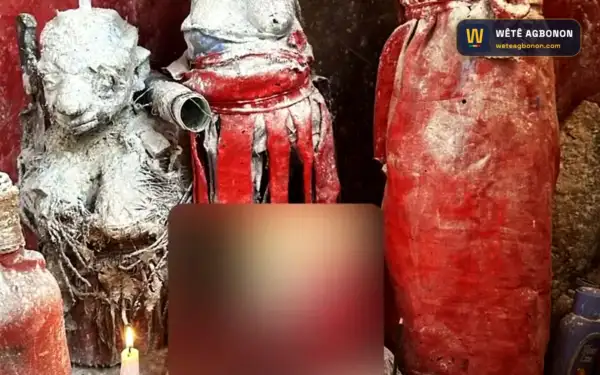
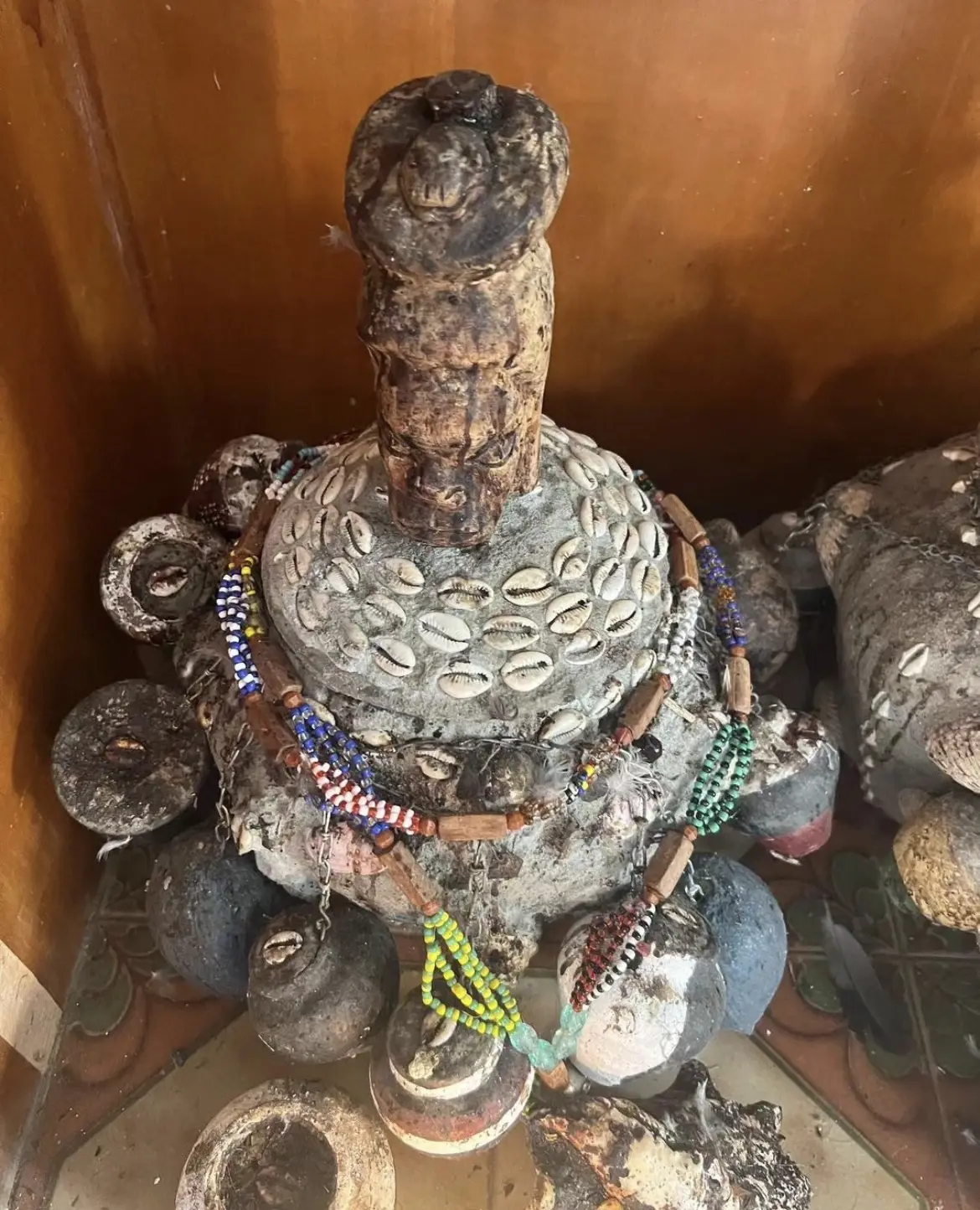
In Benin, an object can be consecrated. A bo, prepared at the temple for one particular person, holds a force addressed to that person alone. A bocio, a ritual figure, is carved and empowered to protect or to act. The objects of an altar belong to the vodun it serves, and the heir who receives them receives obligations too.
Most masks and statues sold to travellers in markets and airport shops were carved to be sold and never consecrated. In the sense the tradition gives the term, a cursed object is either an item charged against someone, or a sacred item taken out of its place. The reading says whether yours belongs to either group.
Cursed object or sacred object
Many items feared as cursed are really sacred objects that left their place. A family altar taken apart during a move, an ancestor figure stored in an attic, initiation beads sold by an heir who did not know what they were: these items carry a relationship more than a curse. Neglected, they can weigh on whoever holds them.
The reading makes this distinction, and it matters. A cursed object, charged against someone, must be undone. A sacred object that was neglected must be honoured, returned or entrusted. Treating one like the other is a mistake, and it is the mistake people make when they throw away in a panic an inheritance they do not understand.
Superstitions about unlucky objects
Western folklore has its own list. A broken mirror promises seven years of bad luck, a belief often traced to the ancient idea that a mirror holds the reflection of the soul. Giving someone a knife is said to cut the friendship, unless they hand you a coin in return. Peacock feathers indoors are thought to invite misfortune. A single novel by Walter Scott, Anne of Geierstein, was enough in the nineteenth century to give opals a reputation for bad luck that hurt their sales for years.
These beliefs travel lovingly through families. They do not make an item cursed in the sense the tradition uses, which looks at the charge an object carries and the story that ties it to you.
Six cases
6 cases where people suspect a cursed object
They come up week after week in the letters. For each, the reading says whether the item is involved at all.
An inherited ring
A ring, a chain or a watch worn since a relative died.
A souvenir statue
A mask or a fetish brought back from Africa, Haiti or elsewhere.
A suspicious gift
A present from a former in-law, a rival, someone who envied you.
Something left at the door
A knotted pouch, a doll, seeds or powder on the threshold.
An antique
A mirror, a chair or an old doll bought at an estate sale or a flea market.
A charm from another practitioner
A talisman to wear or bury, given years ago, contents unknown.
What people notice around a cursed object
The letters describe a familiar set of experiences. Misfortune that seems to start the week the item arrived. Nightmares in the room where it sits. A pet that refuses to enter that room, or stares at the shelf. A sense that the item is warmer or colder than it should be, or that it has moved slightly overnight. Quarrels that flare every time the gift is mentioned.
None of this proves that a cursed object is involved. Moving an item, inheriting it, or receiving it from a difficult person changes how we look at it, and fear finds evidence everywhere. That is exactly why the question goes to the Fâ, which can say how to tell if an object is cursed in your particular case.
What the signs reveal
Should the item really carry a charge, the reading says what kind. A consecrated object may need to return to an altar or be appeased with an offering. An object charged against you must be undone and the charge lifted. An object tied to a dead relative may call for a ceremony for its former owner. A sacred object that left its lineage may need to go back to the family that holds it.
Very often the sign shows that the item has nothing to do with anything. The misfortunes started at the same moment by chance, or have other causes: a bereavement, a conflict, a difficult season. Wêtê Agbonon writes that clearly, and the item can stay where it is.
Keep, cleanse, return or entrust
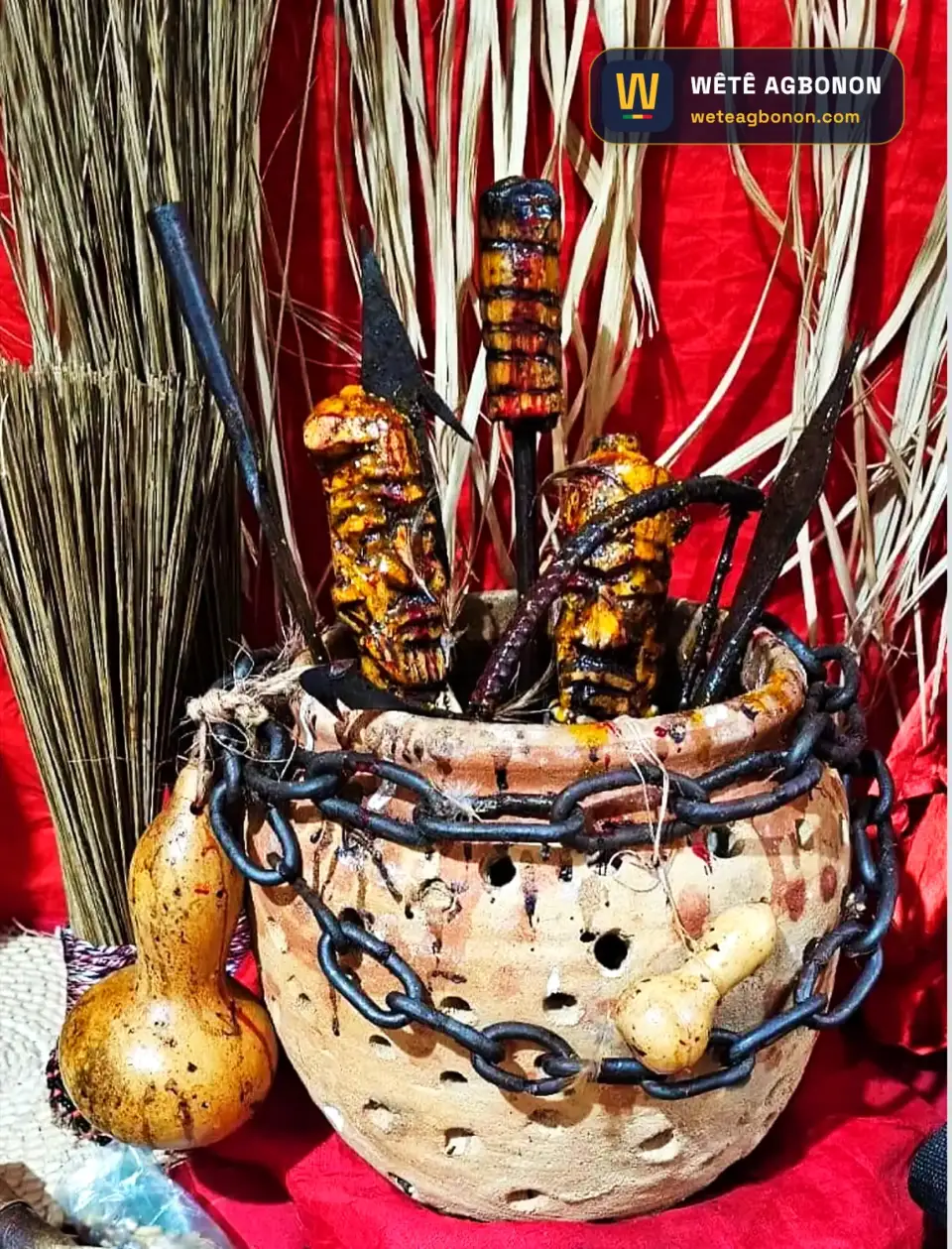
The answer of the Fâ usually comes down to one of four paths. Keep the item, because it carries nothing, or because it protects. Have it cleansed at the temple, so that it can rest peacefully in your home. Return it to the person or the family it came from, sometimes with a few words. Entrust it to the temple, when it belongs to a cult or carries a charge too heavy to stay with you.
When an item must be entrusted, Wêtê Agbonon explains how to send or hand it over safely. A charged object is undone according to rules; it does not go into a dumpster or a river on impulse.
What not to do with a cursed object
Fear pushes people to hasty gestures: burning the item in the yard, throwing it off a bridge, listing it online to be rid of it. According to the tradition, each of these can move the problem instead of solving it, or pass it on to someone else. Put the item aside in a bag or a box, away from bedrooms, until the reading arrives.
Avoid handling it constantly, posting dozens of photos to forums, or showing it to one practitioner after another. One serious reading is worth more than ten contradictory opinions.
After the reading: living with the answer
People often feel relief when the Fâ says an item is harmless, and some feel foolish for having worried. There is no reason to. A cursed object is a real fear in many families, and checking it is a sensible step. Put the item back where it belongs, or give it the place you want for it, and let the question rest.
When the item must be cleansed, returned or entrusted, follow the steps one by one and keep a short note of what was done and when. If doubts return later, a second look is always possible; the answer will rest on what has actually changed since.
Charms given by other practitioners
Many letters concern a talisman handed over by someone else, months or years earlier: a pouch to wear, a bottle to keep, a parcel to bury. The practitioner has vanished, or now asks for money to deactivate the charm. Wêtê Agbonon examines these items like any other, through the Fâ, and says whether they protect, weigh on you, or contain nothing.
Never pay a ransom to have an item removed that you were sold in the first place. If you are threatened, keep the messages and contact the police.
A cursed object left on your doorstep
A knotted pouch tied to the handle, seeds or powder on the step, a pierced doll in the mailbox: such finds are frightening, and that is often their purpose. Do not touch the item bare-handed. Photograph it, pick it up with gloves and set it aside. If a neighbour threatens or harasses you, that is also a matter for the police.
The reading then says whether the item was truly charged, what lay behind it, and what will undo it. A protection is prepared at the temple when the sign calls for one.

Photographing the item and telling its story
Photograph the item in daylight, front and back, without filters. If beads, cloth, nails, writing or stains are attached, take close-ups. Then write down its history: who owned it, how it came to you, in which year, and what has shifted since. Add the names of the people at home who feel uneasy and what each one experiences.
These details matter as much as the image. They let the Fâ answer a precise question, and they often help you see whether the cursed object you fear is really the centre of the story.
Cursed objects for sale: warnings
Frightening objects feed a business. Be wary of anyone who declares an item cursed from a single photo, sells fixed-price object exorcisms, or offers to buy the item from you for a token sum while charging you to purify it. Be even more wary of anyone who insists you pay before nightfall.
The temple applies the same rules to everyone. Reading an object costs you nothing. When the Fâ asks for a work, you receive a written quote: one figure, seven days to say yes, the option to pay in several parts, and no start until it is settled. Should the deadline set by the sign come and go with no change, despite following its instructions, a second performance is owed to you at no cost, on a request made within thirty days.
An imagined example
Nobody in this example is real; it gathers details found in many letters. A student in Chicago inherits the ring of her aunt, who died suddenly last year. Since she began wearing it, she has failed two exams, dreams the same dream every week, and has fallen out with her mother over the estate. She writes to the temple convinced she owns a cursed object.
The reading may show that the ring carries her aunt’s unfinished mourning, and that a ceremony for the aunt followed by a cleansing of the ring will bring peace. It may also show that the ring carries nothing, and that grief and the family dispute weigh alone. Either way, she gets a written answer and knows whether she can keep wearing the ring.
Sending a request from abroad
Most people who suspect a cursed object live in North America or Europe. A clear photo is enough: the opèlè is cast at Sakété and Wêtê Agbonon replies himself, in English. You can hear him speak in a France 24 report on the mangroves of Benin and read reviews from people he has helped, then decide whether to write.
Only the consultation is free. With objects, it prevents the costliest mistake of all: destroying in fear what was harmless, or keeping what had to go.
Questions
Cursed object: questions people send the temple
How can I tell if an object is cursed?
Set it aside, note what worries you with dates, and send a photo for a Fâ reading. The reading is free and says whether the item is charged.
Can an object really bring bad luck?
The tradition says so for certain consecrated or charged items. Most suspicious items carry nothing; the Fâ tells the difference.
What should I do with an inherited ring that worries me?
Do not throw it away. The reading says whether it carries an unfinished mourning, protects you, or can be worn without fear.
Should I burn a cursed object?
Not before a reading. A charged item is undone according to rules, and a hasty gesture can move the problem.
Is an African mask bought on holiday dangerous?
Most masks sold to travellers were never consecrated. If doubt remains, a photo is enough for the reading.
I found a pouch on my doorstep. What now?
Do not touch it bare-handed. Photograph it, store it aside with gloves, and ask for a reading. Report any threats to the police.
Can an object be cleansed remotely?
Yes, when the Fâ allows it. Some items must be entrusted to the temple; the reading says so.
A practitioner wants money to remove a charm he sold me. What should I do?
Refuse, keep the messages, and ask for a reading to learn what the item really contains.
How much does cleansing an object cost?
The reading is free. A cleansing requested by the Fâ appears on a written quote before anything starts.
How long should I keep the item aside?
Until the answer of the Fâ, which says what to do with it.
Who examines the photo?
Wêtê Agbonon examines every photo himself and answers by letter, in English or in French.
Do I need to share the voodoo faith to send an object?
Nobody will ask you to. An honest description of the item and its history is all that is needed.