Prosperity · Sakété temple
Money spell: what a voodoo priest from Benin can do when money keeps slipping away, and what he refuses to sell
Debts that grow, a business with no customers, wages that vanish before the month ends: many people then look for a money spell. Wêtê Agbonon starts with a free Fâ reading. It shows whether something spiritual blocks your finances, what can be done at the temple, and what belongs to a budget, a bank or an adviser.
Filmed testimony
“I was skeptical at first, but I’m honestly so grateful I gave it a chance.”
A client, face shown, in her own words
The Fâ first
Money spell: what the Fâ looks at before any ritual
People who write about money usually describe a pattern: every time they get ahead, something takes it back. Wêtê Agbonon asks for your name, date of birth and a portrait, then for the facts: what you earn, what you owe, what you have tried, when the difficulties began, and who else is involved. He then casts the opèlè at the Sakété temple.
The Fâ may show a charge placed by someone envious, a debt owed to an ancestor or a vodun, a family dispute over land or inheritance, or a decision that keeps being postponed. Sometimes the sign finds no spiritual cause at all, and the answer lies in your accounts. Either way, you receive the reading in writing, and it costs nothing.
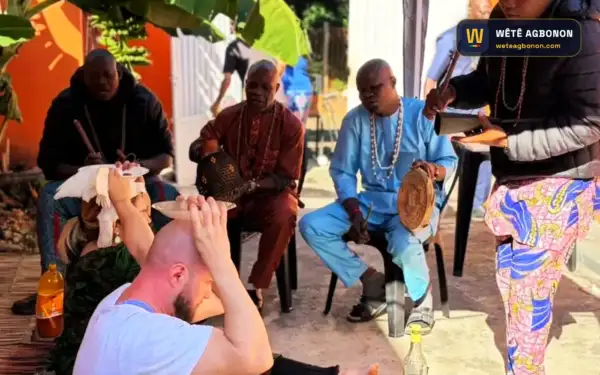
How a Fâ reading is done
At a glance
The money spell in a few lines
- What people ask for
- Debts cleared, a business revived, a job found, money that finally stays.
- What decides
- A free Fâ reading, which shows whether a spiritual blockage exists.
- What can be done
- Lifting a charge, settling a debt to the ancestors, protecting a business, opening a path.
- What he refuses
- Lottery numbers, overnight fortunes, money taken from someone else.
- How payment works
- A written quote with one total, valid seven days, payable in instalments, before any work.
What people mean by a money spell
Almost every tradition has rituals for prosperity. In American hoodoo, practitioners dress green candles with money drawing oil. Chinese families honour Caishen, the god of wealth, at the lunar new year and arrange their homes by feng shui rules meant to let fortune flow. European folk magic slips a bay leaf or a coin into a wallet. Online, these customs have become a market of money spells sold by the hour, with guarantees nobody can keep.
At a voodoo temple in Benin, the question is asked differently. Before any gesture, the Fâ says what is happening: why money does not stay, what weighs on the person, and whether a work at the temple can change anything. A money spell, in this sense, is the answer to a reading, never a product chosen from a list.
What voodoo says about prosperity
In Benin, wealth is never only a private matter. It flows through a family, a lineage, a community, and the vodun and ancestors who watch over them. Dan, the rainbow serpent, is honoured for continuity and abundance. Legba, the guardian of crossroads, is greeted first because he opens or closes the way. Families consult the Fâ before opening a shop, buying land, or setting off to work abroad.
The tradition also teaches that prosperity can be blocked: by an envious neighbour, by an offering promised and never made, by an inheritance shared unfairly, by a quarrel that poisons a household. These are the situations a reading can bring to light. The tradition does not teach that a ritual makes money appear from nowhere.
The money spells he refuses
Some requests receive the same answer whatever the sign says. Wêtê Agbonon gives no lottery numbers and performs no work to win at gambling. He does not promise a fortune within days, does not work to take a competitor’s customers or a relative’s inheritance, and does not sell the magic wallets and money doubling rituals advertised on social media.
These refusals protect the people who write to him. A ritual meant to take what belongs to someone else carries a price in the tradition, and a promise of instant wealth is the oldest bait in the trade.
Six situations
6 money problems people bring to the temple
Each comes up every week in the messages. For each, the reading says whether a money spell has any place in the answer.
Debts that keep growing
Every repayment is followed by a new bill, a fine, an unexpected repair.
A business without customers
A shop or a service that worked, then emptied after a dispute or a move.
A blocked career
Interviews that go well and lead nowhere, a promotion always given to someone else.
Money that never stays
Good wages, and still nothing left at the end of the month, year after year.
An inheritance dispute
Land, a house or savings frozen by a family quarrel that nobody can settle.
Losses after a betrayal
An associate who left with the funds, a loan never repaid, a scam.
What the Fâ distinguishes
When the reading shows a real blockage, it names it. A charge placed by someone envious, often after a success that others resented. A debt owed to an ancestor, when a family stopped honouring the one who built its fortune. A promise made to a vodun in exchange for a favour, never fulfilled. A dispute over land or inheritance that keeps the whole family stuck.
The Fâ just as often shows ordinary causes. Spending that has drifted, a business model that no longer fits its market, a debt structure that needs renegotiating, a partner who should no longer be trusted. Wêtê Agbonon says so plainly, and points toward the people who can help: a debt adviser, an accountant, a lawyer.

How a work for prosperity is done at the temple
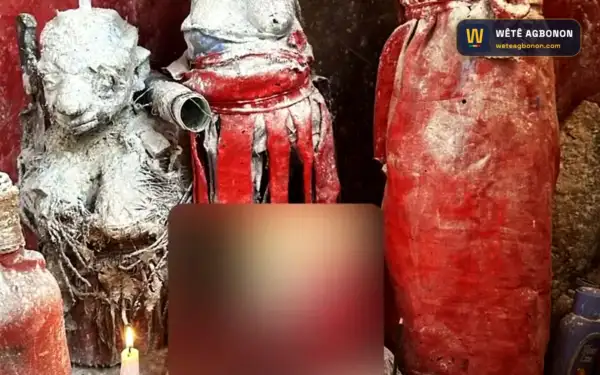
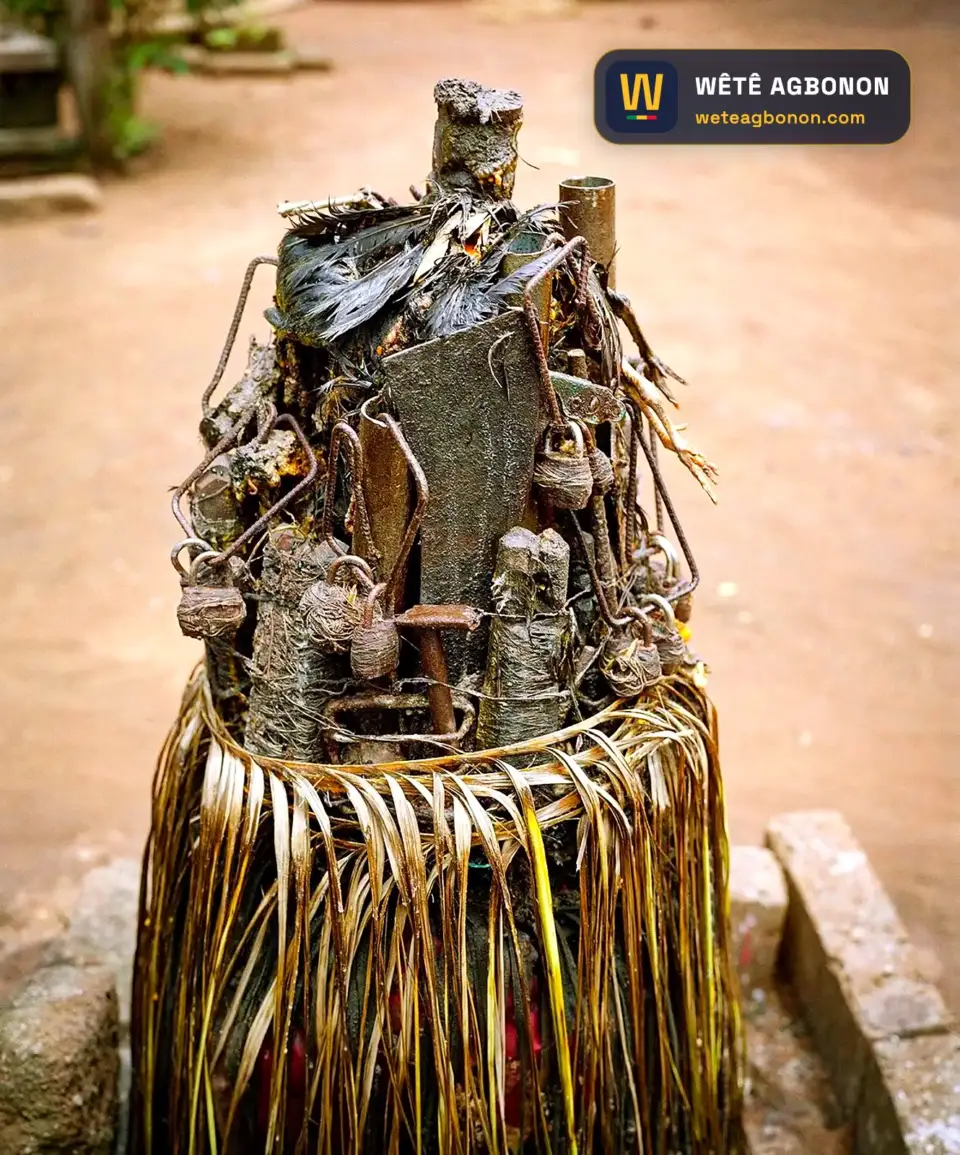
When the Fâ calls for a work, Wêtê Agbonon carries it out himself at Sakété. The sign names the offerings and the vodun to be approached; your name is spoken before the altar, with the name of your business when there is one. Depending on the reading, a charge is lifted, a debt to the ancestors is settled, a protection is prepared for a shop or a home, or the way is opened before an important step.
The sign sometimes adds instructions for you: a gesture to make, a gift to return, a person to reconcile with, a decision to take within a set time. These instructions are part of the work. You know the day the work begins and the day it ends.
Money spell or protection for a business
Many people who ask for a money spell actually need something else: protection for what they have already built. A restaurant owner whose rivals spread rumours, a trader whose stock keeps disappearing, a freelancer whose clients leave after a former partner turned against him. In these cases, the reading looks for what attacks the business, and the work at the temple aims at shielding it.
Attracting money and protecting a livelihood are two different requests, and the Fâ treats them differently. Saying clearly which one you need, in your first message, helps the reading. The page on the protection spell explains how a protection is prepared at Sakété.
When money troubles come from the family
In many families of the diaspora, money is a shared burden. Those who work abroad send support home, pay for funerals and school fees, and are asked again before the last transfer has arrived. Some feel that whatever they earn is drained away by obligations they cannot refuse. Others inherit land or a house that becomes the centre of every quarrel.
The Fâ may show an ancestral debt that weighs on the whole lineage, or an inheritance that must be shared fairly before anyone can prosper. It may also show that the person needs to set limits, kindly and firmly, and that no voodoo money spell will replace that conversation. Wêtê Agbonon writes down both kinds of answer.
Questions to answer before you write
A precise message makes a precise reading. Say what you earn and what you owe, roughly. Say when the difficulties began and what happened around that time: a success, a quarrel, a move, a death in the family. Say what you have already tried, including any ritual done elsewhere, and whether someone asked you for money to complete it.
Add the names of the people involved, a partner, an associate, a relative, if they play a part in the story. The Fâ answers the question it is asked; the clearer the question, the more useful the answer.
Practical steps while you wait for the reading
Write down what comes in and what goes out for one month, without judging yourself. List your debts by interest rate and contact your creditors before they contact you: many agree to a repayment plan when asked early. Free help exists in most countries. In the United States, nonprofit credit counselling agencies affiliated with the NFCC can review a budget; in the United Kingdom, StepChange and Citizens Advice offer free debt advice; in France, the Banque de France handles over-indebtedness files.
If you run a business, ask your accountant for the real margin of each product or service. Losses often hide in a single line. And if someone has taken your money through a scam, report it to the police and to your bank at once: the sooner the report, the better the chances of recovery.
After the work: what to watch
Once the work is done, the Fâ usually leaves a few instructions and a period during which they apply. Follow them, keep managing your money with the same care, and note what happens: a payment that finally arrives, a client who returns, a negotiation that unblocks, or nothing at all. Wêtê Agbonon asks you to write back when the period set by the sign ends.
A money spell done at the temple removes what stood in the way; it does not replace effort, prudence or a sound plan. People who combine the work with practical changes describe the clearest results, and the reading at the end of the period tells you whether anything remains to be done.
Money spell scams to recognise
The money trade attracts the worst practitioners. Beware of the black money scam, in which banknotes dyed black are shown to you and you are asked to pay for the chemical that will clean them. Beware of magic wallets that refill themselves, of rituals that double whatever you hand over, of anyone who asks for an advance to unlock a fortune waiting in a foreign account. These are frauds, whatever spiritual language dresses them up.
Beware too of the practitioner who demands a percentage of future gains, or who warns that the money spell will turn against you if you stop paying. A serious priest names his price in writing, once, and does not hold anyone by fear.
What a reading costs, and what a money spell costs
The reading is free, without conditions. When the Fâ calls for a work, Wêtê Agbonon sends a quote that gives one total, stays valid for seven days and can be paid in instalments; the work starts once it is paid. If the time set by the sign passes without the expected change, although you followed the instructions, you are entitled to a second performance at no cost, provided you request it within thirty days.
A story to make it concrete
The case below is invented from messages that come up often; it describes no real person. A woman in Houston runs a small catering business that thrived for six years. After her sister-in-law opened a rival company and the two families quarrelled, orders fell by half, a van broke down twice, and a large client cancelled at the last minute. She writes to the temple asking whether she needs a money spell.
The reading may show a charge born of that quarrel, to be lifted at the temple, with a protection prepared for the business. It may also show that the rival simply offers lower prices and that the answer lies in her menu and her margins. Whatever it shows, she receives it in writing, with a quote only if a work is needed.
Writing to the temple from abroad
Most people who ask for a money spell write from North America, Britain or continental Europe. No travel is required: the Fâ is consulted at Sakété with what you send, and Wêtê Agbonon writes his answer himself, in English or in French. You can watch the France 24 piece on voodoo and the mangrove and read what people he has helped say before you write.
Only the consultation is free. For money troubles, it often saves the most: it tells you whether a work is needed at all, before you spend a single dollar on rituals.
Questions
Money spell: what people ask before writing
Do money spells work?
A work at the temple can lift a real blockage when the Fâ shows one. No ritual creates money from nothing, and no honest priest promises it.
What is a voodoo money spell?
In Benin, a work for prosperity decided by a Fâ reading: lifting a charge, settling a debt to the ancestors, protecting a business, opening a path.
Can a spell help me pay off my debts?
It can remove what blocks you when a blockage exists. Paying off debts still takes a plan, and the reading often helps you see it more clearly.
Will you give me lottery numbers?
No. Wêtê Agbonon performs no work for gambling and gives no numbers.
How long does a money spell take?
The Fâ sets the time of each work, and it is written in the quote. Nobody can guarantee a date for a payment or a contract.
Can a spell protect my business?
Yes, when the Fâ asks for it: the temple then prepares a protection for the business and its owner.
Is the reading really free?
Yes. Only the consultation is free; a work, if needed, comes with a written quote.
How much does a work cost?
It depends on what the sign asks for. The quote gives one total, valid seven days, and can be paid in instalments.
Someone asks me to pay for a chemical to clean black banknotes. Is it real?
No. It is a well-known fraud. Stop all contact and report it to the police.
Do I need to travel to Benin?
No. The reading and the work happen at Sakété with your name and details.
Who reads what I send?
Wêtê Agbonon in person; he replies in English or French.
Must I believe in voodoo?
Nobody will ask you to. Describe your situation honestly and respect the answer of the Fâ.
Further reading