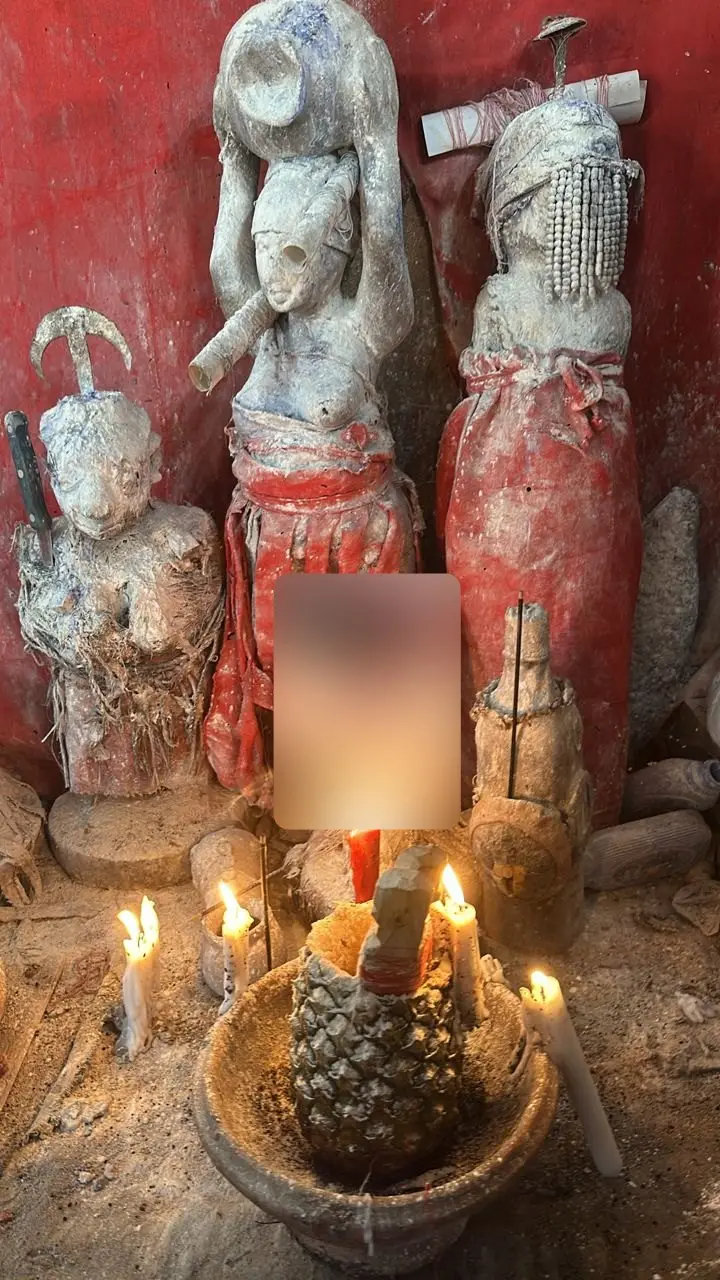
Commitment · Sakété temple
Commitment spell: what a voodoo priest from Benin checks before working on a relationship
A commitment spell is asked for when love is there but the promise never comes: no engagement, no shared home, no wedding date. Before anything else, Wêtê Agbonon casts the Fâ at his temple in Sakété, Benin, at no cost, to see whether the bond is shared and what holds it back. He refuses to force anyone into a commitment.
Filmed testimony
“I was skeptical at first, but I’m honestly so grateful I gave it a chance.”
A client, face shown, in her own words
The Fâ first
Commitment spell: first, see whether the love is shared
The letters that ask Wêtê Agbonon for a commitment spell look alike. “We have been together for six years and he still talks about later.” “She loves me, I know it, but she will not move in.” “His family refuses me, so he will not propose.” Before any work, he reads the Fâ for the two of you, using the elements of both people. The signs show whether the love is shared, and what stands between the two of you and a promise.
When the bond is real and something blocks it, a work at the temple can help remove the obstacle. When the love is one-sided, he says so plainly, and nothing is sold to you. Only the consultation is free; any work is paid on a written quote, before it begins.
Voodoo love spells: his rules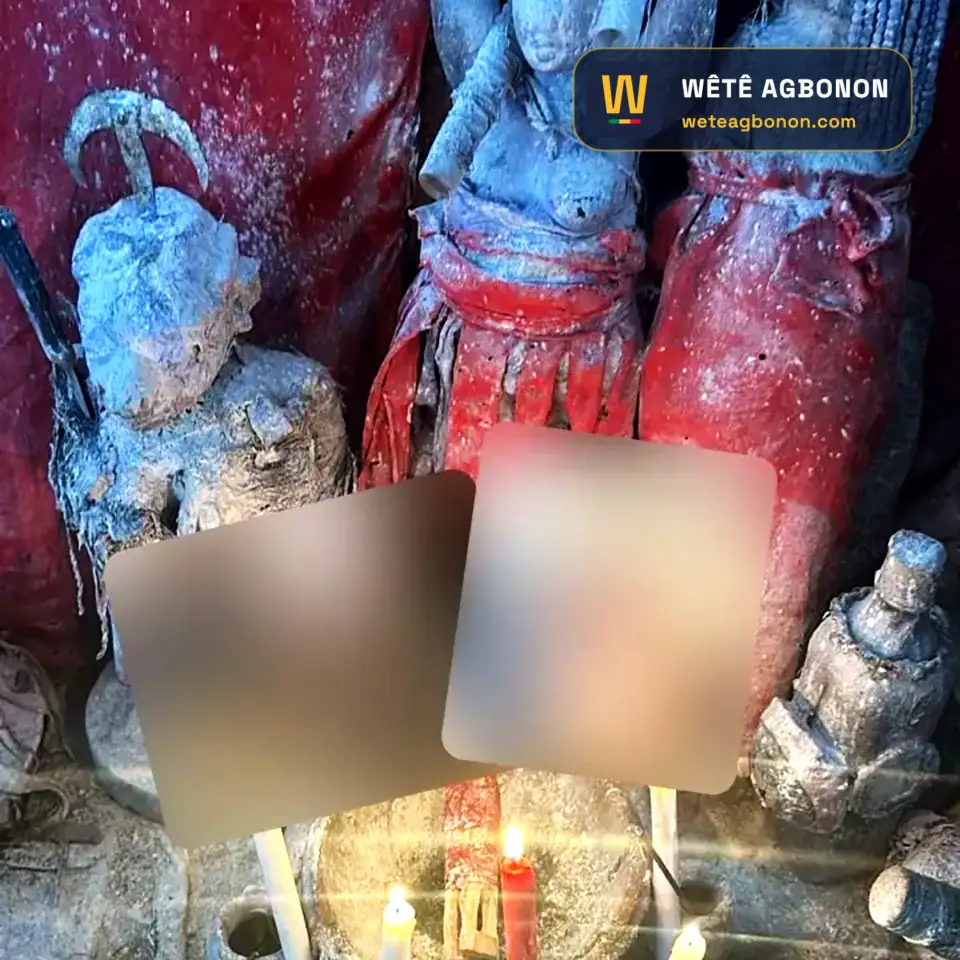
When love is there but the promise never comes
Some couples live years in a waiting room. The relationship works, the two people care for each other, and yet every attempt to speak about the future ends in silence or in a quarrel. Others are separated by distance, by money, by a divorce that left a scar, or by a family that has already chosen someone else. Some people wait for a partner who is still married, and who promises to leave.
These situations do not have the same cause, so they do not have the same answer. A partner who fears marriage because his parents divorced badly needs something different from a partner whose mother threatens to cut him off. And a person who is still married to someone else raises a question of its own, which the reading always takes into account.
Why some people hesitate to commit
Before speaking of spirits, it helps to look at the usual reasons. Some people fear losing their freedom, or repeating the marriage of their parents. Some were betrayed once and protect themselves. Some carry debts and feel unable to promise a home. Some have children from an earlier union and a former partner who still weighs on their choices. Some come from families or faiths that expect a different match. And some still have feelings for an ex that they have never named.
Each of these brakes has its own answer, and most of them are human. The reading of the Fâ comes alongside a frank conversation: it shows which brake is at work, and whether something beyond the ordinary adds its weight.
What people mean by a commitment spell
Online, a commitment spell can mean almost anything: a jar with names and honey, a candle burned for seven nights, a “marriage ritual” sold by the hour. Behind these offers lies the same wish: that the person you love stops hesitating, and chooses you openly. At the Sakété temple, the expression covers a narrower thing. It means a work that removes what blocks a commitment both people already want somewhere in themselves: a charge placed by jealousy, a family opposition, an old promise in a lineage, a fear that the reading names.
This difference matters. A spell for commitment that aims to bend someone’s will is a work Wêtê Agbonon refuses, marriage included, as his terms state in writing. A work that helps a shared love take its next step is something he can do, when the Fâ allows it.
The five checks the Fâ makes before any work
Every request for a commitment spell goes through the same five questions, asked to the Fâ at the temple:
- Is the love shared? The reading looks at both people. Without a real attachment on the other side, no work is undertaken.
- What holds the other person back? Fear, money, a past divorce, a family, another relationship: the signs point to the brake.
- Is there a charge? Jealousy can weigh on a couple close to marrying, and the reading says whether it does.
- Is a family or ancestral matter involved? A promise made in a lineage, or a union the ancestors have not been told about, can stand in the way.
- Is the time right? Sometimes the Fâ shows that the commitment will come, and that pushing now would break it.
Only after these answers does Wêtê Agbonon tell you whether a work makes sense, what it involves and how long the Fâ says it takes. You receive this in writing, and you decide.
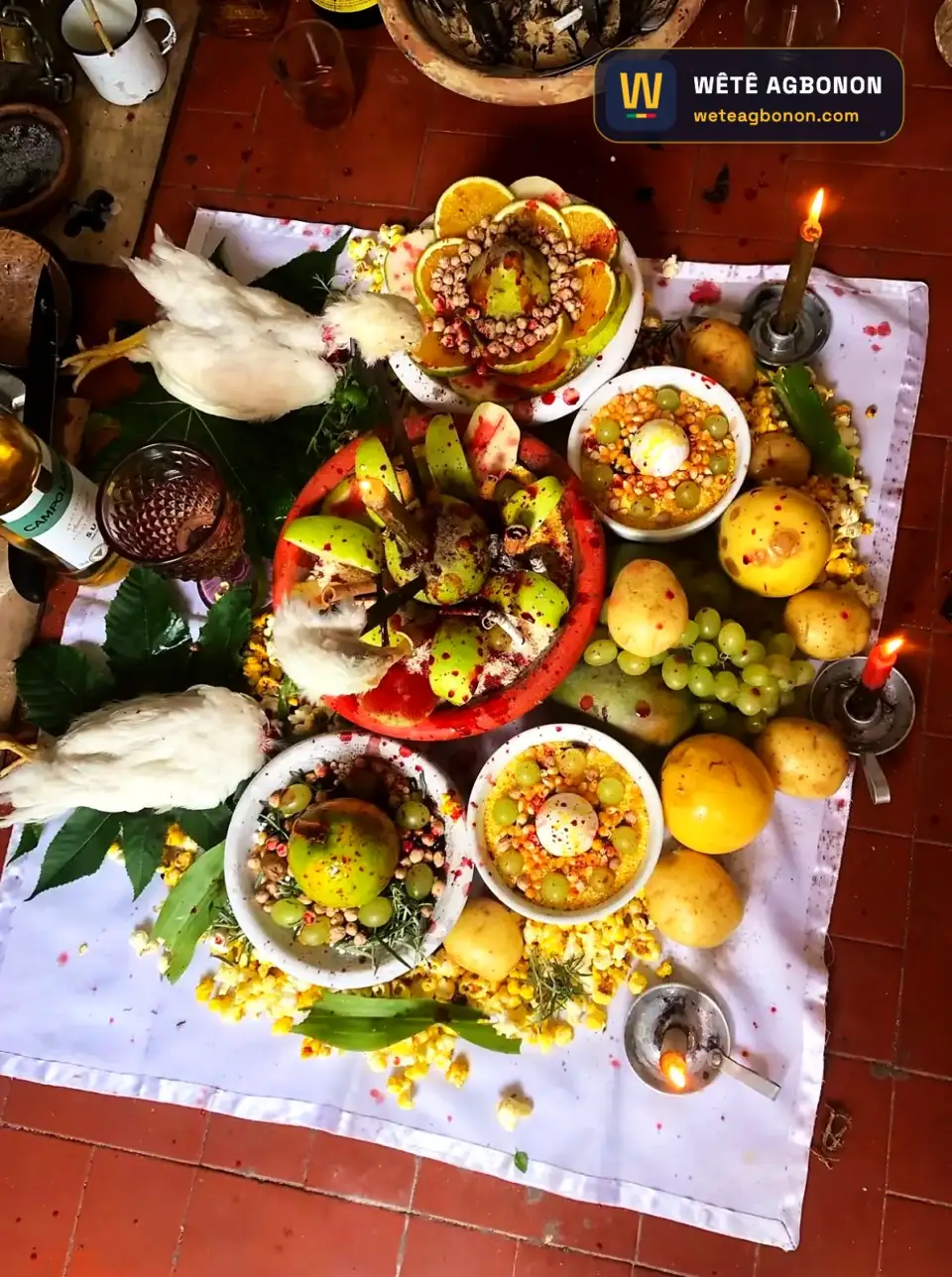
Three situations
What the reading usually shows, and what follows
For a commitment spell, the answer of the Fâ comes as a picture of the situation, and each picture calls for its own response.
The bond is shared, something blocks it
A charge, a family opposition or an old promise. A work at the temple can address it, on a written quote.
Work possibleThe love is there, the fear is stronger
The reading names the fear. Advice comes first; sometimes a work supports it.
Advice firstThe love is one-sided
No commitment spell is undertaken. He tells you, and you pay nothing.
No workIs a commitment spell the right request?
A commitment spell makes sense in a precise situation: two people love each other, both picture a shared life, and something they cannot name keeps them from taking the step. It makes little sense when one person has already said clearly that marriage is not for them, when the relationship is marked by violence or control, or when the goal is to keep someone who wants to leave. In those cases the reading usually says so, and Wêtê Agbonon turns the conversation towards what can actually help you: protecting yourself, letting go of a hope, or rebuilding your own life.
If you are unsure, ask the question as it is, in your own words. The consultation is free, and its answer is often the most useful part of the whole exchange, whether or not a work follows.
Commitment spell or binding spell: the difference
People often confuse the two. A binding spell aims to tie a person to another, and many binding rituals sold online are coercive by design. A commitment spell, as Wêtê Agbonon understands it, starts from a bond that already exists and works on what keeps it from being declared. The page on the binding love spell explains the risks of coercive binding and what he accepts in that field.
Long distance, visas and two countries
Many couples who ask for a commitment spell live apart: one in Lagos and one in London, one in Cotonou and one in Montreal. Distance stretches every decision, and papers, money and family duties turn a simple promise into a project. The reading looks at whether the distance itself is the brake, or whether it hides another hesitation. Often the most useful advice is practical: a date for the next visit, a plan for who moves and when, a conversation about money held before the next trip.
After infidelity: trust before a promise
Some requests come after a betrayal. One partner cheated, the couple stayed together, and the one who was hurt now wants a promise as proof. The Fâ shows whether trust can be rebuilt, and on which conditions. A commitment obtained before the wound has closed rarely holds. When the reading shows that peace must come first, Wêtê Agbonon says so, and the page on the reconciliation spell explains how the temple approaches that work.
Marriage and commitment in the voodoo tradition
In southern Benin, a marriage concerns two families as much as two people. The Fâ is traditionally consulted before such a decision, the ancestors are informed, and offerings ask for the union to be blessed. Seen from the temple, a promise that never comes is often a matter between families: a parent who has not given consent, a lineage that expects something, an elder who was never consulted.
This is why the reading sometimes asks for gestures that look indirect: an offering to the ancestors of one partner, a step towards a reluctant parent, a period of patience. They address the real brake, and they often matter more than any ritual done on the couple alone.
An example: a promise blocked by a family
The following case is a composite: it gathers elements from many letters and describes no real individual. A man of thirty-eight writes from London. He has lived for five years with a woman he wants to marry. She says she loves him, and she does, but her mother has always refused him, and every time a date is mentioned, she asks for more time.
Wêtê Agbonon consults the Fâ with the names, dates of birth and photographs of both. The reading may show that the attachment is shared, that the mother’s opposition is the main brake, and that an old matter in her lineage adds to it. It then says what would help: perhaps an offering to her ancestors, perhaps a step he should take towards her mother, perhaps patience for a set time. If a work at the temple makes sense, the quote describes it. He reads it, asks his questions, and decides. Nothing is undertaken on the woman against her will.
What the work at the temple involves
When a work is agreed, Wêtê Agbonon performs it in person at the Sakété temple. It consists of the offerings and prayers the Fâ asked for, addressed to the voodoo the reading named, and sometimes of a ritual bath or a protection for the person who asked. He tells you when it begins and when it ends, and you can write to him throughout. The work aims at the obstacle the Fâ identified, and stays within what the reading allowed.
What you can do yourself
Some steps belong to you, with or without a commitment spell:
- Say clearly what you want, once, calmly, and listen to the answer without arguing it away.
- Decide for yourself how long you are willing to wait, and keep that date to yourself.
- Look at facts: plans shared with friends, money put in common, families introduced.
- Protect your own life: your savings, your home, your work.
- Consider couples counselling when the fear comes from an old wound.
- Leave aside ultimatums thrown in anger; they rarely produce a promise that lasts.
Signs that a commitment spell offer is a trap
The wish to be chosen is easy to exploit, and commitment spells are sold everywhere online. Be wary of anyone who guarantees a proposal within seven days; who asks for payment before examining anything; who sends you photographs of strangers holding wedding rings; who asks for intimate pictures; who announces a rival or a curse at every exchange; or who invents new costs once the work has begun. A serious priest examines first, explains, writes a price and leaves you time.
Duration and price of the work
There is no standard duration. The duration comes from the Fâ and appears in the quote, next to the offerings, the prayers and one total price, which holds for seven days. You may also ask to pay in several instalments, which the quote then sets out. Once the payment agreed in the quote is made, the work begins, and his terms provide a free second performance when the period ends without satisfaction despite the instructions being followed, on request within a month.
Asking from abroad
Most requests for a commitment spell come from abroad: North America, Britain, the Caribbean, continental Europe. At the temple, the Fâ is read from the full names, dates of birth and photographs of both people, with your account of the situation. His answer comes in English, written by him. A France 24 story about sustainable development in Benin, broadcast early in 2026, interviews him.
Only the consultation is free. If the Fâ shows a shared bond and an obstacle, a work can address it, on a written quote. If it shows a love that is not returned, you hear it plainly and owe nothing.
Questions
Commitment spells: common questions
Do commitment spells work?
A work can remove an obstacle to a shared love. No ritual creates a love that is not there, and the Fâ says which situation is yours.
Can a commitment spell make him propose?
It can work on what blocks a proposal he already wants to make. It cannot force a proposal against his will, and Wêtê Agbonon refuses to try.
Can it make someone leave their spouse for me?
No. He does not act against a third party or separate a couple to form another.
How long does a commitment spell take?
The time comes from the Fâ and is stated in the quote; Wêtê Agbonon adds no estimate of his own.
Can it backfire?
A work done within the rules, after a reading, and without forcing anyone, carries no curse in return. Forced rituals are where people get hurt.
Do I need a photograph of my partner?
Yes, together with the full name and date of birth of both people. Faces stay private and never leave the temple.
Can I do a commitment spell myself at home?
He publishes no recipe. Without a reading, nobody knows what blocks your relationship, so a candle or a jar addresses nothing precise.
My partner fears marriage after a divorce. Can you help?
The reading says whether the fear is the main brake. Advice often comes first, sometimes with a work that supports it.
Is a commitment spell a love spell?
It belongs to the same family of works, with a narrower aim: helping a shared love become a declared commitment.
What does a commitment spell cost?
The reading costs nothing. A work is priced in writing, one total valid for seven days, and settled before it starts.
Will you guarantee marriage?
No promise of marriage is made. His written commitment concerns the time the Fâ gives, as his terms explain.
What happens after the work?
You receive the instructions the Fâ gives and can write to him at any time. A new reading is free.
We live in two countries. Does that change anything?
The reading is done at a distance for both of you. Distance is often part of the answer, and the advice then covers practical steps.
Can I ask on behalf of my daughter or my son?
Yes, with their knowledge. The reading uses the elements of the person concerned, and the decision about any work stays theirs.
Read next