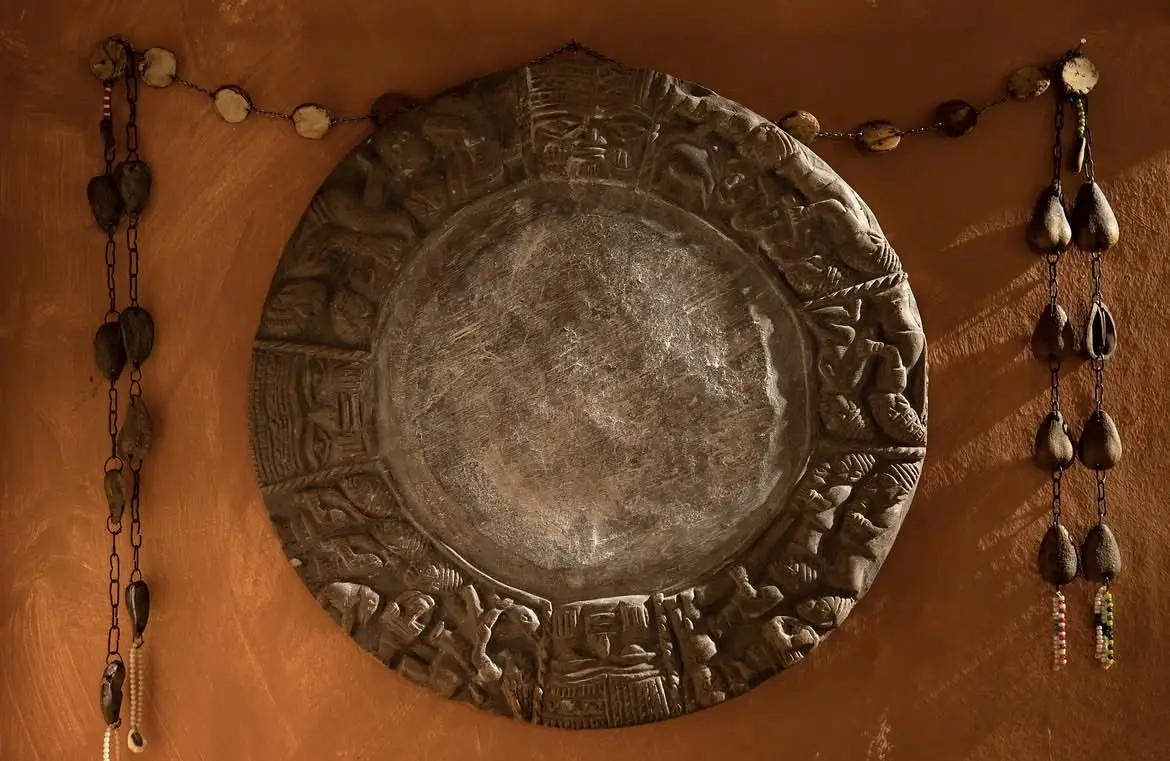
Lineage · Sakété temple
Generational curse: what a voodoo priest from Benin reads in a family that repeats the same misfortunes
The same divorce at the same age, the same debts, the same early deaths, from grandparents to grandchildren: many families start to speak of a generational curse. Wêtê Agbonon answers with a Fâ reading that costs nothing; the signs say whether something weighs on the lineage, where it began, and what the ancestors ask for it to end.
Filmed testimony
“I was skeptical at first, but I’m honestly so grateful I gave it a chance.”
A client, face shown, in her own words
The Fâ first
Generational curse: how the Fâ traces a family pattern
A request about a generational curse begins with a family tree, even a rough one. Wêtê Agbonon asks for your name, birth date and portrait, then for what you know of your parents and grandparents: where they lived, how they died, what they suffered, what was said about them. He asks which misfortunes repeat, and in whom.
The Fâ is then consulted at Sakété. The signs may reveal an ancestor who was wronged or forgotten, an old promise to a vodun never kept, a taboo broken in an earlier generation, a quarrel over land that still divides the family, or a charge laid long ago. They may also show that the pattern is human, carried by habits and wounds, with no curse behind it. The reading is free and written down for you.
How the Fâ is read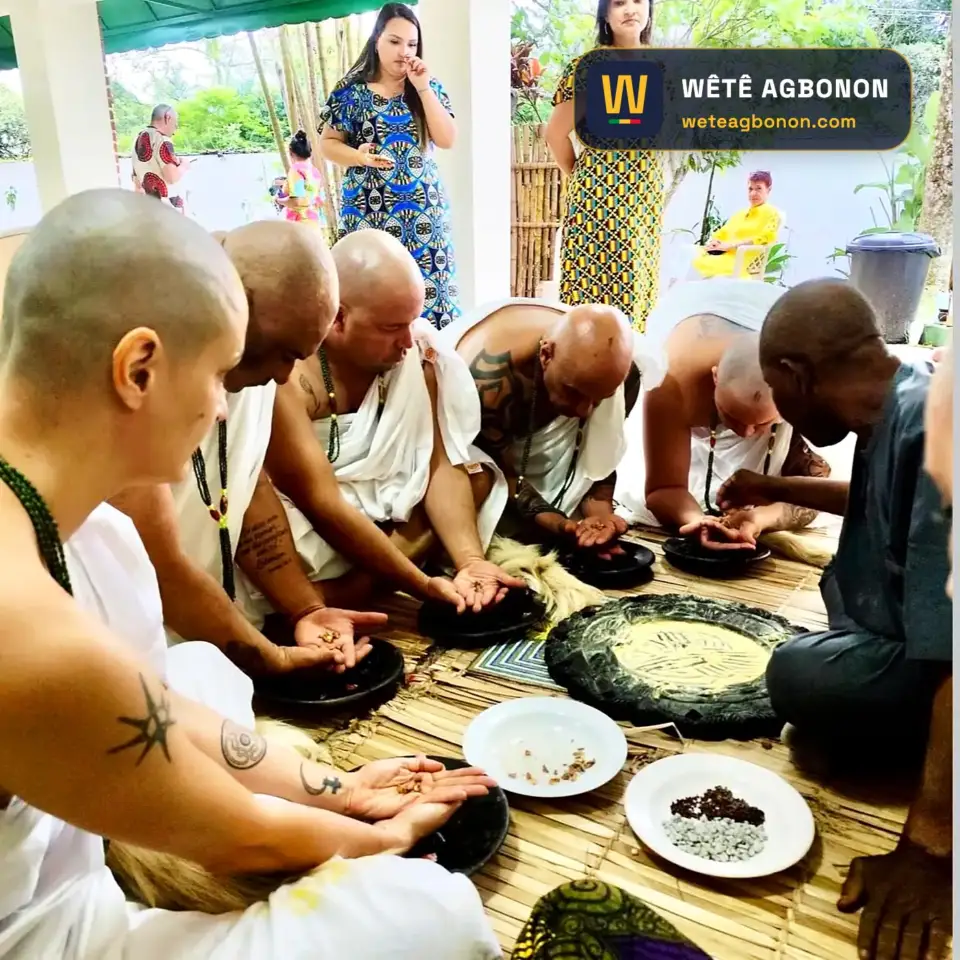
At a glance
The generational curse in a few lines
- What families notice
- The same losses, illnesses, breakups or debts, repeating across generations.
- What the tradition says
- A lineage carries its ancestors, their debts, their promises and their taboos.
- What decides
- A free Fâ reading built on the family story you send.
- What can be done
- Honouring an ancestor, settling an old promise, reconciling a family, lifting a charge.
- What he refuses
- Blaming a relative, inventing a curse, promising a result.
Where the idea of a generational curse comes from
The expression is familiar to many Christians through a verse of Exodus, in which the faults of the fathers are visited upon the children to the third and fourth generation. The book of Ezekiel answers with the opposite principle: the son shall not bear the guilt of the father. Churches still debate how to read these passages, and deliverance ministries often pray against family curses.
Psychology offers its own vocabulary. Clinicians speak of intergenerational trauma, the way a parent’s untreated grief or violence shapes a child who then repeats it. The French psychotherapist Anne Ancelin Schützenberger, in a book published in English as The Ancestor Syndrome, described families in which accidents and deaths recur on the same dates. Studies of children born after the Dutch famine of 1944 and 1945 have even found health effects that reach into later generations.
What a lineage carries in the voodoo tradition
In Benin, a person never stands alone. Each lineage has its founding ancestor, its family vodun, its taboos received at birth or initiation, its obligations toward those who came before. The dead become ancestors through the rites that follow their funerals, and they remain present: honoured, consulted, sometimes angered.
When a family turns away from its ancestors, sells land they consecrated, forgets an offering a grandfather promised, or leaves a dead relative without rites, the tradition holds that the consequences can fall on descendants who know nothing of the original fault. This is what Benin calls the weight of the lineage, and what English speakers call a generational curse.
When a pattern is not a curse
Repetition does not prove a curse. Children learn how to love, argue and spend by watching their parents; they inherit illnesses through their genes and habits through their homes. A family where men leave early or money vanishes may be repeating, without knowing it, what it saw.
The reading respects this. When the Fâ shows a human pattern, Wêtê Agbonon says so, and the advice turns toward what breaks such cycles: speaking about the family past, seeking therapy, getting medical screening for hereditary conditions, changing what can be changed.
Six patterns
6 family patterns that make people fear a generational curse
They return again and again in letters to the temple. For each, the reading tells a curse from a habit.
Marriages that break
Divorces or separations at the same age, generation after generation.
Debts that pass down
Each generation losing what the previous one built, often the same way.
Early deaths
Men or women of the family dying young, sometimes at the same age.
Barrenness or lost pregnancies
Repeated difficulties having children, along one branch of the family.
Addictions
Alcohol, gambling or other dependencies recurring from parent to child.
Feuds that never end
A land dispute or an old quarrel dividing the family for decades.
Mapping the pattern
Before any reading, it helps to draw the family as it is known. Family therapists use a tool called a genogram: a tree that records not only names and dates, but marriages, separations, illnesses, causes of death, migrations and conflicts. Drawn over three or four generations, it often shows at a glance where a generational curse is feared, and where the story simply has gaps.
Civil records, church registers, letters and photographs can fill some of those gaps. Elders fill others. A rough tree sent with your message, even incomplete, gives the Fâ a clear question to answer.
Questions to ask your elders
Who was the first of the family to leave the village, and why? Was land sold, lost or disputed, and with whom? Did someone die young, far away or without a proper funeral? Was a child given away, a marriage forbidden, a relative disowned? Did a grandparent make a promise to a vodun, a saint or a healer in exchange for a favour?
These questions can be painful. Ask them gently, and accept silences. What elders choose to share, and what they refuse to say, both tell a story that the reading can help interpret.
What the Fâ distinguishes
When a generational curse is real, the reading identifies its root. An ancestor who suffered an injustice from his own family and was never appeased. A vodun to whom a forebear promised an offering in exchange for a child, a harvest or a recovery, and who still awaits it. A taboo of the lineage broken by a grandparent. A charge placed by a rival family in an old conflict over land or a marriage.
The Fâ also says who in the family is concerned, and whether the matter must be settled by one person or by several branches together. Sometimes it asks that relatives who no longer speak to each other take part in the same ceremony.
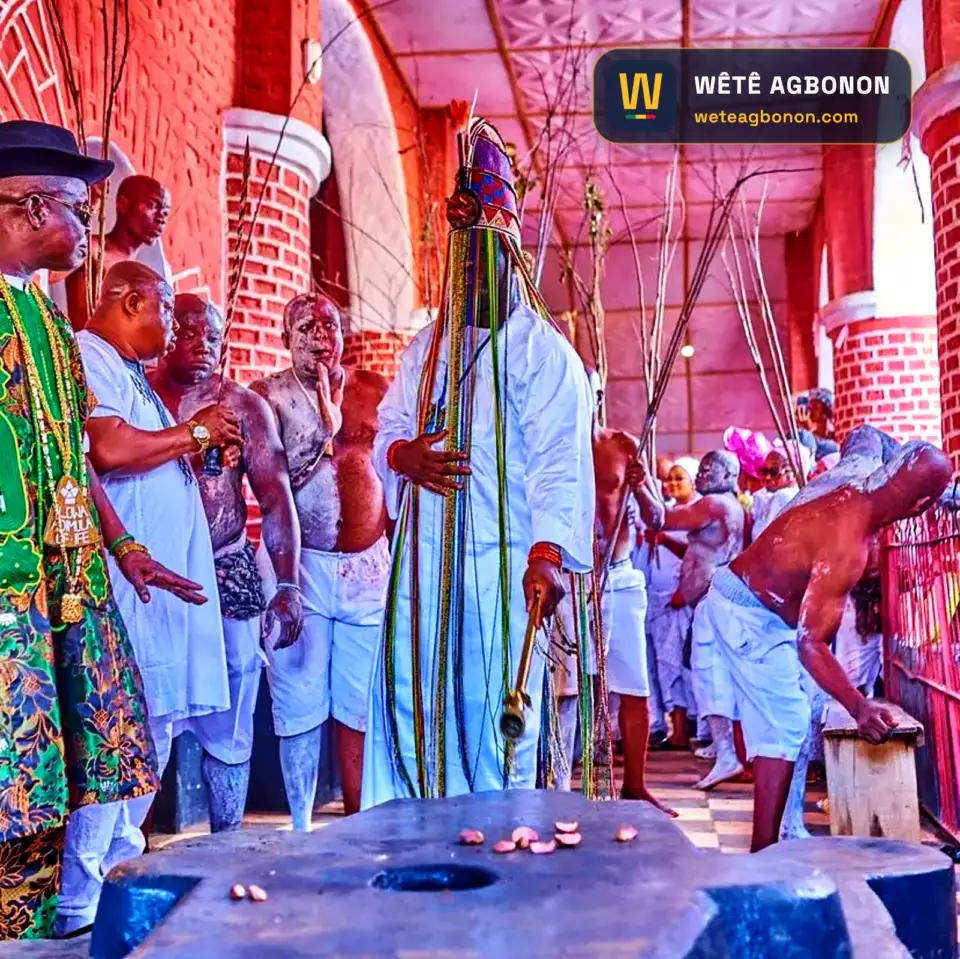
How a family curse is settled at the temple
Settling a family curse usually follows an order. First the ancestor concerned is called by name and honoured on the altar, with the offerings the sign specifies. Then whatever remains unpaid is paid: a promise to a vodun, a ceremony owed to a relative who died without rites, a reparation toward a branch of the family that was wronged. Finally, when the Fâ calls for it, a protection is prepared for the descendants.
Wêtê Agbonon conducts each of these steps himself at Sakété. Your name and the names of the relatives concerned are spoken before the altar. You know when the work begins and when it is complete, and the sign may leave instructions for the family afterwards, such as an annual offering or a visit to a grave.
What the family can do
Breaking a generational curse rarely happens through a ritual alone. The family has its part: speaking openly about the past, naming the dead who were hidden or forgotten, settling inheritances fairly, ending feuds where possible. Elders often hold the missing pieces; asking them, while there is still time, is part of the work.
Practical help matters as much. A genetic counsellor can assess hereditary illnesses. A therapist trained in family systems can help a person step out of a repeated pattern. Support groups exist for families marked by addiction. None of this contradicts the reading; the Fâ itself often recommends it.
What the ancestors ask for
When the reading confirms that a lineage is weighed down, the ancestors’ requests are usually concrete. An offering on the altar, renewed at a set date. A ceremony for a relative who died without rites. Land returned or shared. A family reconciliation that has been postponed for decades.
Among the Fon of Benin, the Fâ is also consulted after a birth to name the ancestor who watches over the child, called the joto. Families who have lost touch with this custom sometimes learn, through a reading, which forebear has been waiting to be recognised. Honouring that ancestor can become the first step in lifting a family curse.
Generational curse or family secret
Some patterns grow around what a family has hidden: a child born outside a marriage, a death that was never explained, a relative who was erased from conversations. Psychologists observe that such secrets travel through generations in the form of unease, repeated choices, unexplained fears. The tradition says something similar in its own language: what is hidden from the ancestors weighs on the living.
The reading does not expose anyone. It may simply say that something unspoken weighs on the family, and that naming it, among those concerned, will ease the generational curse more than any offering.
Generational curses and the diaspora
Many people who ask about generational curses live far from where their family began. Their grandparents left Benin, Nigeria, Haiti or the Caribbean; the rites stopped with the journey; the names of ancestors faded. Two or three generations later, misfortunes repeat and nobody remembers why.
The reading can reconnect what migration cut. It may ask that an ancestor be honoured again, that a family altar be restored, that relatives who stayed behind be contacted. Wêtê Agbonon explains each request and how it can be fulfilled from abroad.
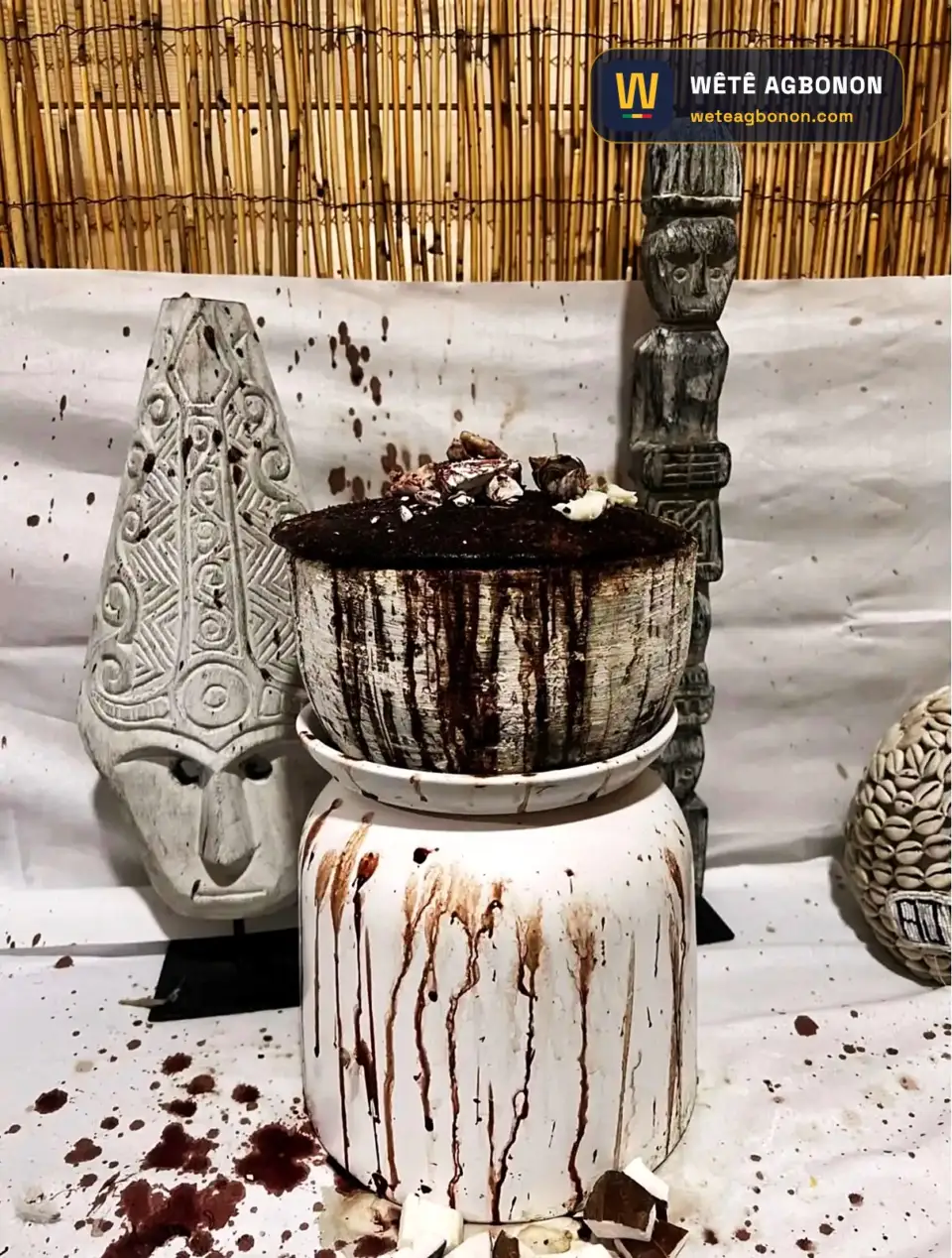
Protecting the next generation
Lifting a weight from a lineage is only half the task; keeping it from returning is the other. The Fâ often leaves the family a simple rhythm: an offering at a given time of year, a name to remember aloud, a grave to visit. These gestures keep the bond with the ancestors alive, which the tradition considers the surest protection of all.
Parents can add their own part. Tell children where the family comes from, who their great-grandparents were, what the family survived. Break the silences that weighed on you, at an age-appropriate pace. Keep an eye on hereditary health risks with your doctor. A child who knows the family story, and is not crushed by it, is the best answer to a generational curse.
Warnings
Fear of a family curse makes people easy targets. Be wary of anyone who diagnoses a generational curse in minutes without hearing your story, who names a relative as the culprit, who sells breakthrough packages billed every month, or who demands a large sum to protect your children before nightfall. These are pressure tactics, not tradition.
Wêtê Agbonon’s terms are set out before anything starts. The reading costs nothing. A ceremony, when the Fâ requests one, appears on a quote that states one amount, holds for seven days and may be paid in several instalments; nothing begins until it is paid. If the time named by the sign passes and nothing has eased, though the family followed the instructions, a second ceremony is granted on request within thirty days, free of charge.
A story, imagined
This story is a composite of situations that recur in messages and portrays no real family. A nurse in London, thirty-six, notices that the women on her mother’s side all separated from their husbands within ten years of marriage, and that two of them lost a child. Her own marriage is now in trouble. Her grandmother, before she died, spoke of a land dispute in Benin that was never settled.
The reading may confirm that the dispute left a weight on the women of the lineage, and ask for a ceremony for an ancestor, with a gesture toward the other branch of the family. It may also show that the repetition is a learned one, and that the nurse’s marriage needs counselling more than ritual. Whatever the signs say, the answer reaches her as a letter, and a price is added only when a ceremony is needed.
Writing from far away
No journey is needed. The Fâ is consulted at Sakété with the family story you send, and Wêtê Agbonon writes back in English. Before trusting him with your family history, you can watch the France 24 report about sacred mangroves that features him and read testimonies from families he has helped.
Only the consultation is free. For a family that fears a generational curse, it often brings the first relief: knowing whether something truly weighs on the lineage, and what would lift it.
Questions
Generational curse: what families ask
What is a generational curse?
A misfortune believed to pass from one generation to the next because of an ancestor’s fault, an unkept promise or an old charge.
How do I know if my family has a generational curse?
List the patterns you see, with names and dates, and ask for a Fâ reading. It shows whether a curse exists or whether the pattern is human.
Can a generational curse be broken?
When the Fâ confirms one, yes: by honouring the ancestor concerned, paying what remains owed, and protecting the descendants.
Is a family curse the same as bad luck?
No. Bad luck may strike one person for a season; a family curse follows a lineage and repeats across generations.
Does the Bible talk about generational curses?
Exodus mentions faults visited on later generations; Ezekiel insists each person answers for their own. Churches read these passages differently.
Can my children inherit a curse?
The tradition says a lineage can carry a weight. The reading shows whether your children are concerned and how to protect them.
Must the whole family take part?
Sometimes. The Fâ may ask that several relatives join the same ceremony, especially when a feud is involved.
Can it be done from abroad?
Yes. Ceremonies take place at Sakété with the names of those concerned spoken before the altar.
How much does it cost?
The reading costs nothing. A ceremony is priced on a written quote, one amount, valid seven days.
How long does it take?
The sign sets the duration; you see it on the quote before deciding.
Who reads my family story?
Wêtê Agbonon in person, who answers in English or French.
Do I need to practise voodoo?
Not at all. Telling your family history truthfully is enough.