Home · Sakété temple
Signs your house is haunted: what to check first, and what a voodoo priest from Benin reads in a troubled home
Footsteps upstairs at 3 a.m., doors that open on their own, a child who talks to someone nobody else can see: when these things pile up, people start looking for signs your house is haunted. Wêtê Agbonon begins with the house itself, then with a free Fâ reading that says whether a presence is really there and what it wants.
Filmed testimony
“I was skeptical at first, but I’m honestly so grateful I gave it a chance.”
A client, face shown, in her own words
The Fâ first
Signs your house is haunted: how the Fâ approaches a troubled home
Letters about a haunted house tend to start the same way: « I know this sounds crazy, but. » Wêtê Agbonon takes them seriously. He asks for the names of the people living there, if they agree, a few photos of the rooms involved, the date the trouble started, and anything known about the history of the place. With your own name, birth date and portrait, the opèlè is then cast in the temple courtyard.
What comes out may point to a relative who died and wants something, a presence older than the family and tied to the land, a charge placed against the household, or the trace of a tragedy. Just as often they point to nothing spiritual, and to a list of checks to run in the house. The reading costs nothing in every case.
What a Fâ reading involves
At a glance
The haunted house in a few lines
- What families report
- Knocks, footsteps, moved objects, cold spots, smells, children or pets reacting.
- What to check first
- Carbon monoxide, heating, plumbing, wiring, pests, neighbours.
- What decides
- A Fâ reading, offered free, which says whether a presence exists.
- What can be done
- A prayer for a departed relative, offerings, a cleansing of the place, a protection.
- What he refuses
- Dramatic exorcisms, accusing a neighbour, promising results.
Why people believe a house is haunted
Belief in haunted houses is widespread. Polls in the United States regularly find that a large share of adults believe houses can be haunted, and a good number say they have lived in one. The law has even noticed. In 1991, a New York appeals court ruled in Stambovsky v. Ackley that a buyer could cancel his purchase because the seller had spent years telling the press the house was haunted; for the purposes of the case, the judges wrote, the house was haunted as a matter of law.
In the voodoo tradition of Benin, the question is less whether ghosts exist than which presence troubles which household, and why. The dead become ancestors through funeral rites; those denied their rites, or who died violently, may stay close to the living. Some places are inhabited by spirits older than any building. And a home can be targeted by a charge laid against its occupants.
Haunted house or stigmatized property
American real estate has a term for homes marked by a death, a crime or a reputation for being haunted: stigmatized properties. Disclosure rules vary from state to state. California, for instance, requires sellers to disclose a death on the property within the previous three years, while many states require nothing unless the buyer asks. Buyers who later discover such a history sometimes start reading every creak as one of the signs your house is haunted.
Knowing the history of a home helps the reading. If you can, ask neighbours, search old newspapers, or check public records. A haunted house reputation is often older than any real event, and sometimes it points to a death whose rites were never completed.
When a presence follows a death
Many families who wonder whether their house is haunted have recently lost someone. A grandmother’s perfume in the hallway, her chair that seems occupied, dreams in which she knocks at the door: these experiences often accompany grief, and they deserve to be heard before they are interpreted. A counselor who works with grief can help when such moments feel heavy.
When the presence frightens, wakes children in tears or comes with violent noises, the reading looks beyond mourning: at the house itself, at a family conflict, at what may have been laid against the household.
Seven signs
7 signs your house is haunted, as families describe them
None is proof on its own. Written down with dates, they guide both the practical checks and the reading.
Sounds with no source
Knocking in the walls, footsteps on an empty floor, scratching at the same hour.
Objects out of place
Keys gone missing, frames fallen, drawers open that nobody touched.
Doors and lights
Doors that slam without a draught, bulbs that buzz, appliances that switch on.
Cold spots
One corner of a room colder than the rest, a chill that moves.
Unexplained smells
Perfume, cigar smoke or burning, in a closed room.
Children and pets reacting
A toddler waving at an empty corner, a dog that stares and growls at nothing.
Broken sleep
Several people in the house waking at the same hour, sharing similar nightmares.
Is my house haunted, or is it the building? Check first
Wêtê Agbonon asks every family to start with the building, and the first check can save lives. Carbon monoxide, an invisible and odourless gas produced by faulty furnaces, water heaters and stoves, causes headaches, nausea, confusion and sometimes hallucinations. In 1921, the American ophthalmologist William Wilmer described a family who heard footsteps and bells and saw figures in their home; a defective furnace was poisoning them. Many U.S. states require carbon monoxide alarms in homes with fuel-burning appliances, and they are inexpensive. If several people in the house have headaches at once, get outside and call 911.
Houses make noise. Wood framing contracts as temperatures drop at night and creaks at regular hours. Pipes bang when a valve closes, an effect plumbers call water hammer. Mice and squirrels scratch inside walls. In 1998, the British engineer Vic Tandy showed that a fan producing infrasound around 19 hertz could create unease and visual disturbances in his laboratory. An electrician can explain lights that flicker.
The body plays its part. On the edge of sleep, the brain can produce sounds and images that feel completely real, and sleep paralysis often brings the sense of a presence in the room. A doctor can help if such nights repeat.
What the Fâ distinguishes in a haunted house
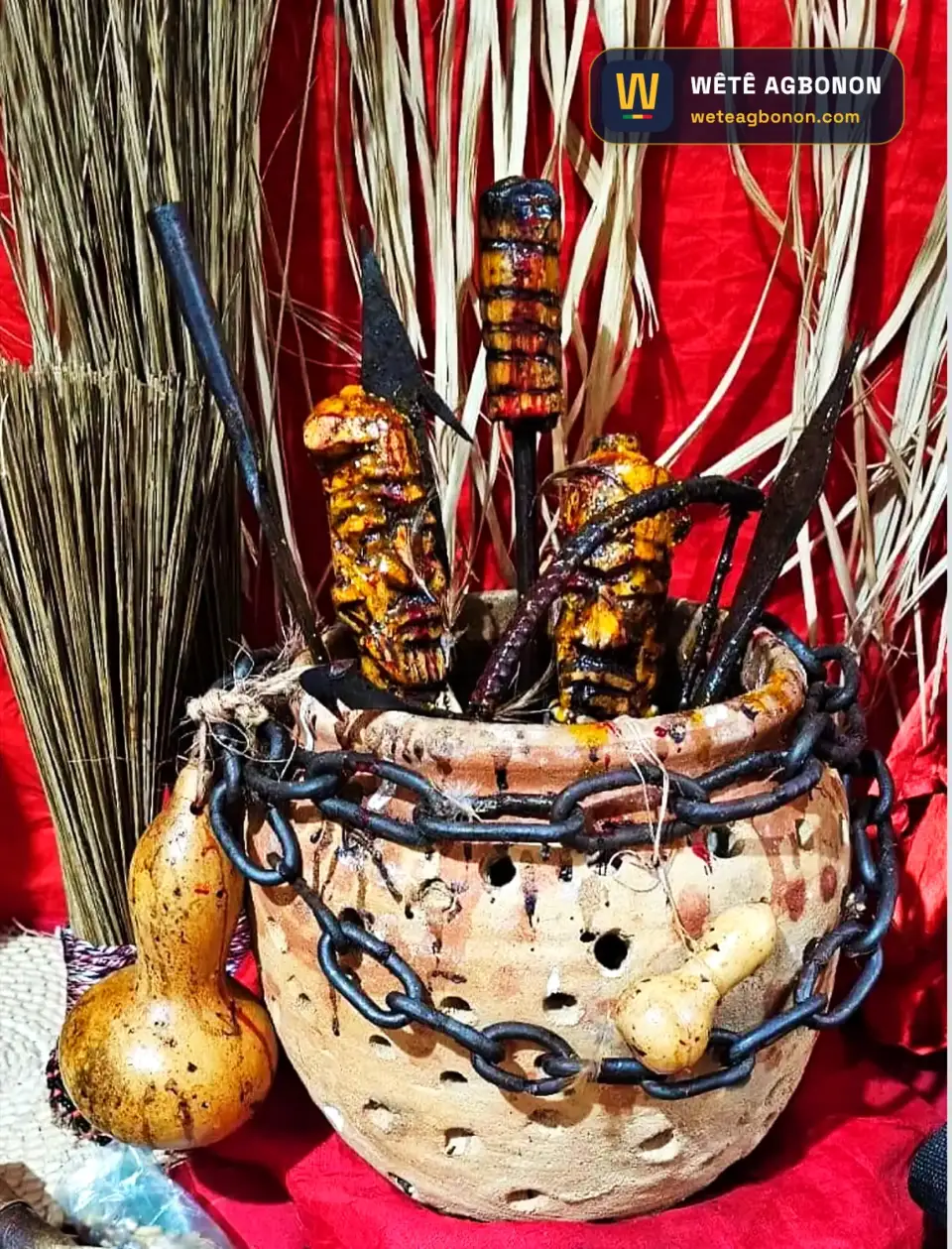
Once the house has been checked, the reading returns to the story. The Fâ may show a departed relative asking for a ceremony left undone, a prayer, an offering. It may name a presence tied to the place, older than you. It may point to a charge laid against the household, out of jealousy or during a dispute. It may reveal the trace of a tragedy that only a cleansing will lift.
Often it shows that the house holds nothing at all: fear, mourning, exhaustion or tension between the occupants give ordinary noises a meaning they do not have. Wêtê Agbonon writes that plainly, with advice to restore calm at home.
Poltergeists and the haunted house
Stories of poltergeists, the noisy spirits of German folklore, have filled newspapers for two centuries. The Enfield case, in north London in the late 1970s, remains the most famous and the most disputed: some investigators saw a genuine presence, others a hoax by children. Researchers who study such cases note how often they occur in households under strain, around a teenager or an open conflict.
Wêtê Agbonon keeps both possibilities in view. The Fâ may show that a presence acts in the house; it may also show that a child carries a distress the noises express. In the second case, the answer goes through the family, and sometimes a counsellor, before any rite.
How a troubled home is treated at the temple
A work for a house is carried out by Wêtê Agbonon at Sakété, according to the sign. The offerings it names are presented to the vodun it designates, or at the ancestors’ altar, and the names of the occupants and the address of the house are spoken aloud. The reading decides whether the place is cleansed, a departed relative is prayed for, or a protection is prepared for the household.
You stay at home throughout. He lets you know the day the work opens and the day it closes, and the sign sometimes gives an instruction for the house: a room to air, an object to remove, a gesture to make at the threshold.
What you can do tonight
Install a carbon monoxide alarm if you do not have one, and have the furnace serviced. Keep a log of every event with the date, time and room, and record sounds on your phone; a written log calms the mind and helps the reading. Talk with children calmly, without passing on your fear. Avoid Ouija boards and improvised séances, which add anxiety to doubt.
Keep a soft light on in the hallway, stay together if the children are afraid, and resist searching the dark for every sound. In the morning, reread your notes: they often show a pattern tied to the heating or the neighbours that fear had hidden.

Questions to answer in your letter
When did the first events happen, and what changed in the household around that time? Which rooms are involved, and at what hours? Who hears or sees things, and who does not? Has the house been checked for carbon monoxide, plumbing and wiring problems? Did anyone die in the house, recently or long ago, as far as you know? Has anyone brought in an object, a gift or an inheritance just before?
Answering these questions turns a vague fear into a clear request. It also helps you see, sometimes before any reading, whether the signs your house is haunted point to the building, to the family, or to something the Fâ alone can name.
Haunted house traps to avoid
Fear of a haunted house brings out the salesmen. Be wary of house clearings sold by phone before anyone has asked a single question, travelling exorcists who quote hundreds of dollars on the spot, sage kits sold as a cure, and anyone who announces a curse on your home in order to bill you monthly. A serious practitioner listens first, checks the concrete, and then puts in writing what the reading requires.
At the temple, four rules protect you. The reading is free. A work, if the Fâ asks for one, is described in a quote with a single total, valid for seven days and payable in parts. Nothing starts before that quote is paid. And if the time the sign set goes by with no improvement, instructions followed, a second performance can be claimed within thirty days at no charge.
When the signs stop
Families whose haunted house was a real case usually describe a gradual return to normal after the work: nights that become quiet, a room that stops feeling cold, a child who sleeps through. Keep your log going for a few weeks, so that you notice the change rather than wait for it. When the time fixed by the sign is over, send him a short update on how the house feels.
If the signs your house is haunted come back months later, tell him. A fresh consultation compares the household then and now, and can uncover a cause that did not exist when the first reading was made.
A case to picture
This case is a composite drawn from common letters, not a real family. A couple moves into a 1920s house outside Philadelphia. Three weeks later, knocking echoes in the bedroom wall around 3 a.m., and their eight-year-old says an old lady watches him sleep. They write to Wêtê Agbonon, who first asks them to have the furnace inspected and to install an alarm.
The furnace is fine and the knocking goes on. The reading may then show a former occupant still attached to the house, whom a prayer and an offering will put to rest. Or it may show that the boy is struggling with the move and that the house has nothing to do with it. The couple receives a written reply in both cases, and a quote only if there is work to do.
Help without travelling
Families who ask about signs their house is haunted write from across the United States, Canada, Britain and Europe. Photos and an address are enough for the reading, which takes place at Sakété; Wêtê Agbonon answers in English. Before you trust him with your home, you can watch the France 24 segment on Benin’s mangrove guardians and look through his published reviews.
Only the consultation is free. The Fâ first says whether your house is truly inhabited; when it shows nothing, you know it without having paid a cent.
Questions
Haunted house: questions families send
How do I know if my house is haunted?
Rule out carbon monoxide, plumbing, wiring and pests first, then write to the temple: the Fâ reading, free of charge, says whether a presence is there.
What are the most common signs of a haunted house?
Unexplained knocks and footsteps, moved objects, cold spots, smells, and children or pets reacting to something unseen.
Can carbon monoxide make a house feel haunted?
Yes. It causes headaches, confusion and sometimes hallucinations. An alarm is essential in any home with gas, oil or wood heating.
Can a dead relative stay in a house?
According to the tradition, yes, if their rites were never completed or they died violently. The reading shows whether this applies and what they ask.
What is a poltergeist?
A noisy presence from German folklore that knocks and moves objects. The Fâ says whether a presence acts, or whether the noises have another source.
Should we move out?
Rarely. Most situations are settled in place, by a repair, a prayer, a cleansing or a protection.
Can a house be cleansed remotely?
Yes. The work takes place at Sakété, with the names of the occupants and the address spoken at the altar.
My child sees someone in their room. What should I do?
Listen without frightening them, check the room, and talk to a paediatrician if sleep is affected. A reading can then shed light on it.
Should I call a priest from my church?
If you are a believer, your parish can help, and many dioceses have exorcists. Wêtê Agbonon respects that choice.
How much does a house cleansing cost?
The reading is free. Any work requested by the Fâ is priced in writing before it starts.
Who answers my letter?
Wêtê Agbonon in person; write in English or French.
Is belief in voodoo required?
Not at all. Describe honestly what happens in your home and accept what the sign answers.