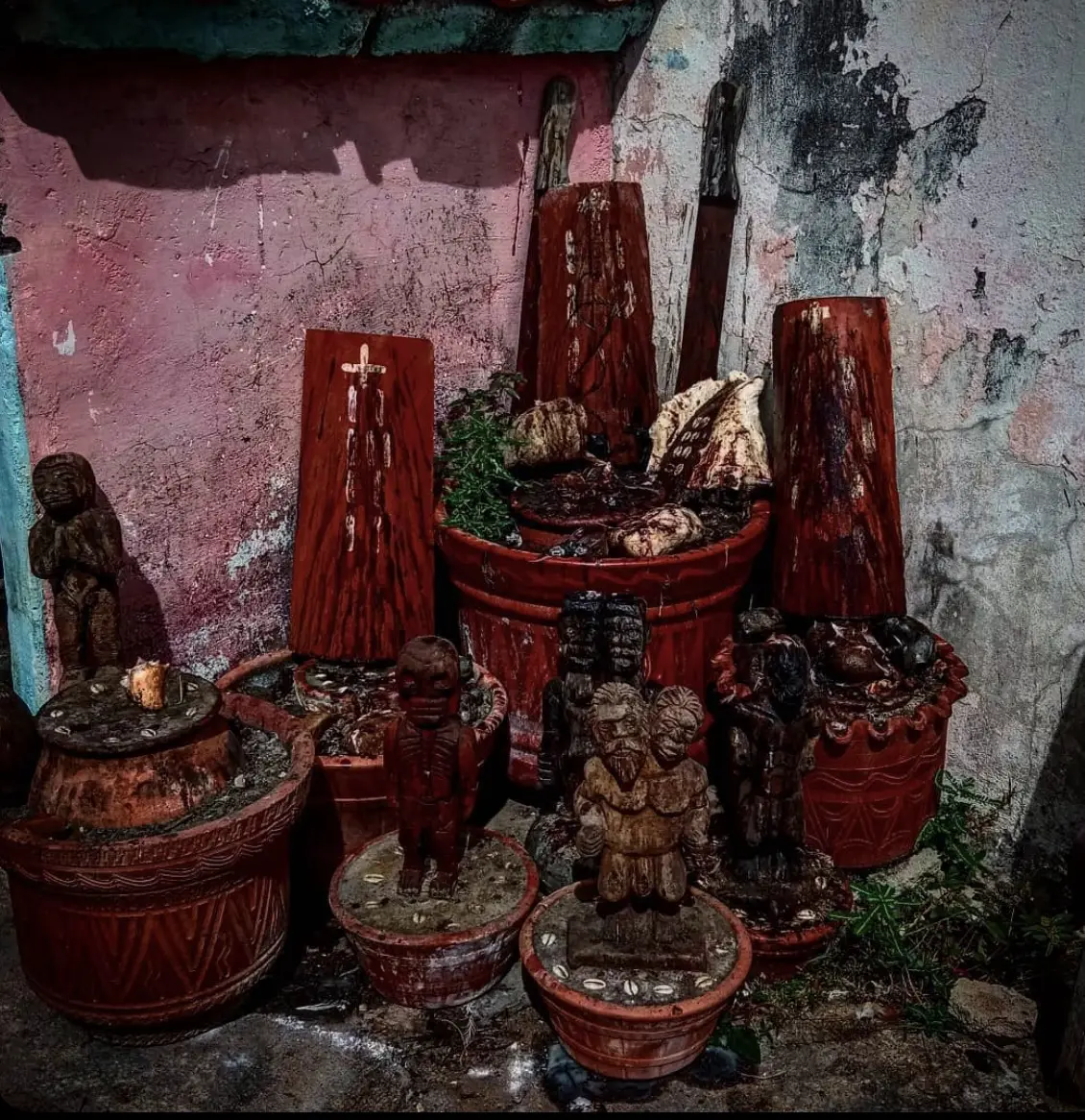
Bonds · Sakété temple
Soul tie: the meaning of a bond that will not let go, and how the temple at Sakété unties it
Months after a relationship ended, some people still feel tied to the other person: they dream of them, check their profile at night, cannot begin anything new. Many call it a soul tie. At Sakété, Wêtê Agbonon answers with a Fâ reading, free of charge, which shows whether a spiritual bond really holds the person, where it comes from, and which ceremony at the temple can untie it.
Filmed testimony
“I was skeptical at first, but I’m honestly so grateful I gave it a chance.”
A client, face shown, in her own words
The reading first
Soul tie: what the Fâ is asked
The letter begins with the bond itself: who the other person is, how long you were together or close, how and when it ended, and what still holds you. Some people describe a love that never really began, others a marriage of twenty years, others a single night they cannot forget. Wêtê Agbonon asks for your date of birth and a photograph, and for the other person’s first name if you know it.
Cast at Sakété, the Fâ can show a bond kept alive by memory and grief alone, a tie strengthened by a work someone ordered, a promise made between the two of you, or an attachment fed by a spirit. Each answer leads somewhere different, and the reading says which one is yours. It reaches you as a written reply, at no cost.
About the Fâ reading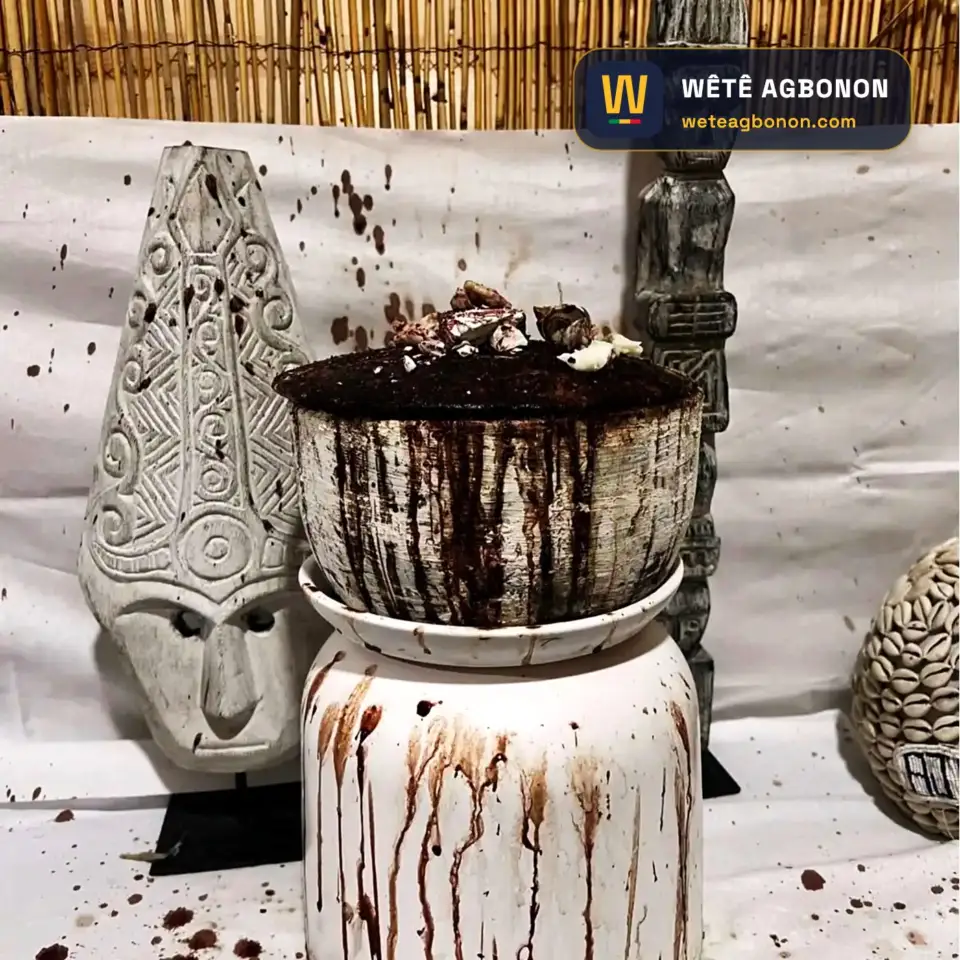
In short
Soul tie meaning in a few lines
- The word
- A term from Christian deliverance teaching for a bond between two souls.
- What people feel
- Obsessive thoughts, recurring dreams, a pull toward someone who hurt them.
- What decides
- A free Fâ reading: grief and memory, or a spiritual bond.
- What the temple does
- Unties a bond, lifts a work, releases a vow, protects.
- What it refuses
- Binding someone to you against their will.
Where the word “soul tie” comes from
The phrase belongs to charismatic Christian teaching, where pastors speak of souls “knit together” and cite the friendship of Jonathan and David in the First Book of Samuel, or the “one flesh” of Genesis. In that teaching, a soul tie forms through sex, close friendship, vows or shared suffering, and deliverance ministers lead prayers to break it. In recent years the term has spread widely on social media, often far from its religious roots.
Psychologists describe something close under other names: trauma bonding, where cycles of hurt and reconciliation create an intense attachment, or simply the slow grief that follows a breakup. These explanations matter, and a reading at Sakété keeps them in view.
How the tradition of Benin sees bonds between people
In Benin, bonds between people are taken seriously, in life and beyond it. A marriage joins two families and is presented to the ancestors; a promise made before a vodun binds the one who made it; works can be done to attach one person to another. The tradition also knows rites that release a person from what was sealed when a union ends. A soul tie, in this view, is one of several kinds of bond, and each is untied in its own way.
Soul tie, twin flame, soulmate: words that get mixed
Online, several ideas blur together. Twin flame comes from New Age writing and describes a single destined partner, a mirror soul one is supposed to reunite with. Soulmate is older and gentler, a person with whom life fits. Karmic relationship, borrowed from Hindu and Buddhist vocabulary, names a painful bond believed to repay something from a past life. A soul tie, in the sense people use it, is simply a bond that persists, wanted or not.
The confusion has a cost. Someone told that a violent former partner is their twin flame may wait years for a reunion that should never happen. The Fâ sets these labels aside, looks at the actual bond, and says what holds it.
Signs of a soul tie
People describe them in similar words: thoughts of the other person that arrive dozens of times a day, dreams where they return, a body that seems to wait for them, an inability to love anyone new, a pull to answer every message even after betrayal. Some feel the other person’s moods at a distance, or sense their presence at night. Others notice that every new relationship ends at the same point, as if something pulled them back toward the old one, and they start to wonder whether the problem lies with them.
None of these signs alone proves a spiritual tie. Grief produces most of them, and so does an unfinished conversation. The reading separates what the heart will heal with time from what needs the temple.
Six bonds
6 kinds of soul tie seen in letters to the temple
They come from very different stories. The Fâ tells which one weighs on the person who writes.
After a long marriage
Divorced for years, still bound to a former spouse in thought and dream.
After a violent relationship
Free of the person, and still drawn back to them.
After a work was ordered
A love work done by an ex, or by oneself, now felt as a chain.
After a promise
Vows or blood pacts made in youth and never released.
After a single encounter
A brief affair that left a trace out of all proportion.
After a death
A partner who died, and a bond that has not found its place.
What the reading can show
When the Fâ confirms a bond, it names its source. A love work done by the other person, or once ordered by the person who now writes, can keep two lives attached long after love has gone. A pact or vow made before a vodun may still be active. A spirit may have attached itself to the relationship, which the tradition places close to what is called a spirit husband or spirit wife. Sometimes an ancestor of one family refuses the separation.
The signs may also show that no spiritual bond exists, and that the pain belongs to grief. That answer, written plainly, often brings relief of its own: the person stops searching for a curse and starts mourning what was lost.

How to break a soul tie at the temple
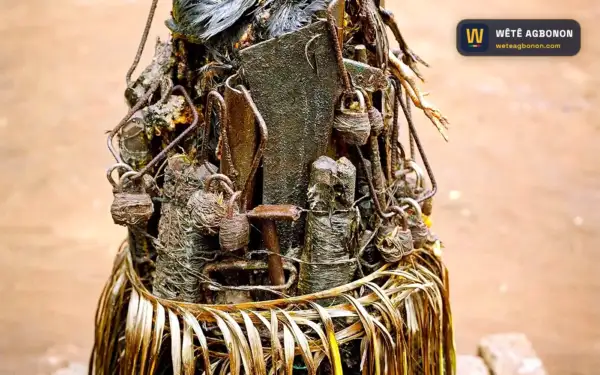
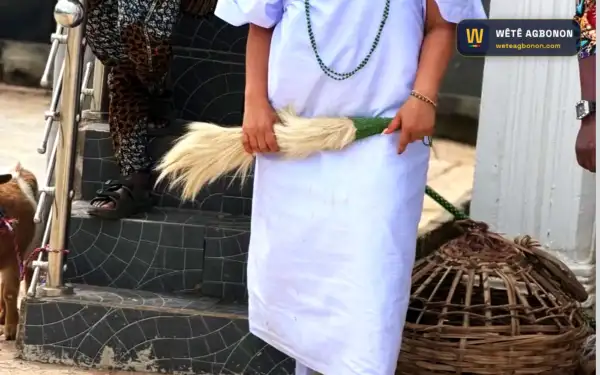
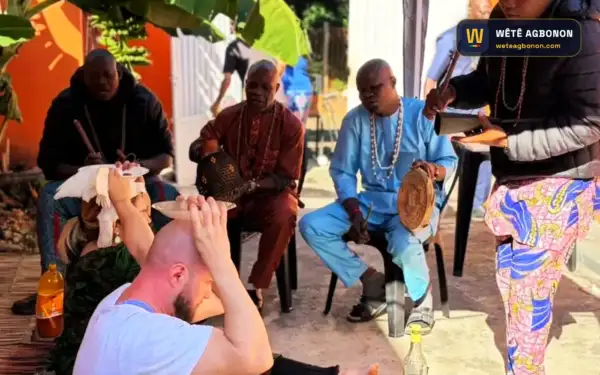
If the signs require a ceremony, Wêtê Agbonon conducts it at Sakété. The vodun named by the reading receives offerings; your name is spoken before the altar together with the bond to be untied. Depending on its source, the work lifts a love work, releases a vow, sends an attached spirit away, or asks an ancestor to accept the separation. A protection may follow, so that the soul tie does not form again.
You also receive instructions: what to do with gifts, photographs and messages, which places to avoid for a while, how to answer if the other person reappears. These gestures carry as much weight as the ceremony.
What you can do yourself
Cut the daily threads: mute or block the accounts you keep checking, put away the objects that bring the person back, stop the late-night messages. Tell a friend what you are going through, since isolation feeds the bond. If the relationship was abusive, a therapist who knows trauma bonding can help you understand why leaving was so hard. Sleep, food and movement sound banal, and they are the ground on which any soul tie loosens.
Soul ties and love spells
Many letters come from people who once paid for a love spell and now cannot breathe inside the bond it created. Others suspect a former partner of having done one. The reading can confirm or rule out such a work. If it exists, it is lifted, whoever ordered it, and the person is protected against its renewal. Wêtê Agbonon helps people who asked for a binding love spell in a desperate moment to leave it, without judging them.
Intimacy, personal items and fear
In Benin as elsewhere, people know that hair, worn clothing or other personal items can be used in works, and some fear what a former partner kept after the separation. Others worry about photographs or messages left in the hands of someone angry. The reading says whether anything of the kind was done. Most of the time nothing was, and the fear itself becomes the bond that needs loosening.
When you share children with the other person
A soul tie with the other parent of your children is harder to cut, because contact cannot stop. Every handover, every school message reopens the wound. Here the work aims at calming the bond so that co-parenting becomes possible without the old pull. The instructions often concern how to speak to the other parent, and what to keep out of the exchanges. The children’s peace stays at the centre of every decision.
When the bond is with someone who died
Widows and widowers sometimes feel that the person who died still holds them, months or years later. The tradition gives the dead their place: funeral rites completed, offerings to the ancestors, a moment when the living are released to go on. When the reading shows that a rite is missing, it can be performed, and the soul tie becomes a memory the living person can carry.
A soul tie that is wanted
Some people write with the opposite request: they want to create a soul tie with someone, so that the person cannot leave. The temple refuses works that bind another person against their will. Love that has to be chained does not last, and the chain usually ends up around both necks. What the reading can do is look at the relationship honestly and say whether a road toward the other person exists.
After the ceremony
People who write back after a ceremony usually describe a slow change. Thoughts of the other person come less often and with less force; the dreams thin out; the urge to check a profile fades. Some notice it within days, others over several weeks. Keep the protection and the instructions for the period the signs gave, and write to the temple if the old pull returns, so that the reading can say whether something remains.
Before you write
Describe the bond as precisely as you can: when it began and ended, what you feel and at what moments, what has already been tried, and any ritual done by you or that you suspect was done by the other person. Mention dreams if they recur. A detailed letter lets the Fâ answer the question that matters to you.
Warning signs in online offers
Search results for how to break a soul tie are full of paid prayers, cord-cutting kits and readers who find a soul tie in every story. Be wary of anyone who announces a curse before asking a single question, asks for new money with each new discovery, or warns that the bond will tighten if you stop paying. A serious answer begins with questions and may end with no ceremony at all.
The cost of a ceremony
Writing to the temple and receiving the reading is free. Should the signs ask for a ceremony, its price arrives first, in writing, as one sum: it holds for seven days, may be paid in parts, and the ceremony is held once it is settled. If the time the signs set elapses without the change they announced, instructions respected, Wêtê Agbonon performs it again free of charge, provided you ask within thirty days.
Two stories from letters
Both people here are invented; their situations are common. A woman in Houston left a violent husband four years ago. She has a new job, a new flat, and still checks his social media every night. The reading may find no spiritual tie and recommend a counsellor who works with survivors, along with a simple protection for her peace. It may also show a work her former husband ordered during their marriage, which is then lifted.
A man in Lagos made a blood promise with a girlfriend at nineteen. Twenty years and one marriage later, he dreams of her every month and his marriage suffers. The reading may show that the old promise is still active, and that a ceremony releasing both sides is needed. In each case the reply is written, and a fee appears only if a ceremony is needed.
Writing to Sakété
Letters about a soul tie come from Lagos, London, Houston, Kingston and Johannesburg. The reading needs no journey: Wêtê Agbonon casts the Fâ at the temple and writes back himself. France 24 presented his work in its Plan B programme from Benin, and what his clients say is collected on a page of their own.
Only the consultation is free. For a bond that will not let go, it tells you where the bond comes from and how it can end.
Questions
Soul tie: what people ask the temple
What is a soul tie?
A term from Christian teaching for a bond between two people that persists after the relationship. The tradition of Benin recognises several kinds of bond, and the Fâ tells which one is at work.
What is the soul tie meaning in voodoo?
Voodoo speaks of bonds created by works, vows, spirits or unfinished rites. The reading identifies which one applies.
How do I know if I have a soul tie?
Obsessive thoughts and dreams can come from grief or from a spiritual bond. The reading separates the two.
How to break a soul tie with an ex?
Cut daily contact first. If the Fâ shows a spiritual bond, a ceremony at the temple unties it.
Can a soul tie be one-sided?
Yes. Many letters describe a bond felt by one person only, often after a work or an unanswered love.
Can a soul tie come from a love spell?
It can. The reading confirms whether a work holds the bond, and if so it is lifted.
Can you create a soul tie with someone for me?
Binding another person against their will is refused at Sakété.
How long does it take to break a soul tie?
The signs fix the length of each ceremony, and it appears on the quote.
Is a soul tie the same as a twin flame?
Twin flame belongs to New Age belief about a destined partner. A soul tie describes a bond, often an unwanted one.
Does the reading cost anything?
Nothing at all. A ceremony, if needed, is priced in writing before it begins.
Can this be done from abroad?
Yes. The letter is read in Sakété and the ceremony is held there, with your name before the altar.
Which languages does Wêtê Agbonon read?
English and French; he replies to each letter himself.
More