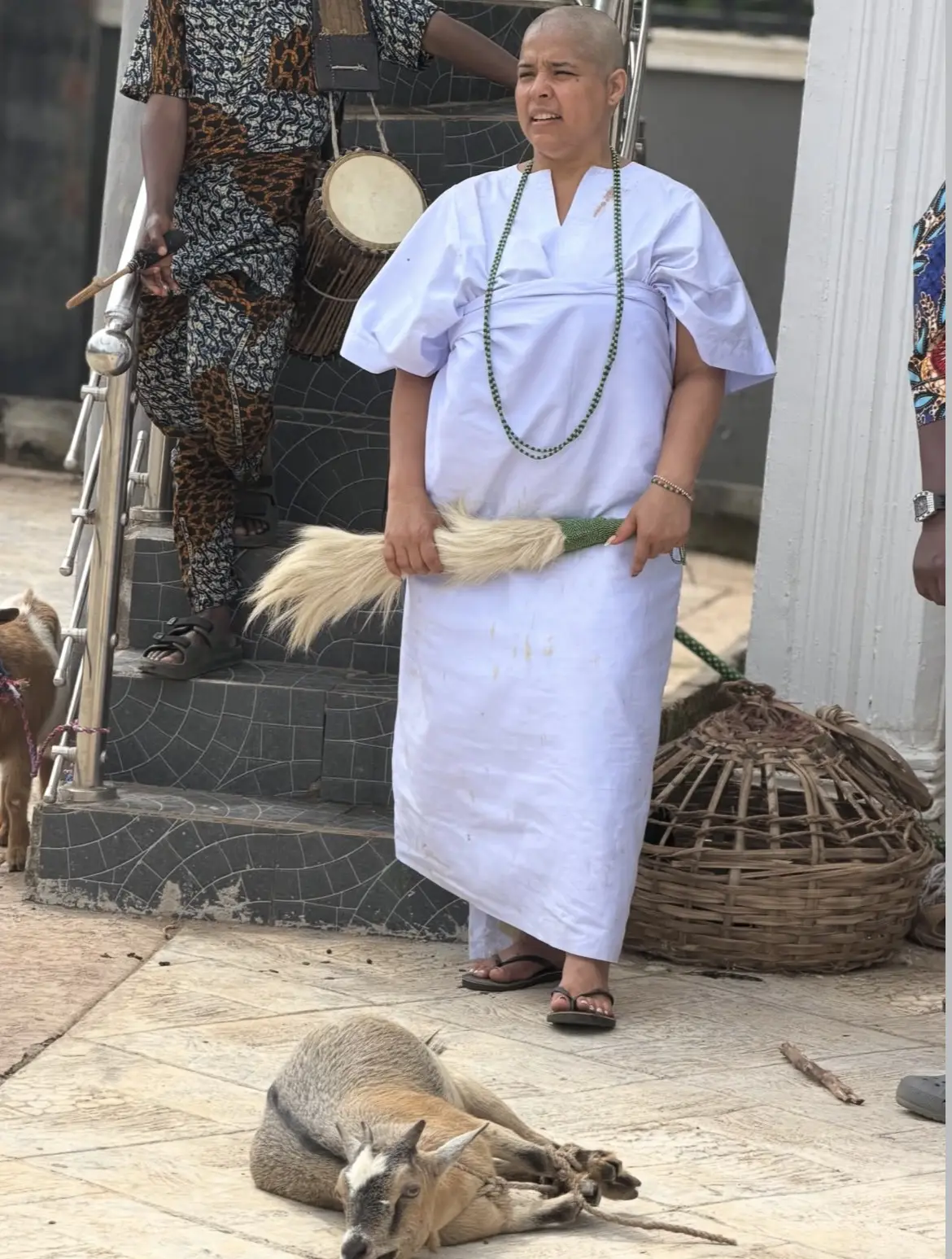
Family · Sakété temple
Fertility spell: what a Fâ reading at Sakété looks at when a child is long awaited, and why the doctor walks beside the temple
Months of hope, negative tests, appointments, and family gatherings where everyone avoids the question. Some couples then look for a fertility spell. The first step at Sakété is a reading of the Fâ, offered without charge. From the signs, Wêtê Agbonon learns whether something spiritual stands between the couple and a child, what the temple can offer, and why medical care must continue meanwhile.
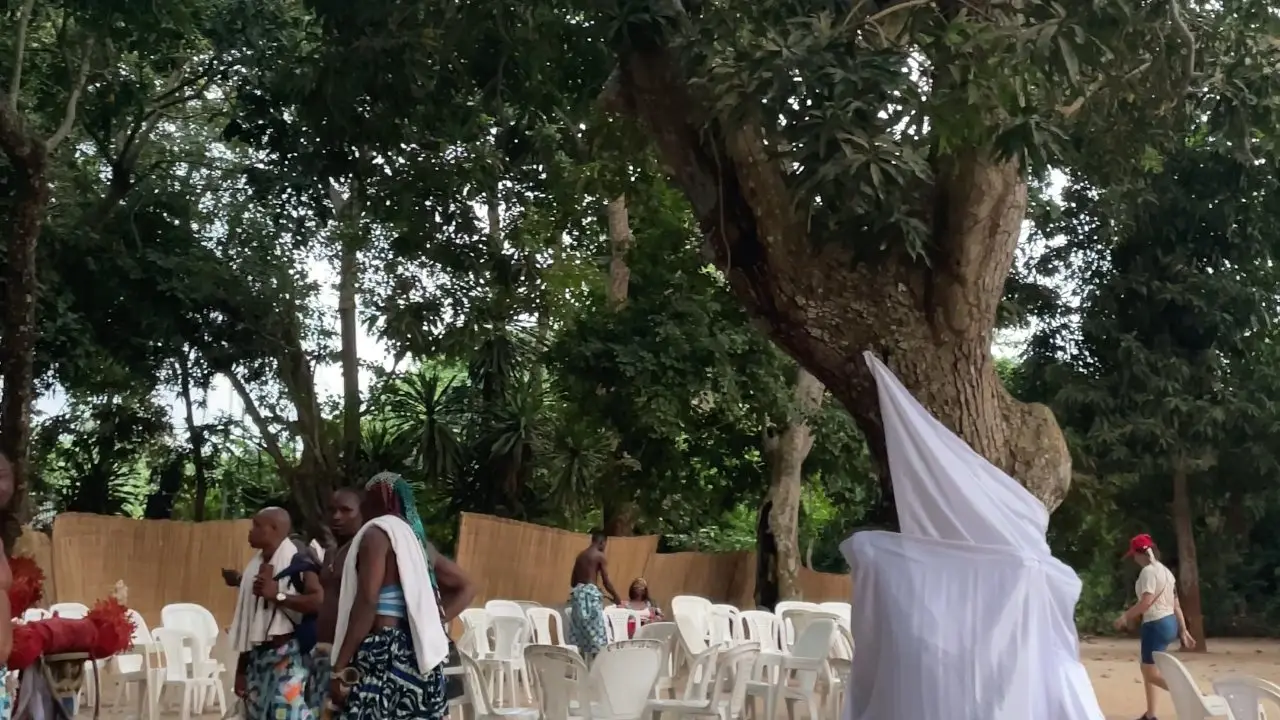
Filmed testimony
“I was skeptical at first, but I’m honestly so grateful I gave it a chance.”
A client, face shown, in her own words
The question asked
Fertility spell: what the Fâ looks at first
Couples, and women on their own, write with long histories: how many years of trying, which examinations were done, what the doctors said, whether pregnancies began and ended. Wêtê Agbonon asks for these facts, for the date of birth and a photograph of each partner, and for any event in the family that came before the difficulties.
The Fâ, cast at Sakété, may point to an ancestor waiting to be honoured, a prohibition broken, a charge placed by a jealous person, or a spirit spouse who refuses a human child. It may also show nothing spiritual and send the couple back to medicine with encouragement. Its answer arrives in writing, and it is free.
What happens in a Fâ reading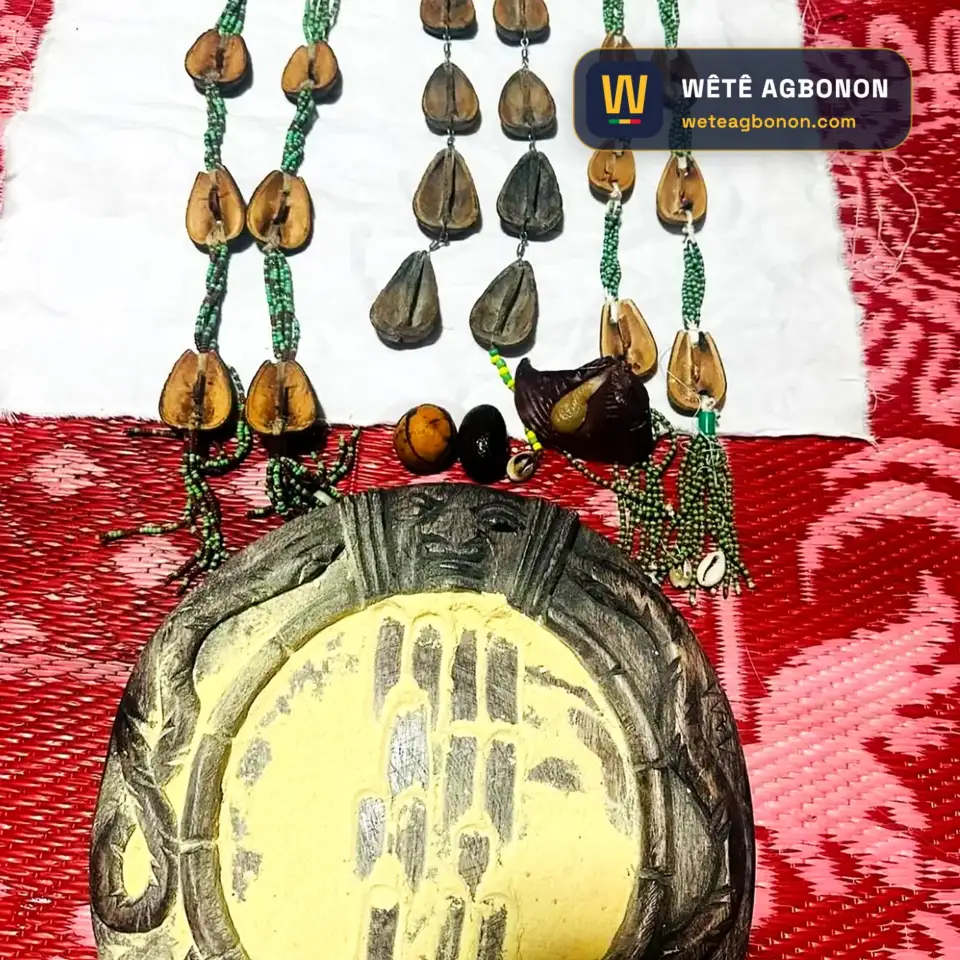
Overview
Fertility spells in a few lines
- Who writes
- Couples trying for years, women alone, families after repeated losses.
- What decides
- A free Fâ reading on whether a spiritual obstacle exists.
- What the temple offers
- Offerings to the ancestors, the lifting of a charge, a protection for the couple.
- What stays essential
- Medical examinations and treatment, for both partners.
- What it refuses
- Promising a pregnancy or a date of birth.
A long wait, often in silence
The World Health Organization estimates that about one adult in six faces infertility at some point in life. Behind that figure stand couples who stop going to baby showers, women questioned by their in-laws, men who avoid the subject entirely. In many African families, a marriage without children draws remarks, suspicion and sometimes accusations. People look for a pregnancy spell when they feel that every ordinary road has been tried. Many write on the evening after a relative asked, once again, when the baby would come, or after a friend announced a third pregnancy with a smile they could not return.
Online, they find rituals promising a pregnancy within weeks, sold with photographs of babies. The cost is counted twice: money that could have paid for an examination, and months of hope lost.
Fertility spells across cultures
Requests for children are as old as prayer. Akan women in Ghana have long carried akuaba, small wooden figures with a flat round head, in the hope of conceiving. Catholic women pray to Saint Gerard Majella, patron of mothers and of those who wish to become mothers. Pilgrimages, vows and fertility spells exist on every continent, and they say the same thing: the wish for a child reaches beyond the body.
The tradition of Benin shares that wish. It adds a reading that looks at one couple’s situation in particular, instead of offering the same ritual to everyone.
Children in the tradition of Benin
In Benin, children are the continuation of the lineage and a gift that comes through the ancestors. When a child is awaited, families consult the Fâ, make offerings, and sometimes ask the family vodun for its blessing. Twins are honoured with rites of their own, and small carved figures keep the memory of twins who died. Every birth is greeted as the return of something from the family line. Names keep this memory alive: in Fon families, twins are often called Zinsou and Zinhoué, and the child born after them Dossou or Dossa.
This is why the tradition looks for a reason when a child does not come: an ancestor who has not been honoured, a family quarrel, a prohibition. It is also why the tradition can add weight to couples who already suffer. The reading at Sakété aims to lift that weight.
What medicine can do
Doctors generally investigate infertility after a year of trying, or after six months when the woman is 35 or older. Both partners should be examined, because male factors are involved in a large share of cases. Blood tests, ultrasound, semen analysis and checks of the tubes often find a cause that can be treated, from ovulation problems to blocked tubes. Treatments range from medication to surgery and assisted reproduction. A fertility spell that asks you to stop treatment is a warning sign.
Six situations
6 situations that lead couples to ask for a fertility spell
Each needs a different answer. The reading tells the temple’s share from the clinic’s.
Years without a pregnancy
Regular attempts, normal tests, and no explanation.
Repeated losses
Pregnancies that begin and end, sometimes at the same stage.
A second child that does not come
A first child easily, then years of waiting.
Pressure from the family
In-laws who blame the wife, rumours of a curse.
After a broken relationship
A former partner who threatened, and then the difficulties began.
Treatments that keep failing
Several attempts at assisted reproduction without success.
Obstacles the Fâ may name
Where the signs see a spiritual obstacle, they say which. An ancestor who expects an offering before blessing a child. A prohibition linked to the family or to one partner’s destiny, broken without knowing. A charge laid by a jealous relative or a former partner. A spirit spouse who claims one of the partners and refuses a human child. A quarrel between the two families that must be settled first.
Where the signs see no spiritual obstacle, the reading encourages the couple to pursue medical care, and sometimes suggests a protection to accompany it. That answer, given plainly, spares many couples from blaming each other or their relatives.
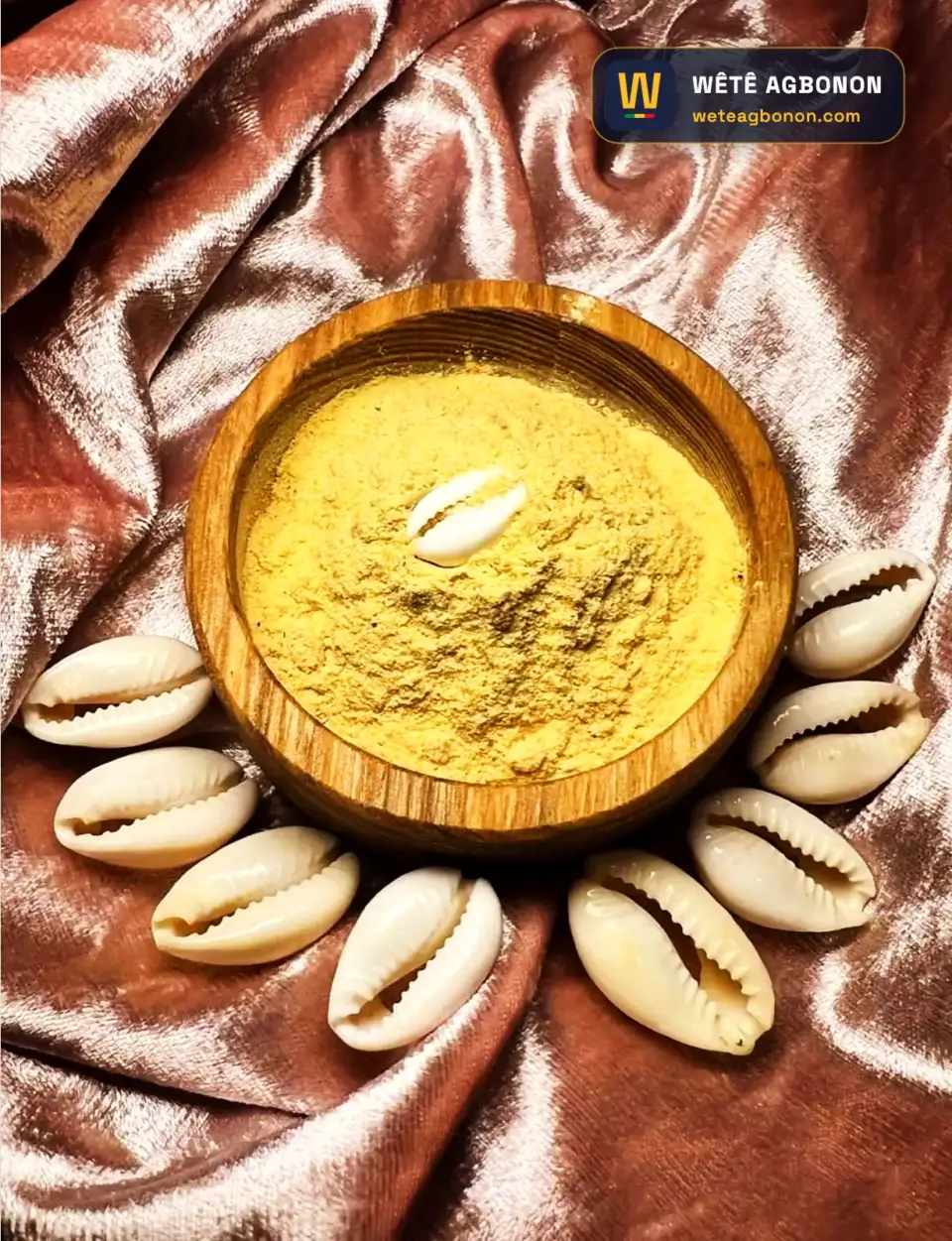
How a fertility spell is performed at Sakété
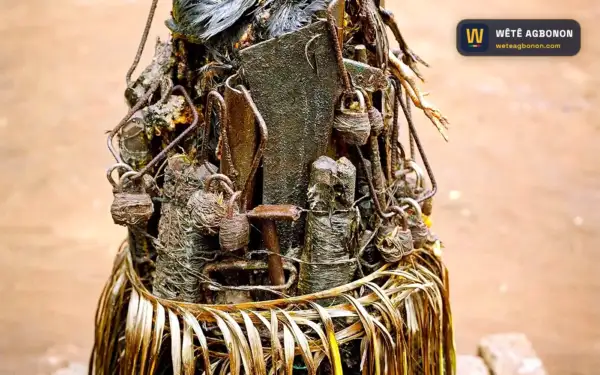
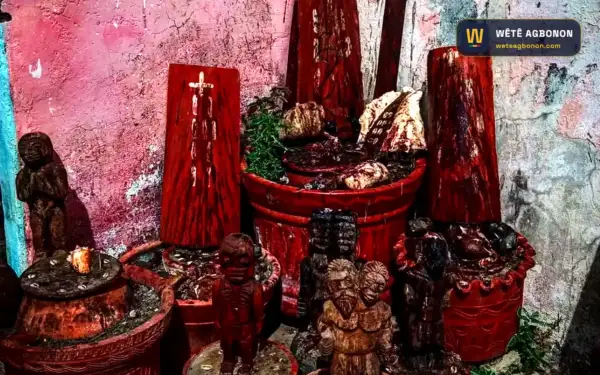
A work asked for by the signs takes place at the temple. The ancestors and the vodun named by the reading receive offerings, and the names of both partners are spoken before the altar. Depending on the cause, the work honours an ancestor, lifts a charge, settles a spirit spouse’s claim, or places a protection over the couple. Instructions come with it: gestures to make together, a period during which certain prohibitions are respected, a relative to reconcile with.
Alongside medical treatment
The temple asks couples who request a fertility spell to continue their medical care. Many people write while preparing an IVF cycle or after a failed attempt; a protection can accompany the treatment, and the reading may advise on timing according to the signs. Every instruction given at Sakété is meant to sit alongside the treatment, and the tradition requires no woman to stop care her doctor recommends.
Some couples feel ashamed to tell their doctor about the temple, or the temple about the doctor. Both can be told about each other, since they serve the same hope.
The man in the couple
In many families the question falls on the woman alone, and men often delay their own tests out of pride or fear. Yet a semen analysis is simple and quick, and a male factor found early can save years. The reading at Sakété concerns both partners. When a charge or a prohibition weighs on the man, the work is done for him, and a protection can cover him as well. A fertility spell that looks at only one partner looks at half of the story.
Waiting, stress and the couple
Years of trying put a strain on the strongest marriages. Intimacy becomes a schedule, each month ends in disappointment, and partners begin to blame each other in silence. Counsellors who work with infertility exist in many clinics, and talking to one can help. The temple sees the same wounds in letters, and the instructions that come with a work often concern the couple itself: time together, words to stop using, a reconciliation with a relative who keeps adding pressure.
Repeated pregnancy loss
Women who lose several pregnancies carry a grief few people around them understand. Medicine has made progress here: specialists look for clotting disorders, hormonal problems, chromosomal causes and anatomical issues, and several of these can be treated. The tradition, for its part, has long linked repeated losses to the spiritual world, and the reading looks at this with care. When the Fâ shows a spiritual cause, a rite can be performed; when it shows none, the answer helps the woman stop blaming herself.
When the family blames the woman
In some families, a childless wife is accused of witchcraft or told she is cursed, while the husband is never examined. These accusations destroy lives. Wêtê Agbonon refuses to confirm a curse that the signs do not show, and he reminds families that the cause may lie with either partner, or with neither. When a charge does exist, it is lifted without naming anyone as a witch.
A fertility spell aimed at someone else
Some people ask for a work to make a partner pregnant without their knowledge, or to prevent a rival from having a child. Both requests are refused. A child is welcomed by two parents, or by a woman who chooses it, and harm aimed at another woman’s womb is among the gravest things the tradition knows.
Women hoping for a child on their own
Some women write without a partner, planning a pregnancy with a donor or after a separation, sometimes as their late thirties approach. The reading looks at their path in the same way, and a protection can accompany the medical steps. The tradition welcomes every child received with love, and the temple helps a woman who chooses this road as it would help a couple.
After the birth
A birth calls for thanks. The signs may ask that the ancestors, or the vodun that was addressed, receive an offering of gratitude, and families often consult the Fâ again to learn about the newborn’s path. Writing to the temple after a birth is a joy shared, and it lets the reading say whether anything remains to be done for mother and child.
Writing to the temple
Before asking for a fertility spell, describe your history plainly: how long you have been trying, the examinations and treatments so far, any pregnancies and losses, your ages, and the events in the family around the time the difficulties began. Mention any ritual done before, by whom and when. The reading becomes more precise as the letter does.
Five questions to ask before any pregnancy spell
Has the practitioner asked about your medical history and your partner’s, or did he name a cause straight away? Does he respect your treatment, or does he ask you to stop it? Is the price fixed and written, or does it move with each disappointment? Does he promise a date, a sex for the baby, twins on request? Does he refuse to harm another woman when asked? A pregnancy spell offered by someone who fails these five questions deserves your caution, whatever the testimonials say.
Promises to avoid
Be careful with anyone who guarantees a pregnancy, names a date, sells potions to drink without medical advice, or tells you to stop treatment. Be careful too with offers whose price climbs after each failure. A serious fertility spell begins with a question to the Fâ and comes with respect for your doctor.

The price of a work
Asking the Fâ costs nothing. If a work is needed, the couple receives a written quote with one amount, open for seven days and payable in several parts, and the work begins once the amount is paid. When the period given by the signs ends without the change announced, the instructions having been kept, the couple may ask within thirty days for a second performance, which is free.
A couple like many others
The couple is invented; their story is frequent. Married for six years and living in London, both from Ghana, they have tried for four. Tests show a minor problem on his side, which they have not told their families. Her mother-in-law hints at a curse. Two IVF attempts have failed.
The reading may show an ancestor on his side waiting for an offering, made at Sakété together with a protection for the next treatment cycle. It may also show no spiritual cause at all, and then the advice is to continue with the clinic and to stop carrying the family’s accusations. Either way the answer is written, and a work is quoted only when one is needed.
Letters from abroad
Couples write from London, Accra, Paris, Houston and Lagos. The reading needs no visit: Wêtê Agbonon consults the Fâ in Sakété from your letter and writes back to you personally. On January 12, 2026, a France 24 report on Benin’s coastal mangrove interviewed him, and testimonies from clients are available on this site.
Only the consultation is free. For a couple waiting for a child, it says whether the temple has a part to play, and it encourages what medicine can do.
Questions
Fertility spell: what couples ask
Does a fertility spell work?
When the Fâ shows a spiritual obstacle, a work addresses it. Medical care remains essential, and no pregnancy can be promised.
What is a pregnancy spell?
A request for spiritual help to conceive. At Sakété it starts with a reading and goes hand in hand with medical care.
Can a curse prevent pregnancy?
The tradition says a charge can weigh on a couple. The reading confirms or rules it out.
Can a spirit husband stop me from having children?
The tradition links some cases to a spirit spouse. The Fâ says whether it applies to you.
Should we stop medical treatment during the work?
Continue every treatment your doctor recommends.
Can the temple help after miscarriages?
The reading can look for a spiritual cause, and specialists can look for medical ones. Both are worth doing.
Can a fertility spell be done for a man?
Yes. Male fertility matters as much, and the reading concerns both partners.
Can you make someone pregnant without their knowledge?
Such requests are refused.
How long does a fertility spell take?
The signs fix its duration, and the quote states it.
Can a pregnancy spell help during IVF?
When the reading calls for it, a protection can accompany the cycle. The clinic’s protocol stays exactly as planned.
What do we pay for the reading?
Nothing. A work, if needed, is priced on a written quote.
Must we travel to Benin?
Your letter is read at Sakété, and the work is performed there with your names.
Who replies?
Wêtê Agbonon himself, in English or French.
See also